Our Top Picks
Pros & cons
- 7075 aluminum shaft is lighter than standard 6061 aluminum
- Flip lock adjusts length from 25.5 to 54 inches
- Cork grip wicks sweat to reduce hand chafing
- Folded length is still 25.5 inches, not ultra compact
- Listing does not specify basket sizes for snow or mud
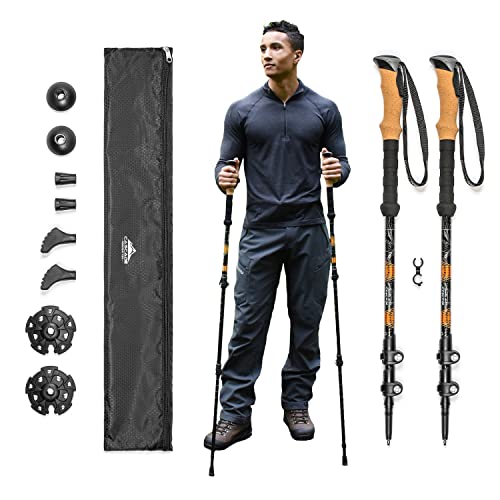

The Cascade Mountain Tech aluminum quick-lock trekking poles are the best overall pick for beginners: simple lever locks, a cork grip, a wide adjustment range up to 54 inches and a durable aircraft-grade aluminum shaft. Trekking poles are adjustable walking poles that take load off your knees on descents and add balance on rough ground, and beginners do best with a pair that is easy to size, lock and stow. If you want a lighter pole and are happy to handle it with a little more care, the Cascade carbon fiber pair is the upgrade, while the other four listings cover lighter-featured and accessory-rich options.
Quick List
- Telescopic Anti-Shock Trekking Poles – best for walkers who want shock absorption and a Nordic-walking style pole
- Cascade Mountain Tech Aluminum Quick-Lock Poles – best overall for first-time hikers who want durable, easy-to-adjust poles
- KINGGEAR 7075 Aluminum Poles – best for beginners who want a stronger alloy with flip locks and a cork grip
- Foxelli Collapsible Aluminum Poles – best for hikers who want a ready-to-go kit with all-terrain accessories
- Aihoye 2-Pack Anti-Shock Poles – best for couples or friends who want two matching, collapsible sets
- Cascade Mountain Tech Carbon Fiber Poles – best for beginners who want a lighter pole for long days
Which One Is Right for You?
| If you… | Choose |
|---|---|
| Want carbon fiber to cut swing weight on long hikes | Cascade Mountain Tech Carbon Fiber Poles |
| Want a straightforward aluminum pole with a cork grip and lever locks | Cascade Mountain Tech Aluminum Quick-Lock Poles |
| Care about the strongest alloy named in the listing | KINGGEAR 7075 Aluminum Poles |
| Like a bundle that includes accessories for different surfaces | Foxelli Collapsible Aluminum Poles |
| Are buying for two people at once | Aihoye 2-Pack Anti-Shock Poles |
| Prefer a spring-damped, Nordic-style walking pole | Telescopic Anti-Shock Trekking Poles |
For a first pair, the best advice is to choose the simplest locking system you can operate with cold or gloved hands, and ignore feature lists that sound impressive but add complexity. Lever locks are easier to learn than twist locks, a cork or foam grip is more comfortable than bare plastic, and a sturdy aluminum shaft will tolerate the inevitable stumbles that come with learning how to plant a pole. Once you know what you like, you can step up to a lighter carbon pole.
All 6 Picks in Detail
1. Telescopic Anti-Shock Trekking Poles – Best for spring-damped walking
As an Amazon Associate we earn from qualifying purchases at no extra cost to you.
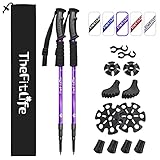
This listing is a pair of telescopic hiking poles marketed as anti-shock Nordic walking sticks that collapse and extend, and the visible name begins an adjustment range starting at about 25 inches. The brand is not visible in the shortened name, so verify the maximum length, shaft material and lock type on the product page. It suits casual walkers and beginners who want a spring-damped pole for pavement, parks and gentle trails.
Anti-shock poles contain an internal spring in the shaft that softens the impact each time the tip hits the ground. Some walkers like the cushioned feel, particularly on hard surfaces, while others prefer a rigid pole because it responds more directly. The spring can also be locked out on many designs, which is a useful feature to look for in the listing.
- Type: telescopic, collapsible walking poles
- Feature: anti-shock mechanism named in the listing
- Adjustment: begins at roughly 25 inches; maximum length is confirmed on the product page
- Intended use: hiking and Nordic walking
- Shaft material, lock type and grip: confirm on listing
Who should skip it: hikers who plan steep, long climbs may prefer a rigid pole, since a spring inside the shaft can feel springy under heavy load. If you are not sure you like anti-shock, look for the option to lock the spring, or choose a plain aluminum pole. For paved paths, parks and gentle trails, however, the cushioning is a reasonable comfort feature for a first pair.
Pros:
- Spring damping can feel gentler on hard ground
- Collapsible design makes it easy to carry on a flight or in a car
Cons:
- Key specifications are not visible in the shortened listing name
- Springs add weight and a small amount of bounce on steep climbs
Next to the Aihoye pair, which also advertises anti-shock, it is the better pick if you want to read the exact adjustment range before you buy.
2. Cascade Mountain Tech Aluminum Quick-Lock Poles – Best overall for first-time hikers
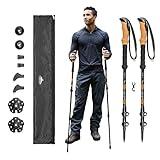
These Cascade Mountain Tech poles are sold as a set of two with an aircraft-grade 6061 aluminum shaft, adjustable locks, a cork grip and an extension up to 54 inches. They suit first-time hikers who want an uncomplicated pair that can be adjusted on the trail, sized for most adults and shared between family members with different heights. The brand’s standard aluminum quick-lock style is described as adjusting from about 26 to 54 inches.
The appeal for beginners is how few things can go wrong. Quick-release levers are fast to open and close, and the cork grip warms to the hand and handles sweat better than hard plastic. The aluminum shaft tends to bend under extreme load rather than snapping, which is a more forgiving failure mode for someone still learning pole technique.
- Shaft: aircraft-grade 6061 aluminum
- Locks: adjustable quick-release locks
- Length: expands to 54 inches, per the listing; the brand’s quick-lock family collapses to about 26 inches
- Grip: cork, per the listing
- Set: two poles; the manufacturer offers a one-year warranty on its poles
Who should skip it: very light packers who count every ounce will prefer the carbon sibling, and anyone who needs a folding Z-style pole for airline luggage may want a different format altogether. For the great majority of day hikers and weekend backpackers, though, a straightforward aluminum pole with a cork grip is the safest bet, and it leaves a little room in the gear fund for boots or socks.
Pros:
- Easy-to-use lever locks and a comfortable cork grip
- Wide adjustment range suits tall and short users alike
Cons:
- Heavier than the carbon version from the same brand
- Tip and basket details should be confirmed on the product page
Compared with the KINGGEAR, it uses a more common 6061 alloy but is simpler to understand; KINGGEAR leans on a stronger-sounding 7075 shaft.
3. KINGGEAR 7075 Aluminum Poles – Best for a stronger alloy with flip locks

KINGGEAR describes these as lightweight hiking sticks with a 7075 aluminum shaft, natural cork grip, EVA support area and a flip-lock system, plus terrain accessories. The 7075 alloy is a stronger aluminum grade than 6061, which makes it a good choice for hikers who expect to lean on their poles on steep terrain. It suits beginners who want a strong, no-fuss pole without moving to carbon.
The EVA support area just below the cork grip is a useful detail. It lets you choke down on the pole on steep traverses without changing its length, which is a technique beginners often discover quickly. Flip locks hold the sections in place and can be tightened with a small adjustment screw if they loosen over time.
- Shaft: 7075 aluminum
- Grip: natural cork with an EVA extension, per the listing
- Locks: flip-lock system
- Extras: terrain accessories are listed with the poles
- Length range and weight per pole: confirm on listing
Who should skip it: hikers who prefer twist locks or foam grips will find the cork and flip-lock combination less familiar. The flip locks are easy to use with gloves, though, which helps in cold weather. If you hike with a partner of a very different height, the wide adjustment range matters more than the alloy grade, so confirm the minimum and maximum lengths on the product page.
Pros:
- Stronger alloy than the common 6061 grade
- EVA down-grip helps on side slopes
Cons:
- Specific length range is not visible in the shortened name
- Accessories add small parts you can lose
It sits between the aluminum Cascade and the Foxelli: stronger-sounding than both, but with less detail visible in the listing text.
4. Foxelli Collapsible Aluminum Poles – Best for a kit with accessories

Foxelli markets these as lightweight, collapsible hiking poles made from aircraft-grade aluminum with cork grips, quick locks and a set of all-terrain accessories. They suit new hikers who like arriving with everything in the box, such as baskets and rubber tips for different conditions, rather than shopping for parts later. The collapsible design also means they fit in a daypack or carry-on.
Accessories matter more than they sound. Rubber tips protect trail surfaces and quiet your steps on pavement, mud baskets stop the tip sinking in soft ground, and spare tips replace worn ones. The risk is that small pieces get lost, so keep them in a labeled bag.
- Shaft: aircraft-grade aluminum
- Grip: cork
- Locks: quick-lock levers
- Accessories: all-terrain accessories, per the listing
- Maximum length and weight: confirm on listing
Who should skip it: hikers who already own baskets and tip covers do not need an accessory bundle and can focus on shaft quality and lock design instead. For newcomers, the kit approach is helpful because it shows what each attachment does. Keep the accessories together in a small pouch so they stay with the poles, and fit rubber tips on pavement to avoid noisy, scratchy steps.
Pros:
- Accessory set suits mixed surfaces
- Collapsible and light enough for travel
Cons:
- Exact alloy grade is not stated in the visible name
- Small accessories can be misplaced
Compared with the Aihoye pair, it is the more traditional lever-lock choice with a cork grip and an accessory kit.
5. Aihoye 2-Pack Anti-Shock Poles – Best for two matching sets

The Aihoye listing is a two-pack of collapsible hiking and walking sticks, described as lightweight, anti-shock and fitted with a quick-lock system, for men and women. It suits friends or couples starting out together, because one purchase covers two hikers. The name does not make clear whether a “2 pack” means two poles (one pair) or two pairs, so read the product page to be certain.
That ambiguity matters: many listings sell a single pair under a “2 pack” label. If you are buying for two people, confirm that you are getting four poles, not two. The anti-shock feature, as with the first listing, is a matter of taste rather than a requirement.
- Type: collapsible hiking and walking sticks
- Feature: anti-shock mechanism named in the listing
- Locks: quick-lock system
- Count: described as a 2 pack; confirm the pole count
- Shaft material, length range and grip: confirm on listing
Who should skip it: solo hikers should check carefully whether the listing contains two poles or four, because a pair is all one person needs. If you want carbon fiber or a specific grip material, this listing does not advertise either in its visible name. It is better suited to casual walkers, family walks and travel use than to long, technical backcountry routes.
Pros:
- Useful for two walkers sharing the same style
- Quick locks are easy for beginners
Cons:
- Pack contents and specifications need confirming
- Anti-shock springs add moving parts that can wear
Versus the first telescopic listing, it offers the same anti-shock idea with an explicit quick-lock mention.
6. Cascade Mountain Tech Carbon Fiber Poles – Best for a lighter upgrade

This Cascade listing is a set of two carbon fiber trekking poles with quick adjustable locks, in grey. Manufacturer pages for the carbon quick-lock family describe a collapsed length of about 26 inches, an extended length of 54 inches, cork grips with an extended EVA down grip, tungsten carbide tips and weights in the range of roughly 7.4 to 8.1 ounces per pole depending on the version. It suits beginners who plan long days or multi-day hikes and want to reduce arm fatigue.
Carbon is lighter than aluminum and dampens vibration, but it is less forgiving of sharp side impacts, such as a pole wedged between rocks. Beginners can use carbon without trouble if they treat it with a little care, and the weight saving across thousands of steps is noticeable. Confirm the exact version and weight on the product page.
- Shaft: carbon fiber
- Locks: quick adjustable locks
- Length: about 26 to 54 inches for the brand’s carbon quick-lock family
- Weight: roughly 7.4 to 8.1 ounces per pole across versions; confirm for this listing
- Grip and tip: cork with an extended EVA down grip and a tungsten carbide tip, per the manufacturer’s family description
Who should skip it: if you often scramble through rocky terrain, or if your poles regularly get wedged between boulders, aluminum is more forgiving. For smooth trails, long days and weight-conscious beginners, the carbon version is a rewarding upgrade. Always check the sections and locks before each hike, since a hairline crack in carbon is easier to miss than a bend in aluminum.
Pros:
- Lighter swing weight reduces fatigue over long distances
- Same user-friendly lock style as the aluminum version
Cons:
- Carbon can fracture under sharp lateral stress
- Needs a little more care than aluminum around rocks
Compared with the aluminum Cascade, it is the lighter, more refined choice, while the aluminum version is the sturdier first pair.
Specs Compared
| Product | Shaft | Lock type | Grip | Length range | Extras |
|---|---|---|---|---|---|
| Telescopic Anti-Shock Poles | Confirm on listing | Confirm on listing | Confirm on listing | Starts near 25 in; confirm maximum | Anti-shock |
| Cascade Aluminum Quick-Lock | 6061 aluminum | Adjustable quick locks | Cork | Up to 54 in | Set of 2 |
| KINGGEAR 7075 | 7075 aluminum | Flip lock | Natural cork with EVA | Confirm on listing | Terrain accessories |
| Foxelli Collapsible | Aircraft-grade aluminum | Quick locks | Cork | Confirm on listing | All-terrain accessories |
| Aihoye 2-Pack | Confirm on listing | Quick lock | Confirm on listing | Confirm on listing | Anti-shock, 2 pack |
| Cascade Carbon Fiber | Carbon fiber | Quick adjustable locks | Cork and EVA (family) | About 26 to 54 in (family) | Set of 2 |
How We Chose These
This guide comes from desk research and comparison of listing names, retailer specification fields and manufacturer product pages where a recognized brand exists. We looked for beginner-friendly traits: simple lever locks, comfortable grips, a wide adjustment range and a clear set of accessories. We weighed documented materials over marketing language, and where a listing did not state a value we marked it for confirmation. Products were arranged to show a spread of shaft materials and locking systems, so a first-time buyer can compare aluminum, higher-grade aluminum and carbon fiber in one place without relying on unverified claims.
What to Look For
Shaft material: aluminum or carbon
Aluminum shafts, especially 6061 and 7075 grades, are the practical default for beginners. They bend before they break, resist cold and are generally easier for a first pair. 7075 is a stronger alloy than 6061, which allows a slim shaft to carry more load. Carbon fiber is lighter and absorbs vibration, so arms tire less over long days, but it can splinter if it takes a hard side load. If you often scramble over rocks or wedge poles into crevices, aluminum is the safer first choice.
Lock systems
Poles adjust using either twist locks or external lever locks. Lever or flip locks are the easiest for beginners: open, slide, close, and you can see and feel whether the lock is engaged. Twist locks are slimmer and lighter but can slip if worn or dirty. Whatever the system, look for a tension screw or adjustment nut that lets you tighten the lock as it wears. Test every lock with a firm downward push before heading out, since a slipping section on a descent can cause a fall.
Sizing and length
A reliable starting point is to hold the pole upside down with the grip on the ground and your forearm level with the floor. Your elbow should form about a right angle. A simple formula multiplies your height by 0.68. For example, a 175 cm (about 5 ft 9 in) hiker would start near 119 cm. Shorten the poles slightly for steep climbs and lengthen them by a few centimeters for steep descents. Poles that extend to 54 inches (about 137 cm) cover almost any adult user.
Grips, straps and tips
Cork grips mold to your hand and manage sweat well, foam is lighter and warmer in cold weather, and hard rubber is durable but can feel slick. An extended grip below the main handle allows quick choke-up on slopes. Wrist straps should be adjustable and padded; put your hand up through the loop from below, then grip the handle with the strap running between thumb and forefinger. Carbide tips grip rock and ice, and rubber tip covers protect pavement and quiet your steps. Baskets prevent the tip from sinking into mud and snow.
Weight, packing and care
Every ounce on the end of a pole is multiplied by thousands of swings, so a pair that weighs a few ounces less feels noticeably lighter on a long hike. Collapsed length matters if you plan to strap them to a pack or carry them on a plane. After wet or sandy hikes, take the sections apart, wipe them dry and leave them to air out before storing; trapped grit makes locks stiff and wears the internals.
Questions
Are trekking poles worth it for beginners?
For most hikers, yes. Poles share the load with your upper body, add stability on steep or uneven terrain and can reduce the strain on your knees during descents. They are especially useful if you carry a pack or hike on loose ground.
Should beginners buy carbon or aluminum poles?
Aluminum is a forgiving first choice because it bends rather than breaks and tolerates rough handling. Carbon is lighter and better at damping vibration, so it suits those who hike long distances. Either is fine if you handle it sensibly.
What length should my trekking poles be?
Set them so your elbows form roughly a right angle when the tips are planted beside your feet. Shorten by a few centimeters for steep ascents and lengthen for descents. Use the height-times-0.68 formula as a starting point.
Do I need anti-shock poles?
No, but some walkers like the cushioned feel on hard surfaces. The springs add weight and can feel bouncy on steep climbs, so look for a model that lets you lock the spring out.
How do I use the wrist straps correctly?
Slide your hand up through the strap from below and then grip the handle, with the strap resting between thumb and forefinger. This lets you transfer some load through your wrist and relax your grip. Adjust the strap so it is snug but not tight.
How do I care for trekking poles?
Wipe them dry after wet hikes, separate the sections to let moisture escape and clean the locks. Check tips and baskets for wear regularly. Store them loosely, not under tension.
Update History
- October 20, 2026 – Initial publication; product set drawn from current catalog listings.
- Check the product page for current specifications and availability before buying.
Sources
- Manufacturer product and specification pages for Cascade Mountain Tech
- Retailer listing titles and specification fields for each listed pole set
- General hiking-pole sizing and technique guidance from outdoor retailers and trail organizations