Our Top Picks
 Keurig K-Mini Single Serve K-Cup Pod Coffee Maker1 Count (Pack of 1)4.5 x 11.3 x 12.1 Inches4.6 PoundsCheck on Amazon
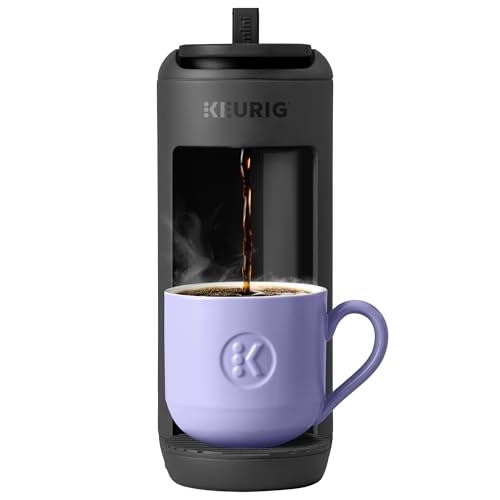 Keurig K-Mini Mate Single Serve K-Cup Pod CoffeeSmall9.34 x 3.94 x 9.46 inches3.9 PoundsCheck on Amazon
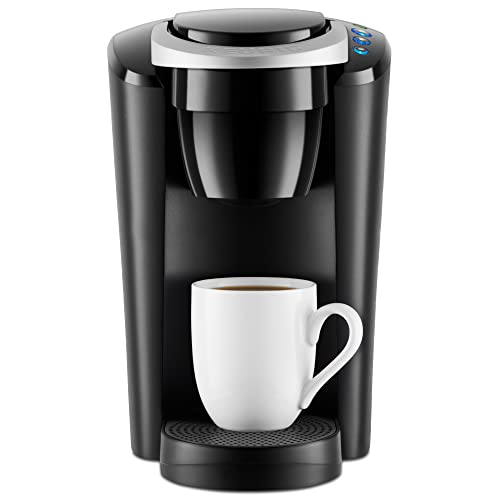 Keurig K-Compact Single-Serve K-Cup Pod Coffee MakerCompact13.2 x 8.2 x 12.5 inches7.9 poundsCheck on Amazon
 Keurig K-Express Single Serve K-Cup Pod Coffee Maker12.8” L x 5.1” W x 12.6” H12.8 x 5.1 x 17.2 inches4.1 PoundsCheck on Amazon
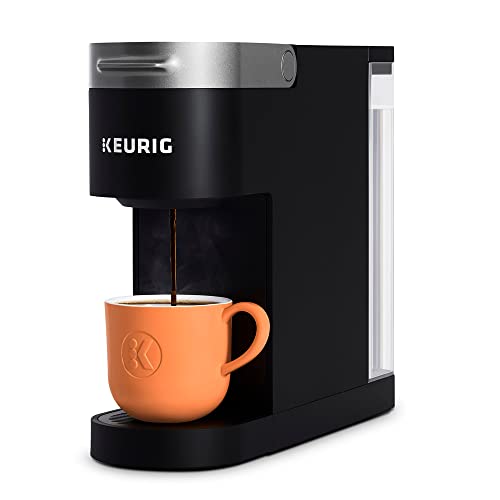 Keurig K-Slim Single Serve K-Cup Pod Coffee Maker1 Count (Pack of 1)15 x 18 x 8 inches6.2 PoundsCheck on Amazon
 Keurig K-Supreme Single Serve K-Cup Pod Coffee MakerK-Supreme10.12 x 14.84 x 14.41 inches1 PoundsCheck on Amazon
Top 3 Picks
The best Black Friday Keurig deal of 2026 is whatever drops the K-Elite or K-Supreme Gen 2 into mid-range money, because both combine a genuinely usable reservoir (roughly 70–75 oz) with a 4–5 cup brew-size spread in a footprint under 13 inches wide. The K-Supreme Gen 2 is the best overall pick: it holds more water than the original K-Supreme, adds iced-coffee capability, and is the model most likely to be stacked with a free-pod bundle, which is where the real savings hide. The K-Mini is the best budget pick for a one-person kitchen with six inches of spare counter, and the K-Duo Gen 2 is the best premium pick for a household that wants a full pot on weekends and single cups on weekdays. If a bundle promises “free pods,” read the pod-cost math in the How to Choose section before you get excited; a mediocre brewer plus 40 pods is often worse value than a better brewer at the same price with no bundle at all.
Quick Comparison
| Product | Best for | Key specs | Price tier |
|---|---|---|---|
| Keurig K-Mini | Tiny kitchens, one user, lowest entry point | Single serve; 6–12 oz brew sizes; removable drip tray for travel mugs; cord storage; slim narrow footprint | Budget |
| Keurig K-Mini Mate | Tightest counters and dorm rooms | Single serve; compact “Mate” chassis; simplified control set; small reservoir filled per use | Budget |
| Keurig K-Compact | Small kitchens that still want a real reservoir | Single serve; multi-cup reservoir; 6–12 oz brew sizes; narrower body than K-Classic | Budget |
| Keurig K-Express | Budget buyers who want a 10 oz mug plus a strong button | Single serve; 6, 8, 10 oz buttons; STRONG brew option; small reservoir | Budget |
| Keurig K-Slim | Narrow gaps between counter and cabinet | Single serve; ~40–46 oz reservoir; 8, 10, 12 oz brew sizes; slim body | Mid-range |
| Keurig K-Supreme | Daily drinkers who want iced coffee and travel-mug clearance | Single serve; MultiStream brewing; 6–12 oz plus iced setting; ~66 oz reservoir; removable drip tray | Mid-range |
| Keurig K-Elite | Buyers who want more control and hotter coffee | Single serve; ~75 oz reservoir; 4–12 oz brew sizes; temperature control; strong brew; iced setting | Mid-range |
| Keurig K-Classic | Buyers who want the plainest, most familiar machine | Single serve; ~48 oz reservoir; 6, 8, 10 oz brew sizes; simple button interface | Premium |
| Keurig K-Supreme Gen 2 | Most households, hot and iced | Single serve; MultiStream; hot and iced; larger reservoir than original K-Supreme; 6–12 oz range | Premium |
| Keurig K-Duo Gen 2 | Households splitting between single cups and a carafe | Single serve plus carafe; 72 oz reservoir; MultiStream; hot and iced | Premium |
How We Chose
This roundup is built from published product specifications, current retail listing names and the standard spec classes Keurig uses across its single-serve line: reservoir capacity, brew-size range, physical footprint, MultiStream versus standard brewing, hot-versus-iced capability, and whether the drip tray is removable for tall travel mugs. We did not test, benchmark or own any of these machines, and we make no durability claims beyond the general ownership realities that apply to all pod brewers — descaling intervals, needle maintenance and reservoir cleaning.
Selection criteria were deliberately boring and repeatable. First, spec transparency: a machine only made the list if its reservoir size, brew-size range and body dimensions are stated plainly in its listing, because those three numbers determine whether it fits your counter and your mug. Second, category fit: every product here is a single-serve pod brewer or a hybrid, so we excluded drip-only machines, grinders, milk frothers and accessories. Third, use case coverage: we wanted at least three genuine answers — a sub-10-inch counter, a two-person household that drinks coffee every morning, and a household that sometimes wants a full carafe. Fourth, upgrade path: we checked what each machine gains over the cheaper model directly below it, so you can see whether the extra spend buys capacity, control or merely a nicer chassis. Finally, bundle honesty: because Black Friday Keurig promotions lean heavily on “free pods” bundles, we weighted pod cost per cup into every recommendation instead of treating the pod count as pure bonus.
1. Keurig K-Mini – Best for Tiny Kitchens
As an Amazon Associate we earn from qualifying purchases at no extra cost to you.

The K-Mini is the machine you buy when the decision is not “which brewer” but “can a brewer exist here at all.” It is the narrowest, thinnest body Keurig sells in the mainstream single-serve line, narrow enough to slot beside a toaster or stand on a small apartment counter that already has a knife block on it. The listing describes 6 to 12 oz brew sizes and cord storage, and the cord storage detail matters more than it sounds: on a counter this tight, being able to wrap the excess cord into the base rather than leaving a loop of cable behind the machine is the difference between a tidy setup and a permanent tangle.
The other genuinely useful spec is the removable drip tray. With the tray out, a tall travel mug clears the dispenser; with the tray in, a standard ceramic mug sits close enough that you are not splashing coffee across a wide gap. That single design choice is why the K-Mini works for commuters despite its size.
- Brew sizes: 6, 8, 10 and 12 oz, chosen before you press brew
- Reservoir: single-serve reservoir, not a multi-cup tank — you add water for each cup
- Footprint: the slimmest body in this roundup, and one of the slimmest Keurig makes
- Travel mug clearance: yes, with the removable drip tray taken out
- Cord management: integrated cord storage in the base
Strengths. It occupies almost nothing on the counter, it is the cheapest realistic way into pod brewing, and the per-cup water fill means you never leave stale water sitting in a tank for a week. For a single person drinking one or two cups a day, the K-Mini’s workflow — fill mug, pour into reservoir, brew into mug — is barely slower than a tank machine and saves a lot of cleaning.
- Pros
- Smallest practical footprint of any Keurig here
- Removable drip tray fits tall travel mugs
- Cord storage keeps the counter genuinely clean
- No standing reservoir means no stale water and less cleaning
- Lowest price tier, so Black Friday discounts land on an already cheap machine
- Cons
- You refill water for every single cup — the biggest daily friction
- No iced-coffee setting and no dedicated strong-brew button
- Only good for one or two regular drinkers before the refilling becomes annoying
- No larger-capacity sibling in the same footprint, so upgrading means giving up the space
How it compares. Against the K-Compact, the K-Mini trades the reservoir for space. The K-Compact is noticeably wider and taller but has a multi-cup tank, so if your counter can absorb roughly a standard coffee-maker footprint, the Compact ends up being less work every morning. Against the K-Mini Mate, the K-Mini has the more familiar button layout and the clearer 6–12 oz spread; the Mate is the more stripped-down of the two, so treat the Mate as the choice only when the K-Mini itself is a hair too big.
2. Keurig K-Mini Mate – Best for Dorm Rooms and Desks

The K-Mini Mate is the stripped-back sibling in the small-machine family: a single-serve pod brewer built around the same idea as the K-Mini — very little counter space, fill water per cup — with a simplified control set that removes some of the buttons and modes you would find higher up the line. If you are shopping purely on the lowest possible entry price and you drink one cup a day, this is the machine the Black Friday pricing is most likely to make genuinely trivial.
Where it earns its place is in spaces that are not kitchens. A dorm desk, a home-office side table, a workshop bench, a guest room — all of these can host a single-cup brewer if it is small and dumb enough, and “dumb enough” is a compliment here. Fewer modes means fewer ways to mis-set the machine, and a smaller chassis means you can move it without rearranging furniture.
- Brew sizes: single-cup range in the compact class — expect the standard small-to-mug sizes rather than a wide spread
- Reservoir: single-serve, filled per use
- Footprint: compact “Mate” chassis, built for cramped surfaces
- Controls: simplified versus the K-Mini and everything above it
- Use case: dorm, office, secondary location — not a primary family brewer
Strengths. It is the least intimidating pod brewer on this list for someone who has never owned one. There is no tank to prime, no temperature setting to learn and no iced mode to misunderstand — you add water, add a pod, press the button, and you have a cup. For a student or a renter who will move twice in two years, that simplicity plus the small size is a real advantage over a machine with a 72 oz reservoir that has to be drained before every move.
- Pros
- Smallest and simplest machine in this roundup
- Perfect for dorms, desks and secondary locations
- Easy to move, store and pack
- Lowest realistic entry point into K-Cup brewing
- Nothing to descale aggressively because little water sits in it
- Cons
- No reservoir means constant refilling if used more than once a day
- No iced setting, no strong-brew mode, no temperature control
- Not a household machine — two daily drinkers will outgrow it fast
- Fewer brew-size options than the K-Mini, K-Compact or K-Slim
How it compares. The nearest alternative is the K-Mini, and the comparison is close enough that it comes down to counter width and price on the day. The K-Mini gives you a clearer 6–12 oz spread and cord storage; the Mate gives you a slightly more pared-down machine that is easier to justify as a second brewer. Against the K-Compact, the Mate wins on space and loses on everything else — the Compact’s reservoir is the single biggest quality-of-life upgrade in the budget tier.
3. Keurig K-Compact – Best Budget Brewer With a Real Reservoir
The K-Compact is the point in the lineup where the budget tier stops being inconvenient. It still wears a small body — narrower and shorter than the K-Classic — but it carries a multi-cup reservoir, which means you stop refilling water for every single cup. That one difference changes the machine from “an appliance I operate” into “an appliance I use,” and it is why the K-Compact is the budget pick for anyone with a normal kitchen counter.
The listing calls out 6 to 12 oz brew sizes, so you can brew a small cup for a quick morning hit or fill a standard mug without doubling up pods. The body is designed to sit under upper cabinets without fighting them, which is the practical definition of “compact” that matters in a real kitchen.
- Brew sizes: 6 to 12 oz
- Reservoir: multi-cup tank — refill every few cups instead of every cup
- Footprint: narrower and shorter than the K-Classic; still a countertop machine, not a corner-crammer
- Drip tray: removable, for travel mugs
- Interface: straightforward button brewing, no iced mode
Strengths. The reservoir is the whole story, and it is worth the upgrade over a per-cup machine for anyone brewing more than once a day. You get the convenience of a tank without the bulk of the full-size machines, and the 6–12 oz range covers the two mugs most people actually own — a small cup and a standard mug. Black Friday tends to hit this tier hard because it sits at a price where retailers can discount aggressively and still advertise a bundle.
- Pros
- Multi-cup reservoir at a budget-tier price
- 6–12 oz range covers small cups and standard mugs
- Narrower body than the K-Classic without losing the tank
- Removable drip tray handles travel mugs
- Simple controls — very little to go wrong
- Cons
- No iced-coffee setting and no dedicated strong-brew button
- Reservoir is smaller than the K-Supreme, K-Elite and K-Duo, so frequent drinkers still refill often
- No temperature adjustment
- Physically larger than the K-Mini and K-Mini Mate, so it needs real counter space
How it compares. Against the K-Express, the K-Compact trades the STRONG brew button and the odd 10 oz-only simplicity for a larger reservoir — and the reservoir is the better trade for most people. Against the K-Slim, the K-Compact is the wider, shorter, cheaper option without the narrow body; if your counter gap is the constraint rather than your budget, the K-Slim is the one you want, and if your budget is the constraint, the K-Compact is the better buy.
4. Keurig K-Express – Best Budget Pick for Strong Coffee

The K-Express is the budget machine for people who care more about how the coffee tastes than how much water the tank holds. Its defining feature is a STRONG brew button that slows the brew and extracts more from the pod — a genuinely noticeable difference on lighter roasts and on the larger brew sizes where standard pods can taste thin.
The trade-off is reservoir size. The K-Express uses a small tank, so you will be refilling it more often than you refill a K-Compact or K-Supreme. The brew buttons are simple and limited to a small set of sizes, which makes the machine fast to operate but less flexible if you like to vary your cup.
- Brew sizes: a small fixed set (roughly 6, 8 and 10 oz), selected by button
- Brew modes: standard and STRONG
- Reservoir: small tank — refill more often than the K-Compact
- Footprint: compact countertop body
- Iced mode: none
Strengths. STRONG brew is the feature that makes the K-Express worth choosing over a cheaper per-cup machine, and it is a feature you keep using — not a gimmick. On a 10 oz cup of a light or medium roast, the difference between the standard and STRONG settings is the difference between “acceptable office coffee” and “actually good.” For a budget machine, that is a lot of value.
- Pros
- STRONG brew setting improves light and medium roasts noticeably
- Simple, fast button interface
- Compact body at a budget price
- Good fit for one or two people who mostly drink the same size cup
- Frequently discounted in Black Friday promotions
- Cons
- Small reservoir — the most common complaint at this tier
- Limited brew-size options compared with the K-Slim, K-Supreme or K-Elite
- No iced-coffee capability
- No temperature control or scheduling
How it compares. Against the K-Compact, the K-Express wins on brew quality and loses on capacity — this is the cleanest either/or in the budget tier, and the right answer depends on whether you brew twice a day (Compact) or care about a stronger cup (Express). Against the K-Slim, the K-Express is cheaper and smaller but gives up the 12 oz brew size and the narrow-profile reservoir capacity. If you drink 12 oz mugs, the K-Slim is the better budget-adjacent buy.
5. Keurig K-Slim – Best for Narrow Counter Gaps
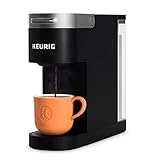
The K-Slim exists for one problem: the horizontal gap between your counter and whatever is above or beside it. It is a genuinely narrow-bodied single-serve brewer with a multi-cup reservoir, so it fits in the slot where a K-Compact or K-Classic simply will not go, and it still gives you 8, 10 and 12 oz brew sizes — including the 12 oz mug size the budget machines often skip.
That 12 oz option is not a small thing. If your daily mug is a 12 oz travel mug, the K-Slim lets you fill it in one brew with one pod. On a machine that tops out at 10 oz, you either drink a slightly small cup or use a second pod — and a second pod at typical pod prices roughly doubles that cup’s cost.
- Brew sizes: 8, 10 and 12 oz
- Reservoir: multi-cup tank in the roughly 40–46 oz class
- Footprint: slim, narrow body — the reason to buy it
- Drip tray: removable, to clear travel mugs
- Iced mode: none
Strengths. The K-Slim is the only machine here whose main selling point is a dimension. If your kitchen has a tight run of counter beside the fridge, or a shallow counter between the stove and the wall, the Slim is often the only pod brewer that fits without a remodel of your habits. At the same time it avoids the per-cup refill hassle of the K-Mini line, so you get reservoir convenience inside a narrow body.
- Pros
- Narrow body fits gaps other Keurigs cannot
- Multi-cup reservoir, so no per-cup refilling
- 12 oz brew size fills a standard travel mug with one pod
- Removable drip tray for tall mugs
- Mid-range pricing that Black Friday frequently pushes toward budget money
- Cons
- No iced-coffee setting
- No strong-brew mode and no temperature control
- Reservoir is mid-pack — smaller than the K-Supreme, K-Elite and K-Duo
- If space is not actually your constraint, the K-Compact or K-Express gives you more per dollar
How it compares. Against the K-Supreme, the K-Slim gives up MultiStream brewing, the iced setting, the larger reservoir and the 6 oz small-cup size in exchange for a narrower body and a lower price. Against the K-Compact, the K-Slim is the narrower and more capable machine — it adds the 12 oz size — so if the price gap on Black Friday is small, the Slim is the better buy of the two. Against the K-Mini, it is a straight trade of width for a reservoir, and for most kitchens the Slim wins because you stop thinking about water.
6. Keurig K-Supreme – Best Mid-Range Pick for Iced Coffee

The K-Supreme is where Keurig’s brewing technology changes. Instead of a single stream of water through the center of the pod, it uses MultiStream Technology — multiple points of water entry around the pod — which the brand positions as better saturation of the grounds. In practice, the more tangible wins for most buyers are the iced-coffee setting, the wider brew-size range and the noticeably larger reservoir than the K-Slim.
The iced setting works by brewing a concentrated, stronger cup that you pour over ice, so the drink does not end up watery. If you drink iced coffee even two or three times a week in summer, this is the feature that decides between the K-Supreme and a cheaper machine — a standard brewer plus ice gives you a diluted cup, not an iced coffee.
- Brew sizes: 6, 8, 10 and 12 oz, plus an iced setting
- Reservoir: multi-cup tank in the roughly 66 oz class
- Brewing: MultiStream Technology
- Drip tray: removable, for travel mugs
- Footprint: standard countertop body — wider than the K-Slim
Strengths. The reservoir is the quiet hero. Around 66 oz is enough that a two-person household can get through a morning without a refill, which removes the single most common daily friction on cheaper machines. Add the 6 oz size for a small cup, the 12 oz size for a travel mug and the iced setting, and you have a machine that covers virtually every way a normal person drinks coffee without moving into the carafe class.
- Pros
- Large reservoir — refill once, not three times
- Iced-coffee setting that produces a properly concentrated cup
- Widest practical brew-size range: 6, 8, 10 and 12 oz
- MultiStream brewing for better pod saturation
- Removable drip tray fits tall travel mugs
- Cons
- Wider footprint than the K-Slim — check your counter gap
- No temperature control and no strong-brew button like the K-Elite
- Pricier than the K-Slim for a similar daily workflow if you never drink iced coffee
- The Gen 2 version is now the better long-term buy if the prices are close
How it compares. Against the K-Slim, the K-Supreme costs more and takes more space, and in return you get MultiStream, the iced setting, the 6 oz size and roughly 20 oz more reservoir capacity — a fair trade for a two-person household and a poor trade for a single user in a tight kitchen. Against the K-Supreme Gen 2, the original is now the value play: the Gen 2 improves on it, and on Black Friday the two often sit close enough in price that the Gen 2 is the smarter buy.
7. Keurig K-Elite – Best Mid-Range Pick for Control

The K-Elite is the most-adjustable single-serve machine in this roundup, and the flagship for people who want to tune the cup rather than accept the default. It carries the largest reservoir in the single-serve tier here — roughly the 75 oz class — along with temperature control, a strong-brew setting, an iced setting and a brew-size range that starts at 4 oz and runs to 12 oz.
That 4 oz minimum is unusual and genuinely useful. It is the size for an espresso-strength shot over ice, for a small cup when you are cutting back on caffeine, or for topping off a mug someone else already filled. No other machine here goes that low.
- Brew sizes: 4, 6, 8, 10 and 12 oz
- Reservoir: largest single-serve tank here, roughly 75 oz
- Controls: temperature control, strong brew, iced setting
- Body: brushed slate finish, standard full-size countertop footprint
- Drip tray: removable, for travel mugs
Strengths. Temperature control is the feature that separates the K-Elite from everything cheaper. If your coffee has been tasting flat on a machine that brews cooler than you would like, being able to raise the brew temperature is the fix — and it is a fix you cannot buy on the K-Slim, K-Compact, K-Express or K-Mini. Combine that with the biggest reservoir, the widest brew-size range and both strong and iced modes, and the K-Elite is the most capable single-serve machine here without going hybrid.
- Pros
- Adjustable brew temperature — unique in this lineup
- Largest single-serve reservoir, roughly 75 oz
- Widest brew-size range starting at 4 oz
- Strong-brew and iced settings both included
- Premium-feeling brushed finish that holds up visually better than gloss plastic
- Cons
- Full-size footprint — not for a tight counter gap
- More settings mean more to learn; not a one-button machine
- Priced above the K-Supreme and K-Slim, so the Black Friday discount matters more
- Still single-serve only — no carafe option if you host
How it compares. Against the K-Supreme, the K-Elite is the enthusiast pick: temperature control, a 4 oz size and a bigger reservoir for a higher price, and if you drink coffee black and care how it tastes, those are worth paying for. Against the K-Supreme Gen 2, it is closer — the Gen 2 brings newer brewing hardware and hot-and-iced flexibility, while the Elite brings temperature control and capacity. Against the K-Duo Gen 2, the Elite is for single-cup households; if anyone in your house wants a pot, the Duo is the one to get.
8. Keurig K-Classic – Best for Simple, Familiar Brewing

The K-Classic is the machine people picture when they hear the brand name: a straightforward black single-serve brewer with a row of buttons, a mid-size reservoir and a defined set of brew sizes. It is listed at the premium tier despite being conceptually simpler than the K-Supreme and K-Elite, which is worth understanding before you buy it — you are paying for a proven, widely available design rather than for features.
What you get is a reservoir in the roughly 48 oz class, brew sizes at 6, 8 and 10 oz, and a body that is larger than the K-Compact but not as large as the hybrid machines. There is no iced mode, no temperature control, no strong-brew button and no MultiStream. The appeal is that the workflow is obvious to anyone who has ever used an office coffee machine.
- Brew sizes: 6, 8 and 10 oz
- Reservoir: roughly 48 oz class — a few cups between refills
- Controls: simple brew-size buttons; no temperature, strong or iced modes
- Footprint: larger than the K-Compact, standard countertop presence
- Drip tray: removable, for travel mugs
Strengths. Availability, familiarity and parts. This is one of the longest-running designs in the lineup, which means replacement parts, drip trays and descaling accessories are easy to find, and anyone in the household can operate it without a manual. If you want a no-thought machine and you are buying it at a real Black Friday discount rather than at list price, it does the job.
- Pros
- Extremely simple, familiar interface
- Solid mid-size reservoir for two light drinkers
- Long-running design with widely available parts and accessories
- Straightforward descaling and maintenance
- Deep discounts are common in Black Friday promotions
- Cons
- Premium price tier for a feature set that is below the K-Supreme’s
- No iced setting, no strong brew, no temperature control
- Tops out at 10 oz — a 12 oz travel mug needs a second pod or a partial fill
- Larger than the K-Compact for only a modest reservoir gain
How it compares. Against the K-Compact, the K-Classic costs more and takes more counter while giving you a slightly larger reservoir and a longer track record — a weak trade unless the Black Friday price lands near the Compact’s. Against the K-Supreme, the K-Classic loses on nearly every spec: smaller reservoir, narrower brew range, no iced mode, no MultiStream. Unless the K-Classic is dramatically cheaper on the day, the K-Supreme is the better value, and that is the single most useful thing to know about this machine.
9. Keurig K-Supreme Gen 2 – Best Overall for Most Households

The K-Supreme Gen 2 is the best overall pick in this roundup because it fixes the original K-Supreme’s weakest number. It keeps MultiStream brewing, the hot-and-iced capability and the wide brew-size range, and pairs them with a larger reservoir and the newer generation of brewing hardware. For a two-person household that drinks hot coffee on weekdays and iced coffee in summer, it covers everything without a carafe and without a full-size appliance’s worth of counter.
Hot-and-iced in one machine is the practical headline. You brew a normal cup on the hot setting, and you brew a concentrated cup on the iced setting and pour it over ice — one machine, both habits, no separate gear.
- Brew sizes: 6, 8, 10 and 12 oz, plus iced brewing
- Brewing: MultiStream Technology
- Reservoir: larger than the original K-Supreme, in the roughly 70 oz class
- Footprint: standard countertop body, slightly larger than the K-Slim
- Drip tray: removable, for travel mugs
Strengths. It is the least-compromised single-serve machine here. You are not giving up iced coffee, you are not giving up the 12 oz mug size, you are not refilling the tank twice a morning, and you are not paying the K-Duo’s price for a carafe you will not use. If someone asked for one recommendation without any other information, this is the answer, and on Black Friday it is also the machine most likely to appear in a genuinely stacked bundle with pods included.
- Pros
- Hot and iced brewing in one machine
- Large reservoir — easy mornings for two people
- MultiStream brewing for better pod saturation
- 6, 8, 10 and 12 oz brew sizes cover small cups and travel mugs
- Current-generation hardware, so the longest useful life of the single-serve models here
- Cons
- Premium price tier, so it only makes sense with a real discount
- Wider and heavier than the K-Slim and K-Mini
- No temperature control — that remains a K-Elite feature
- More expensive than the original K-Supreme for a similar daily routine
How it compares. Against the original K-Supreme, the Gen 2 is the better buy whenever the price difference is modest, because the reservoir and brewing hardware improvements are the ones you notice daily. Against the K-Elite, it is a genuine choice: the Gen 2 brings newer hardware and hot-and-iced flexibility, the Elite brings temperature control and a slightly larger tank. Against the K-Duo Gen 2, the question is simply whether anyone in the house wants a carafe — if yes, buy the Duo; if no, the Gen 2 is the better single-serve machine.
10. Keurig K-Duo Gen 2 – Best Premium Pick for Carafe and Single Serve

The K-Duo Gen 2 is the only machine here that makes a full pot. It pairs a single-serve brewer with a carafe side, sharing a 72 oz reservoir and using MultiStream Technology, with hot-and-iced capability across the system. If your household has one person who drinks a single mug at 6 a.m. and another who wants four cups at brunch, this is the machine that removes the argument.
The 72 oz reservoir is the largest in this roundup, and because it feeds both sides, it is the tank you refill least often of anything here. That is the real premium you are buying on top of the carafe: fewer refills, and one appliance instead of a pod brewer plus a drip machine fighting for the same outlet.
- Brewing: single-serve pods plus a carafe side
- Reservoir: 72 oz, shared across both brewing modes
- Technology: MultiStream Technology
- Modes: hot and iced
- Footprint: the largest machine here — measure before you commit
Strengths. Consolidation. Buying a K-Duo Gen 2 replaces two appliances with one, which frees counter space and an outlet, and the shared reservoir means you are not managing two water tanks. For a household that hosts occasionally or has genuinely different coffee habits under one roof, it solves a problem nothing else in this lineup touches.
- Pros
- Single-serve and carafe brewing in one machine
- Largest reservoir here at 72 oz, shared by both sides
- MultiStream Technology and hot-and-iced brewing
- Replaces two appliances and frees an outlet
- Best fit for households with mixed drinking habits
- Cons
- Largest footprint and heaviest machine of the ten
- Highest price tier — carafe brewing is what you are paying for
- Overkill for a single user or a couple that only drinks single cups
- The carafe side needs its own cleaning routine on top of pod-side maintenance
How it compares. Against the K-Supreme Gen 2, the K-Duo Gen 2 adds the carafe, the 72 oz reservoir and roughly another appliance’s worth of counter footprint. If nobody in your house ever wants more than a mug at a time, the Gen 2 is the smarter purchase and you keep the counter space. Against the K-Elite, the Duo trades temperature control for carafe capacity — a straight swap between “tune my cup” and “brew a pot.”
How to Choose
Four numbers decide this purchase, and only one of them is the price. Work through reservoir capacity, counter footprint, brew-size range and pod cost per cup in that order, and the right machine usually selects itself.
Start with reservoir capacity in ounces
Reservoir size is the spec that determines how often the machine annoys you. A rough working rule: one 10 oz cup per person per morning, plus one for the road, means a household of two wants roughly 40 oz of usable tank before someone has to refill. The machines here span a wide range:
- No tank (fill per cup): K-Mini and K-Mini Mate. Fine for one drinker, one or two cups a day. Painful at three or more.
- Small tank: K-Express. Enough for a couple of cups, not a morning.
- Mid tank, roughly 40–48 oz: K-Slim (about 40–46 oz) and K-Classic (about 48 oz). Two light drinkers, or one heavy drinker with a refill.
- Large tank, roughly 66–70 oz: K-Supreme and K-Supreme Gen 2. Comfortable for two people, most mornings, no refill.
- Largest, roughly 72–75 oz: K-Elite (about 75 oz) and K-Duo Gen 2 (72 oz, shared with the carafe side). Two people plus guests, or a single user who hates refilling.
Do not overbuy here. A 72 oz tank that you refill twice a week means water sitting in the machine for days, which is its own maintenance problem — you should be running fresh water through often enough that the tank does not stagnate. Match the tank to your actual daily volume, not to the biggest number on the box.
Then measure your counter, honestly
Footprint is the constraint people discover after delivery. Measure the width and depth of the space you intend to use, including the height clearance under your upper cabinets — and remember that you need vertical clearance to lift the reservoir lid and to open the pod handle. A practical breakdown by body class:
- Narrowest: K-Mini and K-Mini Mate. The only realistic options for a slot under about 6 inches of width, or for a shelf.
- Narrow: K-Slim. Purpose-built for a tight horizontal gap while still carrying a reservoir; the best answer when width is the binding constraint.
- Compact: K-Compact and K-Express. Smaller than the full-size machines but still need a normal counter run.
- Full-size: K-Classic, K-Supreme, K-Supreme Gen 2 and K-Elite. Standard countertop presence; check depth, because the reservoir sits at the back.
- Largest: K-Duo Gen 2. Plan for it the way you would plan for a drip coffee maker plus a pod brewer, because that is what it replaces.
Match the brew-size range to the mug you actually own
Brew size is where a cheap machine quietly costs you money. Pods are priced per pod, not per ounce, so a machine that cannot reach your mug’s capacity pushes you into two pods for one drink. The ranges here:
| Brew sizes | Machines | What it means in practice |
|---|---|---|
| 4–12 oz | K-Elite | Only machine here that can brew a true small shot; best mug flexibility |
| 6–12 oz | K-Mini, K-Compact, K-Supreme, K-Supreme Gen 2 | Covers a small cup through a standard 12 oz travel mug with one pod |
| 8–12 oz | K-Slim | No small cup, but the 12 oz size fills a travel mug in one brew |
| Up to ~10 oz | K-Express, K-Classic | A 12 oz travel mug needs a second pod or a partial fill — a hidden per-cup cost |
If your daily mug is 12 oz, cross the K-Express, K-Classic and any per-cup small machine off your list unless you are prepared to brew twice. That single check eliminates more bad purchases than any other.
Factor pod cost per cup before you get excited about a bundle
This is the step Black Friday marketing is designed to skip. Here is the worked calculation you should run on any “brewer plus free pods” offer.
Assume a typical name-brand K-Cup runs roughly in the mid-range of the pod market — call it a general market range of about 50 cents to 90 cents per pod depending on brand, roast and pack size, with unbranded and store-brand pods often drifting below that. Take a 60-count free-pod bundle as the example:
- Bundle value of the pods: 60 pods × roughly $0.50–$0.90 = roughly $30–$54.
- What it does not change: the brewer’s own price, and the fact that you will buy pods again in about two months if you drink two cups a day.
- The comparison that matters: if the same bundle machine is priced $40 above the machine without pods, and the pods are worth $30–$54 at general market rates, the bundle is worth taking — but only if you were already going to buy that machine.
- The trap: if the bundle is attached to a machine you would not otherwise choose — say, a limited-brew-size machine when you drink 12 oz mugs — you have bought a worse brewer plus pods you will use at two pods per cup. Effective cost per cup doubles.
Run the arithmetic on your own habits. Two cups a day is about 730 pods a year. At 70 cents a pod, that is roughly $510 a year in coffee, against a brewer that costs somewhere in the low three figures. The machine is a one-time cost; the pods are the subscription. A bundle that saves you $40 on hardware while locking you into a machine that burns two pods per mug is not a deal — it is a surcharge spread over twelve months.
Decide on iced capability and whether you need a carafe
Iced coffee changes the shortlist more than any other feature. Only the K-Supreme, K-Supreme Gen 2, K-Elite and K-Duo Gen 2 have an iced setting in this lineup. If you drink iced coffee regularly, drop everything below those four — brewing hot and pouring over ice gives you a weak, diluted drink, which is exactly what the iced setting exists to prevent by brewing concentrated.
The carafe question is separate and simpler: does any person in your household routinely want more than one cup at a time, or do you host? If yes, the K-Duo Gen 2 is the only machine here that answers it, and it is worth the footprint and the price. If no, the carafe is dead weight you will clean twice.
Think about ownership, not just purchase
Every machine here is a pod brewer, so the ownership realities are shared. Descaling is the main event and the main cause of premature failure — with average water hardness, most manufacturers suggest descaling every few months, and hard water shortens that. The brew needle and the pod holder are the parts that wear and clog first; rinsing the pod holder and wiping the needle area keeps the machine brewing at full flow. Reservoir tanks should be emptied and rinsed periodically rather than left to sit, especially on the large-tank models where water can linger for days. Removable drip trays are a maintenance win — the machines here that have them are easier to clean properly. And the pod itself is the consumable that dominates lifetime cost: the brewer is a one-time purchase, the pods are forever.
Frequently Asked Questions
Are Black Friday Keurig deals actually better than the rest of the year?
Historically, the deepest single-serve brewer discounts cluster around Black Friday and the following week, and bundles with free pods are most common in that window. That said, the discount is not uniform across the lineup — older designs and end-of-generation models tend to get the steepest cuts, while current-generation machines often get a bundle instead of a hard price drop. The practical approach is to decide your shortlist in advance from the specs, then check whether the Black Friday price on that specific machine is lower than what you would otherwise pay. Buy the machine you chose, not the machine that happens to be discounted.
Is a bigger reservoir always better?
No. A large tank is only better if you actually drink enough to cycle through the water in a few days. Water that sits in a reservoir for a week or more is a maintenance and taste problem, and you will still need to descale on the same schedule. If you drink one cup a day, a mid-size tank like the K-Slim’s or K-Compact’s is genuinely sufficient, and you gain counter space and a lower price. Buy capacity you will use this week, not capacity you might use when you host.
Does the K-Supreme’s MultiStream brewing actually make a difference?
MultiStream changes how water enters the pod — multiple points rather than one central stream — which the brand presents as better saturation of the grounds. The more reliable, more tangible differences between the K-Supreme line and cheaper machines are the larger reservoir, the iced setting, the wider brew-size range and the removable drip tray. If you are choosing between a K-Supreme and a K-Slim, weigh those features first and treat the brewing technology as a secondary benefit.
Can I brew a 12 oz mug on any machine here?
No, and this is the most expensive spec gap in the roundup. The K-Express and K-Classic top out at around 10 oz, and the K-Mini Mate and other compact machines have narrower ranges still. The machines with a 12 oz option are the K-Mini, K-Compact, K-Slim, K-Supreme, K-Supreme Gen 2 and K-Elite. If your daily mug holds 12 oz, a 10 oz machine means either a slightly short cup or a second pod — and a second pod roughly doubles that cup’s cost.
Do I need an iced-coffee setting, or can I just brew over ice?
Brewing a normal cup and pouring it over ice dilutes the coffee, because you are adding meltwater to a drink that was brewed at normal strength. An iced setting brews a smaller, more concentrated cup specifically so that the ice melts into it without washing out the flavor. If iced coffee is an occasional thing, a standard machine is fine. If it is a weekly habit from spring through fall, the iced setting is worth restricting your shortlist to the K-Supreme, K-Supreme Gen 2, K-Elite and K-Duo Gen 2.
How much should I budget for pods over a year?
Do the math on your own habit. One cup a day is about 365 pods; two cups a day is about 730. At a general market range of roughly 50 to 90 cents per pod depending on brand and pack size, that is somewhere around $180 to $330 a year for one daily cup, or roughly double for two. Buying larger packs and trying store-brand pods are the two biggest levers on that number. Remember that the bundle’s free pods are worth only that per-pod rate — a 60-pod bundle is worth roughly $30 to $54, not the price the brewer would charge for the same pods in a small box.
Which machine is easiest to keep clean?
The per-cup machines, the K-Mini and K-Mini Mate, have the least to maintain in one sense — no reservoir sitting full of water for days — but you still need to descale them. Among tank machines, the models with removable drip trays and accessible pod holders are easiest, and the large-tank machines demand more discipline about emptying the reservoir if you are a light drinker. In every case, descaling according to your water hardness is the maintenance that matters most; skip it and the machine is the part that fails.
Should I buy the K-Supreme or the K-Supreme Gen 2?
If the prices on Black Friday are close, buy the Gen 2 — the larger reservoir and newer brewing hardware are improvements you will notice every day. The original K-Supreme becomes the better pick only when it is substantially cheaper, or when the Gen 2 deal is bundled in a way that inflates the effective price. For most buyers the Gen 2 is the safer long-term purchase because it is current-generation, which means a longer window before parts and accessories become harder to find.
The Short Answer by Situation
If you have a normal kitchen counter and a two-person household, buy the K-Supreme Gen 2 and take the bundle only if the pods genuinely offset the price gap. If your counter is measured in inches, buy the K-Slim for a narrow gap with a reservoir, or the K-Mini if the gap is genuinely tiny and one person is drinking. If you are on a tight budget and drink coffee black, the K-Express’s STRONG brew is the best value cup in the lineup, while the K-Compact is the better budget choice if you brew more than twice a day. If you want to tune your coffee, the K-Elite’s temperature control and 4 oz minimum have no substitute here. If someone in your house wants a pot, the K-Duo Gen 2 is the only answer, and it earns its price by replacing two appliances. Whatever you choose, run the pod arithmetic before you celebrate the bundle — the brewer is a purchase, and the pods are a subscription.