Key takeaways
- "Best portable power station" is a keyword with no budget cap, no size, and no use case attached.
“Best portable power station” is a keyword with no budget cap, no size, and no use case attached, which makes it one of the hardest searches to answer honestly. A 90Wh pack for a day hike and a 1843Wh home battery are both portable power stations, yet they solve unrelated problems. The real decision is how many watt-hours you need and how many watts you must deliver at once, so this guide is organized around those two numbers.
It is written for first-time buyers in 2026 who want to compare real options without wading through spec sheets. The eight models below cover three capacity bands: pocket-size packs, camping stations near 300Wh, and larger units for outages and RVs. Each comparison relies only on what the listing titles state, so check the full product page for port details before ordering.
Quick Picks
Our top picks
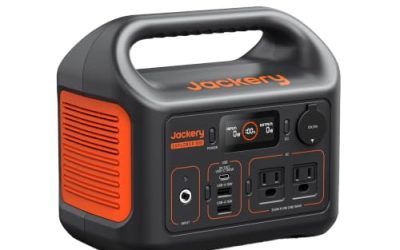
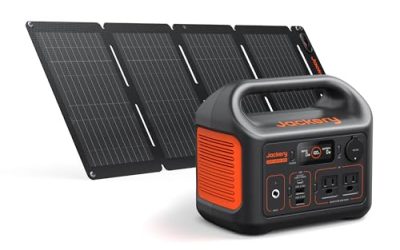
 Jackery Explorer 300 Portable Power Station
- Ultra-Lightweight: At only 7.5 lbs, the Explorer 300…
- Versatile Power for 6 Devices: Equipped with 2…
- Built to Last: Upgraded with premium LiFePO4 chemistry,…
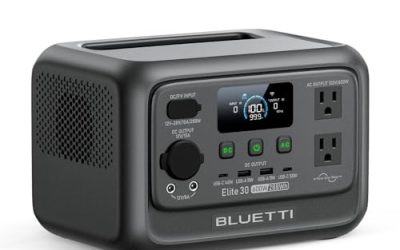
 BLUETTI Elite 30 V2 Portable Power Station
- [288Wh On-the-Go Power] - Only 9.4 lbs lightweight,…
- [600W Continuous & 1500W Surge Power] - Get…
- [50% Lower Power Consumption] - Upgraded UltraCell tech…
 Jackery Explorer 1000 v2 Portable Power Station
- Powerful yet Compact: Boasting a 1,500W AC output…
- One Hour Fast Charging: Charge your Explorer 1000…
- 10 Year Lifespan: The Explorer 1000 v2 portable…
| Product | Key specs | |
|---|---|---|
| Jackery Explorer 300 Portable Power Station | Ultra-Lightweight: At only 7.5 lbs, the Explorer 300… Versatile Power for 6 Devices: Equipped with 2… Built to Last: Upgraded with premium LiFePO4 chemistry,… | Check price |
| BLUETTI Elite 30 V2 Portable Power Station | [288Wh On-the-Go Power] - Only 9.4 lbs lightweight,… [600W Continuous & 1500W Surge Power] - Get… [50% Lower Power Consumption] - Upgraded UltraCell tech… | Check price |
| Jackery Explorer 1000 v2 Portable Power Station | Powerful yet Compact: Boasting a 1,500W AC output… One Hour Fast Charging: Charge your Explorer 1000… 10 Year Lifespan: The Explorer 1000 v2 portable… | Check price |
 Daran Portable Power Station 89.6Wh LiFePO4 Battery | 【SLIM & POCKETABLE】This portable power bank is about… 【DUAL INPUT/OUTPUT (AC + DC)】The portable power station… 【Ultra Fast Charging】With unique fast charging technology,the portable… | Check price |
 Anker SOLIX C1000 Gen 2 Portable Power | 49 Min UltraFast Recharging: With upgraded HyperFlash tech,… 2,000W Output via 10 Ports: Delivers 2,000W (3,000W… Compact and Portable: Easily carry, store, and move… | Check price |
 Anker SOLIX C300 DC Portable Power Station | 𝗧𝗼 𝗮𝗰𝘁𝗶𝘃𝗮𝘁𝗲 𝗖𝟯𝟬𝟬 𝗗𝗖 𝗣𝗼𝗿𝘁𝗮𝗯𝗹𝗲 𝗣𝗼𝘄𝗲𝗿 𝗦𝘁𝗮𝘁𝗶𝗼𝗻 𝗳𝗼𝗿… 𝗠𝗮𝘀𝘀𝗶𝘃𝗲 𝗣𝗼𝘄𝗲𝗿 𝗼𝗻 𝘁𝗵𝗲 𝗚𝗼: Take portable power… 𝗟𝗶𝗙𝗲𝗣𝗢𝟰 𝗯𝗮𝘁𝘁𝗲𝗿𝘆 𝘄𝗶𝘁𝗵 𝗮 𝟯-𝘆𝗲𝗮𝗿 𝗴𝘂𝗮𝗿𝗮𝗻𝘁𝗲𝗲: featuring LiFePO4… | Check price |
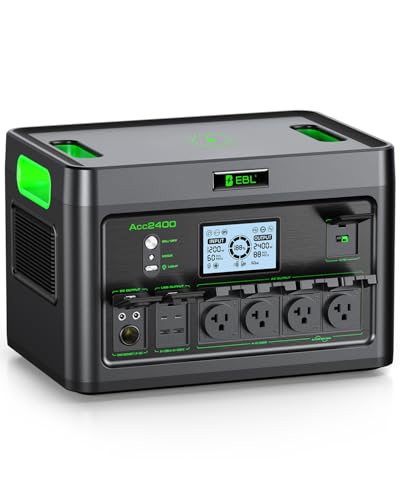 EBL 2400W Portable Power Station LiFePO4 Battery | The Acc2400 High-Capacity Portable Outdoor Power Station boasts… It supports simultaneous charging of 12 devices, ideal… An intelligent emergency power mode switches to backup… | Check price |
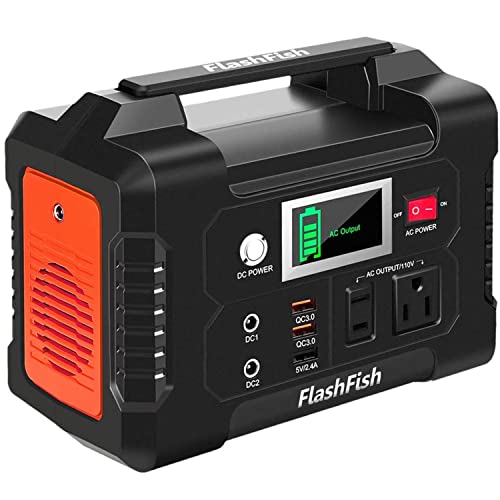 Portable Power Station 200W | [Multiple Outputs for All Your Devices] Flashfish portable… [High capacity & Lightweight Design] Equipped with a… [User-Friendly LcD Display & Controls] The separate Ac/Dc… | Check price |
As an Amazon Associate we earn from qualifying purchases at no extra cost to you.
| Product | Best for | Key spec from the title |
|---|---|---|
| Jackery Explorer 300 | Starter camping | 292Wh, LiFePO4 |
| BLUETTI Elite 30 V2 | Desk backup and camping | 288Wh, 600W, 10ms UPS |
| Jackery Explorer 1000 v2 | Family car camping | 1070Wh, 1500W |
| Daran 89.6Wh | Travel and day trips | 89.6Wh, 100W |
| Anker SOLIX C1000 Gen 2 | Quick-turnaround backup | 1024Wh, 2000W, 49 min charge |
| Anker SOLIX C300 DC | DC-focused outdoor gear | 288Wh, 300W |
| EBL 2400W | Home backup | 1843.2Wh, 2400W, 12 outlets |
| FF Flashfish 200W | Light-duty budget tier | 40800mAh, 200W |
How to Choose
Turn your devices into watt-hours
Add up the watts of each device and multiply by the hours you want it running. A 60W laptop for five hours needs about 300Wh, plus 15 to 20 percent for conversion losses. Doing this on paper before shopping prevents the two classic errors: buying a battery that dies too early, or paying for capacity you never use.
Check the AC ceiling
Watt-hours say how long, watts say what. A 100W or 200W unit handles chargers and lights. A 600W unit can run a small blender or a fan plus a laptop. At 1500W to 2400W you can run coffee makers, toasters, and some power tools, one at a time. Always compare continuous output, not surge figures.
Prefer LiFePO4 for long ownership
LiFePO4 cells appear in most titles here and generally last through more charge cycles than older lithium-ion packs. If you will keep the unit for years as storm insurance, that matters. Where a title does not name a chemistry, assume nothing and check the spec sheet.
Ignore mAh, trust Wh
One listing quotes capacity in milliamp-hours, which is a power-bank habit. Because the voltage is not stated in that title, you cannot convert it with confidence, so compare it against watt-hour units only after finding the real Wh figure. Budget models often hide these details behind friendly numbers, so a listing that gives only mAh deserves an extra question to the seller before purchase.
The 8 Best Options
Jackery Explorer 300
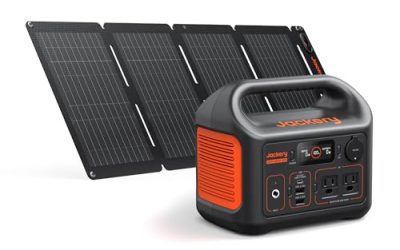
This 292Wh LiFePO4 station is marketed for outdoors, camping, travel, hunting, and blackouts, with a note about a solar panel option in the truncated title. It suits first-time buyers who want a recognizable brand in a size they can carry in one hand and who will mostly charge phones, cameras, and a laptop.
- Strength: LiFePO4 chemistry in a compact body.
- Strength: broad use-case list, from tents to short outages.
- Trade-off: 292Wh will not sustain a refrigerator for long.
Skip it if you need to run heavy appliances or want several days of power with no way to recharge. Also check whether the version you choose includes a panel, because the title treats solar charging as an add-on note rather than a guarantee, and a battery without a way to refill it is a short-trip tool.
BLUETTI Elite 30 V2
A 288Wh, 600W LFP unit with a power-lifting mode that the title lists at 1500W, 10ms UPS switchover, and 45 minutes to reach 80 percent. It suits remote workers who want a small battery under the desk and campers who occasionally need a slightly stronger inverter.
- Strength: 600W output is notably higher than most 288Wh peers.
- Strength: 10ms UPS spec and quick 0-80 percent charging.
- Trade-off: the lifting mode drains a 288Wh battery within a short time.
Skip it if you want long runtime from a hair dryer or heater. Confirm which loads the 1500W mode supports before relying on it, and remember that fast charging only helps if you have a wall outlet nearby. For a backpack trip with no outlet access, a unit paired with a panel is a better fit.
Jackery Explorer 1000 v2
The listing shows 1070Wh, 1500W, a one-hour fast charge, LiFePO4 cells, and a 100W USB-C output. It suits families who want one mid-size unit for weekend camping, tailgates, and a few hours of outage coverage for a router, lights, and a small fridge.
- Strength: fast charging cuts downtime between uses.
- Strength: 100W USB-C powers laptops without a brick.
- Trade-off: at 1500W it cannot run two high-draw appliances together.
Skip it if your needs end at phone charging, since a 300Wh unit would be lighter and easier to store. Also skip it for electric heating, because a heating element can exhaust a 1070Wh battery very quickly. Buyers who expect to need two big appliances at once should shop the 2000W class instead.
Daran 89.6Wh
This pocket-friendly LiFePO4 pack gives 100W of output (200W peak), AC outlets, and PD fast charging. It suits commuters, day hikers, and travelers who want an AC outlet in a very compact box for phones, earbuds, and a tablet.
- Strength: the smallest and lightest option listed.
- Strength: PD fast charging for modern phones and tablets.
- Trade-off: 89.6Wh drains quickly with a laptop attached.
Skip it if you want anything beyond personal electronics. It is a travel convenience, not a backup plan for a household. The title calls it a solar power bank, so pair it with a separate panel if you want off-grid top-ups. Check that the panel’s connector and voltage range match the input port before buying, since small packs often accept only a narrow range.
Anker SOLIX C1000 Gen 2
The C1000 Gen 2 lists 1024Wh, 2000W output with a 3000W peak, LiFePO4 cells, and a full charge in 49 minutes. It suits remote workers, van travelers, and homeowners who want strong output plus a short wait between outages.
- Strength: 2000W continuous at roughly 1kWh is a generous ceiling.
- Strength: the 49-minute full charge claim is the quickest here.
- Trade-off: running near 2000W drains the 1024Wh battery in well under an hour.
Skip it if you want a long runtime from a modest load, because a larger battery is the better match. The peak number is only a short surge allowance. Buyers who only need a lantern, phone, and router during blackouts will find a 300Wh class unit cheaper to buy and easier to store than this one.
Anker SOLIX C300 DC
The title pairs 288Wh with 300W and LiFePO4 cells, and the name flags a DC-oriented design aimed at camping, UPS use, travel, and emergencies. It suits campers with USB and 12V gear who do not rely on household AC plugs.
- Strength: LiFePO4 chemistry with a respected outdoor brand.
- Strength: positioned for UPS and emergency roles.
- Trade-off: the DC branding hints at a different port mix than a standard AC station.
Skip it if standard wall-plug appliances are your main reason to buy. Read the spec sheet for AC availability first. Its 300W ceiling keeps it in the light-duty class, so it fits lights, cameras, and small fans better than anything with a motor or heating element, and it will not stand in for a household backup system.
EBL 2400W
This one lists 1843.2Wh of LiFePO4 capacity, 2400W AC output, 12 outlets, and a USB-C PD port for home use and battery backup. It suits households preparing for storms and RV owners with several simultaneous devices.
- Strength: 12 outlets reduce the need for power strips.
- Strength: 2400W output covers many kitchen-class appliances.
- Trade-off: it is a large unit and not meant for hiking.
Skip it if you plan to carry it far or if your loads are all small chargers. Buyers also lose little by checking the manual for solar input limits. At this size, plan storage space, a stable surface, and a way to move it, since lifting a unit with nearly 1.8kWh of cells is a two-handed job that suits garages and vehicles more than trails.
FF Flashfish 200W
Listed as a 200W station with a 40800mAh battery, 110V AC outlets, two DC ports, and three USB ports. It suits car campers and hobbyists who want a low-output station for lights, phones, and small gadgets at a budget tier.
- Strength: a mix of AC, DC, and USB ports in one box.
- Strength: 200W is enough for chargers and a small fan.
- Trade-off: the title gives capacity in mAh with no Wh figure or chemistry.
Skip it if you want long-term standby use or need to compare capacity precisely against other models. Anyone running a CPAP, a cooler, or a laptop for hours should move to a unit that states watt-hours and battery chemistry in the title, since this listing leaves both open and makes runtime planning guesswork.
Which One Fits Your Situation
First-time camper
The Jackery Explorer 300 keeps things simple, with 292Wh and LiFePO4 cells. The FF Flashfish 200W is the lower-output alternative if you only run lights and chargers and want the lightest wallet impact.
Work-from-home backup
The BLUETTI Elite 30 V2 offers UPS switchover in a small body, while the Anker SOLIX C1000 Gen 2 adds capacity for a monitor and router.
Storm-prone household
Pick the EBL 2400W for outlets and output, or the Jackery Explorer 1000 v2 for a lighter mid-size choice.
Light traveler
The Daran 89.6Wh fits in a bag and handles personal gear. If you want a bit more room for a camera and drone batteries, step up to the Anker SOLIX C300 DC and use its DC outputs.
Common Mistakes
- Shopping by capacity alone and ignoring continuous AC output.
- Comparing mAh to Wh without a voltage figure.
- Expecting a 300W station to run a space heater.
- Storing it fully drained for months.
- Substituting a gas generator indoors; combustion exhaust carries carbon monoxide, so those machines must stay outdoors and away from windows and vents.
Specs and Terms Explained
Watt-hours (Wh)
Energy storage. One watt-hour runs a one-watt device for an hour. Multiply a device’s wattage by the hours you want, then leave extra room, because the inverter and standby circuits consume some of the stored energy.
Continuous output versus surge
The first is the sustained AC rating; the second is a short burst for motor startup. Choose for the continuous number, and treat surge as a safety buffer.
Input watts
This sets recharge speed. A large battery that accepts only a small input takes a long time to refill, whether from the wall, car, or panels. Look for the combined input rating and the allowed solar voltage range.
Battery management system
The BMS monitors cells for over-current, overheating, and over-discharge. It is why a well-built unit shuts off rather than failing under overload.
Setup and Care Tips
- Charge the unit fully before first use, then confirm the display shows sensible numbers.
- Place it on a hard, dry surface with the vents clear; blocked airflow causes fan noise and early shutoffs.
- Do not leave it drained for weeks. Recharge to around half before storing.
- Keep cold weather in mind: lithium cells accept charge poorly below freezing.
- Use the cables provided, or ones rated for the wattage, particularly for fast USB-C charging.
- Cycle a stored unit through a discharge and recharge once or twice a year to keep the battery healthy.
Who Should Skip These
If you need to run heavy resistive appliances like a space heater, hair dryer, or electric oven, none of the models here is a good match; even the EBL 2400W will drain quickly under that kind of load. Frequent flyers should note that larger packs such as the Anker SOLIX C1000 Gen 2 exceed typical carry-on limits.
Buyers who only charge a phone twice a weekend do better with a simple power bank than with a compact station like the FF Flashfish 200W, whose extra ports and weight will rarely be used. Shoppers who want a unit as an everyday home backup for a refrigerator should look at the larger entries rather than the small ones.
Which One Should You Buy?
| If you… | Choose… |
|---|---|
| Only charge phones and a headlamp | Daran 89.6Wh or FF Flashfish 200W |
| Camp with a laptop and small fan | Jackery Explorer 300 or Anker SOLIX C300 DC |
| Want a portable unit with more capacity for home outages | Jackery Explorer 1000 v2 or Anker SOLIX C1000 Gen 2 |
| Need higher output for tools or a small appliance | EBL 2400W |
Related guides
- How To Wash A Down Jacket Without Losing Loft
- 0 Degree Sleeping Bag For Backpacking
- Portable Solar Generator For Camping
Frequently Asked Questions
How many watt-hours do I need?
Multiply device watts by hours of use, then add roughly 20 percent for losses. For phones and a laptop on a weekend, around 300Wh is common.
Can a power station run a refrigerator?
Often yes, if the battery is around 1000Wh or larger and the output exceeds the fridge’s start-up draw. Check the fridge label for running watts.
Are these safe to use indoors?
Battery stations do not burn fuel, so indoor use is normal with normal ventilation. Gas generators are different and must never run indoors.
Do I need a solar panel?
Not to start. Panels extend runtime off-grid, but you can charge from a wall outlet or a car port first and add solar later. Check the maximum solar input listed in the manual so the panel you add actually works with the unit.