Key takeaways
- A camping trip changes the usual power-station math. You are not protecting a refrigerator through a storm; you are keeping a lantern, a phone.
A camping trip changes the usual power-station math. You are not protecting a refrigerator through a storm; you are keeping a lantern, a phone, maybe a camera and a fan alive for a few nights, then going home. That favors small batteries that you can carry from the car to the site, a solar panel that unfolds quickly, and outputs that match camp gear: USB, DC, and a modest AC outlet.
This guide covers five distinct portable solar generators that bundle a panel with a battery, sized from about 146Wh to about 292Wh. It is written for tent campers, anglers, hunters, and road-trippers planning outings in 2026, and it judges each kit only from the details in its listing title. Where the title is silent about something, such as battery chemistry, the write-up says so instead of guessing. Four of the five are small enough to carry from the parking spot to the tent in one trip, which is the real test for any camping gear.
Quick Picks
Our top picks
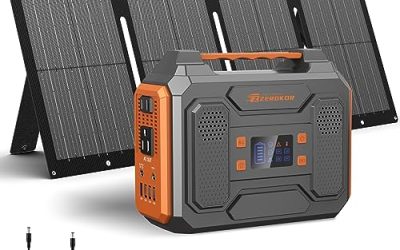
 Portable Solar Generator 300W Portable Power Station
- Portable Generator with 60W Solar Panel Included: with…
- Multiple Charging outlets for camping gear with SOS…
- Multiple Charging Optional, Solar Panel Charger 60W Included:…
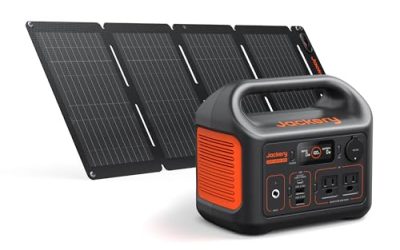
 Jackery Solar Generator 300 and 40W Solar
- Ultra-Lightweight: Weighing only 7.5 lbs, the new Explorer…
- Versatile Power for 6 Devices: Equipped with 2…
- Built to Last: Upgraded with premium LiFePO4 chemistry,…
 Solar Powered Generator 100W
- Apowking portable solar panels 40W performances better even…
- This portable power station with solar panel 146Wh/39600mAh…
- This portable solar generator for camping features with…
| Product | Key specs | |
|---|---|---|
| Portable Solar Generator 300W Portable Power Station | Portable Generator with 60W Solar Panel Included: with… Multiple Charging outlets for camping gear with SOS… Multiple Charging Optional, Solar Panel Charger 60W Included:… | Check price |
| Jackery Solar Generator 300 and 40W Solar | Ultra-Lightweight: Weighing only 7.5 lbs, the new Explorer… Versatile Power for 6 Devices: Equipped with 2… Built to Last: Upgraded with premium LiFePO4 chemistry,… | Check price |
| Solar Powered Generator 100W | Apowking portable solar panels 40W performances better even… This portable power station with solar panel 146Wh/39600mAh… This portable solar generator for camping features with… | Check price |
 Portable Solar Generator 300W Power Station with | PORTABLE GENERATOR 80000mAh Lithium Battery With 60W SOLAR… EnginStar Portable Power Station with Certification, and the… Built with two 110V pure sine wave AC… | Check price |
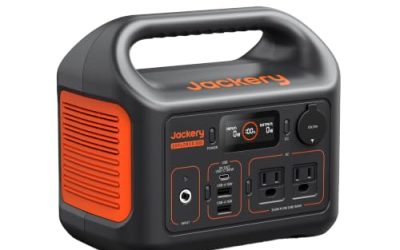
 Jackery Explorer 300 Portable Power Station | Ultra-Lightweight: At only 7.5 lbs, the Explorer 300… Versatile Power for 6 Devices: Equipped with 2… Built to Last: Upgraded with premium LiFePO4 chemistry,… | Check price |
As an Amazon Associate we earn from qualifying purchases at no extra cost to you.
| Product | Best for | Key spec from the title |
|---|---|---|
| 300W Solar Kit with 60W Panel | Most capacity per budget tier | 280Wh, 300W, 60W panel |
| Jackery Solar Generator 300 | Brand-backed starter kit | 292Wh, 300W AC, 40W panel |
| 100W 146Wh Solar Power Bank Kit | Backpack-friendly power | 146Wh, 40W panel |
| 300W Foldable-Panel Station | Hunters and anglers | 60W foldable panel, 80000mAh |
| MARBERO 155Wh Kit | Minimalist overnight trips | 155Wh, 30W panel |
How to Choose
Count nights, not just devices
Write down what runs each evening: lantern, phone, camera battery, maybe a small fan. For most tent campers that totals well under 150Wh per night. If you add a CPAP or a 12V cooler, double or triple that figure. The kits here span 146Wh to 292Wh, so decide whether you want one night of cushion or three. A good habit is to plan for the evening you arrive and the morning you leave, since those are the sessions when phones and cameras need the most charging, and to leave 20 percent of the battery as a reserve for emergencies such as a dead car key fob or a stranded phone.
Panel watts decide how fast you recover
A 30W to 60W panel cannot refill a full battery in a single afternoon, and shade from trees cuts output sharply. Treat solar as a top-up that offsets daily use rather than a way to refill from empty. If your site is shaded, a car charging cable can fill the gap on the drive home. Angle the panel toward the sun and move it every couple of hours; a panel lying flat in the morning or evening loses much of its output. Also keep the panel clean, because dust and pollen add up over a long trip.
Choose ports that match camp gear
USB-C power delivery charges modern phones and tablets quickly. A DC port runs 12V accessories such as small fans and tire inflators. An AC outlet handles laptop bricks and camera chargers. Pure sine wave output, which several titles mention, is kinder to sensitive electronics than modified waveforms. If you travel with a drone or action camera, check whether its charger needs AC or can run from USB, since using USB avoids the inverter and wastes less energy.
Weight, foldability, and weatherproofing
Because you carry everything, a foldable panel and a battery with a handle matter more than extra capacity. None of these titles claim waterproofing, so assume you need to keep the battery dry, and ignore marketing adjectives that do not come with an ingress-protection figure. Budget kits often cut corners on carry handles, cable quality, and panel stands, so look at the included accessories, and pack a dry bag or a small tarp to protect the battery from dew and rain.
The 5 Best Options
300W Solar Kit with 60W Panel
This unbranded kit combines a 300W power station, a 60W solar panel, a 110V pure sine wave outlet, and a 280Wh battery, with USB QC3.0 and DC outputs. It suits car campers who want the biggest panel and a solid capacity at a budget tier, and who are comfortable choosing a lesser-known label.
- Strength: a 60W panel offers the most input in this comparison.
- Strength: AC, DC, and QC3.0 USB outputs cover most camp gear.
- Trade-off: the title names no battery chemistry or brand support.
Skip it if you want a known warranty network, or if you plan to keep the unit for years as emergency storage, since long-term durability is not described. Buyers who want the most flexibility should also check the connector type on the panel, because proprietary plugs limit what you can use as a replacement if a cable fails in the field.
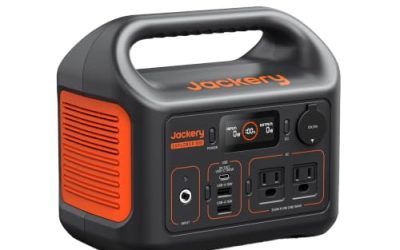
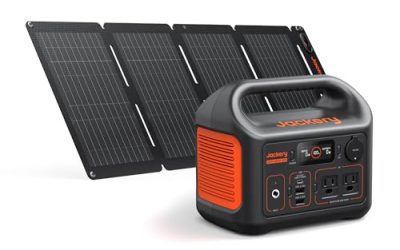
Jackery Solar Generator 300
The Jackery bundle lists a 292Wh battery, 300W AC output with a pure sine wave outlet, and a 40W panel, with RV, outdoors, camping, travel, and blackout use named in the title. It suits campers who want a brand with a clear camping identity and room for a laptop plus phones across a weekend.
- Strength: the largest battery among the five at 292Wh.
- Strength: pure sine wave AC is listed, which suits laptops and camera chargers.
- Trade-off: the 40W panel is smaller than the 60W panels in two rivals.
Skip it if your priority is the most solar input per budget tier. It is also overkill if you only charge a phone and a headlamp over one night. Campers who plan to keep a compressor-style cooler running should look to a larger, higher-output station, because a 300W ceiling and a 292Wh battery leave little margin for those loads.
100W 146Wh Solar Power Bank Kit
This compact kit lists a 100W station with a 146Wh battery, a 40W panel, an AC outlet, USB-A, USB-C, and DC output. It suits backpackers who drive to a trailhead and want a device that fits in a daypack while still giving phones, a tablet, and a small light a few evenings of power.
- Strength: light and small, with four output types in one case.
- Strength: includes a 40W panel for off-grid top-ups.
- Trade-off: 100W of output limits you to small electronics.
Skip it if a CPAP, a cooler, or a power tool is part of the plan. It also is not the right pick for groups sharing one unit across several tents. Because the output is only 100W, even two laptop chargers at once can approach the limit, so sequence your charging rather than plugging everything in together.
300W Foldable-Panel Station
This listing is a 300W station paired with a 60W foldable panel, described as a backup battery and an 80000mAh power bank for outdoors, camping, travel, and hunting. It suits hunters and anglers who want a panel that packs flat in a pack or truck bed and a straightforward, rugged-leaning concept.
- Strength: the foldable 60W panel is easy to stow and carry.
- Strength: 300W output with power-bank style flexibility.
- Trade-off: capacity is quoted in mAh, which cannot be compared directly with Wh without a voltage figure.
Skip it if you need exact runtime math from the title alone. Ask for the watt-hour figure or check the product page before relying on it for a multi-night trip. Because it doubles as a power bank, it is a good fit for people who value charging a phone from a single obvious port, but treat the mAh number as marketing until the voltage is confirmed.
MARBERO 155Wh Kit
The MARBERO set pairs a 155Wh battery and a 30W panel, with a listed 150W surge figure. It is aimed at minimalist campers who want AC, USB, and a panel in a package that stays out of the way and takes a weekend of phone, light, and camera charging.
- Strength: the second-smallest battery of the group, easy to carry.
- Strength: a panel is included in the set.
- Trade-off: the 30W panel is the smallest, so top-ups are slow.
Skip it if you plan to run a laptop daily or want a fan through hot nights. A larger battery will give more peace of mind there. Also note that the 150W surge figure in the title is a short burst, so keep sustained loads well below that and test every appliance at home before the trip.
Which One Fits Your Situation
Weekend car camper with a laptop
Take the Jackery Solar Generator 300. Its 292Wh capacity and pure sine wave AC output suit laptops, cameras, and lights without much fuss.
Multi-night trip with limited sun
The 300W Solar Kit with 60W Panel gives you the most solar input, which helps when clouds trim output. Pair it with a car charging cable as a backup. It also suits a base camp where the panel can stay put and be re-angled through the day.
Hunter or angler who moves camp
Choose the 300W Foldable-Panel Station. The foldable panel travels easily, and the power-bank style design suits short stays.
Ultralight overnighter
The MARBERO 155Wh kit or the 146Wh power bank kit will do. Pick the 146Wh model if you want USB-C and DC outputs in addition to AC. Both are small enough to ride in a pack or on a car seat, and both pair well with a headlamp and a phone, which is all many one-night trips require.
Common Mistakes
- Buying more battery than the trip needs and hauling the extra weight.
- Placing the panel in dappled shade and expecting full output.
- Leaving the battery in a hot car, which can shorten its life.
- Skipping the pre-trip full charge from a wall outlet.
- Running a gas generator or camp stove inside a tent or vehicle for power or warmth; both release carbon monoxide, which can be fatal, so fuel burners stay outdoors, well away from sleeping areas.
Specs and Terms Explained
Panel watts in the shade
A panel rating assumes bright, direct light. Under tree cover, haze, or low winter sun, output drops sharply. If your campsite is wooded, pick a larger panel or charge the unit at home before you leave.
Foldable versus rigid panels
Foldables pack flat and weigh less, which suits backpacking and boats. Rigid ones are tougher but awkward to carry. Compare the folded size against your pack or trunk.
Water and dust ratings
Ingress ratings use two digits: the first covers dust, the second water. Most power stations are not built for rain, though some panels carry water resistance. Treat the battery as the item to keep dry and the panel as the outdoor one.
Cable length
Short leads force the battery into the sun, which heats it. A longer cable lets you keep the unit in the shade while the panel sits in the light.
Sizing and Compatibility Checklist
- List camp devices: phone, headlamp, camera battery, small fan, laptop.
- Check that the unit has the port types you use, especially USB-C and a 12V socket.
- Confirm the panel plug matches the unit’s solar input if you add a different panel later.
- Note the total weight of battery plus panel, not just the battery.
- Find out whether the kit includes a carry bag and stakes or a kickstand.
- Estimate a refill window: how many daylight hours will the panel actually face the sun?
Who Should Skip These
If your camp has a car within a few steps and you stay one or two nights, a plain power station charged at home beats lugging a panel you never unfold. Winter campers facing short, overcast days should not count on panels at all.
Backpackers counting grams are better served by a lightweight power bank than by the 300W Foldable-Panel Station. The 300W Solar Kit with 60W Panel is aimed at car camping, not a long trek, and those who move camp daily may find any panel more trouble than it is worth.
Which One Should You Buy?
| If you… | Choose… |
|---|---|
| Want the lightest option for phones and a headlamp | 100W 146Wh Solar Power Bank Kit |
| Camp one or two nights with a camera and fan | MARBERO 155Wh Kit |
| Bring a laptop for several nights | Jackery Solar Generator 300 |
| Want a larger panel for faster refill | 300W Solar Kit with 60W Panel or 300W Foldable-Panel Station |
Whichever you pick, weigh the whole carry: a battery that is light on paper becomes a chore once the panel, cables, and bag are added.
Related guides
- How To Wash A Down Jacket Without Losing Loft
- 0 Degree Sleeping Bag For Backpacking
- Backpacking Stove For Solo Hikers
Frequently Asked Questions
How many nights will a 150Wh to 300Wh unit last?
It depends on your devices. Phones, lights, and a camera might use under 100Wh per night, so a 292Wh unit could cover several nights with solar help. A laptop or fan reduces that quickly. A simple test is to run your real devices from a full charge for one evening at home and note the percentage left, then scale that to the number of nights you plan to camp.
Can I charge while hiking in?
You can set the panel on a pack or in a sunny clearing, but real input is lower than the panel’s printed watts. Treat it as a bonus, not a plan. If you hike farther than a short walk from the car, leave the panel and battery at camp and carry only a small power bank on the trail, since the full kit adds weight you will feel by the second mile.
Is pure sine wave important for camping?
It matters most for laptops, camera chargers, and any device with a sensitive power supply. Basic lights and USB gadgets are less picky.
Do I need a separate cable for the panel?
Most bundles include one, but check the length. A longer lead lets the battery stay shaded while the panel sits in the sun.