Key takeaways
- "Small" is the word that decides this search. A buyer typing best small solar generator is rarely thinking about running a house.
“Small” is the word that decides this search. A buyer typing best small solar generator is rarely thinking about running a house; they are picturing a box that fits behind a car seat or on a closet shelf, charges phones and a laptop, and can top itself up from a folding panel when the grid is gone. The real question is how much capacity you can carry before the unit stops feeling small, and whether the bundled panel is large enough to refill it in a reasonable stretch of sunlight.
This guide compares six compact kits that ship with a solar panel or are built around one, using only the facts stated in each listing. It suits campers, van and RV travelers, tent weekenders, and anyone building a modest blackout kit for a phone, a router, and a couple of lights. Heavier loads like space heaters and well pumps are out of scope. As 2026 shopping goes, the sweet spot for this class sits between roughly 90 and 300 watt-hours, and the panels bundled here range from small trickle chargers to mid-size folding models.
Quick Picks
Our top picks
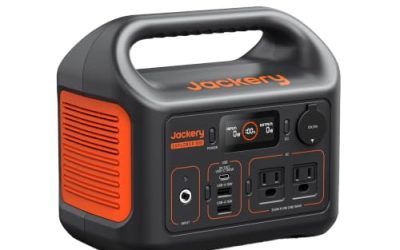
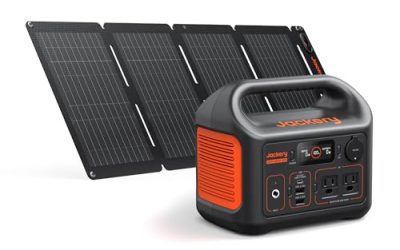
 Jackery Solar Generator 300 and 40W Solar
- Ultra-Lightweight: Weighing only 7.5 lbs, the new Explorer…
- Versatile Power for 6 Devices: Equipped with 2…
- Built to Last: Upgraded with premium LiFePO4 chemistry,…
 Portable Solar Generator 300W Portable Power Station
- Portable Generator with 60W Solar Panel Included: with…
- Multiple Charging outlets for camping gear with SOS…
- Multiple Charging Optional, Solar Panel Charger 60W Included:…
 Jackery Explorer 300 Portable Power Station
- Ultra-Lightweight: At only 7.5 lbs, the Explorer 300…
- Versatile Power for 6 Devices: Equipped with 2…
- Built to Last: Upgraded with premium LiFePO4 chemistry,…
| Product | Key specs | |
|---|---|---|
| Jackery Solar Generator 300 and 40W Solar | Ultra-Lightweight: Weighing only 7.5 lbs, the new Explorer… Versatile Power for 6 Devices: Equipped with 2… Built to Last: Upgraded with premium LiFePO4 chemistry,… | Check price |
| Portable Solar Generator 300W Portable Power Station | Portable Generator with 60W Solar Panel Included: with… Multiple Charging outlets for camping gear with SOS… Multiple Charging Optional, Solar Panel Charger 60W Included:… | Check price |
| Jackery Explorer 300 Portable Power Station | Ultra-Lightweight: At only 7.5 lbs, the Explorer 300… Versatile Power for 6 Devices: Equipped with 2… Built to Last: Upgraded with premium LiFePO4 chemistry,… | Check price |
 Takki Solar Generator 120W Peak Portable Power | Weighing only 2.29 lbs, this 88.8Wh power station… The power bank with 2x 110V AC outlets… Power all devices with 2x AC outlets (110V/80W,120W… | Check price |
 Solar Powered Generator 100W | Apowking portable solar panels 40W performances better even… This portable power station with solar panel 146Wh/39600mAh… This portable solar generator for camping features with… | Check price |
 MARBERO 155Wh Solar Generator with Solar Panel | This all-in-one kit includes the power station, 30W… EXTENEDED 6.5FT CABLE: The generous 6.5ft integrated cable… Power all your devices with 2x 100W AC… | Check price |
As an Amazon Associate we earn from qualifying purchases at no extra cost to you.
| Product | Best for | Key spec from the title |
|---|---|---|
| Jackery Solar Generator 300 | Brand-name RV and camping kit | 292Wh, 300W AC, 40W panel |
| Portable Solar Generator 300W (60W panel) | Largest bundled panel | 280Wh, 300W, 60W panel |
| Takki 88.8Wh | Lightest bag-friendly kit | 88.8Wh, 120W peak, 21W panel |
| Solar Powered Generator 100W | Phone and laptop top-ups | 146Wh, 100W, 40W panel |
| MARBERO 155Wh | Compact starter kit | 155Wh, 150W surge, 30W panel |
| DaranEner 300W 192Wh | Long-life battery on a budget | 192Wh LiFePO4, 300W, 30W panel |
How to Choose
Match battery size to what you carry, not what you hope to run
A compact kit earns its keep when it handles a short list: a phone at roughly 15Wh per full charge, a tablet near 30Wh, a camera battery under 20Wh, a laptop around 50 to 70Wh. A 146Wh unit therefore covers a long weekend of devices, while a 292Wh unit leaves room for a small fan or a string of LED lights overnight. Add up your daily watt-hours before you shop. If the total comes to less than half of a unit’s capacity, you have a comfortable buffer; if it exceeds capacity, either step up a size or plan on a wall recharge between days, because a small panel will not close the gap on its own.
Read the panel wattage honestly
Panel ratings describe ideal sunlight. A 21W panel may deliver only a fraction of that on a cloudy day, and refilling a 300Wh battery from 21W would take days. A rule of thumb is to divide battery watt-hours by half the panel rating to estimate sunny-day hours. Larger bundled panels, like the 60W option here, shorten that wait noticeably.
Check the AC outlet and the waveform
Pure sine wave output is safer for laptops, CPAP-style gear, and chargers with sensitive circuits. Several listings below state it, and others only mention an AC outlet. Also confirm continuous watts: a 100W unit cannot run a 120W device even if its battery is large enough.
Where budget kits cut corners
Tiny panels, short cables, and unlabeled battery chemistry are the usual savings. Look for LiFePO4 or LFP if you plan to cycle the battery often, and look for an input spec that tells you what panel voltage the unit accepts. If the listing never names a charge input, assume the bundled panel is the only match. Cable length matters too: a short lead forces the panel into the shade of the station, so favor kits that leave room to place the panel in full sun while the battery stays cool.
The 6 Best Options
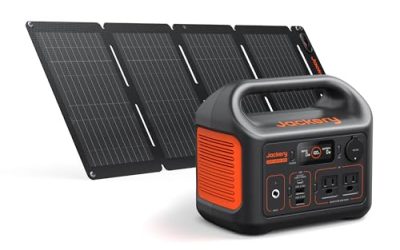
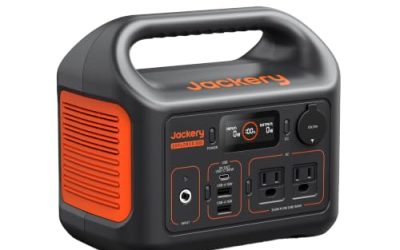
Jackery Solar Generator 300
The most recognizable name here, sold as a bundle with a 40W solar panel. The title lists 292Wh of capacity, a 300W AC output, and a pure sine wave outlet, and it names RV, camping, travel, and blackout use. Buyers who want a straightforward kit from an established brand will find the specs familiar, and the bundle approach means the panel and station arrive as a matched pair.
- Strength: 292Wh and 300W AC sit at the top of this compact group.
- Strength: pure sine wave output suits laptops and other sensitive electronics.
- Trade-off: a 40W panel is slow for a battery of this size, so full refills take long sunny stretches.
Skip it if you want the fastest solar refill or the lowest cost, since a premium-leaning kit pays for the brand.
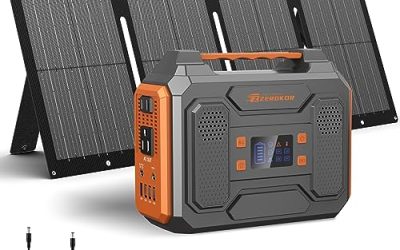
Portable Solar Generator 300W (60W panel)
This unbranded-style kit lists a 300W rating, a 280Wh battery, and a 60W solar panel, the largest panel among the six. It mentions a 110V pure sine wave outlet and USB QC3.0 along with DC and AC outputs, so it covers the usual set of ports. For a buyer who plans to sit in a campsite with the panel angled at the sun all afternoon, this is the kit whose listing puts the most emphasis on solar input relative to battery size.
- Strength: the 60W panel gives it the best solar-to-capacity ratio in the lineup.
- Strength: a pure sine wave AC outlet is stated alongside USB QC3.0 for fast phone charging.
- Trade-off: the title does not state a battery chemistry, so longevity is harder to judge.
Skip it if you want a recognizable brand name or a documented chemistry such as LiFePO4 for heavy cycling.
Takki 88.8Wh
The smallest battery in the group, at 88.8Wh with a 120W peak rating and a 21W solar panel. It carries a 110V AC outlet and is pitched at camping, RV, tent, and home use. The size suggests a kit you can toss into a pack, and it fits the buyer who wants an emergency-ready bundle that covers the basics: a phone, a headlamp, and a laptop charge.
- Strength: the smallest battery in the lineup, aimed at light travel and short trips.
- Strength: the AC outlet lets you run a small laptop charger, not just USB devices.
- Trade-off: a 21W panel and 88.8Wh battery leave little margin for anything beyond phones, lights, and a laptop.
Skip it if you plan to run a fan, a cooler, or anything near the 120W peak for more than a short burst.
Solar Powered Generator 100W
A 146Wh power station bundled with 40W solar panels, offering an AC outlet, USB-A, USB-C, and DC output. The title calls it a small solar power bank, and the port mix covers phones, tablets, and low-draw laptops without adapters. It suits the buyer who values a balanced middle step: more battery than the tiniest kits, a panel big enough to make solar recharging realistic, and ports that match what people actually carry, such as USB-C laptops and phones.
- Strength: the 40W panel pairs well with a 146Wh battery for a better refill pace than the 88.8Wh and 21W kit.
- Strength: the listing includes a USB-C port, which fits modern laptops and phones.
- Trade-off: the 100W rating is modest and brand support is unclear from the title.
Skip it if you need to run a device above 100W or want a named, widely supported manufacturer with a clear service channel.
MARBERO 155Wh
A 155Wh kit with a 30W solar panel and a 150W surge rating, described as a solar powered generator and portable power station. It sits between the smallest and mid-sized options in capacity, a middle option for people who find 88.8Wh too small and 292Wh too much. It is easy to picture in a day-trip bag, powering a camera, a phone, and a small light.
- Strength: 155Wh is enough for a weekend of phones, a camera, and a laptop top-up.
- Strength: the 30W panel is bundled, so you can start charging outdoors right away.
- Trade-off: the title lists a 150W surge figure rather than a continuous rating, so sustained load capacity is less clear.
Skip it if you need a firm continuous output figure or a larger solar input for fast daytime refills.
DaranEner 300W 192Wh
This listing combines a LiFePO4 battery, 192Wh capacity, a 300W rating, two AC outlets, and a 30W solar panel. The title also quotes a two-hour fast charge, which is attractive for short turnarounds between trips. It makes sense for someone who plans to charge from a wall outlet before each outing and treat the bundled panel as a backup, and who wants the longevity associated with LiFePO4 cells rather than the cheapest possible battery.
- Strength: LiFePO4 cells are associated with long cycle life, a plus for frequent use.
- Strength: two AC outlets let you run a laptop and a small device side by side.
- Trade-off: the 30W panel is small for a 192Wh battery, so solar refilling will be slow.
Skip it if you expect to depend on solar alone, since wall charging is the quick path here.
Which One Fits Your Situation
You want a brand-name kit for an RV or van
The Jackery Solar Generator 300 is the logical pick. It has the largest capacity of the compact group and the pure sine wave AC outlet that RV electronics prefer.
You will rely on sunlight more than the wall
Choose the Portable Solar Generator 300W with the 60W panel. The bigger panel makes the biggest difference when solar is your main recharge source.
You hike or tent camp and count every ounce
The Takki 88.8Wh with its 21W panel is the lightweight choice for phones, headlamps, and a laptop charge or two.
You want durability at a low tier
The DaranEner 300W 192Wh stands out thanks to its LiFePO4 battery, which suits repeated charging cycles through a season of weekend trips.
Common Mistakes
- Buying on panel wattage alone and ignoring that real sunlight delivers far less than the rating.
- Choosing a unit with a peak rating and assuming it matches continuous output.
- Expecting a compact kit to run a heater, hair dryer, or microwave.
- Leaving the unit in a hot parked car, which can shorten battery life.
- Treating a gas generator as a cheap alternative and running it in a garage or tent; gas models produce carbon monoxide and must stay outdoors, well away from any opening.
Specs and Terms Explained
Watt-hours versus watts
Watt-hours (Wh) describe the size of the tank; watts (W) describe how wide the tap opens. A laptop that draws about 45 watts empties a 150Wh battery in a little over three hours on paper, and real runtime lands lower because the inverter wastes some energy as heat. Plan on using roughly 80 to 90 percent of the label figure.
Panel wattage versus real output
A panel labeled 60W produces that number only under ideal, direct, midday light at the right angle. Haze, a low sun, or a tilt away from the sun can cut it by half or more, so treat the label as a ceiling and set expectations below it.
MPPT and PWM controllers
The charge controller decides how much of the panel’s output reaches the battery. MPPT designs track the panel’s best operating point and usually harvest more in weak light; simpler PWM designs are cheaper but wasteful. If a spec sheet names MPPT, that is a point in its favor.
Pure sine wave and pass-through
Pure sine wave output is the cleanest AC and suits laptop bricks and sensitive chargers. Pass-through means the unit can power devices while it charges; it is convenient, but running that way continuously can add heat and wear.
Which One Should You Buy?
| If you… | Choose… |
|---|---|
| Only need phones, a tablet, and a light for a night out | Takki 88.8Wh, the smallest battery in this list by its name |
| Want a compact box that still has room for a small laptop | MARBERO 155Wh |
| Want a 300W-class output with modest storage | DaranEner 300W 192Wh |
| Want a panel bundled in the same package | Portable Solar Generator 300W (60W panel) |
| Care most about a familiar brand in a van-friendly size | Jackery Solar Generator 300 |
| Need the lightest possible kit and can live with minimal capacity | Solar Powered Generator 100W |
Setup and Care Tips
- Charge the battery once from the wall before the first trip so you know the display and ports work.
- Angle the panel toward the sun and re-aim it every hour or two; a fixed flat panel loses a lot of output as the sun moves.
- Keep the battery in shade while the panel sits in sun, since heat shortens lithium cell life.
- For storage, leave the battery around half to three-quarters full and top it up every few months.
- Use the cable supplied with the panel; thin extension leads waste power.
Related guides
- How To Wash A Down Jacket Without Losing Loft
- 0 Degree Sleeping Bag For Backpacking
- Portable Solar Generator For Camping
Frequently Asked Questions
How long does a small solar generator take to recharge from the sun?
It depends on panel size and weather. As a rough guide, divide the battery watt-hours by about half the panel wattage. A 292Wh battery on a 40W panel needs well over a full sunny day, while a 60W panel shortens that.
Is a small kit enough for a CPAP?
Possibly, if the machine’s wattage is under the unit’s continuous rating and the battery can cover a full night. Check your device’s power draw first and use the larger capacity models in this list.
Do these produce fumes?
No. Battery-based kits have no exhaust at the point of use. That is different from gas generators, which release carbon monoxide and should never run indoors, in a garage, or near tent doors.
Can I add more panels later?
Only if the unit’s solar input specs allow it. The titles here describe the bundled panels, not expansion limits, so check the input voltage and wattage range before connecting anything extra.