Key takeaways
- Search for the best solar generator and you will find kits that differ by a factor of forty in battery size.
Search for the best solar generator and you will find kits that differ by a factor of forty in battery size. One buyer wants a briefcase-sized unit for a phone and a laptop; another wants a backup system for a refrigerator, a furnace blower, and a sump pump. The decision this keyword hides is simple to state and hard to answer: how many watt-hours do you need to carry through an outage, and how many watts at once? Solar generator is also a bundle term, meaning a battery station plus panels, so the kit’s panel wattage matters as much as the battery.
This guide compares six kits spanning the full range, from a 155Wh starter set to systems measured in kilowatt-hours with expandable batteries. It is for homeowners planning an outage kit, RV owners, off-grid cabin users, and campers who want something larger than a pocket power bank. Every judgment below comes from the facts in the listing titles, with budget, mid-range, and premium tiers in place of price figures. Whichever size you pick, 2026 is a good moment to insist on LiFePO4 or LFP cells where they are offered.
Quick Picks
Our top picks
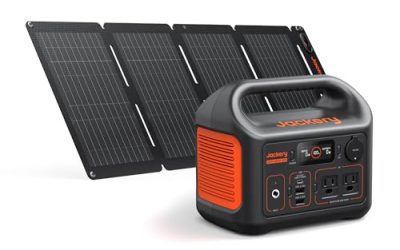
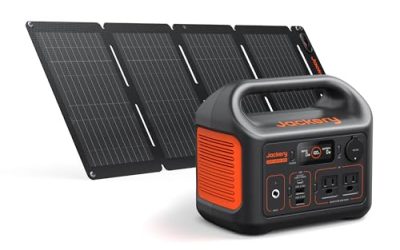
 Jackery Solar Generator 300 and 40W Solar
- Ultra-Lightweight: Weighing only 7.5 lbs, the new Explorer…
- Versatile Power for 6 Devices: Equipped with 2…
- Built to Last: Upgraded with premium LiFePO4 chemistry,…
 Jackery HomePower 3600 Plus & 2x200W Solar
- Essential Home Backup: The Jackery HomePower 3600 Plus…
- Safe Power That Lasts: Built with high-temp resistant…
- Plug-and-Play: With its easy plug-and-play design, the Jackery…
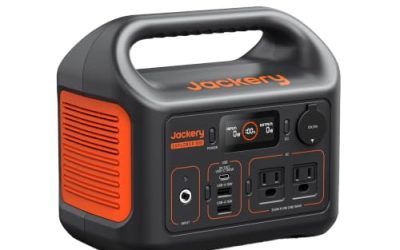
 Jackery Explorer 300 Portable Power Station
- Ultra-Lightweight: At only 7.5 lbs, the Explorer 300…
- Versatile Power for 6 Devices: Equipped with 2…
- Built to Last: Upgraded with premium LiFePO4 chemistry,…
| Product | Key specs | |
|---|---|---|
| Jackery Solar Generator 300 and 40W Solar | Ultra-Lightweight: Weighing only 7.5 lbs, the new Explorer… Versatile Power for 6 Devices: Equipped with 2… Built to Last: Upgraded with premium LiFePO4 chemistry,… | Check price |
| Jackery HomePower 3600 Plus & 2x200W Solar | Essential Home Backup: The Jackery HomePower 3600 Plus… Safe Power That Lasts: Built with high-temp resistant… Plug-and-Play: With its easy plug-and-play design, the Jackery… | Check price |
| Jackery Explorer 300 Portable Power Station | Ultra-Lightweight: At only 7.5 lbs, the Explorer 300… Versatile Power for 6 Devices: Equipped with 2… Built to Last: Upgraded with premium LiFePO4 chemistry,… | Check price |
 MARBERO 155Wh Solar Generator with Solar Panel | This all-in-one kit includes the power station, 30W… EXTENEDED 6.5FT CABLE: The generous 6.5ft integrated cable… Power all your devices with 2x 100W AC… | Check price |
 Jackery Explorer 2000 v2 and 2x200W Solar | Powerful and Versatile: Designed to meet power demands… Smallest & Lightest 2kWh Power: The Jackery Solar… Flexible & Efficient Charging: Power up the Solar… | Check price |
 Jackery HomePower 3000 and 2x200W Solar Panels | Essential Home Backup: With a robust 3600W output… ≤20ms UPS: Featuring a UL-certified UPS that switches… Power for Essentials: The Jackery HomePower 3000 keeps… | Check price |
As an Amazon Associate we earn from qualifying purchases at no extra cost to you.
| Product | Best for | Key spec from the title |
|---|---|---|
| Jackery Solar Generator 300 | Camping and car trips | 292Wh, 300W AC, 40W panel |
| Jackery HomePower 3600 Plus | Whole-home essentials and growth | 3584Wh, 3600W, expandable to 21kWh |
| MARBERO 155Wh | Light starter kit | 155Wh, 150W surge, 30W panel |
| Jackery Explorer 2000 v2 | Mid-size home or RV backup | 2042Wh, 2200W AC, 20ms UPS |
| Anker SOLIX C1000 Gen 2 | Fast-charging mid-range | 1,024Wh LiFePO4, 2,000W, 200W panel |
| ABOK Ark3600 | Maximum capacity and outlets | 3840Wh, 3600W, expandable to 11520Wh |
How to Choose
Start with the essential-loads list
Write down every device you want running during an outage and its wattage. Add the running watts to size the inverter, and multiply each device by the hours you need to size the battery. A router and two phones need only a few hundred watt-hours a day; a full-size refrigerator typically consumes in the low-to-mid hundreds of watt-hours per day but spikes at startup, which is why inverter surge ratings matter.
Size the panel to the battery
A kit with 3,000Wh of battery and 400W of panels needs many hours of strong sun to refill, so check how many panels are bundled. Dividing battery watt-hours by about 70 percent of panel wattage gives a rough sunny-day estimate. Listings that include two 200W panels, or accept a high solar input rating, will recover far faster than small 30W or 40W bundles.
Prefer LiFePO4 and a UPS-grade switchover
For a unit that will sit plugged in and cycle regularly, LiFePO4 or LFP cells are the safest bet. A listed UPS switchover time, such as 20ms, tells you the station can bridge a grid drop without rebooting a computer. Expandability matters for home kits because you can add battery modules later instead of replacing the whole system.
Know when a gas generator is the wrong comparison
A gas generator can produce more continuous power for a given budget, but it releases carbon monoxide and must run outdoors, far from doors, windows, and vents, never in a garage or basement. A solar generator has no exhaust at the point of use and can sit inside. If your loads are modest, the battery-based kit avoids fuel storage, noise, and fume risks altogether.
The 6 Best Options
Jackery Solar Generator 300
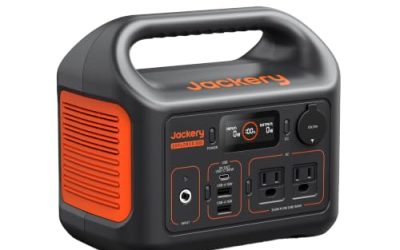
The smallest of the Jackery bundles here, pairing a 292Wh station with a 40W solar panel. The title lists 300W of pure sine wave AC output and recommends it for RV, outdoor, camping, travel, and blackout use. It is the entry point for buyers who want a branded kit without moving into thousand-watt-hour territory. Think of it as the right answer for a buyer whose outage plan is a phone, a laptop, and a lamp, and whose camping plan is a weekend at a state park with a sunny pitch for the panel.
- Strength: pure sine wave AC output suits laptops and sensitive electronics.
- Strength: the bundle includes the panel, so it works outdoors straight away.
- Trade-off: 292Wh is small for home backup, and a 40W panel refills it slowly.
Skip it if you want to power a refrigerator or any appliance above 300W, or if you need fast solar recovery.
Jackery HomePower 3600 Plus
A whole-home-oriented kit with 3584Wh of LFP capacity, 3600W of AC output, and two 200W solar panels. The title says it expands up to 21kWh and calls it an essential home backup, which positions it as a system you can grow into rather than a one-off purchase. For a homeowner who wants to keep a refrigerator, internet gear, and lights going, this is the class of kit designed for that job, and the bundled panel pair gives it a head start on sun-based recharging.
- Strength: 3600W of output can start heavier household loads.
- Strength: expansion to 21kWh lets you scale capacity over time.
- Trade-off: it sits in the premium tier, and two 200W panels will take a long day to refill so large a battery.
Skip it if you only camp occasionally, since the capacity, size, and cost far exceed that use, or if you would rather start with a mid-size kit and see how often you actually lose power.
MARBERO 155Wh
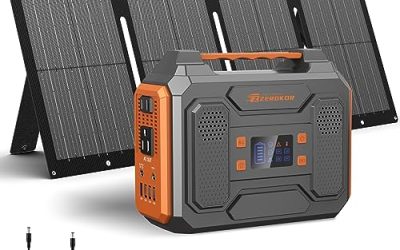
A compact 155Wh kit with a 30W solar panel included and a 150W surge rating. It is the lightest-duty option here and the best match for someone testing the solar generator idea with a phone, tablet, and a few lights. Because the panel and station arrive together, it removes the compatibility homework that stops many first-time buyers, and the small size means it can live in a closet or a car trunk without being noticed.
- Strength: panel included, so you can start charging in daylight at once.
- Strength: the budget tier makes it a low-risk first purchase.
- Trade-off: 155Wh and 150W surge cannot run anything beyond small electronics for long.
Skip it if you need to run a fan, a cooler, or a CPAP for a full night, because the capacity runs out quickly, and the title gives only a surge figure rather than a continuous rating, so treat 150W as an upper bound.
Jackery Explorer 2000 v2
This kit offers 2042Wh of LiFePO4 capacity, 2200W AC output, and two 200W solar panels. The title highlights a 20ms UPS function and USB-C PD 100W fast charging, which makes it equally at home as a laptop charger and a larger appliance backup. It suits a buyer who wants a substantial battery without stepping into the whole-home price tier, and the pair of 200W panels gives a realistic route to refilling it outdoors across a day or two of good weather.
- Strength: 20ms UPS switchover and 100W USB-C output serve both computers and phones.
- Strength: LiFePO4 cells and 2200W output sit in a mid-range sweet spot for RVs and cabins.
- Trade-off: 2200W is the ceiling for what it can run at once, so very large loads are off the table.
Skip it if you want expansion modules to grow into whole-home coverage, since the title lists no expansion path, or if you would prefer a bigger battery for multi-day outages.
Anker SOLIX C1000 Gen 2
A 1,024Wh LiFePO4 station sold with a 200W solar panel, with a 2,000W rating and output up to 3,000W. It is positioned as a mid-range backup with fast charging, covering home essentials and outdoor use alike. A buyer who wants quick recharging and a respectable output rating in a single mid-range kit will find the title leans on exactly those two points, and the included 200W panel gives it a starting solar option out of the box.
- Strength: a 2,000W rating with a higher peak lets it start motor loads.
- Strength: LiFePO4 cells at roughly a thousand watt-hours suit short outages.
- Trade-off: 1,024Wh is modest for day-long refrigerator backup.
Skip it if you plan multi-day outages without a larger panel array or additional batteries, as 1,024Wh will drain in well under a day when it feeds several appliances.
ABOK Ark3600
The capacity leader, with 3840Wh of LiFePO4, a 3600W rating, a 400W solar panel, and 2000W of solar input. The title says it expands to 11520Wh and offers 15 outlets, which gives it breadth for a household or workshop. It is the option for a buyer who wants the largest listed battery in this group plus room to add more, and who plans to feed it with a sizable panel array rather than the single 400W panel in the bundle.
- Strength: 15 outlets handle a crowd of devices without power strips.
- Strength: 2000W solar input can refill quickly if you add enough panels.
- Trade-off: brand recognition and service history are less established than the Jackery or Anker names.
Skip it if you need a compact unit or prefer a brand with a long service track record, because warranty handling and replacement support are harder to judge for a lesser-known maker.
Which One Fits Your Situation
You camp and need phone and laptop power
The Jackery Solar Generator 300 is the right size. Its 292Wh and pure sine wave output cover the devices that matter without hauling a heavy case.
You want essential home backup that can grow
The Jackery HomePower 3600 Plus is the clear fit, thanks to its 3600W output and expansion up to 21kWh. The ABOK Ark3600 is the alternative if you value outlet count and a high solar input.
You run an RV or cabin
The Jackery Explorer 2000 v2 offers the UPS switchover, 2200W, and two 200W panels in a package aimed at that mid-size use.
You want a middle path with fast charging
The Anker SOLIX C1000 Gen 2 balances 1,024Wh and a 200W panel, suited to a short outage or a weekend off-grid.
Common Mistakes
- Sizing the battery by wattage instead of watt-hours, then running out in an hour.
- Forgetting startup surge on compressors, which can exceed the running figure several times over.
- Buying the biggest kit without checking whether the bundled panels can refill it in a realistic time.
- Skipping expansion options on a home system, then replacing it when needs grow.
- Using a gas generator indoors or in an attached garage as a backup; carbon monoxide can reach lethal levels quickly, so fuel units must run outside.
Specs and Terms Explained
Rated output versus surge
Rated (continuous) output is what the inverter can deliver all day; surge is a brief burst for motor start-up. A refrigerator compressor may pull several times its running wattage for a second or two, so a unit with a modest surge ceiling can trip even when the running load looks safe on paper.
Expandable capacity
Some larger systems accept add-on battery packs. Expansion matters if you expect your needs to grow, but confirm the extra pack is a matching, supported accessory before counting on it.
Solar input window
Every unit has a voltage and wattage range it will accept from panels. Panels that exceed the voltage limit can damage the input; panels far below the minimum will not start charging. Match the string to the input window in the manual.
Cycle life
Cycle life counts full charge-and-discharge rounds before capacity drops to a stated fraction, usually around 80 percent. LiFePO4 cells commonly list several thousand cycles, while older lithium-ion chemistries list far fewer, which affects years of service rather than a single trip.
Which One Should You Buy?
| If you… | Choose… |
|---|---|
| Want a small, light starter for camping electronics | MARBERO 155Wh or Jackery Solar Generator 300 |
| Want fast wall charging in a mid-size unit | Anker SOLIX C1000 Gen 2 |
| Need a large battery for an RV or cabin | Jackery Explorer 2000 v2 |
| Want a home-backup system built to scale up | Jackery HomePower 3600 Plus |
| Are comparing large-capacity options for home essentials | ABOK Ark3600 |
Who Should Skip These
- Anyone planning to run a central air conditioner, electric dryer, or well pump; those loads need a transfer-switch installation with a far larger system.
- Buyers who live in persistently overcast climates and expect panels alone to refill a big battery in a day.
- Shoppers who only need a few hours of backup a year; a smaller power bank and a wall-charged station may serve them better.
Sizing and Compatibility Checklist
- List each essential device with its running watts from the label.
- Add the highest start-up surge among motor loads.
- Multiply daily watt-hours by the number of days you want covered.
- Confirm the panel connector type matches the unit’s input.
- Measure the storage spot, since large units can weigh more than a carry-on bag.
Setup and Care Tips
- Give the unit airflow on all vent sides; stacking blankets or bags against the fan intake is a common cause of thermal shutdowns.
- Run a monthly drill: plug in one essential device for a few minutes so you know the unit and the cables still work.
- Keep the panels’ extension leads dry and off the ground when rain is possible.
- Avoid charging or discharging in freezing conditions unless the manual explicitly allows it.
Related guides
- How To Wash A Down Jacket Without Losing Loft
- 0 Degree Sleeping Bag For Backpacking
- Portable Solar Generator For Camping
Frequently Asked Questions
How many watt-hours do I need for a home outage?
List your essential devices and multiply watts by hours. A router, lights, and phones fit in a few hundred watt-hours a day, while a refrigerator pushes you toward the 1,000Wh class or higher for a full day.
Can a solar generator replace a gas generator?
For many outage scenarios, yes, with no fumes, fuel, or noise. For very heavy or long-duration loads, a large expandable kit can approach that capacity, though a gas generator still has a refueling advantage.
Are solar panels included?
In the listings above, yes, and sizes range from 30W to 400W. The panel size determines how fast the sun can refill the battery, so match it to the unit’s capacity.
Is LiFePO4 worth looking for?
Generally, yes. It is associated with a longer cycle life and better heat tolerance than many older lithium chemistries, which matters for a station you expect to use for years.