Key takeaways
- Someone who types "buy portable power station" has usually finished researching and is down to a shortlist.
Someone who types “buy portable power station” has usually finished researching and is down to a shortlist. The remaining decision is rarely about whether to own one; it is about which tier of capacity fits the way you will use it, and which spec lines to verify before committing. A power station bought too small leaves you hunting for outlets mid-outage. One bought too large sits in a closet because it is awkward to move. The goal here is to match the size of the box to the job.
This guide covers six units arranged from compact to home-scale: a 40800mAh budget pack, two 288-292Wh stations, a 1,000Wh pair, and an 1843Wh home battery. It is meant for first-time buyers, campers, remote workers who want ride-through for a desktop, and households building a small outage kit. Everything is judged only from listing titles, with budget, mid-range, and premium tiers in place of price figures. If you are buying in 2026 and plan to keep the unit for years, spend your attention on battery chemistry, output headroom, and recharge methods first.
Quick Picks
Our top picks
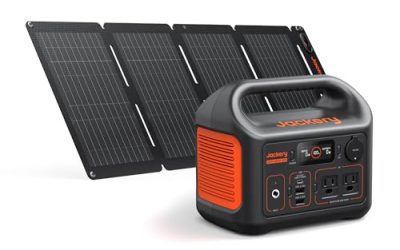
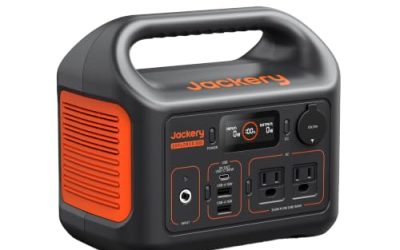
 Jackery Explorer 300 Portable Power Station
- Ultra-Lightweight: At only 7.5 lbs, the Explorer 300…
- Versatile Power for 6 Devices: Equipped with 2…
- Built to Last: Upgraded with premium LiFePO4 chemistry,…
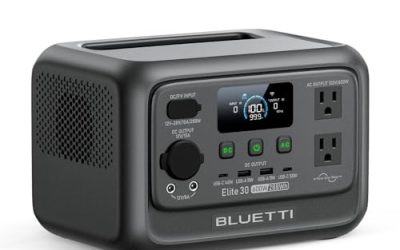
 BLUETTI Elite 30 V2 Portable Power Station
- [288Wh On-the-Go Power] - Only 9.4 lbs lightweight,…
- [600W Continuous & 1500W Surge Power] - Get…
- [50% Lower Power Consumption] - Upgraded UltraCell tech…
 Jackery Explorer 1000 v2 Portable Power Station
- Powerful yet Compact: Boasting a 1,500W AC output…
- One Hour Fast Charging: Charge your Explorer 1000…
- 10 Year Lifespan: The Explorer 1000 v2 portable…
| Product | Key specs | |
|---|---|---|
| Jackery Explorer 300 Portable Power Station | Ultra-Lightweight: At only 7.5 lbs, the Explorer 300… Versatile Power for 6 Devices: Equipped with 2… Built to Last: Upgraded with premium LiFePO4 chemistry,… | Check price |
| BLUETTI Elite 30 V2 Portable Power Station | [288Wh On-the-Go Power] - Only 9.4 lbs lightweight,… [600W Continuous & 1500W Surge Power] - Get… [50% Lower Power Consumption] - Upgraded UltraCell tech… | Check price |
| Jackery Explorer 1000 v2 Portable Power Station | Powerful yet Compact: Boasting a 1,500W AC output… One Hour Fast Charging: Charge your Explorer 1000… 10 Year Lifespan: The Explorer 1000 v2 portable… | Check price |
 Anker SOLIX C1000 Gen 2 Portable Power | 49 Min UltraFast Recharging: With upgraded HyperFlash tech,… 2,000W Output via 10 Ports: Delivers 2,000W (3,000W… Compact and Portable: Easily carry, store, and move… | Check price |
 Anker SOLIX C300 DC Portable Power Station | 𝗧𝗼 𝗮𝗰𝘁𝗶𝘃𝗮𝘁𝗲 𝗖𝟯𝟬𝟬 𝗗𝗖 𝗣𝗼𝗿𝘁𝗮𝗯𝗹𝗲 𝗣𝗼𝘄𝗲𝗿 𝗦𝘁𝗮𝘁𝗶𝗼𝗻 𝗳𝗼𝗿… 𝗠𝗮𝘀𝘀𝗶𝘃𝗲 𝗣𝗼𝘄𝗲𝗿 𝗼𝗻 𝘁𝗵𝗲 𝗚𝗼: Take portable power… 𝗟𝗶𝗙𝗲𝗣𝗢𝟰 𝗯𝗮𝘁𝘁𝗲𝗿𝘆 𝘄𝗶𝘁𝗵 𝗮 𝟯-𝘆𝗲𝗮𝗿 𝗴𝘂𝗮𝗿𝗮𝗻𝘁𝗲𝗲: featuring LiFePO4… | Check price |
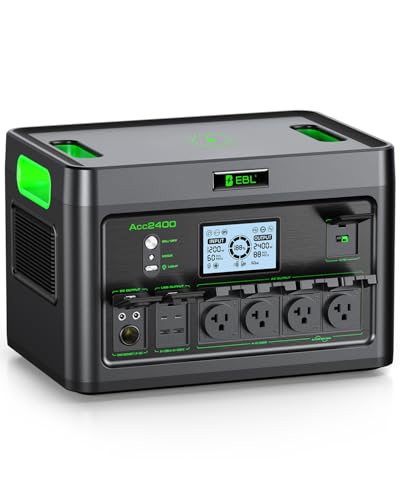 EBL 2400W Portable Power Station LiFePO4 Battery | The Acc2400 High-Capacity Portable Outdoor Power Station boasts… It supports simultaneous charging of 12 devices, ideal… An intelligent emergency power mode switches to backup… | Check price |
As an Amazon Associate we earn from qualifying purchases at no extra cost to you.
| Product | Best for | Key spec from the title |
|---|---|---|
| Jackery Explorer 300 | Camping and blackout basics | 292Wh, LiFePO4 battery |
| BLUETTI Elite 30 V2 | Small backup with UPS behavior | 288Wh, 600W, 10ms UPS |
| Jackery Explorer 1000 v2 | Mid-size all-rounder | 1070Wh, 1500W, 1-hour fast charge |
| Anker SOLIX C1000 Gen 2 | Fastest full recharge here | 1,024Wh, 2,000W, 49-minute full charge |
| EBL 2400W | Home battery backup | 1843.2Wh LiFePO4, 2400W, 12 outlets |
| Flashfish 200W 40800mAh | Lowest-cost entry | 200W, 40800mAh, AC, DC, USB |
How to Choose
Pick a capacity tier first
Under 200Wh is power-bank territory: phones, tablets, a laptop once or twice. Between 250Wh and 350Wh covers a weekend of small electronics and a router. Around 1,000Wh opens up a mini fridge, a drill charger, or a TV for an evening. Above 1,800Wh begins to look like home backup. Choose the smallest tier that handles your top three devices with room to spare.
Verify output against your largest device
Take the wattage printed on your biggest appliance and make sure the station’s continuous rating beats it by about 20 percent. Peak or surge figures only help motors start. A 600W unit will not run a 700W appliance, no matter how many watt-hours it holds, and a unit near its limit will run hot and shut off sooner.
Check recharge speed and input options
Recharge time is a quiet deal-breaker. A unit that refills in about an hour is ready again after a short break, while one that takes many hours is a poor fit for repeated outages. Look for AC wall charging at minimum, and a solar input if you plan off-grid use. Ignore headline numbers that assume ideal conditions.
Where budget units cut corners
The lowest tiers often list mAh rather than watt-hours, which hides the true energy. Convert by multiplying mAh by the battery voltage and dividing by 1,000, then compare on watt-hours. Also watch for modified sine wave inverters, unlabeled cells, and thin warranty terms on lesser-known names.
The 6 Best Options
Jackery Explorer 300
A 292Wh power station with a LiFePO4 battery, marketed as a solar generator for outdoors, camping, travel, hunting, and blackouts. It is the straightforward, name-brand option for buyers who just want a dependable small box to put in a vehicle or closet. It suits someone buying a first unit who wants the decision to be easy: a known brand, a size that covers phones, cameras, and a laptop, and a battery chemistry that holds up to regular use over the years.
- Strength: LiFePO4 cells in a 292Wh package suit repeated charging cycles.
- Strength: the use cases in the title cover camping, travel, and blackout backup in one unit.
- Trade-off: the title does not list a UPS switchover time or fast-charge speed, so recharge details need checking.
Skip it if you want to run larger appliances or need a stated UPS function for a desktop computer, since the title leaves out both the wattage rating and the switchover detail.
BLUETTI Elite 30 V2
This 288Wh LFP station carries a 600W rating, a Power Lifting mode to 1500W, a 10ms UPS function, and a 0-80% charge in 45 minutes. The mix of features reads as a small-form backup that behaves more like a UPS than a camping battery. A remote worker or home-office buyer who wants a router, modem, and small desktop to ride through a brief grid drop is exactly who the title is speaking to, and the fast 0-80% figure shortens the wait before the next outage.
- Strength: 10ms UPS switchover helps protect a router or desktop setup.
- Strength: quick 0-80% charging cuts waiting time after an outage.
- Trade-off: it carries a mid-range tier cost for a battery the same size as cheaper rivals.
Skip it if you want the lowest purchase cost or do not need UPS behavior, because a plain camping battery of the same size can cost less and still charge your devices.
Jackery Explorer 1000 v2
A 1070Wh LiFePO4 station with a 1500W rating, a 1-hour fast-charge claim, and a 100W USB-C output. It is the size where a power station stops being a gadget and starts being a household tool, strong enough for a mini fridge and a laptop at once. For a buyer who wants one station to serve camping trips, tailgates, and outage duty, the combination of 1500W output and a quick recharge is the kind of flexibility that justifies stepping above the compact class.
- Strength: 1500W handles many common kitchen and tool loads.
- Strength: a fast-charge claim of one hour shortens recovery time between uses.
- Trade-off: it is a mid-range to premium purchase compared with the 300Wh class.
Skip it if your needs are phones and a laptop, since you would pay for capacity you will not use, or if weight and storage space are a concern for a unit this size.
Anker SOLIX C1000 Gen 2
A 1,024Wh LiFePO4 station with a 2,000W rating, peak 3,000W, and a full recharge in 49 minutes according to the title. It is meant for UPS duty, outdoor use, and emergencies, and the rapid refill is its defining feature. A buyer who wants to drain the battery during a short outage and be back to full before the next one will appreciate it, and the higher peak figure gives motor loads a better chance of starting cleanly.
- Strength: a 49-minute full charge is the quickest recharge claim in this group.
- Strength: 2,000W continuous output leaves headroom above the Jackery 1000 v2.
- Trade-off: its 1,024Wh capacity is slightly smaller than the 1070Wh Jackery, so runtime is similar or a touch lower.
Skip it if you want a bigger battery for overnight loads, since this is a power-and-speed pick, or if you would rather put the money toward more stored energy than faster charging.
EBL 2400W
The largest unit here, with 1843.2Wh of LiFePO4 storage, 2400W of AC output across 12 outlets, and USB-C PD output. The title positions it for home use and battery backup, and it is the one that approaches serious outage coverage. Households that want a refrigerator, a few lights, and electronics to run together will see the appeal in the outlet count, and the USB-C PD output means laptops and phones can charge without a separate adapter.
- Strength: 12 outlets and 2400W of output serve multiple appliances.
- Strength: 1843.2Wh of LiFePO4 offers the most stored energy among these six.
- Trade-off: a premium-leaning size makes it less practical to carry on casual trips.
Skip it if you mostly camp with light loads or want a unit you can easily lift, because this size is built to stay put near an outlet rather than travel.
Flashfish 200W 40800mAh
A 200W power station expressed as 40800mAh, with 110V AC outlets, two DC ports, and three USB ports. The title also calls it a solar generator and power supply. It is the simplest and lowest-cost entry in the list, a fit for a student, a commuter, or a first-time buyer who wants to try a power station before investing in a larger lithium iron phosphate model.
- Strength: AC, DC, and USB outputs cover several device types in a small box.
- Strength: it sits at the budget tier, which keeps the cost of a first power station low.
- Trade-off: the capacity is stated in mAh with no watt-hour figure or chemistry, so true energy is harder to compare.
Skip it if you want a confirmed long-life battery chemistry or a stated UPS function, as the listing offers neither.
Which One Fits Your Situation
You want a first power station for camping
The Jackery Explorer 300 is the sensible choice. Its LiFePO4 battery and brand recognition make it a reliable and uncomplicated entry.
You work from home and fear outages
The BLUETTI Elite 30 V2 is built around the 10ms UPS function. Plug in a router and a desktop and the switchover happens before most equipment notices.
You want to cover a mini fridge or kitchen tools
Choose between the Jackery Explorer 1000 v2 and the Anker SOLIX C1000 Gen 2. Pick the Anker if recharge speed is the priority, and the Jackery if you want a slightly larger battery.
You are preparing the whole household
The EBL 2400W gives you 12 outlets and 1843.2Wh to spread across essentials, with room to run several devices at once.
Common Mistakes
- Buying on mAh figures without converting to watt-hours.
- Ignoring the continuous output rating and relying on a peak number.
- Choosing the largest unit for casual use, then leaving it unused because it is heavy.
- Skipping a check of recharge time, which determines how ready the station is for repeated outages.
- Buying a power station, then still planning to run a fuel generator inside during a storm; gas models produce carbon monoxide and must run outdoors, away from windows, doors, and vents.
Specs and Terms Explained
Watt-hour capacity
Capacity tells you how much total energy is stored. Divide it by a device’s wattage to estimate hours of runtime, then subtract roughly a tenth or two for conversion loss. A small capacity can be enough for phones; a mini fridge generally needs a larger tier.
Continuous output and boost modes
Some brands advertise a mode that lets a unit run loads above its rated wattage by lowering the output voltage. It helps with simple resistive appliances such as kettles, but it does not suit electronics that need stable voltage, so do not rely on it for sensitive gear.
AC recharge time
A spec stating a full recharge in a couple of hours usually refers to the fastest wall mode. Car and solar routes are slower, and the last portion of any charge tapers.
Battery management system
The BMS protects against overcurrent, overheating, and over-discharge. It is not something you configure, but a unit that lists overload, short-circuit, and temperature protection is giving you the baseline you should expect.
Which One Should You Buy?
| If you… | Choose… |
|---|---|
| Want a first, small station for phones and lights | Flashfish 200W 40800mAh |
| Want a brand-name entry model for camping | Jackery Explorer 300 |
| Want a compact unit near a desk for brief outages | BLUETTI Elite 30 V2 |
| Want a mid-size unit with fast charging | Anker SOLIX C1000 Gen 2 |
| Want a larger battery for a mini fridge and kitchen tools | Jackery Explorer 1000 v2 |
| Want the biggest output and capacity in this list for household essentials | EBL 2400W |
Sizing and Compatibility Checklist
- Write down your longest-running device and how many hours you want it covered.
- Check the outlet type and count against what you plug in; many small units offer only one or two AC sockets.
- Look for a DC car-socket output if you own 12V gear.
- Confirm which recharge methods you will actually use: wall, car, or panels.
- Compare size and weight against where it will live.
Setup and Care Tips
- Unbox the unit and charge it fully before depending on it; manufacturers often ship batteries partly charged.
- Keep the vents clear and avoid covering the unit with a blanket while it runs.
- Do not leave it in a closed car on a hot day or in a freezing garage for long periods.
- Recharge it every few months if stored, because lithium batteries slowly self-discharge.
- Write the date of purchase and the warranty terms inside the box lid so you can find them later.
Frequently Asked Questions
How big a power station should I buy?
Add the wattage of your most important devices and the hours you need them. For phones and a laptop, 300Wh is enough; for a mini fridge, think 1,000Wh or more; for several appliances, look at the 1,800Wh class.
Is a UPS function worth paying for?
If you plug in a desktop computer or network gear, yes. A short switchover time, such as 10ms, keeps equipment running through a grid drop. For camping alone, you can ignore it.
Why does LiFePO4 keep appearing in these listings?
It is a lithium iron phosphate chemistry associated with a long cycle life and good heat tolerance. For a station you expect to recharge often over several years, it is a meaningful durability signal.
Are power stations safe to use indoors?
Battery stations produce no exhaust, so they suit indoor use with normal ventilation around the unit. Gas generators are different: they release carbon monoxide and must never be run indoors, in a garage, or near a tent entrance.