Our Top Picks
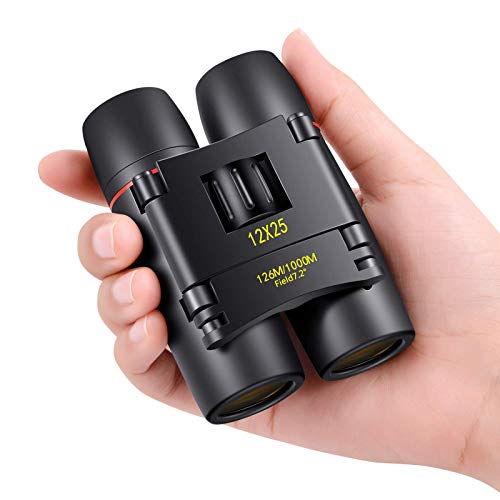 POLDR 12X25 Small Pocket Binoculars Compact for Adults12X253.7 x 2.2 x 0 inches0.4 poundsCheck on Amazon
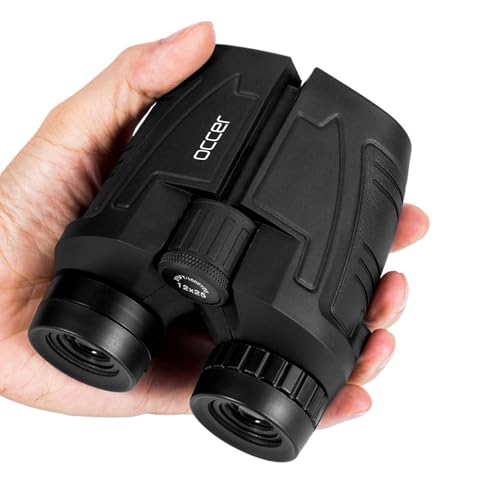
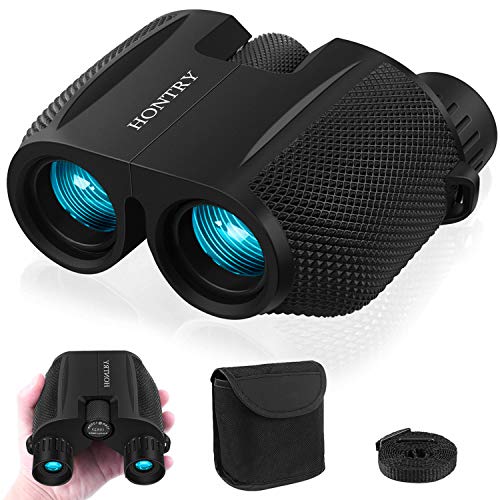


The Hontry 10×25 is the best overall compact binocular for hiking in this group: 10x magnification is strong enough to pick out a ridge line or a hawk, while the compact 25 mm lenses stay small enough for a hip belt or jacket pocket, and it is steadier by hand than the 12x models. Compact binoculars are pocket-sized models, usually with objective lenses of about 21 to 25 millimeters, that trade low-light brightness for low weight. If you want the lightest and steadiest option for long days, the VULNESS 8×21 is the one to look at, and the waterproof mini model suits wet trails.
Quick List
- Occer 12×25 Compact – best for reaching farther with a larger eyepiece
- POLDR 12×25 Pocket – best for a mini pocket size with 12x reach
- Hontry 10×25 Compact – best overall balance of reach and steadiness
- DRANBOL 12×25 Mini Pocket – best for a small 12x model for adults and kids
- Waterproof Mini Compact Binoculars – best for damp trails and changeable weather
- VULNESS 8×21 Mini – best for light packing and an easier hold
Which One Is Right for You?
| If you… | Choose |
|---|---|
| Want a balanced all-rounder for hiking, wildlife and views | Hontry 10×25 Compact |
| Want the lightest, simplest pair for a long day and an easier hold | VULNESS 8×21 Mini |
| Hike in rain, mist or on stream crossings | Waterproof Mini Compact Binoculars |
| Want more reach and are comfortable bracing your hands | Occer 12×25 Compact |
| Want a very small 12x model for a jacket pocket | POLDR 12×25 Pocket |
| Share a pair between an adult and a child | DRANBOL 12×25 Mini Pocket |
For hiking, steadiness and weight usually matter more than raw magnification, because a shaky image hides the extra detail. If you are choosing between 10x and 12x, lean toward 10x unless you already hold binoculars very still. If you hike in wet weather, check carefully for a waterproof statement on the listing instead of assuming it.
All 6 Picks in Detail
1. Occer 12×25 Compact – Best for Extra Reach and a Large Eyepiece
As an Amazon Associate we earn from qualifying purchases at no extra cost to you.

The Occer is listed as a compact binocular for adults and kids, high powered, with easy focus and a large eyepiece. The 12x magnification brings distant objects closer than 8x or 10x models, which suits people who want to reach across a valley. The large eyepiece in the listing name hints at comfortable viewing, and the marketing covers bird watching, cruise ships and outdoor hunting.
- 12x magnification with 25 mm objective lenses
- Exit pupil works out to about 2.1 mm by the standard formula (25 divided by 12)
- Easy focus and a large eyepiece, per the listing
- Marketed for adults and kids
- Weight, field of view, eye relief and waterproofing: confirm on listing
It suits hikers who like to stop at viewpoints and brace their elbows to look at distant wildlife. Because 12x magnifies hand movement, you may want to lean against a tree or a rock.
On a trail, the practical question is how quickly you can raise it, find the subject and put it away. Large eyepieces and simple focus wheels help here, and a strap that sits flat on your chest keeps the pair from swinging when you scramble over rocks or step across a stream.
Pros
- More reach than the 10x and 8x pairs
- Large eyepiece for easier alignment
- Compact enough to carry on a trail
Cons
- 12x magnifies hand shake
- Small exit pupil, so images dim in low light
Compared with the Hontry 10×25, it gives more reach but a harder hold.
2. POLDR 12×25 Pocket – Best for a Pocket-Sized 12x
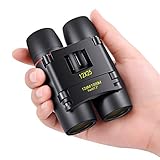
POLDR describes this model as a small pocket binocular for adults, mini and portable, with easy focus and clear images, and lists bird watching, concerts and opera among its uses. It shares 12×25 specs with several others in this guide, so the difference is size, handling and finish rather than headline numbers. It makes the most sense if your priority is a pair that disappears into a pocket.
- 12x magnification with 25 mm objectives
- Mini and portable pocket format
- Easy focus, per the listing
- Uses listed include bird watching, concerts and opera
- Weight, field of view, coatings and waterproofing: confirm on listing
It is an option for day hikers who want something small for scenic stops and who will also use it at a concert or a game. Do not expect weather protection unless the product page says so.
Pocket pairs live or die by how they feel in the hand. If your fingers are large, check whether the barrels leave room for a firm two-handed grip, and consider a wrist strap so a dropped pair does not tumble down a slope. Keep the lens covers closed in a pack so dust and grit do not scratch the glass.
Pros
- Small and portable
- 12x gives long reach
- Focus is described as easy
Cons
- Narrower view and more shake than 8x or 10x
- Waterproofing is not stated
It is nearly a twin of the Occer on paper, so choose between them on handling and any listed protection.
3. Hontry 10×25 Compact – Best Overall for Hiking
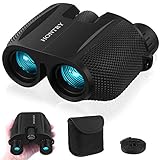
The Hontry is a 10×25 compact binocular for adults and kids, marketed for bird watching, travel, cruise ships, sport games, theater, concerts and road trips. For hiking, the 10x power is a good middle ground. It is bigger than 8x, so you see more detail on a distant peak, yet less jittery than 12x. The 25 mm objectives give an exit pupil of 2.5 mm, which is adequate in daylight.
- 10x magnification with 25 mm objectives
- Exit pupil of 2.5 mm by the standard formula
- Compact design for adults and kids
- Versatile use cases from road trips to sport games
- Weight, field of view, eye relief and waterproofing: confirm on listing
It is the pair to choose if you want one set of binoculars for hiking, travel and events, and it avoids the two extremes of heavy magnification or ultra-small optics.
A pair like this is useful for people who also want binoculars for travel days, such as ferry rides or sports events, because the same compact size works everywhere. On a hike, its balanced power means you are more likely to keep using it rather than leaving it in the pack after the first shaky attempts.
Pros
- Balanced magnification for steady viewing
- Good for many activities
- Small enough for a pocket or a belt pouch
Cons
- Not as light as the 8×21
- Waterproofing is not stated
It beats the 12x models on stability and the 8×21 on reach.
4. DRANBOL 12×25 Mini Pocket – Best for Sharing with Kids

DRANBOL markets this as a mini pocket binocular for adults and kids, small and compact, aimed at bird watching, opera and concerts. Like the other 12×25 pairs it has high reach, and the “adults and kids” wording suggests it is meant to be shared. If a child will use it, check eyepiece spacing and weight on the product page, and teach them to hold it steady with both hands.
- 12x magnification with 25 mm objectives
- Mini pocket size for adults and kids
- Uses listed include bird watching, opera and concerts
- Exit pupil about 2.1 mm by formula
- Weight, interpupillary range, coatings and waterproofing: confirm on listing
It makes sense as a family pair for easy walks, with the caveat that small hands may find 12x harder to keep still than 8x.
For a family outing, set the focus and the eyepiece spacing for each person before you start walking, and write down the settings if you can. Children often need a narrower barrel spacing than adults, so confirm the listed range if a younger child will use the pair on a regular basis.
Pros
- Pocketable
- Strong reach for the size
- Marketed for sharing
Cons
- 12x is tricky for younger users
- Little weather information in the listing name
If a child will use it often, the 8×21 VULNESS is an easier fit.
5. Waterproof Mini Compact Binoculars – Best for Wet Trails

This unbranded-style mini compact model is the only one in the list whose title states that it is waterproof, which matters when you hike in drizzle, fog or near streams. The listing describes it as high powered with easy focus and small, and it is suggested for bird watching, hunting and concerts. The magnification and lens size are not given in the visible title, so read the product page before relying on it.
- Waterproof, stated in the listing name
- Described as high powered with easy focus
- Small mini compact format
- Magnification, objective size, weight and the waterproof protection level: confirm on listing
- Whether it is also fog-resistant: confirm on listing
Waterproof can mean anything from splash resistance to full submersion, so find the exact wording before taking it near water.
If your hikes include creek crossings, boat rides or foggy mornings, a pair with a clear moisture claim gives you more peace of mind. Still, shake off water, wipe the lenses and let the binoculars dry in an open spot after the trip so the rubber and the strap do not stay damp.
Pros
- The only pair here with a stated waterproof claim
- Small and portable
- Easy focus
Cons
- Key optical specs are not visible in the listing name
- Waterproof level is not defined
Choose it over the Hontry when weather protection is the deciding factor.
6. VULNESS 8×21 Mini – Best for Light Packing and Easy Holding

The VULNESS is an 8×21 black mini binocular for adults, marketed as a travel essential for camping, cruise ships and hiking, with bird watching in the use list. At 8x it is the least magnifying pair here but the easiest to keep steady, and 21 mm lenses make it the smallest. Its exit pupil is about 2.6 mm by formula, close to the 10×25.
- 8x magnification with 21 mm objectives
- Exit pupil about 2.6 mm by formula
- Black mini travel binocular for adults
- Listed for camping, cruise ships and hiking
- Weight, field of view, waterproofing and coatings: confirm on listing
It is the pair to pick if you often carry your gear all day and want to forget it is in your pocket.
This is the model for long mileage days when every ounce counts. It also works well as a backup pair that stays in a daypack or a car glovebox for roadside viewpoints. Remember that smaller lenses collect less light, so plan your wildlife watching for the bright hours of the day.
Pros
- Easiest hold of the group
- Smallest lenses and likely the lightest
- Good for hikes where weight matters
Cons
- Least reach
- Small objective lenses give a dimmer view in poor light
Next to the Hontry 10×25 it gives up reach in exchange for weight and steadiness.
Specs Compared
| Product | Magnification | Objective | Exit pupil (calculated) | Waterproof | Marketed for |
|---|---|---|---|---|---|
| Occer 12×25 Compact | 12x | 25 mm | About 2.1 mm | Confirm on listing | Adults and kids |
| POLDR 12×25 Pocket | 12x | 25 mm | About 2.1 mm | Confirm on listing | Adults |
| Hontry 10×25 Compact | 10x | 25 mm | 2.5 mm | Confirm on listing | Adults and kids |
| DRANBOL 12×25 Mini Pocket | 12x | 25 mm | About 2.1 mm | Confirm on listing | Adults and kids |
| Waterproof Mini Compact Binoculars | Confirm on listing | Confirm on listing | Confirm on listing | Stated in listing | Adults and kids |
| VULNESS 8×21 Mini | 8x | 21 mm | About 2.6 mm | Confirm on listing | Adults |
How We Chose These
This guide is research-based. We started with the product set in current catalog listings and read each listing name for magnification, objective lens size, stated waterproofing and intended use. The exit pupil figures are our own calculation from the numbers in the names, using the standard formula of objective diameter divided by magnification. We compared the trade-offs of each magnification class with published binocular specification guides, and we marked every value the listing does not state as “confirm on listing.” Several pairs share the same 12×25 specification, so we separated them by size, stated features and intended users. Check the product page for weight and weather protection before you buy.
What to Look For
Reading the Numbers: 8×21, 10×25, 12×25
The first number is magnification and the second is the objective lens diameter in millimeters. A 10x pair makes a ridge 1,000 feet away look as though it were 100 feet away. The objective diameter controls how much light enters. Divide the objective diameter by the magnification to get the exit pupil, the width of the light beam that reaches your eye: 25 divided by 12 is about 2.1 mm, 25 divided by 10 is 2.5 mm, and 21 divided by 8 is about 2.6 mm. Your pupil is roughly 2 to 3 mm wide in bright daylight and opens wider at dawn or dusk, so compact pairs are best for daytime hikes and look dim in the shade or at twilight.
Why Lower Magnification Can Win on a Trail
Every extra step of magnification also multiplies hand shake and narrows the field of view. On a hike you are often tired, breathing hard or standing on uneven ground, which makes a steady image harder. An 8x or 10x pair gives you a wider, calmer view that is easier to find a bird or a trail marker in. A 12x pair gives more detail only if you can hold it still, so use a tree, rock or trekking pole as a brace.
Weight, Size and How You Carry Them
For hiking, the best binocular is the one you actually keep on you. Check the listed weight, and look for a neck strap, a wrist strap and a small case. A hip pouch or a chest strap reduces neck load on long days. Pocket models are easy to stash but are often less comfortable for large hands, so confirm the barrel size and eyecup design. Make sure the lens caps stay on while you walk, and clean lenses with a soft brush or microfiber cloth instead of your shirt.
Weather Protection, Coatings and Eye Comfort
Only one pair here states that it is waterproof. Waterproof binoculars are usually sealed and filled with nitrogen or similar gas so they resist moisture and internal fogging, but listings can use the word loosely. If you hike in rain or humid forests, look for the specific level of protection, and for coatings such as fully multi-coated lenses that reduce glare and improve contrast. Dry the binoculars and open the case after wet hikes so moisture does not stay trapped.
Easy focus is helpful, but check for a diopter adjustment so you can set the right eyepiece to match your eyes. If you wear glasses, eye relief of about 14 mm or more is usually recommended, and twist-up eyecups help. Try to set the barrel width so you see one round image, not two circles. When a new pair arrives, check that the barrels fold smoothly, that the focus wheel turns without grinding, that both sides show the same sharpness once the diopter is set, and that the strap attachments feel secure. If the two images will not merge or the focus feels loose, contact the seller instead of using it on the trail.
A Worked Example: Choosing for a Six-Mile Day
Imagine a six-mile loop with two viewpoints, a creek crossing and a chance of afternoon cloud. You want weight near the minimum, a view you can hold steady after climbing, and some moisture protection. An 8×21 pair is the lightest and steadiest choice, a 10×25 pair is the best compromise, and a waterproof pair covers the cloud risk. If you rarely stop for long looks, choose 8x or 10x. If you spend long breaks glassing for wildlife and can brace against a rock, 12x is reasonable. The best choice is the pair you will reach for without thinking, not the one with the biggest number on the label.
Questions
Is 10x or 12x better for hiking?
For most people 10x is the better choice because it is steadier and easier to use for long periods. 12x brings objects closer but also magnifies shake, so it suits those who brace the binoculars. If you are unsure, start with 10x or 8x.
Do compact binoculars work in low light?
They work best in daylight. Small objective lenses produce a small exit pupil, so the image darkens at dawn, dusk or in deep forest shade. For low-light use you would need larger lenses, which means a heavier pair.
Are these binoculars waterproof?
Only the mini compact model states it in the listing name. For the others, confirm on the product page before using them in rain. Even waterproof pairs should be dried after use.
Can kids use compact binoculars?
Several listings say they are for adults and kids. Check the eyepiece spacing and weight, and teach children to hold the binoculars with both hands. Lower magnification, such as 8x, is generally easier for small hands.
What does 8×21 mean?
It means 8 times magnification and 21 mm objective lenses. It gives a wider and steadier view than 12x, with a small, light body. It is a good choice for casual hiking and travel.
How do I clean the lenses safely?
Blow off dust first, brush gently, then wipe with a microfiber cloth and a small amount of lens cleaner. Do not use paper towels or your shirt, since grit can scratch the coating.
Update History
- October 20, 2026 – Initial publication; product set drawn from current catalog listings.
- Check the product page for current specifications and availability before buying.
Sources
- Retailer listing titles and specification fields for each listed binocular
- Published binocular specification guides from optics retailers and educational sites, for magnification, objective diameter and exit pupil definitions