
For most patios, a propane fire pit table in the 28 to 43 inch range with roughly 50,000 to 60,000 BTU and a safety certification is the best all-round gas outdoor fireplace, while a portable propane unit such as the Outland Living 893 suits renters and campers, and a permanent natural gas linear fireplace such as the Empire Outdoor 60-inch suits a built-in entertaining space. Before you choose a model, decide whether you need portability, a connection to a home gas line, or a table surface for drinks, because that choice narrows the field faster than any brand comparison.
Our top picks


As an Amazon Associate we earn from qualifying purchases at no extra cost to you.
Gas Outdoor Fireplaces at a Glance
| Model or type | Best for | Key stated specs | Limits |
|---|---|---|---|
| Outland Living 893 Deluxe portable | Portable propane use, camping, renters | Roundups report 58,000 BTU, about 23 lb | Smaller flame area, no table surface |
| Ciays 28-inch propane fire pit with lava rock | Compact patio heat | Roundups report 50,000 BTU, CSA-listed | Limited seating space around it |
| Ciays 43-inch table | Entertaining larger groups | Roundups report 60,000 BTU | Large footprint, heavier |
| LayinSun Alturas propane table | Stylish tabletop pit | Forbes names it best propane fire pit overall | Check size against your patio |
| Bali Outdoors gas fire pit table | Value tier | Forbes names it best value | Material and finish vary by model |
| Olimix 28-inch rattan square table | Budget tier with wind guard | Roundups report 50,000 BTU and a wind guard | Rattan-look resin wears outdoors over time |
| Cuisinart chimenea and West Elm Rutland | Chimenea or modern styles | Both are named in Forbes picks | Check fuel type for each variant |
| Empire Outdoor 60-inch linear | Permanent natural gas installation | Roundups report 65,000 BTU, heating around 200 sq ft | Needs professional installation |
| Duluth Forge 24,000 BTU vent-free | Smaller spaces, permanent | Roundups report 24,000 BTU | Lower heat output; follow clearance rules |
Specifications are reported by roundups and maker listings and may change between versions. Always read the manual and certification label of the unit you buy.
Choosing the Right Type
Portable propane fire pits
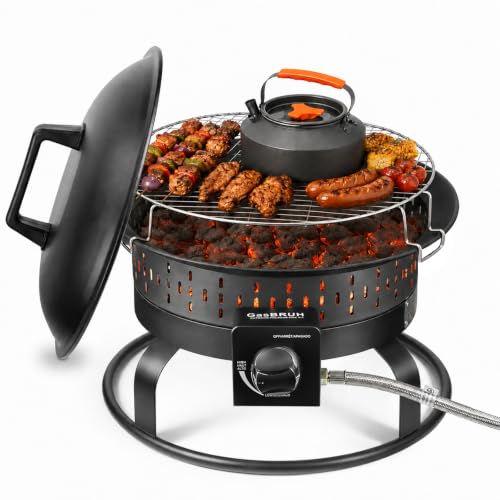
These run on a standard propane cylinder, and many store the tank inside a table or cabinet. They need no gas line and can move between patio and campsite where permitted. Reviewers describe heat output from 50,000 BTU upward as enough for a small seating group, but wind and open space reduce felt warmth.
Fire pit tables
Tables put a tank cover and burner in a single piece of furniture, with a flat rim for drinks. The 28 inch size fits small patios while 40 to 43 inch tables suit larger groups. Weight and material matter, as concrete-look composites can be heavy and steel can fade or rust without a protective finish.
Natural gas and built-in fireplaces
Permanent models such as the Empire Outdoor linear fireplace connect to a home gas supply for continuous running without refilling a tank. A licensed installer should handle the gas line, and local codes determine placement, clearances and permits.
What to Look For
- Safety certification: Look for a listing such as CSA that the maker states. This indicates testing to a standard, and does not replace following the manual.
- Ignition: Push-button or electronic ignition is easier than match-lit designs. Some makers include a flame-out safety valve; confirm this on the specification sheet.
- BTU output: A higher number can mean more heat, but spacing, wind and enclosure affect real warmth. Choose a unit sized to the area you want to warm.
- Wind guard: Wind guards such as the one on the Olimix table keep the flame steadier and protect users from gusts.
- Fuel media: Lava rock, fire glass or ceramic logs change the look and cleanup effort.
- Cover: A fitted cover protects the burner from rain and debris and extends the life of the finish.
- Tank access: Make sure you can swap a propane tank without moving the whole unit.
Placement and Safety
- Place the unit on a stable, level, non-combustible surface, and follow the manual’s required distance from walls, fences, overhangs, trees and furniture.
- Never use a gas fire pit under a covered patio, inside a garage or in an enclosed space unless the maker explicitly allows it. Burning gas produces carbon monoxide.
- Check hoses and connections for leaks as the manual describes before each season, using the method the maker specifies, and do not use an open flame to look for leaks.
- Keep children and pets away, do not leave the fire unattended, and turn off the gas supply at the tank or valve when finished.
- Check local rules, homeowner association policies and burn bans, as some areas restrict gas fire features.
- For natural gas lines or built-in fireplaces, hire a licensed gas fitter. Contact the utility or the maker if you smell gas, shut the supply off and move away.
Budget Tiers and Trade-offs
- Budget tier: Tabletop or portable propane units and 28 inch tables with about 50,000 BTU. Expect thinner steel or resin finishes and fewer included accessories.
- Mid-range tier: 40 to 43 inch tables with heavier construction, glass or rock media, and covers. This tier fits most patio entertainers.
- Premium tier: Permanent natural gas linear or masonry-style fireplaces with professional installation, higher output and a long service life.
Care and Maintenance
- Cover the unit when not in use and let it cool fully first.
- Brush debris off the burner and media and keep the burner ports clear.
- Keep propane cylinders upright, stored outdoors and in a ventilated place.
- Have a technician inspect permanent installations periodically.
Pick X If You Want Y
| Pick this | If you |
|---|---|
| Outland Living 893 portable | want to move it between yards or use it away from home |
| Ciays 28-inch table | have a small patio and want CSA-listed 50,000 BTU |
| Ciays 43-inch table | entertain groups and want a large surface |
| LayinSun Alturas or Bali Outdoors | want a highly rated propane table at premium or value tiers |
| Olimix rattan table | want a budget table with a wind guard |
| Empire Outdoor linear | have a gas line and want a permanent focal point |
| Duluth Forge vent-free | need a smaller built-in unit for a modest space |
Alternatives to Consider
Smokeless wood-burning pits
Models such as the Solo Stove Bonfire 2.0, named best overall in a Tom’s Guide fire pit roundup, burn wood with less smoke. They need fuel handling and local burn permissions but offer a true fire feel.
Patio heaters
Propane or electric patio heaters focus on warmth instead of ambiance and use less space.
Bioethanol or tabletop burners
Smaller decorative burners suit tiny balconies, though many have limited heat output and stricter placement rules.
Sizing Your Fire Feature to the Space
Bigger is not always better. A 43 inch table in a small seating area can crowd walkways and push heat too close to chairs, while a compact pit in a large open yard may feel underpowered. As a starting point, measure the area, mark the footprint of the fire pit and seating on the ground, and leave the clearance the manual requires on all sides.
- Small patios and balconies: choose compact 24 to 28 inch units, and confirm that your landlord or building rules allow gas appliances.
- Medium patios: a 28 to 36 inch table works for four to six people.
- Large entertaining areas: a 40 to 43 inch table or a linear fireplace suits longer seating arrangements.
- Windy sites: a wind guard, nearby windbreak or a model with a lower flame profile helps.
Fuel Choices Compared
Propane is portable and needs only a cylinder, and it is the most common choice for fire tables. Natural gas requires a supply line but lets the fire run continuously with no tanks to swap, and it often costs less to run over time. Some models are sold in one fuel only, and conversion is only appropriate when the maker offers a kit. Remember that propane cylinders have a limited run time at high output, so keep a spare if you plan long evenings.
Frequently Asked Questions
How many BTU do I need?
Many patio fire pits fall between 40,000 and 60,000 BTU. That is enough for a small group in calm conditions, while larger spaces or windy sites need more output or an enclosure.
Can I use a propane fire pit on a covered patio?
Only if the maker’s manual and local rules allow it. Burning gas produces carbon monoxide, so enclosed or covered areas are usually restricted.
Can I convert propane to natural gas?
Some models offer a conversion kit, but the work should follow the maker’s instructions, and a licensed gas fitter should handle it. Do not modify burners yourself.
What goes on top of the burner?
Lava rock, fire glass and ceramic logs are the usual choices. Use only the media the maker approves, as wrong materials can block flow or crack from heat.
Do gas fire pits need a permit?
Portable units generally do not, but permanent gas lines and built-in fireplaces often do. Ask your local building department or utility before installing.
How do I protect it from weather?
Use a fitted cover, store the propane tank upright and ventilated, and let the unit cool before covering. Inspect for rust and burner blockages each season.





