Key takeaways
- Buying on style alone. Fashion boots with a “riding” label may carry no certification at all. Look for the CE mark and the EN 13634 reference on the inside tag.
- Ignoring the shifter zone. Boots with a reinforced shifter pad on the left toe resist the abrasion that smooth leather suffers within a season of daily shifting.
- Choosing too tight a fit. A boot that feels snug in the shop can cut circulation after an hour on the road, especially with thicker winter socks.
- Skipping the break-in. Stiff touring and sport boots need a few short rides before a long trip. Wear them around the house first so pressure points show up before they matter.
- Using one boot for everything. Many riders end up with a waterproof touring boot for winter and a vented or sneaker-style boot for summer commutes. If you only buy one, choose for the conditions you ride in most.
The best motorcycle boot for most riders is a mid-height, waterproof boot with CE Level 2 certification, such as the TCX Street 3 WP for commuting or the Sidi Adventure 3 for long-distance touring. Pick the boot that matches how you ride first, because a track boot is miserable on a commute and a sneaker-style boot gives less protection at highway speed. This guide sorts current models by riding style, then shows how to size, certify and care for them.
Our top picks

As an Amazon Associate we earn from qualifying purchases at no extra cost to you.
Quick Comparison of the Best Motorcycle Boots
| Pick | Best for | Height / closure | Weather protection | Certification | Price range |
|---|---|---|---|---|---|
| Sidi Adventure 3 | Touring and adventure | Tall, buckle and strap | Gore-Tex membrane | CE Level 2 | Premium |
| Alpinestars Corozal Adventure Drystar | Value adventure boot | Mid-calf, buckle and strap | Drystar membrane | CE Level 2 | Mid-range |
| TCX Street 3 WP | Commuting and city riding | Ankle, lace with zip | Waterproof membrane | CE Level 2 | Mid-range |
| TCX Infinity 3 Waterproof | Budget touring | Mid-calf, buckle | Waterproof lining | CE Level 1 | Budget |
| Alpinestars SMX-6 v2 | Sport road riding | Mid-calf, strap closure | Vented, not waterproof | CE certified | Mid-range |
| Alpinestars Supertech R | Track days and racing | Tall, racing closure | Ventilated | Race-grade | Premium |
| Dainese Axial 2 | Maximum protection on track | Tall, racing closure | Ventilated | Race-grade | Premium |
Certification levels and membrane types above follow the manufacturers’ published specifications and 2026 roundups from major riding-gear retailers. Always confirm the exact label inside the boot you buy, since makers revise models between production runs.
Best Overall for Touring: Sidi Adventure 3
The Sidi Adventure 3 is the benchmark touring and adventure boot. It has an Italian-made build, a Gore-Tex membrane, CE Level 2 protection and an articulated ankle that lets you walk comfortably when you are off the bike. It suits riders doing multi-day trips in mixed weather who want one boot for pavement, gravel and a full day of sightseeing on foot.
Main trade-off: It sits at the premium end of the price range, and the tall shaft with multiple closures takes a minute to fasten. Expect a short break-in period before the ankle flex feels natural.
Best Value Adventure Boot: Alpinestars Corozal Adventure Drystar
The Corozal Adventure Drystar delivers CE Level 2 certification and a Drystar waterproof membrane at a noticeably lower price than the premium European adventure boots. The styling is sportier, and the boot walks reasonably well. It is a strong pick for riders who commute during the week and tour at weekends.
Main trade-off: A membrane boot is less breathable in hot weather than a vented sport boot, so riders in warm climates may find it sweaty in summer.
Best for City and Commuting: TCX Street 3 WP
The TCX Street 3 WP is a riding sneaker that looks ordinary off the bike but carries CE Level 2 certification, a waterproof membrane and impact inserts at the ankle. Reviewers repeatedly name it the best choice for riders who walk into an office or store after parking. Since Dainese acquired TCX, reviewers say build quality and comfort have stayed high.
Main trade-off: An ankle-height boot gives less shin and calf coverage than a tall boot, so it fits slow urban riding better than fast highway or sport use.
Best Budget Pick: TCX Infinity 3 Waterproof
The Infinity 3 Waterproof is the entry point for riders who want waterproof, mid-calf touring protection without a premium outlay. It is CE Level 1 certified, which still meets the baseline standard for motorcycle footwear. It works for newer riders who cover a few hundred miles a month.
Main trade-off: Level 1 means a lower abrasion, impact and cut-resistance threshold than Level 2, and the materials will wear faster with daily use.
Best Sport Road Boot: Alpinestars SMX-6 v2
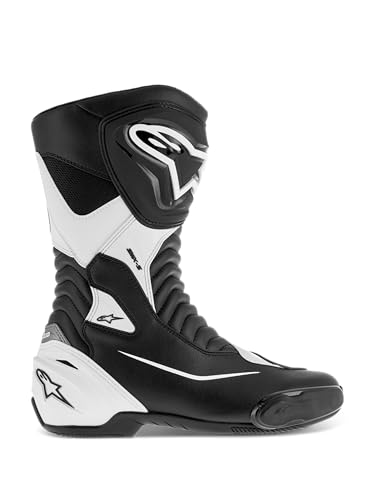
The SMX-6 v2 is a budget-friendly all-rounder for canyon carving and spirited road riding. It has a sporty shape, a protected ankle and a sole that is stiff enough for foot pegs yet short of a full race boot. If your riding is mostly twisty roads with the occasional track day, this is a sensible first sport boot.
Main trade-off: It is not built as a waterproof boot, so rainy commutes will need a boot cover or a different boot.
Best for the Track: Alpinestars Supertech R and Dainese Axial 2
For race tracks, two boots stand out in 2026 roundups. The Alpinestars Supertech R is a long-standing racing reference with a precise fit. The Dainese Axial 2 is described by retailers as the most protective boot in Dainese’s range. Both are built for stiff ankle control, which matters when a foot is trapped under the bike.
Main trade-off: Both are stiff and hard to walk in, sit at the top of the price range, and are overkill for commuting.
Decision Matrix: Match the Boot to Your Riding
| Your situation | Choose | Why |
|---|---|---|
| Daily commute, walk a lot after parking | TCX Street 3 WP | Looks like a sneaker, waterproof, CE Level 2 |
| Multi-day tours, mixed weather | Sidi Adventure 3 | Gore-Tex, tall shaft, walkable |
| Tight budget, light riding | TCX Infinity 3 Waterproof | Lowest cost for waterproof mid-calf coverage |
| Weekend canyon riding | Alpinestars SMX-6 v2 | Sport feel without race-boot stiffness |
| Track days | Supertech R or Axial 2 | Race-grade ankle control |
How to Choose Motorcycle Boots
Check the certification label
Motorcycle footwear in Europe is certified to EN 13634. A boot marked Level 2 meets higher impact, abrasion and cut thresholds than Level 1, and the label should also list the protected zones, such as ankle and shin. Choose Level 2 for anything beyond light, low-speed riding.
Match height to speed
Ankle boots work up to city speeds. Mid-calf boots cover more of the shin and are the usual choice for touring. Tall boots add protection for high-speed sport and track riding.
Choose a membrane for your climate
Gore-Tex and similar membranes keep water out and breathe better than a plain waterproof liner. In hot, dry regions, a vented boot is often more comfortable than any waterproof boot.
Size with riding socks
Try boots with the socks you ride in, in the afternoon when feet are slightly swollen. Your heel should not lift when you flex, and your toes should not touch the end of the boot when you shift.
Worked example: cost per season
If a premium boot lasts six riding seasons and a budget boot lasts three, the premium boot costs about the same per season even at double the purchase price, while delivering a higher protection level. Rider mileage matters as much as the price tag, so riders covering under a few hundred miles a month may do fine with the budget option.
Durability and Care
Soles and heel counters wear first, followed by the shifter-side toe panel. Rinse mud off promptly, dry boots at room temperature away from heaters, and treat leather uppers with a conditioner a few times a year. Replace boots after any crash that impacts the foot, because protective inserts can be compromised even when the leather looks fine. Many premium boots can be resoled, which extends their life.
Common Mistakes When Buying Motorcycle Boots
- Buying on style alone. Fashion boots with a “riding” label may carry no certification at all. Look for the CE mark and the EN 13634 reference on the inside tag.
- Ignoring the shifter zone. Boots with a reinforced shifter pad on the left toe resist the abrasion that smooth leather suffers within a season of daily shifting.
- Choosing too tight a fit. A boot that feels snug in the shop can cut circulation after an hour on the road, especially with thicker winter socks.
- Skipping the break-in. Stiff touring and sport boots need a few short rides before a long trip. Wear them around the house first so pressure points show up before they matter.
- Using one boot for everything. Many riders end up with a waterproof touring boot for winter and a vented or sneaker-style boot for summer commutes. If you only buy one, choose for the conditions you ride in most.
Boots by Riding Season
| Season / climate | Boot type | What to look for |
|---|---|---|
| Hot and dry | Vented sport or sneaker boot | Mesh panels, perforated leather, light weight |
| Wet and mild | Waterproof mid-calf | Sealed membrane, gusseted tongue, trouser-over-boot fit |
| Cold | Membrane touring boot | Room for thicker socks, insulated lining option |
| All-year commuter | Waterproof ankle boot | Slip-resistant sole, easy closure, CE Level 2 |
As a rule of thumb, wear your riding trousers over the boot in rain so water runs off the outside rather than into the shaft. Keep the boot’s zip or hook-and-loop flap closed, since an open flap defeats the membrane.
Frequently Asked Questions
Are motorcycle boots really necessary?
Yes. Feet and ankles are among the most commonly injured areas in motorcycle crashes. Proper boots add impact protection, ankle support and abrasion resistance that sneakers and hiking boots cannot provide.
What does CE Level 2 mean on boots?
It means the boot meets the higher of two performance thresholds in EN 13634 for areas such as impact, abrasion and cut resistance. Level 1 is the baseline. Level 2 gives a greater safety margin and is the better choice for regular riding.
Can I wear hiking boots on a motorcycle?
You can, but they are not designed for crash protection. Hiking boots lack the reinforced ankle and shifter protection of motorcycle boots, and the laces can snag on controls.
How long do motorcycle boots last?
That depends on use, but commuter and touring boots commonly last several seasons with care. Sole wear and cracked leather are the usual signs it is time to replace or resole.
Should I buy waterproof or vented boots?
Choose waterproof if you ride in all conditions or tour. Choose vented if you ride mostly in warm, dry weather and do sport or track riding where airflow matters more.