Key takeaways
- Rotate two pairs if you can, so each pair dries fully between wears.
- Brush off dirt and condition leather regularly, but avoid overly heavy oils that soften the leather.
- Replace insoles every six to twelve months, since foam compresses and loses support.
- Do not store boots by a heater, which can crack leather and weaken adhesive.
- Do not buy boots without trying them on late in the day when feet are swollen.
The best tactical boots in 2026 are the Lowa Zephyr GTX Mid TF for most users, the 5.11 A.T.A.C. 2.0 8-inch Side-Zip for patrol and duty, and the Bates GX-8 Waterproof when you need a composite safety toe with a side zipper. Choose by how long you stand or walk, whether you need a zipper for fast on-and-off, and whether your employer requires a safety toe or specific colors.
Our top picks


As an Amazon Associate we earn from qualifying purchases at no extra cost to you.
Quick Comparison of Tactical Boots
| Pick | Best for | Height | Key features | Waterproofing | Price range |
|---|---|---|---|---|---|
| Lowa Zephyr GTX Mid TF | Everyday duty and field use | Mid | Near-zero break-in, Gore-Tex lining | Gore-Tex | Upper-mid to premium |
| Lowa Z-8S | Rugged 8-inch combat boot | 8 inches | Thicker leather, stiffer chassis | Check current spec | Premium |
| Danner Tachyon | Lightweight 8-inch duty boot | 8 inches | Light weight, athletic feel | Gore-Tex version available | Premium |
| 5.11 A.T.A.C. 2.0 8-inch Side-Zip | Urban patrol | 8 inches | Side zipper, lightweight | Water-resistant | Mid-range |
| Bates GX-8 Waterproof | Side-zip with composite toe | 8 inches | Composite safety toe, side zipper | Waterproof | Mid-range |
| Bates DuraShock Side Zip | Budget duty boot | 8 inches | Shock-absorbing midsole, side zipper | Check current spec | Budget |
| Salomon Quest 4D Forces 2 | Hiking-style tactical boot | Mid to high | Athletic support, strong grip | Gore-Tex | Upper-mid |
Specifications come from the manufacturers’ product pages and 2026 tactical-footwear roundups from retailers such as Galls. Always confirm waterproofing, toe type and any duty certification on the specific model number you buy.
Best Overall: Lowa Zephyr GTX Mid TF
The Lowa Zephyr GTX Mid TF is widely described as a near-zero break-in boot with a Gore-Tex lining, and it is used by federal law enforcement and special operations personnel. It balances support, weight and comfort, which makes it a strong all-day boot for walking, standing and light rucking. The mid-height shaft allows more ankle movement than an 8-inch boot.
Main trade-off: It costs more than patrol-oriented boots, and it has no side zipper, so you need to lace it each time.
Best Premium Alternative: Danner Tachyon and Lowa Z-8S
The Danner Tachyon is a lightweight 8-inch boot with an athletic feel, favored by those who want a lighter load on long shifts. The Lowa Z-8S is a full 8-inch combat boot with thicker leather and a stiffer chassis, which suits rough terrain and heavier loads. Together they cover both ends of the premium range: light and quick, or sturdy and durable.
Main trade-off: Both are expensive. The Tachyon is less rugged in hard abrasion, and the Z-8S weighs more.
Best for Patrol: 5.11 A.T.A.C. 2.0 8-inch Side-Zip
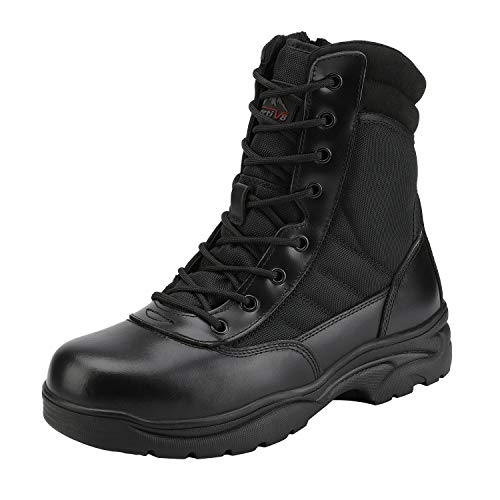
The 5.11 A.T.A.C. 2.0 8-inch Side-Zip is the usual pick for urban patrol and duty. The side zipper lets you slip the boot on quickly, and the lightweight build suits long shifts on pavement. It is a common choice among law enforcement and security staff.
Main trade-off: It is water-resistant rather than fully waterproof, and reviewers note soles can wear fast on pavement and the boots may last around one to two years of daily use.
Best Side-Zip with Safety Toe: Bates GX-8 Waterproof
Few side-zip tactical boots also offer a real safety toe, and the Bates GX-8 Waterproof does. It has a composite toe, which is lighter than steel and does not conduct cold, and it is waterproof. It suits security, correctional and industrial duty roles that need both quick entry and toe protection.
Main trade-off: It is heavier than a non-safety-toe boot, and the fit is more generic than that of premium hiking-style boots.
Best Budget: Bates DuraShock Side Zip
The Bates DuraShock Side Zip is a practical budget boot with a shock-absorbing midsole and an easy zipper. It suits new hires or anyone who needs a second pair for the locker.
Main trade-off: It uses less durable materials than premium boots, so expect shorter life under heavy use.
Best Hiking-Style Option: Salomon Quest 4D Forces 2
The Salomon Quest 4D Forces 2 brings the athletic support and grip of a trail boot to tactical use. It is a good choice for those who hike, ruck or work on uneven terrain more than on pavement.
Main trade-off: It is priced in the upper-mid range, and you lose the quick-entry convenience of a side zipper.
Decision Matrix: Which Tactical Boot Fits Your Job
| Situation | Choose | Reason |
|---|---|---|
| Urban patrol, long shifts | 5.11 A.T.A.C. 2.0 Side-Zip | Lightweight, quick on and off |
| Safety toe required | Bates GX-8 Waterproof | Composite toe with side zipper |
| Field work and rucking | Lowa Zephyr GTX Mid TF | Comfort out of the box, supportive |
| Heavy loads, rough ground | Lowa Z-8S | Stiffer chassis, thicker leather |
| Tight budget | Bates DuraShock Side Zip | Lowest cost, zipper entry |
How to Choose Tactical Boots
Match boot height to duty
Eight-inch boots provide more ankle support and keep trouser cuffs tucked. Mid-height boots allow better flexibility and are lighter. Pick the height that your uniform policy and daily movement allow.
Decide on zipper or laces
A side zipper speeds up changing into and out of boots, which matters for shift work and emergency callouts. Laces offer a more adjustable, secure fit and fewer parts that can fail.
Check waterproofing
Gore-Tex and similar membranes keep water out, but they trap heat. If you work in hot climates, a breathable, water-resistant boot may be more comfortable than a fully waterproof one.
Consider toe protection
If your job requires a safety toe, make sure the boot is rated to the relevant ASTM standard. Composite toes are lighter and non-metallic, while steel toes are thinner but heavier and conduct cold.
Worked example: cost per year
If a mid-range patrol boot lasts about one and a half years on a daily-wear schedule and a premium boot lasts three years, the premium boot costs less per year even at double the price, with the added benefit of better comfort. If you rotate between two pairs, each pair lasts roughly twice as long because the boots have time to dry between shifts.
Boot Care and Common Mistakes
- Rotate two pairs if you can, so each pair dries fully between wears.
- Brush off dirt and condition leather regularly, but avoid overly heavy oils that soften the leather.
- Replace insoles every six to twelve months, since foam compresses and loses support.
- Do not store boots by a heater, which can crack leather and weaken adhesive.
- Do not buy boots without trying them on late in the day when feet are swollen.
Weight, Terrain and Climate Guide
Every extra few ounces on each foot adds up over a long shift, because you lift your boots thousands of times a day. Lighter boots reduce fatigue, but heavier boots with stiffer midsoles protect better when carrying loads or walking on rough ground. Match the boot to your main surface and weather.
| Main conditions | Boot style | What matters most |
|---|---|---|
| Pavement, hot climate | Lightweight, breathable 8-inch | Ventilation, slip-resistant sole |
| Pavement, cold or wet | Waterproof 8-inch with insulation option | Membrane, warm lining |
| Mixed trail and road | Hiking-style mid boot | Ankle support, outsole grip |
| Heavy loads, rough terrain | Stiff-chassis 8-inch leather boot | Midsole stiffness, durable leather |
Break-in and Fit Checklist
- Try boots on at the end of the day with the socks you will wear on duty.
- Walk on an incline: your heel should stay planted and your toes should not hit the front.
- Check that the widest part of the foot sits in the widest part of the boot, because pinching there causes blisters.
- Wear them indoors for short sessions before a full shift, even for boots described as needing little break-in.
- Replace the stock insole if you need more arch support, since a supportive insole can fix many comfort complaints.
Frequently Asked Questions
What is the difference between tactical and hiking boots?
Tactical boots are designed for duty use, often with side zippers, slip-resistant soles and specific color or uniform requirements. Hiking boots focus on trail comfort and traction, and they come in fewer duty-compliant designs.
Are tactical boots good for everyday wear?
Yes, many people wear them for work, hiking and yard work because they are supportive and durable. They can be heavier and warmer than regular shoes, so they may feel bulky for casual wear.
Do I need waterproof tactical boots?
Choose waterproof boots if you work outdoors in wet weather. In hot, dry conditions, a breathable water-resistant boot is often more comfortable.
How should tactical boots fit?
You should have about a thumb’s width of space in front of your toes, a snug heel that does not lift, and enough room to wiggle your toes. Try boots on with the socks you will wear on duty.
How long do tactical boots last?
Budget and patrol boots commonly last about one to two years with daily use, and premium boots can last longer if cared for. Sole wear, loose stitching and lost cushioning signal it is time to replace them.