
Key takeaways
- Budget: Fabric covers and simple weather shields. Good for protecting an idle set.
- Mid-range: Generic hard enclosures with fans and locks. Check ratings and fit carefully.
- Premium: Brand-name enclosures such as Peerless-AV, lift cabinets and purpose-built outdoor TVs.
A sealed, ventilated hard enclosure such as those from Peerless-AV suits a TV that stays outside and is used there, a fabric cover such as the Mount-It 55 to 58 inch cover suits a TV that is covered when not in use, and a covered porch with a purpose-built outdoor TV is often a better answer than any box. The best outdoor TV enclosure depends on weather exposure, TV size, ventilation and whether you want to leave the TV in place year-round. This guide compares the main types, explains ratings, cooling and fit, and ends with a decision table and FAQ.
Our top picks


As an Amazon Associate we earn from qualifying purchases at no extra cost to you.
Outdoor TV Enclosures at a Glance
| Type / example | Best for | Key stated traits | Limits |
|---|---|---|---|
| Hard-shell enclosure, such as Peerless-AV outdoor enclosures | TV that stays outdoors and is watched there | A retailer describes them as built for harsh weather with cooling systems, lockable doors and mounting options | Premium tier; heavy; must match TV dimensions |
| Generic IP65 enclosure with fan and lock | Mid-range outdoor setups | Roundups list an IP65 rating, built-in fans, a lock and a full-motion mount | Quality varies; read the maker’s specification |
| Mount-It soft cover, 55 to 58 inch | Protecting an idle TV | Listing gives 55 inch width, 35 inch height, 5 inch depth; double-lock stitching and hook-and-loop closure | Not for use while the TV is on; not a sealed enclosure |
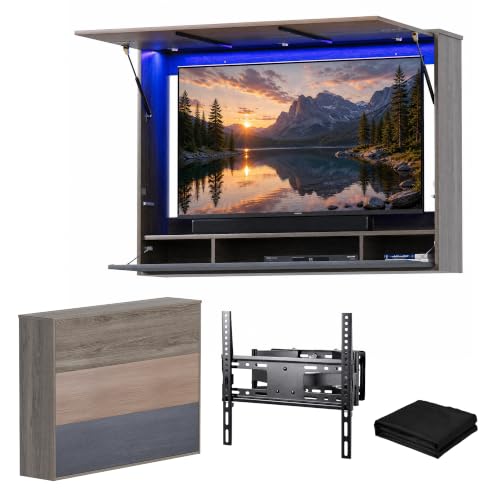
| Weatherproof TV cabinet or lift cabinet | Hidden TV that retracts | Furniture-style housing | Premium tier; needs power and installation |
| Purpose-built outdoor TV | Direct sun or full exposure | Weather-rated by the maker | Higher cost; no enclosure needed |
Details come from retailer listings and roundups such as Deer TV and several affiliate-style lists, and no independent head-to-head test of these models turned up. Check the maker’s current dimensions and the compatibility list for your TV.
How to Choose an Outdoor TV Enclosure
Enclosure or cover
An indoor TV is not designed for moisture, dust, insects or temperature swings. A hard enclosure is meant to protect it while it runs, using seals, ventilation and cooling. A soft cover only protects an idle set from rain, dust and sun and must come off before use. If you plan to leave the TV outside year-round and watch often, a hard enclosure or an outdoor-rated TV is the more suitable choice. If you set up for weekends, a cover plus indoor storage may be enough.
Protection rating
Roundups list IP65 ratings for hard enclosures. IP65 means dust-tight and protected against water jets from any direction under the standard test conditions, but it is not submersion proof. An enclosure rating does not guarantee your TV will survive. The TV itself still has warranty terms that may exclude outdoor use, so check your TV maker’s warranty.
Cooling and ventilation
A sealed box traps heat. Enclosures use fans, vents or filtered airflow to keep the TV inside its operating temperature range. In hot climates cooling matters more. Check the TV maker’s operating temperature range and the enclosure maker’s guidance for climate. Direct sun on the enclosure adds heat and glare, so shade helps.
Size and fit
Match the enclosure to your TV’s width, height and depth, including the stand or mount, and check the maker’s compatibility list. Enclosures list a TV size range, such as 55 to 58 inches for the Mount-It cover. Leave room for cables, the remote and airflow. Check the viewing angle and the screen cover material, which can cause reflections or reduce clarity.
Mounting
Wall mounts must be rated for the combined weight of the TV and enclosure and attached to studs or masonry as the maker directs. Full-motion mounts help you adjust the angle and reduce glare. If you are not sure about the wall, a qualified installer can help.
Electrical safety
Outdoor power needs weather-rated outlets protected by a ground-fault circuit interrupter, in-use outlet covers and outdoor-rated cords. Do not run indoor extension cords through wet areas. Have a licensed electrician install or check outdoor outlets, and follow the TV and enclosure manuals. Disconnect power before cleaning or servicing.
Location
One roundup recommends installing under a roof, deep eave or pergola, which reduces rain, sun and heat on the enclosure. Avoid placing it above a grill, firepit or heater where heat or smoke could damage it, and keep it away from sprinklers.
Security and sound
Lockable doors protect against theft. Outdoor audio is usually a separate decision: a soundbar rated for outdoor use or weatherproof speakers often sound better than a TV’s built-in ones in open air.
Budget Tiers
- Budget: Fabric covers and simple weather shields. Good for protecting an idle set.
- Mid-range: Generic hard enclosures with fans and locks. Check ratings and fit carefully.
- Premium: Brand-name enclosures such as Peerless-AV, lift cabinets and purpose-built outdoor TVs.
Pick X If… Decision Table
| Pick this | If you |
|---|---|
| Peerless-AV style hard enclosure | keep the TV outside and use it often in changing weather |
| Generic IP65 enclosure with fan | want a mid-range solution and will confirm size and ratings carefully |
| Mount-It style soft cover | only need to shield a TV between uses |
| Outdoor-rated TV | have direct sun or full exposure |
| Cabinet or lift | want the TV hidden when not in use and have a budget for it |
Climate and Seasonal Considerations
Hot, humid regions stress cooling and seals the most, since warm moist air can condense inside a housing when temperatures drop at night. Cold regions bring a different problem: many TV makers list a minimum operating temperature, and switching on a very cold set can be harmful, so let it warm up as the manual advises. Coastal air adds salt, which attacks metal hinges, screws and mounts, so look for stainless or coated hardware and rinse the exterior with fresh water as the maker allows. In areas with heavy pollen, dust or insects, filtered vents are a useful feature to look for, and the filters need cleaning on the schedule the maker gives.
Seasonal owners often remove the TV from the enclosure in winter and store it indoors, leaving the empty housing mounted. If you do this, plug unused cable openings so insects and moisture stay out, and check seals for cracks before reinstalling. Silica packs inside a closed enclosure can help with moisture only if the maker allows them, so read the guide first.
Glare, Screen Covers and Viewing
Hard enclosures usually place a clear panel in front of the screen. That panel can reflect sunlight, so position the TV away from direct afternoon sun, use a model with an anti-glare or tinted cover if the maker offers one, and angle the mount slightly downward when the TV sits high. Picture quality also depends on the TV itself. Standard indoor sets are tuned for dim rooms and can look washed out in daylight, which is why some buyers choose a brighter, outdoor-rated display for sunny spaces and keep standard sets for covered, shaded porches. Touch-screen and remote function through the cover can also vary, so confirm with the maker that the remote signal reaches the TV.
Installation Checklist
- Confirm the TV’s width, height, depth and weight against the enclosure’s listed limits.
- Confirm the wall can hold the combined weight, and use the hardware the maker specifies.
- Plan cable routing before closing the enclosure, including HDMI, power and any antenna lead.
- Test the remote through the screen cover or add an infrared extender if the maker offers one.
- Level the unit so rain drains away from seals and doors.
- Keep the vents clear of leaves, spider webs and paint.
Alternatives Worth a Look
- Outdoor projector and screen: Avoids keeping a set outside, but is best after dark and needs storage for the screen.
- Portable or tablet viewing: For occasional use, a portable display avoids permanent installation.
- Indoor window or door placement: Placing the TV just inside a large opening can make an outdoor viewing area without exposing the set.
Frequently Asked Questions
Can I put a regular TV in an outdoor enclosure?
Many people do, using an enclosure with cooling and seals. However, the TV maker’s warranty may not cover outdoor use, and heat, cold and humidity can still affect the TV. Read both manuals.
Is a fabric cover enough?
It protects an idle TV from rain, dust and sun, but it is not for use while the TV is on, because it blocks ventilation. If you watch outdoors regularly, consider a hard enclosure or outdoor-rated TV.
What does IP65 mean?
It means the housing is dust-tight and protected against water jets from any direction in standard testing. It does not mean the enclosure can be submerged, and it does not guarantee the TV inside is protected in all conditions.
Does the enclosure need a fan?
Often yes, especially in warm climates, since a sealed box traps heat. Check the TV’s operating range and the enclosure maker’s cooling guidance, and keep the unit shaded.
How do I power an outdoor TV safely?
Use weather-rated, ground-fault-protected outlets with in-use covers and outdoor-rated cords, and have a licensed electrician install them. Follow both manuals.
Where should I mount the enclosure?
Under a roof, deep eave or pergola is ideal, away from grills, heaters and sprinklers. Mount to studs or masonry with hardware rated for the combined weight, or ask a qualified installer.





