Key takeaways
- Budget tier: Folding steel or lighter aluminum ramps suit lawn mowers, small ATVs and occasional jobs. Expect lower capacity and shorter length.
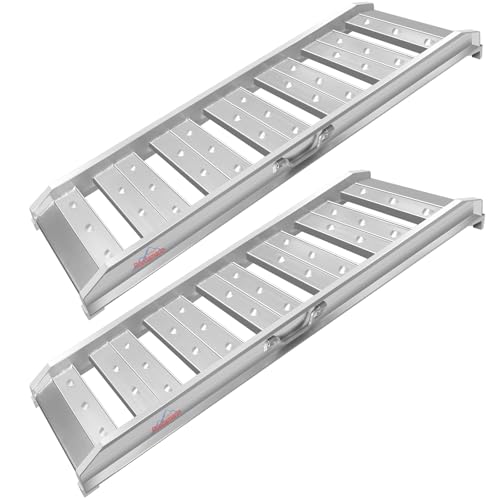
- Mid-range tier: Aluminum pairs from makers such as VEVOR, BestEquip and ALMULOO cover most homeowners. Look for traction surfaces, a stated combined rating and a clear lip design.
- Premium tier: Heavy-duty aluminum such as GEN-Y Hitch or longer 8 ft sets from makers like Broozer suit frequent loading of heavier equipment and give the gentlest angles.
For most owners hauling a mower, ATV or garden tractor on an open utility trailer, a pair of long, arched aluminum ramps rated well above the loaded weight is the safest and easiest choice, while folding steel ramps suit a tight budget and occasional use. Heavier machines such as compact tractors and skid steers need long, solid, single-piece or heavy-duty dual-runner ramps with a generous reserve in the rating. The right pick comes down to four numbers: the weight you load, the height of the trailer deck, the length of the ramp, and the width between your wheels.
Our top picks


As an Amazon Associate we earn from qualifying purchases at no extra cost to you.
Utility Trailer Ramps at a Glance
| Model or type | Best for | Key stated specs | Limits |
|---|---|---|---|
| VEVOR 60-inch aluminum pair | General homeowner use, light vehicles and mowers | Roundups report 6,000 lb combined, 60 in long, about 26 lb per ramp | Short length means a steeper angle on higher decks |
| GEN-Y Hitch heavy-duty aluminum | Heavier equipment and frequent use | Reviewers report 8 ft length and a 10,000 lb rating | Premium tier, non-folding, bulky to store |
| Broozer 8 ft aluminum | Long, gentle loading angle | Reviewers report 10,000 lb combined | Reviewers note no mounting bracket is included |
| BestEquip and ALMULOO aluminum | Weekend users who want balance of cost and capacity | Roundups list lengths from 60 to 84 in | Rated capacity varies by length, read the label |
| Stalwart 77-inch folding steel | Budget, light loads, small storage space | Roundups report 2,200 lb combined | Heavier, can rust, lower capacity |
| Reese 6 ft steel | Short, low decks | Steel construction, 6 ft length | Reviewers say too steep for full-size truck beds |
| MAXIVAMN aluminum bi-fold | Pickup beds and light loads | Roundups report 1,500 lb rating | Not meant for heavy tractors |
| AUTOSAVER88 84-inch | Gentler angle on mid-height decks | 84 in length listed by the maker | Longer ramps are harder to store |
Specifications above come from maker listings as summarized by review roundups. Ratings can differ between sizes and revisions of the same product line, so always read the label on the ramp you actually receive.
How to Size a Ramp Correctly
Start with the weight
Add the weight of the machine, any attachments, fuel and the operator. Many makers state a combined rating for the pair, while others state a per-ramp rating, and the two are easy to confuse. One reviewer cited in a roundup says ramps behave most reliably when used at roughly half to three quarters of the rating, so choose a rating comfortably above your loaded weight rather than right at it.
Measure deck height and choose length
Measure from the ground to the top of the trailer deck. A longer ramp creates a gentler angle, which matters for low-clearance mowers, tractors with front-mounted implements, and anything with a short wheelbase. A short ramp on a tall deck can cause scraping at the break-over point or tip a top-heavy machine. As a rough habit, many buyers aim for a ramp at least four times as long as the deck height, though your equipment manual and the ramp maker’s guidance should take priority.
Check width and wheel track
Each ramp should be wider than the tire, with a lip or side rail where possible. Dual-runner designs that join into one platform are useful for narrow tracks, while individual ramps let you adjust spacing for wide equipment. Confirm that the combined spacing fits your wheel track before relying on a pair.
Match the attachment style
Hook ends, bolt-on flanges and strap-down tabs all exist. The ramp should seat securely on the trailer edge and, ideally, be fastened in place. Reviewers frequently mention that a ramp that slides off the edge is the most common cause of loading accidents.
Aluminum, Steel and Arched Designs
Aluminum
Roundups consistently describe aluminum as lighter, typically 30 to 50 percent less weight than steel, and resistant to rust. That makes loading easier for one person. The trade-off is a higher cost and, in some designs, more flex under heavy point loads.
Steel
Steel is usually cheaper and strong for its cost, which is why single-piece steel ramps are suggested for skid steers and compact tractors over about 3,000 lb in some guides. The downsides are weight, which makes solo handling awkward, and the need to touch up scratches to limit rust.
Arched and folding
Arched ramps reduce the sudden angle change where the ramp meets the deck, helping low-clearance machines such as zero-turn mowers. Folding ramps take less space in a garage or truck but add hinge points that need occasional inspection. Reviewers generally rate fixed single-piece ramps as more rigid, and folding models as more convenient.
Budget Tiers and Trade-offs
- Budget tier: Folding steel or lighter aluminum ramps suit lawn mowers, small ATVs and occasional jobs. Expect lower capacity and shorter length.
- Mid-range tier: Aluminum pairs from makers such as VEVOR, BestEquip and ALMULOO cover most homeowners. Look for traction surfaces, a stated combined rating and a clear lip design.
- Premium tier: Heavy-duty aluminum such as GEN-Y Hitch or longer 8 ft sets from makers like Broozer suit frequent loading of heavier equipment and give the gentlest angles.
Safety and Care Notes
- Park the trailer on level, firm ground, hitched to the tow vehicle, with the trailer brakes or wheel chocks set.
- Secure the ramps to the trailer before driving on them, and keep bystanders clear of the sides.
- Load slowly and straight. Do not turn on the ramp, and do not shift gears or stop partway if the machine manual advises against it.
- Keep ramp surfaces clean and dry. Mud, oil and wet leaves reduce traction on any material.
- Inspect welds, hinges, hooks and rungs before each season. Retire a bent, cracked or heavily corroded ramp rather than repair it informally.
- Store aluminum ramps off the ground and away from road salt, and keep steel ramps dry.
- Follow the trailer maker’s tongue weight guidance after loading, since placement affects towing stability.
Pick X If You Want Y
| Pick this | If you |
|---|---|
| VEVOR-style 60-inch aluminum | load a mower or small vehicle onto a low trailer and want light handling |
| Broozer or GEN-Y 8 ft aluminum | carry heavier equipment or want the gentlest angle and long-term durability |
| BestEquip or ALMULOO aluminum | want a balance of cost, capacity and weight for weekend use |
| Stalwart folding steel | have tight storage, light loads and a small budget |
| Single-piece steel ramps | move compact tractors or skid steers and do not mind the weight |
| Bi-fold truck-bed ramps | load light cargo into a pickup rather than a utility trailer |
Alternatives to Consider
Trailer with a tilt bed or dovetail
A trailer built with a dovetail or a tilting deck needs shorter ramps, or none at all. If you load often, this can be a better long-term answer than buying longer ramps.
Powered or hydraulic liftgates
For repeated heavy loading, a liftgate removes the angle problem altogether, though it adds cost and maintenance.
Beaver-tail or spring-assist ramp gates
Some utility trailers have a built-in rear gate that folds down as a ramp. These are convenient, but check the trailer maker’s rated capacity for the gate itself, which is often lower than the trailer’s total rating.
Loading Technique and Common Mistakes
Most ramp accidents trace back to setup rather than the ramp itself. Reviewers and equipment makers repeatedly point to the same handful of errors, and avoiding them matters as much as the model you buy.
- Loading on a slope: a trailer parked on even a slight incline changes the ramp angle and can shift the load. Choose flat, firm ground.
- Ignoring tongue weight: placing a heavy machine too far back can lighten the hitch and cause sway on the road. Follow the trailer maker’s guidance on load placement.
- Mismatched ramp pairs: use two ramps from the same set so height, width and surface match.
- Using ramps beyond their rating: remember the loaded weight includes attachments, fuel, cargo and operator.
- Wet or icy surfaces: traction falls sharply. Wait, dry the surface, or use ramps with a stated high-traction design.
- Rushing the crest: slow, steady progress through the break-over point reduces the chance of scraping or tipping.
If you often load low-clearance equipment, ask the equipment maker whether a minimum approach angle is stated in the manual and compare it with the angle your ramp length produces on your deck height. Measuring once, before you buy, is far cheaper than discovering a mismatch with a loaded machine halfway up the ramp.
Frequently Asked Questions
How long should a trailer ramp be?
Longer is gentler. Many buyers aim for roughly four times the deck height, and longer still for low-clearance mowers or tractors. Your equipment manual and the ramp maker’s guidance take priority over any rule of thumb.
Is the capacity rating per ramp or for the pair?
It depends on the maker. Some list a combined rating for the pair and others list a per-ramp rating. Read the product label or manual and, if unclear, assume the lower figure.
Are aluminum ramps strong enough for a tractor?
Heavy-duty aluminum ramps with ratings of several thousand pounds are sold for this purpose, but the rating must be well above the machine’s loaded weight. For very heavy equipment, reviewers often prefer solid steel or heavy-duty dual-runner designs.
Do I need to strap the ramps to the trailer?
Securing them is strongly advised. Many ramps rely on hooks or flanges, but ramps can still slide when wet or loaded. Use the attachment points the maker provides and add a strap or pin if the design allows.
Can I use car ramps or truck ramps on a utility trailer?
Only if the maker states they suit that use. Ramps made for pickup beds or garages may have different attachment styles, lengths and ratings, so match the ramp to the deck height and trailer edge.
How should I store ramps?
Keep them dry, off the ground and away from road salt. Inspect hinges, welds and traction surfaces before each season, and replace any ramp that shows cracks, bends or heavy corrosion.