
Key takeaways
- Hand size. A chef’s knife should feel comfortable in a pinch grip. If you have small hands, a lighter model or a seven-inch blade may feel more controllable.
- Handle material. Synthetic handles resist moisture and are easy to clean. Wood handles look good but need more care.
- Weight. Heavier knives power through hard produce, while lighter ones reduce fatigue in long prep sessions.
- Block footprint. Measure your counter space and consider in-drawer trays or magnetic strips as alternatives.
For most home cooks, a Wüsthof Classic block set or a Zwilling J.A. Henckels Four Star set is the safest long-term buy, a Victorinox Fibrox Pro or Swiss Classic set is the value pick for people who want reliable blades without a large outlay, and a compact Misen or MAC Professional set suits cooks who would rather own three excellent knives than a block full of fillers.
Our top picks



As an Amazon Associate we earn from qualifying purchases at no extra cost to you.
Knife Sets at a Glance
| Set | Style | Best for | Reported details | Limits |
|---|---|---|---|---|
| Wüsthof Classic block sets (7-piece slim and 9-piece) | Forged German steel | Home cooks wanting a long-lasting all-round set | Forbes Vetted and Food Network name Classic block sets their best overall; TechGearLab data rated a Classic set highly for edge retention | Premium tier; block takes counter space |
| Zwilling J.A. Henckels Four Star and Forged Elite | Forged German steel | Cooks who want comfortable handles and heirloom quality | Taste of Home names the Four Star set its top pick after testing multiple sets, with Forged Elite as a runner-up | Heavier feel than Japanese-style knives |
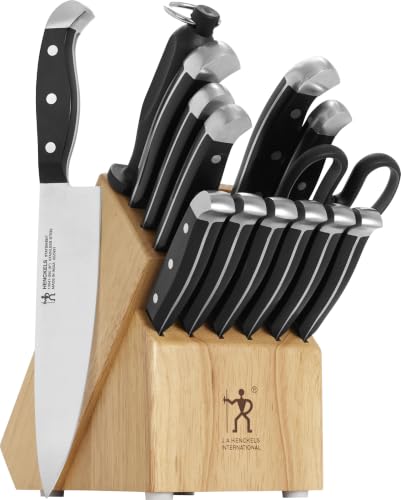
| Henckels Classic 15-piece self-sharpening | Block with built-in sharpening | Those who want a large set with easy upkeep | Food Network names it the best self-sharpening set | Large block; more pieces than most cooks use |
| Victorinox Fibrox Pro and Swiss Classic sets | Stamped Swiss steel | Value-minded cooks, students, first kitchens | Several roundups name Victorinox the value pick; TechGearLab scored a Classic 8-piece set high for selection and versatility | Lighter, less polished handles than forged sets |
| Misen 3-piece essentials | Minimal set without a block | Small kitchens, cooks who want the core knives only | Food Network and Forbes Vetted both name it a top basic set | No steak knives or block; fewer specialty blades |
| MAC Professional 3-piece | Japanese-style, thin blades | Cooks who prioritize precision and keen edges | One roundup names it a top compact professional set | Premium tier; edges need more careful handling |
Taste of Home, Food Network, Forbes Vetted and TheConsumersGuide reach broadly similar conclusions: forged German sets lead overall, Victorinox leads on value, and Misen leads in the minimal category. Prices and exact rankings differ between outlets, so use the tiers below as a guide.
What Should Be in a Good Set?
Three knives do most of the work in a home kitchen: an eight-inch chef’s knife, a paring knife and a serrated bread knife. Anything beyond that is optional. Utility knives, santoku knives and boning knives earn their place only if you cook in a way that uses them. Steak knives add value if you serve steak often but are often thinner than the main set and can be bought separately.
Block sets look generous but frequently include slots filled with knives you will rarely touch. A smaller set of well-made knives often performs better than a large set of mediocre ones. Reviewers repeatedly stress this point, which is why compact sets from Misen and MAC attract attention.
Forged or Stamped Blades?
Forged knives are shaped from a single piece of steel and typically have a bolster, a thicker spine and a heavier feel. Wüsthof and Zwilling forged lines fall here. Many cooks like the balance and durability, and forged knives usually hold their shape well with regular honing.
Stamped knives are cut from a sheet of steel. They are lighter and usually cost less. Victorinox is a well-known example, and its Fibrox Pro handles are praised for grip and ease of cleaning. Stamped does not mean low quality, but the construction is simpler and the knives feel lighter in the hand.
German versus Japanese-style
German-style knives such as Wüsthof and Henckels generally have a slightly thicker blade and a more curved belly, which suits rocking cuts and tough tasks. Japanese-style knives like MAC are usually thinner and can take a finer edge, but they can chip if used on bones or frozen food. Choose the style that matches how you cut.
Handles, Balance and Fit
- Hand size. A chef’s knife should feel comfortable in a pinch grip. If you have small hands, a lighter model or a seven-inch blade may feel more controllable.
- Handle material. Synthetic handles resist moisture and are easy to clean. Wood handles look good but need more care.
- Weight. Heavier knives power through hard produce, while lighter ones reduce fatigue in long prep sessions.
- Block footprint. Measure your counter space and consider in-drawer trays or magnetic strips as alternatives.
Budget Tiers
Budget tier
Victorinox sets dominate budget recommendations. They offer sharp, practical blades with grippy handles. They are a good fit for first kitchens or households that put knives through heavy use. Expect a simple look and lighter weight.
Mid-range tier
Zwilling and some Henckels lines fit here, along with Misen’s compact set. You get better steel, comfortable handles and a more polished finish, with the option of a block or a trimmed-down core set.
Premium tier
Wüsthof Classic and MAC Professional sets sit at the top. These are sets many cooks keep for decades with proper care, and the investment makes the most sense for those who cook daily.
Care, Sharpening and Safety
Wash knives by hand with warm water and mild soap, dry them promptly and store them in a block, on a magnetic strip or in a sheath. Most makers advise against the dishwasher because heat, detergent and knocking against other items can dull edges and damage handles. Check the manual for your set.
Hone regularly to keep the edge aligned, and sharpen on a stone or a quality sharpener when honing no longer restores cutting performance. Self-sharpening blocks can help maintain an edge but follow the maker’s guidance on how often to use them. Always cut on a stable board made of wood or plastic, not on glass or stone, and keep fingers curled away from the blade. Store knives out of the reach of children, and never try to catch a falling knife.
How to Choose Between Similar Sets
When two sets look alike on paper, handle feel and warranty often decide the matter. Hold a chef’s knife in a pinch grip if you can, and note whether the handle edges press into your palm during a few mock cuts. Read the warranty, since makers differ in what they cover and for how long. Consider also whether the maker offers replacement pieces, because losing or damaging one knife is easier to fix when single knives are sold separately.
Finally, match the set to your habits. If you cook several times a week, spend more on the chef’s knife and keep the rest simple. If you cook occasionally, a durable value set with easy-clean handles is usually enough. Whichever you choose, a stable cutting board and regular honing matter as much as the brand name.
Pick X If … Decision Table
| Pick this | If you … |
|---|---|
| Wüsthof Classic block set | want a long-lasting German set and have counter space |
| Zwilling Four Star or Forged Elite | value comfortable handles and a well-rounded forged set |
| Henckels Classic 15-piece self-sharpening | want a large block with built-in upkeep |
| Victorinox Fibrox Pro or Swiss Classic | want dependable knives at a modest tier |
| Misen 3-piece essentials | want a small, simple set without a block |
| MAC Professional 3-piece | prefer thin Japanese-style blades and precise cuts |
Alternatives to a Full Set
- Build your own trio. Buy a chef’s knife, a paring knife and a bread knife separately from brands you like. This lets you mix styles and avoid unused pieces.
- Add a good steak knife set separately. If you rarely serve steak, skip these. If you do, a dedicated set is often better than the extras included in a block.
- Single premium chef’s knife. Many cooks upgrade only their main knife and keep inexpensive paring and bread knives.
- Magnetic strip or drawer tray. If a block does not suit your kitchen, these alternatives protect edges and save space.
Frequently Asked Questions
How many knives do I really need?
Most cooks can handle nearly every task with a chef’s knife, a paring knife and a serrated bread knife. Add a utility knife or a santoku if you cut a lot of produce or prefer a shorter blade. Extra pieces are optional and often go unused.
Are expensive knife sets worth it?
For people who cook often, higher-tier sets generally offer better steel, more comfortable handles and longer service life. For occasional cooks, a value set from a reputable maker is often enough. The best choice depends on how much you use knives and how well you maintain them.
Can I put knives in the dishwasher?
Most makers recommend hand washing. Heat, harsh detergent and contact with other items can dull blades and damage handles. Follow the care instructions that come with your set.
How often should I sharpen my knives?
Hone often, even weekly for heavy use, and sharpen only when honing no longer restores a clean cut. For many home cooks that means sharpening once or twice a year. Self-sharpening blocks can help, but follow the maker’s instructions.
What is the difference between a chef’s knife and a santoku?
A chef’s knife usually has a longer, more curved blade suited to rocking cuts, while a santoku has a flatter edge and a shorter, wider blade that suits chopping and slicing. Neither is better; it comes down to cutting style and comfort.
Is a knife block necessary?
No. A block is convenient and keeps knives safe, but a magnetic strip, a drawer tray or individual sheaths work well too. Choose based on counter space and how many knives you own.





