
Key takeaways
- Ultralight backpacking: one or two pots, usually titanium or thin aluminum, designed to boil water and rehydrate meals.
- Mid-weight and group sets: hard-anodized aluminum pots and pans with lids, handles and nesting bowls for real cooking.
- Car camping: heavy, durable cookware, including cast iron, where weight does not matter.
For one or two backpackers counting grams, a titanium set like the Snow Peak Trek 900 or Multi Compact is the usual reviewer pick; for families and car camping, the GSI Pinnacle Camper is the set that shows up most; and for collapsible, space-saving cooking, Sea to Summit’s X-Pot or Alpha Pot is where reviewers send people. The best set depends on how many people you cook for, how far you carry it and what you cook.
Our top picks

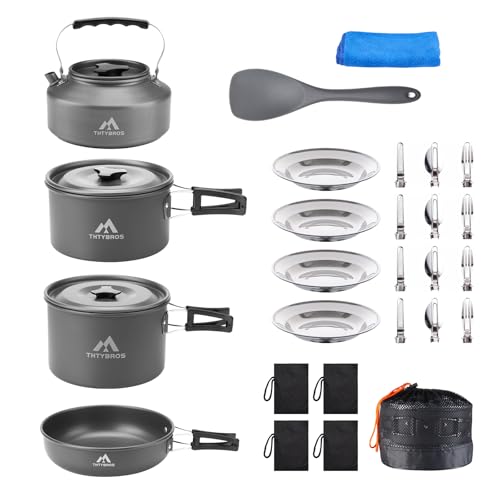

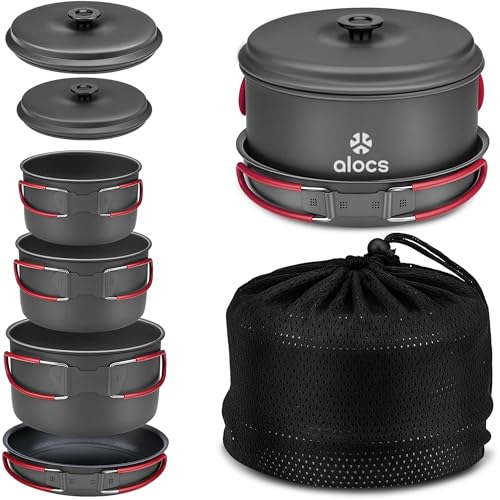
As an Amazon Associate we earn from qualifying purchases at no extra cost to you.
Start With How You Camp
Camping cookware falls into three groups, and picking the wrong group is the most common mistake.
- Ultralight backpacking: one or two pots, usually titanium or thin aluminum, designed to boil water and rehydrate meals.
- Mid-weight and group sets: hard-anodized aluminum pots and pans with lids, handles and nesting bowls for real cooking.
- Car camping: heavy, durable cookware, including cast iron, where weight does not matter.
At a Glance: Camping Cookware Compared
| Set | Best for | Reviewer-cited details | Limits |
|---|---|---|---|
| Snow Peak Multi Compact Titanium | Ultralight solo backpacking | 99Boulders reports about 11.6 oz and scores it as top backpacking pick | Titanium heats unevenly; poor for simmering |
| Snow Peak Trek 900 Titanium | Backpackers who want a single pot | Named best for backpackers in one roundup | Small capacity |
| GSI Pinnacle Dualist II | Two people on a trip | Reported at 1.8 L and roughly 1.3 lb | Heavier than titanium |
| GSI Pinnacle Camper | Families and car camping | Reported 18 pieces at about 3 lb 10 oz | Bulky for backpacking |
| GSI Halulite Dualist HS | Pot set all-rounder for pairs | Backpacker magazine reportedly named it a favorite | Aluminum surfaces need care with utensils |
| Sea to Summit X-Pot 2.8 L | Collapsible, 2 to 3 people | 99Boulders reports 2.8 L capacity | Silicone walls and base need careful use |
| Sea to Summit Alpha Pot 2.2 and Detour | Non-stick and collapsible options | Named by Campingsaga and Outdoor Life in their categories | Non-stick coating needs soft utensils |
| MSR Ceramic 2-Pot Set and Alpine 2 | Durability and non-stick | Cited by Outdoor Life and Campingsaga | Heavier than titanium |
| Stanley Wildfare and Lodge Combo Cooker | Group meals and open-flame cooking | One aggregator reports Outdoor Gear Lab placing them highly | Heavy; car camping only |
Materials Compared
Titanium
Titanium is light and strong and does not hold flavor, which is why ultralight backpackers love it. Its drawback is poor heat spreading, so food can scorch if you try to simmer. Reviewers say it is best for boiling water and simple meals.
Hard-anodized aluminum
Hard-anodized aluminum spreads heat well, is moderately light and handles real cooking such as pasta and sauces. GSI and MSR use this material in many sets. Avoid metal utensils on non-stick coatings.
Stainless steel
Stainless is tough and easy to clean but heavier and slower to heat. It suits car camping and group use.
Cast iron
Cast iron holds heat well for searing and baking over a fire, but it is heavy and needs seasoning. It belongs in car camping kits.
Silicone and collapsible designs
Collapsible pots such as Sea to Summit’s save packing space. Be careful with direct flame contact on silicone sides, and follow the maker’s guidance on stove types and heat.
Sizing: How Much Pot Do You Need?
A rough guide used by many gear writers is about 0.7 to 1 liter for one person, 1.5 to 2 liters for two, and 2.5 liters and above for three or more. Bigger pots take more fuel and space, so choose the smallest capacity that suits your menu. Check the maker’s stated capacity and nesting dimensions to see whether your stove canister fits inside.
Stove Compatibility
- Canister stoves: work with most backpacking pots. Wide pots on tiny stoves can be unstable.
- Integrated systems: a few sets pair the pot with a specific burner and use heat exchangers for fuel efficiency.
- Open fire: only use cookware the maker says is suitable. Many nonstick coatings and silicone parts are not designed for direct flame.
- Induction or home stoves: camping aluminum and titanium pots may not work on induction.
Budget Tiers
Budget
Basic aluminum or stainless sets work fine for car camping and occasional trips. Expect heavier weights and simpler lids and handles.
Mid-range
Hard-anodized sets from GSI and MSR and some Sea to Summit collapsible models are usually in this tier, with good heat spread, nesting and useful extras like strainer lids.
Premium
Titanium sets from Snow Peak and high-end integrated systems cost more for their low weight. They make sense if you carry the gear on long trips.
Care and Safety
- Use soft utensils on non-stick surfaces and wash with a soft sponge.
- Never heat an empty non-stick pot at high temperature, as the manual may warn.
- Let pots cool before handling, since metal handles and rims can get hot. Use handle grips or gloves.
- Operate stoves outdoors in ventilated areas, never inside a tent, due to fire and carbon monoxide risks.
- Keep the stove on a stable, flat surface away from flammable material.
- Clean food residue promptly in camp and dispose of waste following local rules to avoid attracting wildlife.
Pick X If… Decision Table
| If you want… | Pick | Why |
|---|---|---|
| The lightest solo kit | Snow Peak Multi Compact or Trek 900 | Titanium weight savings |
| Real cooking for two | GSI Pinnacle Dualist II | Hard-anodized with nesting accessories |
| A family kitchen kit | GSI Pinnacle Camper | Many pieces |
| Minimal pack space | Sea to Summit X-Pot or Alpha Pot | Collapsible design |
| Rugged ceramic non-stick | MSR Ceramic 2-Pot Set | Durable coating |
| Open-fire cooking | Lodge Combo Cooker | Cast iron heat retention |
Alternatives
- Single pot plus spork: the lightest approach for boil-in-bag meals.
- Integrated canister stove systems: built for fast boiling and fuel efficiency.
- Cast iron skillet and Dutch oven: best for campground cooking where weight is not an issue.
- Freeze-dried meals with an insulated pouch: skip pots almost entirely.
Packing, Weight and Fuel Planning
Cookware weight is only part of the load. A heavier pot that boils faster or nests around a fuel canister can lower the total weight you carry, because you burn less fuel and need fewer extra containers. Reviewers who weigh complete kits often count the pot, lid, stove, fuel, spork and mug together rather than the pot alone. Think about the whole kitchen before you buy.
Nesting matters for packing. Many sets are designed so bowls, mugs and a lid stack inside the main pot, and some leave room for a small canister and lighter. Compare the maker’s stated nested dimensions with the size of your pack’s cooking compartment. A pot with a lid that doubles as a strainer or frying surface can replace two other items.
Think about what you really cook. If most meals are dehydrated pouches, a single small pot is enough, and extra pans are dead weight. If you cook eggs, pancakes or fish, a shallow non-stick pan makes a noticeable difference, and a set with a skillet is worth the extra grams. For group trips, a large pot for pasta or stew and a separate pan lets two dishes cook at once.
Handles are another detail. Folding handles save space but can loosen with time; locking handles feel safer when lifting a full pot. Heat-resistant grips help, though no handle is a substitute for gloves when you move boiling water. Finally, bring a small scrubber, biodegradable soap and a way to carry waste water away from streams and lakes, following local leave-no-trace guidance.
Frequently Asked Questions
Is titanium cookware worth it?
If weight is your priority, yes. It is light and durable, but it heats unevenly, so it is best for boiling water. For simmering sauces, hard-anodized aluminum is often easier.
What size pot do I need for two people?
Roughly 1.5 to 2 liters suits two people for typical camp meals, based on common gear-writer guidance. Pick larger if you cook pasta or stews, and check that it nests with your stove canister.
Are collapsible pots durable?
Reviewers like them for packing space, but silicone walls require care around direct flame and sharp objects. Follow the maker’s stove and heat guidance.
Can I use camping cookware over a campfire?
Only if the maker says it is suitable. Non-stick coatings, silicone parts and some handles can be damaged by direct flame, while cast iron and some stainless cookware tolerate it.
How do I clean burnt-on food?
Soak with warm water, loosen with a soft scrubber and avoid abrasive pads on non-stick surfaces. Bring water to a simmer in the pot to loosen residue where the material permits.
Can I cook inside my tent?
No. Cooking in a tent creates fire and carbon monoxide hazards. Cook outdoors in a ventilated area following the stove manufacturer’s instructions.





