Key takeaways
- Pros: 10 simultaneous connections; established brand with a broad server network
- Con: Renewal pricing exceeds the first-year cost
Anyone who connects to public Wi-Fi at a coffee shop, airport lounge, or co-working space faces a concrete risk: unencrypted traffic that passes within reach of anyone on the same network. A VPN encrypts that traffic and masks your IP address, closing the most common exposure point. The problem is that the market floods buyers with options that differ wildly in device limits, logging policies, bundled extras, and renewal pricing, making it genuinely hard to match a product to a specific use case without reading dozens of spec sheets and owner reports.
What separates a worthwhile VPN subscription from a mediocre one in 2026 comes down to four things: whether the provider keeps logs, how many simultaneous connections you get, whether the listed price reflects the actual long-term cost or just an introductory tier, and whether the software works reliably on the devices you already own. We compared the published specifications, current retail prices, and aggregate owner feedback across eight products that span the range from single-purpose privacy tools to broader security bundles and even a hardware option for travelers. The goal here is straightforward: help you identify which product fits your situation without paying for features you will never touch.
As an Amazon Associate we earn from qualifying purchases at no extra cost to you. Product prices and availability are accurate as of the date shown and are subject to change.



![Bitdefender Premium VPN | 10 Device | 1 Year [PC/Mac Online Code]](https://m.media-amazon.com/images/I/51PJO994uUL._SL160_.jpg)
![Norton 360 Deluxe Antivirus, 3 Devices, Auto-Renews [Download]](https://m.media-amazon.com/images/I/41CUTfRuxEL._SL160_.jpg)

Quick Picks
| Product | Best for | Price |
|---|---|---|
| NordVPN Basic | First-time VPN buyers | $29.99 |
| NordVPN Plus | Password management plus VPN | $44.99 |
| TunnelBear VPN | Unlimited devices on a budget | $24.99 |
| Mullvad VPN | Maximum privacy, minimal data collection | $65 |
| Bitdefender Premium VPN | Device-heavy households | $29.99 |
| Norton 360 Deluxe | Antivirus with VPN bundled | $19.99 |
| NordVPN Standard | Balanced security suite | $34.99 |
| GL.iNet Opal Travel Router | Hardware-level encryption on the go | $39.99 |
How We Picked
We narrowed the field using three criteria that matter most when comparing VPN reviews: connection and logging transparency (does the provider state a verifiable no-log policy?), simultaneous-device support relative to price, and whether the subscription renews at the advertised rate or jumps significantly after the first year. Products that met at least two of those three benchmarks made the cut. We also included one hardware option because it solves the same underlying problem at the network layer rather than the application layer, and owner feedback showed strong crossover interest between the two approaches.
The 8 Best Vpn Reviews in 2026
NordVPN Basic
NordVPN Basic is the entry point to one of the most recognized names in VPN software, offering encryption for up to 10 devices on a single annual license. It suits someone who wants a straightforward tunnel without password managers or antivirus add-ons cluttering the interface. Owner feedback highlights consistent connection speeds and a large server network, though some note that the introductory price increases meaningfully at renewal.
- Pros: 10 simultaneous connections; established brand with a broad server network
- Con: Renewal pricing exceeds the first-year cost
Skip this if you only need protection on two or three devices and want the lowest possible long-term cost.
NordVPN Plus
NordVPN Plus bundles the same VPN client with a password manager, making it a practical choice for people who reuse passwords across accounts or store sensitive logins in browser autofill. The 10-device allowance covers a household with phones, laptops, and tablets. Reviews praise the convenience of a single vendor for two security needs, while noting the price premium over Basic is modest if you would buy a separate password manager anyway.
- Pros: VPN and password manager in one license; consistent 10-device support
- Con: Higher upfront cost than buying either tool separately during a sale
Skip this if you already have a password manager you are comfortable with and only need tunneling.
TunnelBear VPN
TunnelBear distinguishes itself by offering unlimited devices on a single annual subscription, a rare policy in a category where most competitors cap connections at five or ten. At $24.99 per year, it represents the lowest per-device cost in this roundup for anyone with a sprawling set of gadgets. The interface is simple and the logging policy is transparent. Owner feedback is broadly positive on usability, though some advanced users note fewer customization options for protocols.
- Pros: Unlimited devices; affordable flat annual price
- Con: Limited protocol-level customization for power users
Skip this if you need split tunneling or specific tunneling protocols for work environments.
Mullvad VPN
Mullvad targets the privacy purist who wants zero personal data collected at sign-up. The no-log policy is central to its architecture, and the flat $65 annual rate for five devices does not change at renewal, which eliminates the bait-and-switch pricing that frustrates many VPN buyers. Owner feedback consistently calls it the least intrusive option reviewed here. The trade-off is a sparser feature set and no bundled extras.
- Pros: Flat pricing with no renewal jump; verifiable no-log stance
- Con: No additional security tools bundled; smaller device limit than competitors
Skip this if you want a one-stop suite that includes antivirus or password management.
Bitdefender Premium VPN
Bitdefender Premium VPN appeals to households that want to cover many devices under one license without thinking about individual app configurations. Ten simultaneous connections and a simple client make setup quick. Owner reviews note reliable performance and minimal background resource usage. The main caveat echoed across feedback threads is the renewal price, which sits above the introductory rate.
- Pros: 10-device coverage; low system impact noted by owners
- Con: Renewal pricing higher than the first-year figure
Skip this if you prioritize a no-log policy you can independently verify beyond the provider’s own statement.
Norton 360 Deluxe
Norton 360 Deluxe is not primarily a VPN product; it is an antivirus suite with a VPN component included. For buyers who need malware scanning, a firewall, and basic encryption in one package, the $19.99 entry price is the lowest here. However, it covers only three devices, and the VPN feature set is narrower than dedicated competitors. The auto-renew clause means the listed price applies only to the first billing cycle.
- Pros: Lowest price point; antivirus plus VPN in one license
- Con: Only 3 devices; auto-renewal at a higher rate
Skip this if the VPN is your primary concern and you do not need bundled antivirus.
NordVPN Standard
NordVPN Standard sits between Basic and Plus, adding cybersecurity features such as a threat blocker while keeping the 10-device allowance and the same VPN client. It suits users who want more protection than a simple tunnel provides but do not need a password manager. Owner feedback praises the expanded threat detection, though some note the interface feels denser than Basic.
- Pros: Threat-blocking layer added to the VPN; 10 devices
- Con: Renewal rate climbs after year one
Skip this if you want the absolute simplest interface with the fewest moving parts.
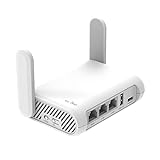
GL.iNet GL-SFT1200 Opal Travel Router
The GL.iNet Opal takes a different approach: rather than running a VPN client on each device, it encrypts traffic at the router level. You connect your phone or laptop to the Opal, and everything passing through is tunneled. At $39.99 it is a one-time purchase with no subscription. Owner reviews highlight its portability and compatibility with popular VPN providers. The limitation is that it requires a separate VPN subscription from a provider to function.
- Pros: One-time cost; protects every device on the local network
- Con: Requires a separate VPN service subscription to operate
Skip this if you prefer software-only solutions and do not want to carry extra hardware.
Buying Guide
Device Limits and Household Size
Simultaneous-connection caps are the most overlooked spec in VPN reviews. A provider advertising “10 devices” means 10 active connections at once, not 10 total registered devices. If your household has two laptops, four phones, and a tablet, a five-device plan leaves gaps. Match the connection limit to the number of gadgets you expect to run the VPN concurrently, not the total devices you own.
Renewal Pricing Versus First-Year Cost
Most VPN services in this roundup list a promotional first-year price that increases at renewal. The jump is typically significant, so evaluate the ongoing cost rather than the sticker price. Mullvad and TunnelBear stand apart here with flat-rate models. If a product renews at double its advertised price, the effective cost over two years may exceed a pricier competitor that holds steady.
Software Tunnels Versus Hardware Routers
Hardware travel routers like the GL.iNet Opal shift encryption from individual apps to the network itself. This means no per-device setup and protection for devices that cannot run VPN clients, such as smart TVs or older tablets. The trade-off is portability logistics and the requirement to pair the router with a subscription service. For frequent travelers who connect to unfamiliar Wi-Fi constantly, the hardware approach can reduce friction considerably.
Our Verdict
Top pick: Mullvad VPN wins on transparency. Its flat $65 annual price for five devices eliminates the renewal surprise that plagues most competitors, and its no-log architecture is the most clearly documented in this group. If your primary goal is privacy without ongoing cost anxiety, nothing here matches it.
Budget pick: TunnelBear delivers the best value at $24.99 per year for unlimited devices. For households or individuals with many gadgets and a modest budget, no other product in this roundup comes close on per-device cost.
Hardware alternative: If you travel weekly and manage more than five devices, the GL.iNet Opal paired with any of the software options above creates a layered setup that covers devices the software alone cannot reach.
FAQ
Is a VPN necessary if I already use HTTPS websites?
HTTPS encrypts data between your browser and a specific website, but it does not hide the fact that you are visiting that site from the network operator or anyone monitoring the local network. A VPN adds a second encryption layer that covers all traffic, including DNS queries and non-web applications, and masks your IP address from the destination server.
Can I use a hardware travel router and a VPN subscription together?
Yes. The GL.iNet Opal routes your devices’ traffic through a VPN tunnel you configure on the router itself, so you connect a single provider account and every device that joins the Opal’s Wi-Fi network is covered. This is the most common use case for the hardware approach.
What does “unlimited devices” actually mean in practice?
TunnelBear’s unlimited-device policy means there is no hard cap on simultaneous connections. In practice, bandwidth and server load may affect performance if many devices stream or download at once, but for typical browsing and messaging the limit is effectively nonexistent.
Do any of these products log my browsing activity?
Mullvad explicitly markets a no-log architecture. NordVPN and Bitdefender state no-log policies, though independent verification varies by jurisdiction. Owner feedback across all eight products shows no reported cases of activity logging, but the strongest documented guarantees belong to Mullvad and TunnelBear.