
Key takeaways
- Dependable precision with micro-adjustable pins
- Heightened accuracy over longer distances with second-axis adjustment
- Ultimate visibility with ultra-bright .019 horizontal fiber optic…
The best bow sights for faster, more accurate aiming are a fixed multi-pin sight for simple hunting setups, a slider for changing distances and flat trajectory, or a hybrid sight when you want both preset pins and precise dialed adjustments.
The right choice depends less on the number of pins than on how often you change distance, how much room your bow has around the mounting holes, and whether you hunt in bright sun, thick timber, or low-light conditions. Sight-ring diameter, pin size, adjustment range, and calibration method all affect speed in the field.
Our top picks
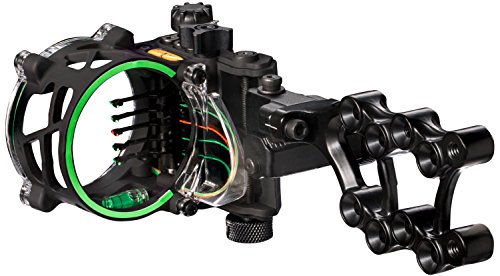 Trophy Ridge Fix Bow Sight
- Dependable precision with micro-adjustable pins
- Heightened accuracy over longer distances with second-axis adjustment
- Ultimate visibility with ultra-bright .019 horizontal fiber optic…
 Trophy Ridge Fix Archery Bow Sight
- Dependable precision with micro-adjustable pins
- Heightened accuracy over longer distances with second-axis adjustment
- Ultimate visibility with ultra-bright .019 horizontal fiber optic…
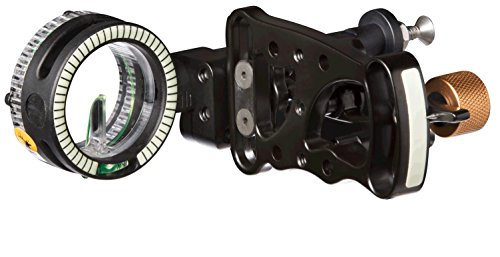 Trophy Ridge Drive Slider Bow Sight
- Adjustable indicator pin allows for ultra-precise adjustments to…
- Nylon bushings create smooth, quiet movement with no…
- Properly align shots with the precision installed bubble…
| Product | Key specs | |
|---|---|---|
| Trophy Ridge Fix Bow Sight | Dependable precision with micro-adjustable pins Heightened accuracy over longer distances with second-axis adjustment Ultimate visibility with ultra-bright .019 horizontal fiber optic… | Check price |
| Trophy Ridge Fix Archery Bow Sight | Dependable precision with micro-adjustable pins Heightened accuracy over longer distances with second-axis adjustment Ultimate visibility with ultra-bright .019 horizontal fiber optic… | Check price |
| Trophy Ridge Drive Slider Bow Sight | Adjustable indicator pin allows for ultra-precise adjustments to… Nylon bushings create smooth, quiet movement with no… Properly align shots with the precision installed bubble… | Check price |
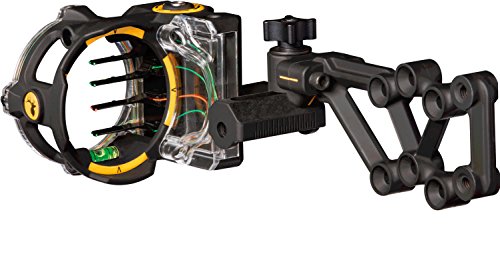 Trophy Ridge React H4 Bow Sight | Four .019" horizontal-pin sight perfect for shooting 195… After only 2 pin adjustments, React Technology automatically… Make easy, exact corrections with advanced tool-less windage… | Check price |
As an Amazon Associate we earn from qualifying purchases at no extra cost to you.
Quick picks by shooting situation
| Situation | Best sight type | Useful configuration | Main reason |
|---|---|---|---|
| Budget-conscious beginner | Fixed multi-pin | 3 or 5 pins, .019-inch pins, 1.8- to 2-inch ring | Simple setup with few moving parts |
| Whitetail hunting with common 20–40-yard shots | Fixed 3-pin | 20, 30, and 40 yards; .019-inch pins | Fast aiming without dialing |
| Open-country hunting or 3D competition | Single-pin slider | 2- to 3-inch ring; .010- or .019-inch pin | Exact distance corrections and a clean view |
| Mixed hunting and target practice | Hybrid | 2 or 3 fixed pins plus a movable indicator | Preset close ranges with longer-range precision |
| Low-light timber hunting | Fixed or hybrid with bright pin fibers | .019-inch pins and a larger ring | More visible aiming references at dusk |
Fixed, slider, or hybrid: which design wins?
Fixed multi-pin sights: fastest under pressure
A fixed sight keeps several aiming references in one vertical or horizontal housing. A common three-pin arrangement is 20, 30, and 40 yards; a five-pin sight might cover 20 through 60 yards in 10-yard increments. You can draw, find the appropriate pin, and shoot without touching a dial.
Fixed sights are forgiving when an animal appears suddenly or when dialing would create unnecessary movement. They also tend to be lighter and less expensive, with general market prices around $100–$300 depending on materials, damping, light systems, and adjustment hardware. The trade-off is pin-gap aiming. If the target is at 35 yards, you must hold between the 30- and 40-yard pins or use a pin-gap reference learned through practice.
More pins do not automatically mean more accuracy. Five pins can clutter the sight picture, particularly with a small ring or a fast arrow trajectory. Three pins usually offer a better balance for hunting ranges, while five pins suit archers who regularly shoot known distances without dialing.
Single-pin sliders: clean sight picture, more procedure
A slider uses one pin and a movable sight body or housing. Once the bow is sighted in, you set the indicator to the target distance and place the single pin on the desired impact point. The uncluttered housing makes it easier to concentrate on the target, and the exact distance setting eliminates much of the guesswork associated with pin gaps.
Slider sights are particularly effective for open terrain, western hunting, and 3D courses. However, the dial must be set before the shot. Forgetting to move it, moving it to the wrong distance, or allowing the indicator to slip can produce a large error. A locking or high-friction adjustment is valuable, but it cannot replace a consistent pre-shot routine.
Expect roughly $180–$450 for a well-built slider from brands such as HHA, Axcel, Spot Hogg, or Black Gold. The higher end commonly buys a stronger dovetail or bar, smoother adjustment, improved indicators, and better protection for the fiber-optic pin rather than a dramatic increase in basic aiming accuracy.
Hybrid sights: the most versatile compromise
A hybrid combines two or three fixed pins with a movable lower pin or movable housing. For example, you might use fixed pins at 20, 30, and 40 yards, then dial for 50 yards and beyond. This setup is fast at normal hunting distances while preserving precise aiming for longer shots.
The costs are added weight, more adjustment parts, and a longer learning curve. Hybrids can also create visual clutter if the fixed pins, movable indicator, level, and sight ring are all prominent. They are a strong choice for archers who practice at varied distances and do not want the limitations of either a purely fixed or purely single-pin sight.
What to compare before buying
Pin layout and pin diameter
Vertical pins generally keep the sight picture orderly and make elevation changes easier to understand. Horizontal stacks can be quick to read, but they occupy more lateral space and may obscure a small target. A three-pin vertical layout is a practical starting point for most hunting bows.
Pin diameter affects both brightness and precision. A .019-inch pin gathers more apparent light and is easier to see at dawn. A .010-inch pin covers less of the target at distance but appears dimmer and can be harder to use in deep shade. A .015-inch pin sits between those extremes. Some sights offer different diameters for different ranges, such as a brighter .019-inch top pin and finer .010-inch lower pins.
Sight-ring size and scope housing
Common circular housing sizes range from about 1.5 to 3 inches. A 1.5-inch ring provides a compact sight picture and can work well with a fast bow, but it makes alignment and pin visibility less forgiving. A 2-inch ring is a versatile hunting size. A 3-inch ring gives a larger field of view and can help target acquisition, although it may expose more visual distraction and add weight.
Do not choose the largest ring automatically. At full draw, the housing should frame the target without forcing you to hunt for the peep alignment. Your peep diameter, anchor position, and bow setup determine whether a ring appears comfortably centered.
Adjustment range and calibration
Check elevation travel before mounting the sight. A sight with approximately 2–3 inches of vertical adjustment is commonly sufficient for a properly tuned hunting bow, while long-range sliders may need more travel or a longer mounting bar. Windage should offer at least about 1 inch of usable correction in each direction without leaving the mounting screws at the end of their slots.
Tool-free calibration is convenient, but it should mean more than a knob that turns without a wrench. Look for a secure second-axis or windage lock, a clearly marked yardage scale, and a reference indicator that cannot shift when bumped. Tool-free micro-adjustments are most useful during initial setup and when changing arrows; they do not remove the need to verify impact at actual distances.
Mounting options
A direct mount is compact and usually lighter. A dovetail mount lets you remove the sight for transport and can move the housing closer to or farther from the riser. A longer dovetail can improve balance and provide more adjustment room, but it increases leverage on the mounting screws if the bow strikes a tree or blind.
Before ordering, confirm the bow’s mounting-hole pattern and available clearance around the cable guard, quiver, and rest. A sight that technically fits the riser may still interfere with a quiver hood or prevent the housing from moving far enough for proper alignment.
Brightness, batteries, and low-light trade-offs
Fiber-optic pins collect ambient light and usually provide the most useful brightness control. Too much exposed fiber can make a pin flare in direct sun, while too little fiber can leave it dull in cover. A removable or adjustable fiber cover helps tune brightness for changing conditions.
Many sights accept an optional battery-powered light. Use it to make a pin visible, not to illuminate the entire housing. Excessive brightness creates a glowing blur and can reduce the contrast between pin and target. Battery life varies by light and setting, but planning around roughly 20–50 hours of intermittent use is sensible unless the manufacturer specifies otherwise. Carry a spare coin cell during a hunt and check that the light cannot be activated accidentally inside a pack.
Setup method that prevents common errors
- Mount the sight squarely. Tighten each screw gradually and use the manufacturer’s torque guidance. A crooked mounting plate can consume all your windage adjustment.
- Level the first axis. Place the bow in a stable position and align the sight housing so it is not visibly tilted relative to the riser.
- Set the closest pin first. Start at 10 or 20 yards, confirm a safe backstop, and adjust windage and elevation in small increments.
- Walk the sight back. Verify at 30, 40, and any distance you intend to hunt. Do not assume a mathematically perfect trajectory after only one distance.
- Confirm the third axis. Shoot from an elevated position or follow a proper level-check procedure. Third-axis error often appears when shooting uphill or downhill.
- Mark and recheck settings. Add a small reference mark to a slider or indicator after zeroing, then inspect it after transport and after tightening the sight.
A useful example: if a slider is marked in 10-yard increments but your actual arrow speed changes enough to shift impact 2 inches at 40 yards, the printed tape is only a starting point. Shoot at 20, 30, 40, 50, and 60 yards, select the tape that matches your impacts, and verify it again after changing strings, arrows, or broadheads.
Durability and ownership realities
The parts most likely to wear first are fiber-optic strands, sight tapes, locking knobs, mounting screws, and exposed indicator mechanisms. Fiber can break when the bow is transported carelessly; replacement fiber is inexpensive, but rebuilding a pin may require patience or a service part. Sight tapes can peel in rain or lose accuracy if installed over dirt or oil.
After wet hunts, dry the sight before storing the bow. Brush mud from threads rather than forcing a knob, and inspect for loose screws before every trip. Avoid overtightening aluminum adjustment knobs, which can damage threads or make later calibration difficult. A sight that remains accurate after repeated removal is often more valuable than one with the lowest advertised weight.
Bottom line
Choose a fixed three-pin sight if speed and simplicity matter most, a single-pin slider if you routinely shoot known distances and want the clearest view, and a hybrid if your normal hunting distances are close but your practice and hunting sometimes extend farther. For most archers, a 2-inch housing, .019-inch primary pin, solid windage locks, and a mounting system compatible with the bow offer the best balance of visibility, accuracy, and ownership value.





