
Best Brushless RC Cars for Speed and Durability
The best brushless RC car for most drivers is a 1/10-scale, four-wheel-drive (4WD) truggy or monster truck with a 3S-capable power system, oil-filled shocks, and readily available replacement parts. Choose a 2WD short-course truck for simpler, lower-cost running; choose a lightweight 2WD buggy for speed on smooth dirt; and step up to a larger 1/8-scale model if rough ground and long-term toughness matter more than price or portability.
Speed figures alone are a poor way to choose: quoted top speeds depend on battery voltage, gearing, tires, and conditions. The comparison below focuses on what those numbers mean alongside drivetrain, battery fit, protection, and ownership.
Our top picks
 1/14 Brushless RC Cars for Adults Fast
- RTR Built for Extreme Speed Bashing: Rugged chassis…
- Aluminum Alloy Chassis: Made of 6061 aluminum, the…
- Brushless Extreme Speed Truggy: Hobby 2852 4200KV, 4…
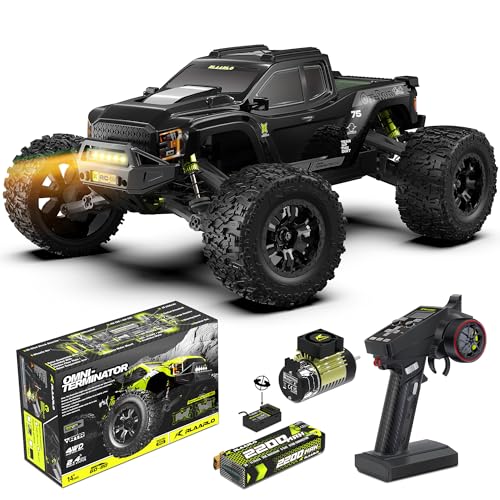 RIAARIO 1/10 Brushless RC Cars
- Feel the Rush of 50+ MPH
- Fast Enough to Thrill, Easy Enough to Control
- Take It Beyond the Pavement
 UDIRC 1/14 Brushless RC Cars
- The 2845 3800KV motor and independent 45A ESC…
- 0-100% ADJUSTABLE THROTTLE: Use the transmitter dial to…
- A wide 202 mm (7.95 in) track, large…
| Product | Key specs | |
|---|---|---|
| 1/14 Brushless RC Cars for Adults Fast | RTR Built for Extreme Speed Bashing: Rugged chassis… Aluminum Alloy Chassis: Made of 6061 aluminum, the… Brushless Extreme Speed Truggy: Hobby 2852 4200KV, 4… | Check price |
| RIAARIO 1/10 Brushless RC Cars | Feel the Rush of 50+ MPH Fast Enough to Thrill, Easy Enough to Control Take It Beyond the Pavement | Check price |
| UDIRC 1/14 Brushless RC Cars | The 2845 3800KV motor and independent 45A ESC… 0-100% ADJUSTABLE THROTTLE: Use the transmitter dial to… A wide 202 mm (7.95 in) track, large… | Check price |
 1/10 RTR Brushless Fast RC Cars for | 【Powerful Electronics】Featuring a brushless 2852 3100KV motor with… 【Central Differential Transmission】The carbon steel central split differential… 【Original Triangle Geometric Structure】The self-designed fully enclosed central… | Check price |
As an Amazon Associate we earn from qualifying purchases at no extra cost to you.
Quick comparison
| Model | Scale and layout | Power and battery fit | Speed context | Best use |
|---|---|---|---|---|
| Traxxas Rustler 4X4 VXL | 1/10, 4WD stadium truck | VXL-3s system; 2S or 3S LiPo | Manufacturer claims up to 65+ mph with suitable setup | Versatile dirt, grass, and jumps |
| ARRMA Typhon 3S BLX | 1/8, 4WD buggy | 3S-capable BLX system; compatible 2S or 3S LiPo | Manufacturer claims up to 50 mph on 3S | Fast, open dirt and prepared tracks |
| ARRMA Granite 4X4 3S BLX | 1/10, 4WD monster truck | 3S-capable BLX system; compatible 2S or 3S LiPo | Manufacturer claims up to 50 mph on 3S | Rough ground and casual bashing |
| Traxxas Slash 2WD VXL | 1/10, 2WD short-course truck | VXL-3s system; 2S or 3S LiPo | Manufacturer claims up to 60+ mph with suitable setup | Lower-complexity running on dirt or pavement |
Speeds are manufacturer claims, not guaranteed real-world results. Actual speed varies with gearing, battery, tire condition, surface, and setup. Confirm the exact model-year manual before buying: included batteries, connectors, and equipment can differ by package and region. These are established product lines, but availability and specifications can change.
Which one fits your driving?
For one car that can handle varied terrain: Rustler 4X4 VXL
The Rustler’s 4WD and stadium-truck shape make it a balanced choice for mixed surfaces. Four driven wheels help put power down on loose ground, while the lower, narrower body is less top-heavy than a typical monster truck. Its 3S capability leaves room to grow, but starting on 2S makes throttle and traction easier to manage. The trade-off is more drivetrain components to maintain than a 2WD car has.
For fast dirt driving and track-like handling: Typhon 3S BLX
A buggy’s low body and wide stance suit smoother dirt, where stable cornering matters more than crawling over obstacles. The Typhon is the most focused pick here for open space and controlled high-speed runs. Its lower clearance and buggy bodywork are less forgiving in tall grass, deep ruts, or repeated landings on uneven ground. Check local track rules before arriving; some tracks restrict power or require specific tires.
For rough ground and big-tire resilience: Granite 4X4 3S BLX
The Granite’s monster-truck layout offers high clearance and large tires for broken ground. That makes it an appealing basher, but the tall stance can encourage rollover in fast turns. Big tires also add rotating mass and can put extra load on the drivetrain. If durability is the goal, smooth throttle and sensible jumps matter more than choosing the largest battery available.
For a simpler drivetrain and lower entry cost: Slash 2WD VXL
With power sent to the rear wheels only, the Slash has fewer drivetrain parts than a 4WD model and is easier to inspect. It can be lively on loose surfaces, especially on 3S, so it rewards a light trigger finger. Choose it if you value accessible short-course bodywork and a straightforward layout; avoid it if you need consistent traction on slippery grass or steep, uneven ground.
Battery, runtime, and speed: what to budget for
A “3S” LiPo has three cells in series and a nominal voltage of 11.1 volts; “2S” is 7.4 volts. Voltage affects speed and heat, but a battery must also fit the tray, use a compatible connector, and meet the vehicle’s size and discharge requirements. Check the manual for maximum dimensions and approved battery types. A higher-capacity pack may run longer, but it is also heavier and may change handling.
For planning, a 5000 mAh pack contains 5 amp-hours. If average current draw during your driving style were 30 amps, the simple estimate would be 5 ÷ 30 × 60 = 10 minutes. Actual runtime is often lower because current draw rises under acceleration, grass, and repeated jumps; stop when the vehicle’s low-voltage cutoff activates rather than trying to drain a LiPo completely. Expect roughly 10–20 minutes per pack as a practical planning range, not a promise.
Battery and charger costs can substantially increase the initial outlay. As a general market guide, ready-to-run brushless cars often fall around $300–$600, while a suitable LiPo and balance charger may add roughly $60–$180, depending on capacity and quality. Budget for a spare battery if your sessions are longer than one pack’s runtime.
Durability is a system, not a waterproof label
- Suspension travel and ground clearance: Monster trucks usually cope better with ruts and rough landings; buggies generally handle more precisely on smoother surfaces. No suspension prevents damage from landing nose-first or at speed.
- Water resistance: Some models advertise water-resistant electronics, but that does not make the entire vehicle waterproof. Water, wet grass, and mud can still corrode bearings and fasteners or contaminate the drivetrain. Follow the manual’s limits, and do not submerge the car.
- Crash protection: A flexible body and bumpers absorb ordinary knocks, but arms, hubs, shock parts, and body mounts are common break points in hard impacts. Driving at maximum speed into a curb is not a durability test worth repeating.
- Parts access: Before purchase, search the manufacturer’s parts diagram for arms, drive shafts, hubs, bearings, and shock components. A popular platform with clearly numbered parts is usually easier to keep running than an obscure model, even if its initial price is lower.
Choose by budget, skill, and space
| Your situation | Good starting point | Why |
|---|---|---|
| New driver, small paved area | 2WD Slash VXL, run on 2S | Manageable power setting and simpler drivetrain; still needs room to stop safely. |
| Mixed dirt and grass, one-car garage | Rustler 4X4 VXL | Useful balance of traction, speed, and terrain flexibility. |
| Open dirt, experienced driver | Typhon 3S BLX | Low buggy stance suits speed runs and smoother, predictable surfaces. |
| Rough yard, jumps, frequent bashing | Granite 4X4 3S BLX | High clearance and large tires are better suited to uneven ground. |
Keep a brushless car running longer
After dusty or wet sessions, remove the battery and brush off dirt before it reaches bearings and gears. If the car gets wet, dry it promptly and inspect exposed metal parts; avoid soaking electronics or using heat that can damage seals and plastics. Check wheel nuts, suspension arms, steering links, and drivetrain for looseness or binding before each run. Let the motor and electronic speed controller cool between hard runs, especially on 3S or in tall grass.
Do not assume a larger pinion gear is a free speed upgrade. Taller gearing can raise motor and ESC temperatures and shorten component life. If you change gearing, follow the manufacturer’s recommendations and monitor temperatures during short test runs. For most owners, the best brushless RC cars are the ones matched to the driving surface and backed by parts they can actually obtain—not simply the models with the biggest speed number.





