
Key takeaways
- Eight 0 degree sleeping bags for backpacking compared by fill type, shape, size and compression, with notes on the listings that need a closer look first.
For a first cold-season pack trip, the synthetic Kelty Cosmic and the Teton LEEF are the most straightforward 0°F mummy bags in this group, while the down listings from QEZER and Naturehike point toward smaller packed size. One listing, the Naturehike, prints 28.9℉ next to its 0 degree label, so read that page closely before buying. Everything here comes from listing titles, and a 0°F label is only a starting point: your pad, your shelter and your own sleeping temperature decide whether a bag works at 10°F.
Quick picks
Our top picks



As an Amazon Associate we earn from qualifying purchases at no extra cost to you.
- Synthetic with a compression sack: Kelty Cosmic Synthetic 0F
- Down with a stated temperature range: QEZER (0°F-27°F, 650 fill power)
- Bigger frames: Coleman North Rim or the RIOYALO envelope bag
- Mummy shape from a familiar camping brand: Teton LEEF or Teton Altos-S
- Listing to double-check: Naturehike (0 degree and 28.9℉ in one title)
All eight at a glance
| Model | Key point from the title | Best for |
|---|---|---|
| Teton LEEF | Lightweight mummy, 0F, compression sack included | Pack trips on a tighter budget |
| Teton Altos-S | 0 degree adult mummy, lightweight | Cold-weather hiking |
| Coleman North Rim | 0°F mummy, no-snag zipper, adjustable hood, big and tall fit | Larger frames |
| RIOYALO | Envelope with hood, waterproof, machine washable, big n tall | Cold car camping |
| Naturehike | 650FP RDS down, ultralight, 0 degree and 28.9℉ both stated | Weight-focused hikers who verify the rating |
| Teton Celsius | 0 degree all-weather bag for adults and kids, stuff sack | Family camping |
| Kelty Cosmic Synthetic | Synthetic 0F mummy, compressible, PFC-free fabrics | Damp, cold trips |
| QEZER | 650 fill power down, 0°F-27°F, large size | Down fans who need room |
The eight bags, one at a time
Teton LEEF Lightweight Mummy Sleeping Bag, 0F (Black and Sage)
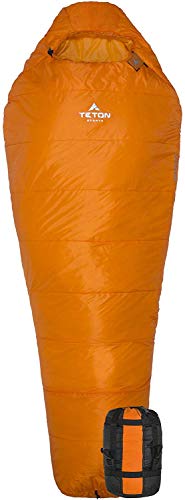
The title describes a lightweight mummy bag for camping, hiking and backpacking, calls it a cold weather option, includes a compression sack and states 0F. The mummy shape and the sack are the two features that matter most for pack space. Fill type, weight and length are not in the title, so confirm them on the listing before weighing this bag against the down models further down. Black and sage is the only colorway mentioned, and the title does not say which zipper side or what length range it covers.
Pros
- Compression sack included
- Mummy cut named in the title
Cons
- Fill type and weight are not stated
- Length options are unclear from the title
Who it’s for: Backpackers who want a mummy bag from a known camping brand without paying for down.
Teton Altos-S 0 Degree Sleeping Bag for Adults
This Teton mummy is labelled lightweight and warm for camping, hiking and backpacking, with a plain 0 degree rating. The title is short on detail: no fill, no length, no packed size and no mention of a sack. That is less a flaw than a prompt to read the specifications table before checkout. If the numbers match your trips, it sits in the same territory as the LEEF, so compare the two side by side, including the weight, the sack and whether a longer length exists.
Pros
- Mummy shape aimed at backpacking
- Adult sizing stated
Cons
- No fill or packed-size details in the title
- Not clear whether a sack is included
Who it’s for: Hikers choosing between two Teton mummies who want the specifications spelled out first.
Coleman North Rim 0°F Sleeping Bag, Large, Big and Tall Fit
Coleman’s listing names a large cold-weather mummy with a no-snag zipper, an adjustable hood and a big and tall fit. The size and the snag-free zipper are practical for anyone who has wrestled a bag shut in the dark. The wording leans toward camping in general rather than backpacking specifically, and no weight is given, so weigh that against how far you plan to carry it. The big and tall fit is a genuine plus for people who find standard mummy bags tight at the shoulders.
Pros
- Big and tall fit stated
- Anti-snag zipper and adjustable hood
Cons
- Weight not given
- More camping-oriented than backpacking-oriented
Who it’s for: Taller or broader campers who need a roomier mummy and will not carry it far.
RIOYALO 0 Degree Winter Sleeping Bag, Envelope with Hood
Read to the end of this long title: it says envelope with a hoodie, so this is a rectangular-style bag, not a mummy. The listing also claims waterproof, machine washable, big n tall, a compression sack and a four-season backpacking label. An envelope cut is roomy, which is comfortable but harder to warm and bulkier on the trail. It is the lowest-cost listing here, which explains its appeal, but it is the one most likely to feel oversized in a pack.
Pros
- Machine washable per the title
- Big n tall sizing with compression sack
Cons
- Envelope shape is bulky for trail carry
- Waterproof wording does not say what is waterproof
Who it’s for: Cold car campers and cabin users who want a roomy bag.
Naturehike 0 Degree Ultralight Down Sleeping Bag, 650FP RDS Down
This is a down bag with 650 fill power and RDS down, labelled ultralight and described as a 2025 model. The wrinkle is that the same title says 0 degree and 28.9℉, which are very different numbers. One could be a limit and the other a comfort figure, or the listing could simply be inconsistent. Ask the seller or read the documentation before trusting it below freezing, because the gap is roughly 29 degrees.
Pros
- Down fill gives a packed-size advantage in principle
- Ultralight claim in the title
Cons
- Conflicting temperature figures in one title
- Highest listed cost here, so verify before buying
Who it’s for: Weight-conscious hikers willing to confirm the rating first.
Teton Celsius Regular 0 Degree Sleeping Bag
Listed as an all-weather 0 degree bag for adults and kids, with a stuff sack included and an easy-camping pitch. Because the title covers kids as well as adults and never calls it a mummy, it reads as a general family bag rather than a trail-weight one. Shape, fill and weight are all absent, so treat it as a campground bag until the specifications say otherwise. Regular is the length named, and the kids mention means sizing is broad rather than precise.
Pros
- Stuff sack included
- Sizing noted for adults and kids
Cons
- Shape and weight not given
- Not clearly built for carrying miles
Who it’s for: Families who want one warm bag for cold campground nights.
Kelty Cosmic Synthetic 0F Mummy Sleeping Bag, 4 Season (Regular)
The title lists a synthetic mummy rated 0F, billed as a four-season backpacking bag that is highly compressible, with a compression stuff sack, a soft taffeta lining and PFC-free fabrics. Synthetic fill is the pick when damp is a worry. Regular is the only size named, so check the listing for a longer cut if you are over average height.
Pros
- Synthetic fill with compression sack included
- PFC-free fabrics stated
Cons
- Synthetic is usually bulkier than down at similar warmth
- Regular length only in this listing
Who it’s for: Cold, damp trips and anyone choosing synthetic on purpose.
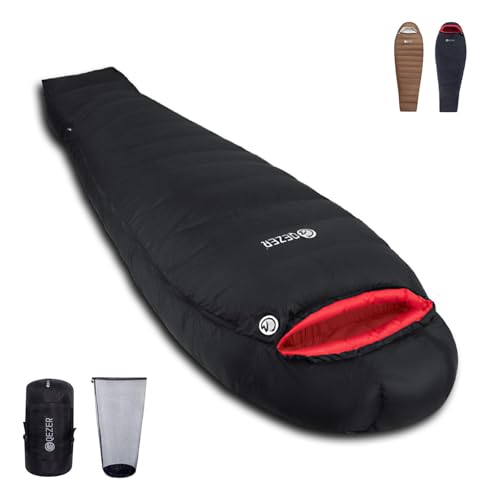
QEZER 0 Degree Down Sleeping Bag, 0°F-27°F, 650 Fill Power
This listing gives a temperature range, 0°F to 27°F, which is more candid than a single number: it implies the cold end is the extreme and the warmer end is nearer comfort, though the title does not explain the split. It also names 650 fill power down, four-season use, a large size and a lightweight, compact carry. Check what the 27°F figure refers to before treating this as a true 0°F bag.
Pros
- Range gives a clue about real-world use
- Large size and down fill
Cons
- Temperature standard is not explained in the title
- Large may be more bag than a smaller hiker needs
Who it’s for: Down shoppers who want room and a published range.
How we picked these
We read the eight listings for this search and checked each title for shape, fill type, size and packing accessories. Where a title is vague or contradicts itself, we say so in the entry. Nobody on the team used or measured these units. The basis is published specifications, manufacturer documentation and buyer reviews, and every temperature figure is the seller’s own label, not a number we produced.
What separates a good 0°F bag from a poor fit
Read the rating before the number
A bag labelled 0 degree might be quoting a comfort figure, a lower limit or an extreme. Standardized labels usually publish all three, and the gaps can be ten degrees or more. A lone number on a listing, or two conflicting ones as on the Naturehike title, deserves a closer look at the manufacturer page. If only one figure is given, plan as though it is the limit, not the comfort number.
Down or synthetic
Down at 650 fill power compresses smaller than synthetic and weighs less for the same warmth, but it loses loft when it gets wet. Synthetic keeps more of its insulation when damp and is usually cheaper, at the price of bulk. Choose by the weather you expect, not by habit, and remember that a waterproof stuff sack and a dry tent matter more than the fill label.
Shape and size
A mummy cut traps less empty air, so it warms faster and carries easier. An envelope bag is roomier but colder and bulkier. Check the length too: a bag that is too short compresses insulation at your feet, and one that is far too long leaves cold dead space to heat.
The pad underneath matters as much
Body weight flattens the insulation beneath you, so a bag labelled 0°F on a summer pad will feel colder than the label. Pair it with a winter-rated pad and look at that pad’s R-value on its own listing. Many people stack a foam pad under an inflatable one for a safety margin, since a punctured air pad in the cold is a bad surprise. Do the same thinking for your tent: a solid fly and good ventilation reduce the condensation that dampens any fill.
Weight against warmth
Ultralight claims in a title are not a promise about the temperature rating. Compare the stated weight, if the listing gives one, against the stated rating, and be wary when a very light, very cheap bag claims the same 0°F figure as a heavier branded one.
A quick margin check
- Write down the forecast low, then subtract 10°F as a cushion for wind and damp.
- Compare that figure with the bag’s comfort number if one exists; otherwise assume the label is the limit.
- Example: a 15°F night plus a cold-sleeper cushion means looking for a bag labelled 0°F to 5°F that states a limit, plus a winter pad.
- If a title shows two different temperatures, plan with the warmer one until you confirm the other.
Mistakes buyers make
Trusting a lone number is the big one. Others include picking an envelope bag for a long carry, ignoring the length, storing the bag compressed for months so the fill never recovers, and climbing in wearing damp clothes. Skipping the pad is the costliest mistake, since it can turn a 0°F bag into a 30°F one. Buyers also choose a size by looking at the price rather than their height, then find the bag too short to close over a hood or too long to heat. Finally, many people pack the sleeping bag loose in a pack lid with no liner bag, and one wet river crossing or leaky rain cover undoes the insulation they paid for.
Verdict
Among these eight, the Kelty Cosmic is the least ambiguous synthetic option, and the QEZER is the down option with the clearest stated range. The Naturehike may be the lightest, but only after you resolve its conflicting numbers. The RIOYALO and Teton Celsius suit car camping better than a long carry. If you are unsure, start with the bag whose title tells you the most (shape, fill, sack, size) and read the manufacturer page for the rest, then plan a first night close to home before heading into the cold.
Questions buyers ask
Does a 0 degree label mean a sleeper stays comfortable at 0°F?
Not usually. Many makers print the lowest survivable figure, while the comfort figure sits several degrees higher. A cold sleeper in a bag labelled 0°F may feel chilly near 15°F. Look for separate comfort and limit numbers in the listing or manufacturer documentation, and add margin for wind, a thin pad or damp clothes.
Is down or synthetic better for a 0°F backpacking bag?
Down generally packs smaller for the warmth, which helps with pack space. Synthetic fill copes better with damp and is usually bulkier. The two synthetic bags and the two down bags here show that split. If your trips are dry and cold, down is attractive; if you expect snow melt and condensation, synthetic is the safer bet.
Can a car-camping envelope bag work for backpacking?
You can, but expect a bigger, heavier bundle and more empty space inside to warm. The RIOYALO listing is an envelope shape with a hood, which is roomy rather than snug. For carrying a bag several miles, a mummy cut with a compression sack, like most of the other bags here, will usually fit a pack more easily.
Why does one Naturehike listing mention 28.9°F?
The title says 0 degree but also shows 28.9℉, and those two numbers cannot both describe the same rating. One may be a comfort figure and the other a limit, or the title may simply be inconsistent. Settle it on the listing page or with the seller before relying on the bag in freezing weather.
Does a 0 degree bag need a special pad?
In practice, yes. Body weight flattens the insulation under you, so the pad does most of the work below. Pair a cold-weather bag with a pad made for winter use and check its R-value on the pad’s own listing. A warm bag on a thin summer pad leaves you cold from underneath.
Related guides
- How To Wash A Down Jacket Without Losing Loft
- Backpacking Stove For Solo Hikers
- Digital Night Vision Binoculars





