
The best 65 tv for the money in 2026 is the TCL QM8 or Hisense U8N if you want maximum brightness and features under $1,000, the LG C4 or Samsung S90D OLED if you want the best picture quality around $1,400-$1,800, and the Sony Bravia X90L or TCL Q7 if you need a solid all-rounder in the $650-$800 range.
A 65-inch TV is the sweet spot for most living rooms — large enough for cinematic impact at 7 to 10 feet viewing distance, but not so large that it overwhelms a standard wall or requires a reinforced stand. The trick is matching panel technology and processing to your room and use case, not just buying the brightest or cheapest option.
Our top picks
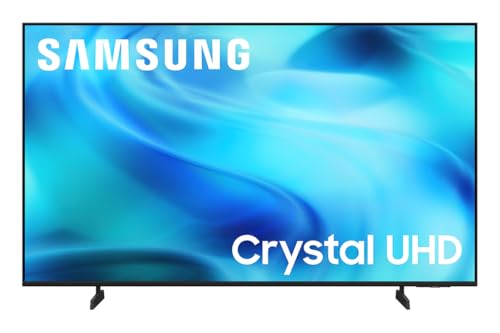 Samsung 65-Inch Class Crystal UHD U8000H Series
- Powerful processor enhances colors and sharpens details for…
- Watch 2,700+ free streaming options, including 750+ subscription-free…
- Experience clear picture and smooth motion in games…
 TCL 65 Inch T7 Series 4K 144Hz
- 4K UltraHD Resolution: Experience incredible detail with 4X…
- QLED (Quantum Dot Technology): Rich, vibrant colors covering…
- 144Hz Panel Refresh Rate: Watch action-packed movies, fast-paced…
 Roku 65-Inch Plus Series Smart TV
- Breathtaking picture: Mini-LED backlighting brings out the rich…
- TV, simplified: With setup that only takes minutes,…
- A world of free entertainment: Enjoy a huge…
| Product | Key specs | |
|---|---|---|
| Samsung 65-Inch Class Crystal UHD U8000H Series | Powerful processor enhances colors and sharpens details for… Watch 2,700+ free streaming options, including 750+ subscription-free… Experience clear picture and smooth motion in games… | Check price |
| TCL 65 Inch T7 Series 4K 144Hz | 4K UltraHD Resolution: Experience incredible detail with 4X… QLED (Quantum Dot Technology): Rich, vibrant colors covering… 144Hz Panel Refresh Rate: Watch action-packed movies, fast-paced… | Check price |
| Roku 65-Inch Plus Series Smart TV | Breathtaking picture: Mini-LED backlighting brings out the rich… TV, simplified: With setup that only takes minutes,… A world of free entertainment: Enjoy a huge… | Check price |
 Hisense 65" E7 Cinema Series Hi-QLED Mini-LED | Mini-LED backlighting uses thousands of precise light zones… High refresh performance keeps fast movement fluid and… Experience cinematic HDR with vivid brightness and deeper… | Check price |
As an Amazon Associate we earn from qualifying purchases at no extra cost to you.
How to Choose a 65-Inch TV by Your Situation
Before comparing specs, narrow your choice by where the TV will live and what you watch most. The same budget buys very different strengths.
| Situation | Best Fit | Why |
|---|---|---|
| Bright living room with windows, mostly daytime sports and streaming | Mini-LED QLED (TCL QM8, Hisense U8N, Samsung QN90D) | 1,500-3,000 nits peak brightness cuts through glare; anti-reflection coating matters more than contrast in bright rooms |
| Dark or dim basement, movies and prestige TV at night | OLED (LG C4 / C5, Samsung S90D, Sony Bravia 8) | Pixel-level dimming delivers true black and infinite contrast that Mini-LED cannot match in the dark |
| Competitive gaming on PS5, Xbox Series X, or PC | OLED or high-end Mini-LED with 4x HDMI 2.1 | 4K 120Hz, VRR, ALLM, and under 10ms input lag are essential; OLED has faster pixel response |
| Wide seating or open-plan room | OLED or Samsung QN90D with wide-angle layer | VA-based QLEDs wash out past 25-30 degrees off-center; OLED and wide-angle VA keep color at 60+ degrees |
| Tight budget, mixed use for family room | Mid-range QLED (TCL Q7, Hisense U7N, Sony X90L) | Good brightness, decent local dimming, and Google TV / Roku without paying for OLED or flagship processing |
Spec Comparison: What You Actually Get at Each Price Tier
Numbers reveal trade-offs that marketing names hide. Sustained peak brightness, dimming zone count, and HDMI bandwidth matter more than claims of “AI picture” or “quantum processing.”
| Model (65-Inch) | Panel Type | Peak HDR Brightness (10% Window) | Local Dimming Zones / Contrast Control | Refresh Rate & Gaming | Weight Without Stand |
|---|---|---|---|---|---|
| TCL Q7 (Q750G) | QLED VA with Mini-LED | ~900-1,100 nits | ~200-300 zones | 144Hz, 2x HDMI 2.1, VRR/ALLM, ~6.5ms lag at 4K 120Hz | ~24.5 kg (54 lbs) |
| Hisense U8N | QLED VA with Mini-LED | ~1,800-2,500 nits | ~1,000-1,300 zones | 144Hz, 2x HDMI 2.1, VRR/ALLM, ~7ms lag | ~26.3 kg (58 lbs) |
| TCL QM8 (QM851G) | QLED VA with Mini-LED | ~2,400-3,000 nits | ~1,500-2,300 zones | 144Hz, 2x HDMI 2.1, VRR/ALLM, ~6ms lag | ~27.2 kg (60 lbs) |
| Samsung QN90D | Neo QLED VA with Mini-LED + Wide Angle | ~1,800-2,000 nits | ~700-900 zones | 144Hz, 4x HDMI 2.1, FreeSync Premium Pro, ~5.8ms lag | ~22.7 kg (50 lbs) |
| LG C4 OLED evo | WOLED | ~1,000-1,100 nits | Self-emissive, per-pixel (8.3M zones) | 144Hz, 4x HDMI 2.1, G-Sync/FreeSync, Dolby Vision 120Hz, ~5ms lag | ~17.2 kg (38 lbs) |
| Samsung S90D OLED | QD-OLED | ~1,300-1,500 nits | Self-emissive, per-pixel | 144Hz, 4x HDMI 2.1, HDR10+ Adaptive, ~5.2ms lag | ~19.5 kg (43 lbs) |
| Sony Bravia 8 OLED | WOLED | ~900-1,000 nits | Self-emissive, per-pixel | 120Hz, 2x HDMI 2.1, VRR/ALLM, ~8.5ms lag | ~21.0 kg (46 lbs) |
Two takeaways from this table: First, peak brightness alone does not equal better HDR — OLED shows brighter specular highlights in dark scenes because it can keep surrounding pixels perfectly black. Second, weight differences reflect backlight and chassis design; Mini-LEDs are heavier and run hotter than OLEDs of the same size, which affects wall-mount hardware and ventilation clearance.
Best 65-Inch TV for the Money by Price Tier
Best Value Under $800: TCL Q7 and Hisense U7N
This tier is where most buyers should look if they want the best 65 tv for the money without chasing flagship performance. Both TCL Q7 and Hisense U7N use VA panels with Mini-LED backlights, which means significantly better black levels and HDR pop than entry-level edge-lit models that sit in the $400-$550 range.
Expect 600 to 1,100 nits in real content, full-array local dimming with a few hundred zones, and 144Hz panels with HDMI 2.1 for current consoles. Viewing angles are the compromise — color fades noticeably beyond 30 degrees off-center, so they suit a sofa directly opposite the screen rather than a wide L-shaped sectional. For room-size fit, a 65-inch at this tier still needs about 6.5 feet minimum viewing distance to avoid seeing pixel structure on 4K content.
Pick the TCL Q7 if you prioritize Google TV and slightly better motion handling for sports. Pick the Hisense U7N if you want higher peak brightness for a bright room.
Best Mid-Range $800-$1,200: Hisense U8N and TCL QM8
This is the performance-per-dollar champion for 2026. The Hisense U8N and TCL QM8 deliver flagship-level brightness (1,800 to 3,000 nits) and zone counts over 1,000, which translates to minimal blooming around subtitles and streetlights in night scenes. Both cover wide color gamut (around 95% DCI-P3) and support Dolby Vision and HDR10+.
For HDR brightness, these Mini-LEDs will look more impactful than any OLED in a sunlit room. For gaming, they add 144Hz VRR up to 4K 144Hz on PC and Dolby Vision Gaming at 120Hz. The trade-off is blooming control still cannot match OLED in a completely dark room, and off-axis viewing remains narrower than OLED or Samsung’s wide-angle VA.
Best Upper Mid-Range $1,200-$1,800: LG C4 OLED and Samsung S90D OLED
If you watch mostly in the evening and value picture quality over raw brightness, OLED is worth the premium. The LG C4 offers four full-bandwidth HDMI 2.1 ports, Dolby Vision, 144Hz support, and LG’s WebOS with excellent calibration controls. The Samsung S90D uses a QD-OLED panel that is brighter than WOLED (around 1,300-1,500 nits vs. 1,000 nits) and shows more saturated colors at high brightness, but it lacks Dolby Vision and uses HDR10+ instead.
Room-size fit is also a win here: OLED panels are thinner and lighter, easier to wall-mount on standard studs, and have near-perfect viewing angles so everyone on a wide couch sees the same contrast. For gaming, OLED provides instant pixel response (0.1ms vs. 4-6ms on Mini-LED), which eliminates motion smear in fast games without needing aggressive overdrive.
Best for Bright Room With Wide Seating: Samsung QN90D
Often priced between the value Mini-LEDs and OLEDs, the Samsung QN90D is the specialist for bright, wide rooms. Its anti-glare coating and wide-angle layer preserve contrast at angles where TCL and Hisense VA panels wash out. Brightness sits around 1,800-2,000 nits, well above OLED, so it holds up against afternoon sun. The cost is contrast — the wide-angle layer slightly raises black levels compared to TCL QM8 or Hisense U8N — and it is also HDR10+ only, no Dolby Vision.
Viewing Distance and Mounting: Getting the Fit Right
A 65-inch 16:9 TV is about 56.7 inches wide and 31.9 inches tall. For 4K resolution, THX and SMPTE guidelines suggest:
- Optimal cinematic distance: 7 to 9 feet for a 36-40 degree field of view
- Minimum comfortable distance: About 6 feet; closer than that you may see the screen structure and need to move your head to follow action
- Maximum for detail benefit: About 10.5 feet; beyond that a 65-inch and 55-inch look similar for 4K detail, though HDR and contrast benefits remain
Allow at least 4 inches clearance behind Mini-LED models for heat dissipation, and 2 inches on the sides if recessed in an alcove. OLEDs run cooler but are more fragile when handling — always lift by the bottom edge, not the thin top of the panel. Most 65-inch models use 400x300mm or 400x400mm VESA patterns and weigh 38 to 60 pounds without the stand, so a mount rated for at least 80 pounds provides a safe margin.
Durability and Ownership Realities
Beyond the spec sheet, ownership costs and habits affect long-term value.
What wears first: On Mini-LED QLEDs, the LED backlight is rated for 50,000-100,000 hours but power supply boards and local dimming drivers are the more common failure points after 4-6 years. On OLEDs, organic pixel wear and potential image retention are the concern — static news tickers, channel logos, or HUD elements left at high brightness for thousands of hours can cause uneven aging. Modern OLEDs include pixel shift, logo dimming, and refresh cycles to mitigate this, but varied content is still the best protection.
Consumables and cleaning: There are no bulbs to replace, but anti-reflection coatings scratch easily. Clean with a dry microfiber cloth, or slightly damp with distilled water only. Avoid window cleaners, alcohol, or paper towels. Dust the rear vents monthly; blocked vents on high-brightness Mini-LEDs raise internal temperatures and can accelerate board failure.
Common mistakes: Leaving the TV in Vivid/Dynamic mode accelerates OLED wear and skews color accuracy — use Filmmaker, Cinema, or ISF modes for accurate SDR/HDR. Failing to enable HDMI Deep Color / Input Signal Plus prevents 4K 120Hz and HDR from activating on game consoles. Mounting too high (above eye level when seated) causes neck strain and washes out VA panels faster because you are viewing off-axis vertically.
Final Picks: Which 65-Inch Should You Buy?
- Choose TCL Q7 or Hisense U7N if your budget is tight and you need a bright, capable TV for mixed daytime use.
- Choose Hisense U8N or TCL QM8 if you want the brightest HDR and best specs-per-dollar and watch mostly with some lights on.
- Choose LG C4 or Samsung S90D OLED if you control light levels and want the most cinematic contrast, widest viewing angles, and smoothest gaming response.
- Choose Samsung QN90D if your room is both bright and wide, where reflections and off-angle viewing matter more than absolute black level.
For most buyers searching for the best 65 tv for the money, the Hisense U8N and TCL QM8 hit the balance of HDR brightness, gaming features, and price in 2026, while the LG C4 remains the benchmark for pure picture quality when light control is not an issue.
Frequently Asked Questions
Is a 65-inch TV too big for a small living room?
Not if you have at least 7 feet between the screen and your eyes. At 6 to 9 feet a 65-inch provides an immersive 30-40 degree view without requiring head movement. In rooms smaller than 10×10 feet, consider whether the 57-inch width fits your wall with speakers or furniture.
Is OLED worth it over Mini-LED for bright rooms?
In bright rooms Mini-LED usually looks better because 1,800-3,000 nits overcomes ambient light while OLED peaks around 1,000-1,500 nits. OLED still has superior contrast and viewing angles, but its advantage is most visible in dim or dark environments.
How many HDMI 2.1 ports do I need?
One is enough if you only have a single console or PC that needs 4K 120Hz. Two or more helps if you have both a PS5 and Xbox Series X plus a gaming PC, or if you use an AV receiver and want eARC on a separate port. LG C4 and Samsung QN90D/S90D offer four; Sony, TCL, and Hisense typically offer two.
Do 65-inch TVs use a lot of electricity?
Typical SDR consumption is 70-120 watts for OLED and 90-180 watts for bright Mini-LED models at moderate backlight settings. HDR at maximum brightness can push Mini-LEDs to 250-350 watts briefly. Using energy-saving or calibrated picture modes and enabling auto-brightness reduces consumption without a noticeable quality loss.





