
The best bouldering crash pads for most climbers are the Organic Climbing Simple Pad for all-around durability and carrying comfort, the Black Diamond Mondo for maximum coverage on highballs, and the Metolius Session II for compact value, with your ideal choice depending on landing size, thickness needs, and how far you carry it.
Our top picks
 VEVOR Bouldering Crash Pad
- Reliable Cushioning: This bouldering crash pad adopts a…
- Built for Rugged Outdoor Use: Engineered to withstand…
- Three Carrying Options: Designed for climbers, our bouldering…
 Meister Boulder Beast XL Tri-Fold Climbing Crash
- Oversized tri-fold bouldering crash pad designed to provide…
- Each panel features four layers of premium open…
- Removable backpack straps with waist belt and chest…
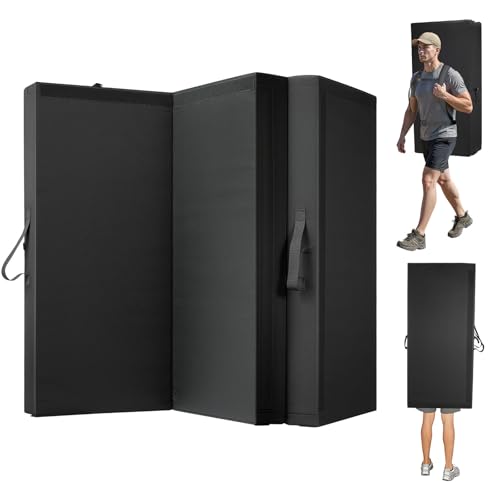 VEVOR Bouldering Crash Pad
- Reliable Cushioning: This bouldering crash pad adopts a…
- Built for Rugged Outdoor Use: Engineered to withstand…
- Three Carrying Options: Designed for climbers, our bouldering…
| Product | Key specs | |
|---|---|---|
| VEVOR Bouldering Crash Pad | Reliable Cushioning: This bouldering crash pad adopts a… Built for Rugged Outdoor Use: Engineered to withstand… Three Carrying Options: Designed for climbers, our bouldering… | Check price |
| Meister Boulder Beast XL Tri-Fold Climbing Crash | Oversized tri-fold bouldering crash pad designed to provide… Each panel features four layers of premium open… Removable backpack straps with waist belt and chest… | Check price |
| VEVOR Bouldering Crash Pad | Reliable Cushioning: This bouldering crash pad adopts a… Built for Rugged Outdoor Use: Engineered to withstand… Three Carrying Options: Designed for climbers, our bouldering… | Check price |
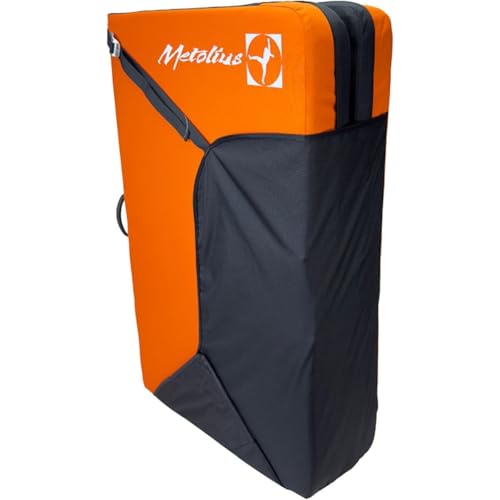 Metolius Session II Crash Pad | Material: 900D polyester Padding: high compression foam, low compression foam Carry Mode: backpack | Check price |
As an Amazon Associate we earn from qualifying purchases at no extra cost to you.
Quick Picks by Landing and Approach
Match the pad to where and how you boulder, not just brand name:
- Best all-rounder for regular gym-to-crag climbers: Organic Climbing Simple Pad — hinge fold, balanced size and weight, easy shoulder carry for mile-long approaches.
- Best for highballs and uneven landings: Black Diamond Mondo or Mad Rock Triple Mad Pad — large surface area and 5-inch foam stack to handle bigger falls.
- Best compact pad for lowballs and travel: Metolius Session II or Black Diamond Circuit — smaller footprint fits in cars and apartments, lighter for quick sessions.
- Best for building a quiver: Petzl Alto as a primary large pad paired with a small secondary like the Organic Climbing Blubber Pad or Metolius Bailout for gaps and sit-starts.
- Best for frequent abuse and rental-gym style durability: Organic Climbing Full Pad — 1000D Cordura and replaceable components handle rough rock and frequent dragging.
Best Bouldering Crash Pads Compared: Specs That Affect Safety
Listed dimensions are open/flat. Closed size is roughly half that for hinge pads. Weights and thickness vary slightly by production year and fabric choice.
| Pad | Open Dimensions | Thickness | Weight | Fold Style | Foam Layup |
|---|---|---|---|---|---|
| Organic Climbing Simple Pad | 36 x 48 in (91 x 122 cm) | 4 in (10 cm) | 11 – 12 lbs (5.0 – 5.4 kg) | Hinge | Closed-cell top + open-cell center + closed-cell base |
| Black Diamond Mondo | 44 x 65 in (112 x 165 cm) | 5 in (12.7 cm) | 18 – 19 lbs (8.2 – 8.6 kg) | Hinge | Dual-density: firm closed-cell top/bottom, soft open-cell middle |
| Mad Rock Triple Mad Pad | 40 x 64 in (102 x 163 cm) | 5 in (12.7 cm) | 17.5 lbs (7.9 kg) | Taco (continuous hinge) | Triple layer: PE closed-cell + PU open-cell + PE closed-cell |
| Metolius Session II | 36 x 48 in (91 x 122 cm) | 4 in (10 cm) | 9.5 – 10.5 lbs (4.3 – 4.8 kg) | Hinge | Closed-cell over open-cell sandwich |
| Petzl Alto | 39 x 52 in (100 x 132 cm) | 4.7 in (12 cm) | 12.5 lbs (5.7 kg) | Hinge | Multi-layer with firm top sheet and progressive compression |
| Black Diamond Circuit | 35 x 47 in (89 x 119 cm) | 3.5 in (9 cm) | 9 lbs (4.1 kg) | Hinge | Dual-density, thinner overall stack for low impact |
General market ranges in 2026: compact pads $180-$280, standard single pads $280-$400, large highball pads $420-$580, and small slider/secondary pads $100-$170. Fabric upgrades like 1000D Cordura or recycled high-tenacity nylon usually add $30-$60.
How to Choose: Dimensions, Thickness, and Foam Matter More Than Brand
1. Coverage area vs. landing zone
A standard 36×48 inch pad covers about 12 square feet. A large pad like the Mondo covers about 19.9 square feet — roughly 65% more. If your boulder has a lateral traverse or you expect to fall off to the side, one large pad often beats two small pads that can separate on impact. For narrow corridors or rocky runouts, two medium hinge pads placed with the hinges overlapping create a more continuous surface than one giant pad with gaps at the edges.
2. Thickness and foam density
Thickness controls bottoming-out. For falls under 8 feet onto flat dirt, 3.5 to 4 inches of layered foam is sufficient for most adult climbers. For falls over 10 feet, highballs, or rocky landings with roots and talus, 4.7 to 5 inches with a firm closed-cell top layer prevents your heel or hip from hitting ground through the foam. Soft, thick open-cell foam feels comfortable but bottoms out faster; look for a sandwich with firm closed-cell on top for impact distribution and softer foam underneath for deceleration. Replace or retire any pad that stays compressed after you stand on it for 10 seconds.
3. Folding style: hinge vs. taco
Hinge pads fold in half with a distinct crease. They lay flatter with no central bump, make better seating or sleeping platforms, and have a hinge seam that can be a weak spot if you land directly on it. Mitigate by overlapping two hinge pads or placing a small slider over the seam.
Taco pads fold continuously without a seam, creating one uniform landing surface and no hinge gap. The trade-off is a slight curve or hump in the middle when open, and they are harder to pack with gear inside since they don’t create a flat suitcase shape. Tacos are preferred for single-pad coverage on uneven ground; hinges are preferred for stacking and carrying extra gear.
Carrying Comfort: What Matters on the Approach
Carry system differences become obvious after 20 minutes on trail:
- Straps: Look for padded, contoured backpack straps with a sternum strap and waist belt. Organic Climbing and Petzl Altos use more heavily padded, adjustable systems that distribute 12-19 lbs better than simple webbing straps found on budget pads.
- Weight vs. coverage: A 9 lb Circuit feels dramatically lighter than an 18 lb Mondo after a 2-mile approach with elevation. If you primarily walk in less than 15 minutes on flat ground, prioritize coverage. If you hike ridges or bike to boulders, prioritize weight and compact folded size.
- Storage: Hinge pads close like a clamshell and let you strap shoes, brushes, and layers inside. Some taco pads have closure flaps but hold less. Check for buckle quality — metal cam buckles outlast plastic side-release buckles for heavy loads.
- Handles and drag: Side and end handles matter for repositioning under a problem. Avoid dragging pads by handles over granite; shoulder carry preserves the base fabric significantly longer.
Decision Matrix: Match Your Situation to the Right Pad
| Your Situation | Prioritize | Best Match Type |
|---|---|---|
| Short approach, highball projects, rocky landings | Max coverage + 5-inch thickness, weight less important | Large hinge like Black Diamond Mondo or large taco like Triple Mad Pad |
| Long hike, moderate height, solo sessions | Light weight, comfortable straps, medium coverage | Mid-size hinge like Organic Simple Pad or Petzl Alto |
| Tight budget, low to medium boulders, gym + occasional outdoor | Value, 4-inch foam, small folded size | Metolius Session II or Black Diamond Circuit |
| Uneven talus or boulder fields | No hinge gap, continuous surface | Taco-style large pad, or two hinges overlapped by 12+ inches |
| Apartment storage, small car, frequent travel | Compact folded dimensions (approx 35×24 in) | Compact hinge 3.5-4 inch pad plus optional small slider |
| Building a two-pad quiver | One large primary + one small secondary to cover seams | Primary: Mondo / Alto + Secondary: Organic Blubber or Metolius Bailout |
Worked Calculation: How Much Pad Do You Need?
Use this quick method at the base of a problem to decide if you need a second pad.
Step 1: Estimate fall zone. Stand under the crux and imagine falling. Mark a square around where your feet and hips could land if you peel off sideways. A 6-foot tall climber falling from 10 feet can easily land 3-4 feet to either side of the wall.
Step 2: Calculate coverage. Coverage = length x width / 144 to get square feet. Example: One 36×48 inch pad = 1,728 sq in / 144 = 12.0 sq ft. Two of the same pads side-by-side with a 6-inch overlap = (72-6) x 48 /144 = 22 sq ft.
Step 3: Compare to usable landing. If your fall zone is 5×5 feet (25 sq ft) and you have one 12 sq ft pad, you have less than half the ideal coverage. Two medium pads overlapped (22 sq ft) gets you close. For a 4×6-foot corridor under a highball (24 sq ft), a single Mondo (19.9 sq ft) covers 83% in one piece with no gap — often safer than two small pads that could slide apart.
Rule of thumb: For falls over 12 feet, aim for at least 18-20 sq ft of continuous, gap-free foam under the widest part of the fall zone, and add a spotter or secondary slider if rock or roots protrude above the dirt line.
Durability and Ownership Realities
Crash pads do not wear evenly. Knowing what fails first extends usable life:
- What wears first: The base fabric and corners from dragging, followed by the closure buckles and strap stitching. The hinge seam on hinge pads abrades if you flip the pad frequently. Foam softens gradually; the closed-cell top sheet develops permanent heel dents after 2-3 seasons of heavy use.
- Fabric: 1000D Cordura and ballistic nylon resist abrasion and moisture best but add weight. 600D recycled fabrics are lighter and pack smaller but show wear sooner on sharp granite. All fabrics benefit from keeping the pad off wet ground overnight.
- Foam care: Store pads open and flat, not folded tightly for months. Prolonged compression in a hot car or storage unit creates memory and reduces impact absorption. Air pads out after damp sessions to prevent mildew in open-cell foam.
- Cleaning: Brush off dirt, spot clean with mild soap and water, never machine wash or pressure wash. Dry fully open in shade — UV degrades nylon and heat can delaminate glued foam layers.
- Common mistakes: Landing with the pad on a slope without anchoring it (it shoots out), leaving gaps between two pads without covering the seam, stacking pads with a soft pad on top of a firm pad (reduces overall firmness), and using a worn thin pad for highballs because it still looks intact externally while the foam no longer recovers.
Retire a pad when you can feel the ground through it while standing on one foot, when foam cracks or crumbles at the edges, or when the shell has holes exposing open-cell foam to water and dirt. Many brands sell replacement shells, straps, and buckles — replacing a strap set is far cheaper than a new pad.
FAQ
Is one big pad safer than two small pads?
For a single fall point, one continuous large pad eliminates hinge gaps and sliding. For traverses or problems where you move sideways 8+ feet, two medium pads positioned along the wall provide wider coverage. Serious highball climbers often use one large pad plus a secondary small pad to cover the hinge seam or edges.
Do I need a 5-inch thick pad?
Not for every session. For boulders under 10 feet with flat, soft landings, 4 inches is enough and saves weight. Choose 5 inches if you project highballs, weigh over 180 lbs, or boulder on rocky talus where bottoming out is more likely to cause ankle or back impact.
Can crash pads be checked or flown with?
Most airlines count large pads as oversized sports equipment. Compact pads folded to 36x24x8 inches sometimes fit as checked luggage within standard size limits, but large pads usually incur oversize fees. Remove loose gear, protect buckles, and expect inspection — foam shows up dense on scanners.





