
The best built in outdoor sinks are 304 stainless-steel, 16- to 18-gauge basins sized to your countertop and connected to a properly trapped drain—not simply the deepest or largest sink you can fit.
For most outdoor kitchens, choose a 20- to 24-inch single-bowl sink with a 7- to 10-inch depth, a standard 3.5-inch drain opening, and a rear or centered drain that leaves room for the cabinet and plumbing below. A smaller bar sink suits occasional drink preparation, while a 30-inch or larger basin is worth the space if you wash cookware outdoors.
Our top picks
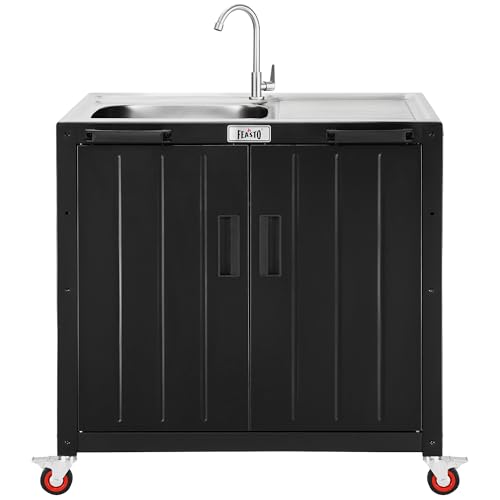 Feasto Modular Outdoor Kitchen Island with Stainless
- Grill-Side Prep Station: Never leave the grill while…
- Spacious Stainless Steel Prep Surface: The one-piece stamped…
- Storage Cabinet with Door: The enclosed cabinet keeps…
 WOEDEN 47" 304 Stainless Steel Sink Free-Standing
- 【Versatile Free-Standing Utility Sink】 Upgrade your workspace with…
- 【Premium 304 Stainless Steel Construction】 Built from high-grade…
- 【Spacious Workbench & Smart Storage】 Unlike standard sinks,…
 Stainless Steel Utility Sink
- 【Build to Last】This sink is mainly made of…
- 【Large Capacity for Efficient Kitchen Work 】The large…
- 【Sleep-Safe Silent Design】The bottom of the sink features…
| Product | Key specs | |
|---|---|---|
| Feasto Modular Outdoor Kitchen Island with Stainless | Grill-Side Prep Station: Never leave the grill while… Spacious Stainless Steel Prep Surface: The one-piece stamped… Storage Cabinet with Door: The enclosed cabinet keeps… | Check price |
| WOEDEN 47" 304 Stainless Steel Sink Free-Standing | 【Versatile Free-Standing Utility Sink】 Upgrade your workspace with… 【Premium 304 Stainless Steel Construction】 Built from high-grade… 【Spacious Workbench & Smart Storage】 Unlike standard sinks,… | Check price |
| Stainless Steel Utility Sink | 【Build to Last】This sink is mainly made of… 【Large Capacity for Efficient Kitchen Work 】The large… 【Sleep-Safe Silent Design】The bottom of the sink features… | Check price |
 Feasto 35" Movable Outdoor Grill Cart with | All-in-One Convenience: The integrated sink lets you rinse… Spacious, Built for Real Prep: A generously sized… Designed for Easy, Clean Use: The rounded basin… | Check price |
As an Amazon Associate we earn from qualifying purchases at no extra cost to you.
Quick picks by patio situation
| Patio situation | Best sink type | Recommended basin | Typical market range | Why it fits |
|---|---|---|---|---|
| Small counter or balcony kitchen | Compact bar sink | 15–18 in. wide, 5–7 in. deep | $150–$400 | Uses less counter space and water; suitable for rinsing glasses and produce |
| Regular outdoor cooking for two to six people | Single-bowl utility sink | 20–24 in. wide, 7–10 in. deep | $250–$750 | The best balance of washing room, cabinet clearance, and installation cost |
| Large family kitchen or frequent entertaining | Deep single bowl or low-divider double bowl | 27–33 in. wide, 9–12 in. deep | $500–$1,200 | Handles pans, serving trays, and separate wash-and-rinse tasks |
| Rental, seasonal, or freeze-prone patio | Removable or freestanding utility sink | 16–24 in. wide, 6–10 in. deep | $100–$500 | Can be disconnected, drained, and stored without permanent plumbing |
| Premium built-in kitchen near the house | Flush-mount or undermount 304 stainless sink | 20–30 in. wide, 8–10 in. deep | $600–$1,500+ | Provides a finished countertop appearance and better long-term integration |
What to look for in a built-in outdoor sink
Basin size and depth
Measure the sink cabinet opening before choosing the basin. A sink described as 24 inches wide may require a larger cutout or cabinet than the nominal size suggests. The manufacturer’s cutout template is the dimension that matters.
For most outdoor kitchens, a 20- to 24-inch basin is the practical sweet spot. A 7- to 10-inch depth contains splashing without forcing you to bend excessively. Basins deeper than 10 inches are useful for stockpots and large grates, but they also require more clearance below the counter and may interfere with drawers, waste bins, or gas lines.
Measure your largest regularly used item. If a roasting pan is 18 inches wide, a 20-inch internal basin may still be too narrow once the curved corners are considered. Allow at least 1 to 2 inches of usable clearance around the item so it can lie flat and drain properly.
304 stainless steel is the safest default
- 304 stainless steel: The preferred choice for most patios because it resists corrosion, tolerates temperature changes, and is easy to clean.
- 316 stainless steel: A stronger corrosion-resistance choice for coastal locations or patios exposed to salt spray, although it usually costs more.
- 18-gauge steel: A good balance of rigidity, weight, and price for a built-in basin.
- 16-gauge steel: Heavier and less prone to flexing or denting; worthwhile for a large sink or heavily used kitchen.
- Granite composite: Attractive and quiet, but heavier and more vulnerable to impact damage and thermal shock if the manufacturer’s care instructions are ignored.
- Porcelain-enamel steel: Easy to wipe clean but can chip; exposed steel beneath a chip may rust outdoors.
A brushed or satin finish is generally easier to live with than a mirror finish. It disguises water spots and light scratches, while a deep decorative finish can show mineral deposits quickly. Avoid abrasive pads and chlorine bleach left on the surface, both of which can damage stainless steel.
Plumbing and drainage: the part listings often understate
A sink needs more than a faucet hole. Plan for a hot-and-cold supply or a cold-only line, a drain assembly, a trap, a venting solution, and a way to protect the pipes from freezing. The correct arrangement depends on local plumbing rules and whether the sink drains into a permitted sewer connection, an approved dry well, or a gray-water system.
- Water supply: A common outdoor setup uses 1/2-inch supply lines, but the faucet manufacturer and local code determine the final connection.
- Drain opening: A standard 3.5-inch opening makes it easier to source baskets, strainers, and garbage-disposal-compatible fittings.
- Trap: A P-trap blocks sewer gases. Do not send a sink drain directly into the ground or onto the patio.
- Vent: The drain needs proper venting to prevent slow flow and trap siphoning. An air-admittance valve may be permitted in some locations, but it is not universally accepted outdoors.
- Freeze protection: Install shutoff valves and low-point drains so every exposed section can be emptied before freezing weather.
- Drain slope: Horizontal drain piping generally needs a consistent slope; a plumber can confirm the required fall for your pipe size and local code.
Drainage deserves special attention. A sink that empties onto a paving joint can create odors, stains, insect activity, soil erosion, or an icy patch in winter. If the patio kitchen is far from the house drain, get a plumbing plan before buying the sink. The basin is often the inexpensive part of a remote installation.
Countertop fit and installation choices
Built-in sinks are commonly installed as top-mount, flush-mount, or undermount models.
- Top-mount: The rim rests on the counter. It is the most forgiving option for an outdoor renovation because the rim covers small cutout imperfections and helps protect the counter edge.
- Flush-mount: The sink rim sits level with the countertop. It looks integrated but demands accurate fabrication and a well-sealed joint.
- Undermount: The basin hangs below the counter. It gives a clean surface for sweeping crumbs into the bowl, but the countertop must be structurally suitable and the sealant must remain intact.
Leave enough space between the sink and nearby appliances for installation and service. As a practical planning target, reserve at least 3 inches between the sink edge and a cutout or countertop end, and more if the counter material requires a wider support area. Confirm that the cabinet has room for the faucet shank, supply hoses, trap, drain slope, and a removable access panel.
How the main sink types compare
| Type | Typical internal capacity | Best for | Main drawback |
|---|---|---|---|
| Bar sink | Approximately 2–5 gallons | Ice, drinks, hand washing, and quick rinsing | Too small for cookware and large plates |
| 20–24-inch single bowl | Approximately 6–12 gallons | Most residential outdoor kitchens | Washing and rinsing share one space |
| 27–33-inch deep single bowl | Approximately 10–20 gallons | Grills, pans, and frequent outdoor meal preparation | Consumes valuable counter space and costs more to support |
| Double bowl | Approximately 8–16 gallons total | Separate washing from rinsing | Each bowl may be too narrow for large cookware |
Capacity is not the same as useful working room. A 10-gallon basin filled to a safe level may hold about 8 gallons during normal use. At roughly 8.3 pounds per gallon, that is about 66 pounds of water before adding dishes. Your counter and cabinet do not usually carry that entire load alone—the basin transfers much of it through its rim and mounting system—but the figure explains why a large sink needs solid support.
Weather resistance and ownership realities
Outdoor exposure attacks the faucet, sealants, drain fittings, cabinet, and countertop as much as the basin. Even good stainless steel can develop tea-colored surface staining near the coast or where iron particles land on it. This is usually surface contamination rather than structural rust, but it should be cleaned early.
- Rinse salt, chlorinated water, and food acids from the basin after use.
- Dry the sink when practical to limit mineral spotting.
- Use a soft cloth and stainless-steel cleaner in the direction of the grain.
- Inspect the drain gasket and faucet base each season; seals commonly wear before the metal basin does.
- Replace cracked silicone or failed plumber’s putty before water reaches the cabinet.
- Remove and clean the strainer basket, especially if the sink receives grease or food scraps.
The most common installation mistakes are using indoor-only faucets, omitting a shutoff valve, trapping the drain incorrectly, sealing over a service panel, and allowing the countertop to slope toward the cabinet. A cover can reduce debris, but it cannot substitute for winterizing and proper drainage.
Bottom line
Choose a compact bar sink when counter space is limited, a 20- to 24-inch 304 stainless single bowl for the broadest range of outdoor cooking, and a larger 16- or 18-gauge basin when washing pans and grill components is part of the routine. Before ordering, verify the cutout dimensions, cabinet clearance, faucet configuration, drain route, venting, and freeze plan. Those details determine whether the sink remains a useful outdoor workstation or becomes an expensive basin with nowhere reliable to drain.





