
Key takeaways
- Key lock: Simple and cheap, but keys can be copied or lost, and cheap tubular locks can be defeated.
- Electronic keypad: Fast access. Batteries need replacement on a schedule and you should know the maker’s manual override.
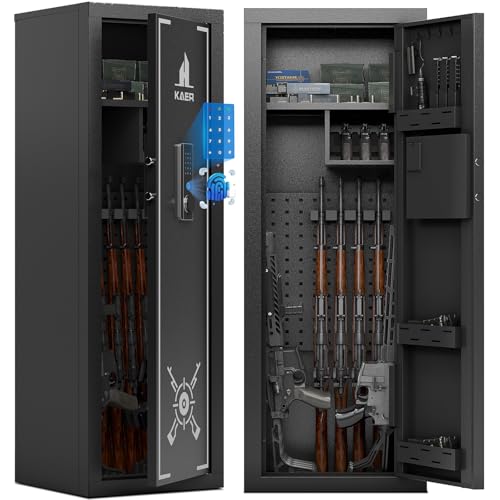
- Biometric: Quick fingerprint entry, as in the KAER biometric models. Reviewers say wet or dirty fingers can fail to read, so keep a backup method secure.
If you need inexpensive, orderly storage that keeps children and casual visitors away from a few long guns, a steel cabinet such as the Stack-On 18-Gun Convertible or the smaller Stack-On Sentinel is the usual starting point; if you want quicker keypad or biometric access in a compact unit, the KAER, INTERGREAT and EMAXEE lines are the names that recur in reviews; and if you want to display firearms in the home, a locking wood-and-glass cabinet from American Furniture Classics is the typical choice. None of these should be mistaken for a fire-rated or burglary-rated gun safe.
Our top picks


As an Amazon Associate we earn from qualifying purchases at no extra cost to you.
Gun Cabinets at a Glance
| Model | Type | Best for | Key stated specs | Limits |
|---|---|---|---|---|
| Stack-On 18-Gun Convertible Steel Security Cabinet | Steel cabinet | Budget storage of many long guns | Convertible interior; reviewers call it a budget standout | Thin steel, no rated fire protection |
| Stack-On 8-Gun Sentinel | Steel cabinet | Ultra-budget, small collections | Described as the best ultra-budget option by one roundup | Basic lock, limited capacity |
| KAER Biometric 14-15 Gun | Biometric steel safe | Quick access and larger counts | One roundup lists 15-gauge steel and three-mode access | Not independently rated for fire or theft |
| KAER 2-Gun Electronic | Electronic cabinet | New owners, apartments | Keypad, room for a rifle plus a pistol per reviewers | Small capacity |
| INTERGREAT 12-15 Gun | Steel safe | Value pick | Frequently named as best value | Check steel gauge, lock quality |
| EMAXEE 5-8 Rifle | Compact, modular | Small spaces, pre-assembled convenience | Described by one reviewer as a compact option | Limited height for scoped rifles |
| Surelock Security Combat 14 | Steel cabinet | Sturdier steel at a mid tier | Described as 21-gauge body and 19-gauge doors | Check certification if fire matters |
| American Furniture Classics (8, 10, 16 gun) | Wood and glass display | Showing firearms in the home | Locking doors, glass fronts | Glass and wood offer low security |
Specifications are those reported by makers or the reviewers named. Many roundups for this category are affiliate-driven, so confirm details on the maker’s own page before buying.
Cabinet vs Safe: Know the Difference
A gun cabinet is usually made of thinner steel (or wood), uses a simple lock and is designed to deter casual access. A gun safe has thicker walls, more robust bolts and often a rated fire barrier. Reviewers who cover quick-access units like KAER, INTERGREAT and EMAXEE note that they mainly keep children and opportunistic access out; they are not true burglary or fire-rated safes. If you want independent assurance, look for a laboratory certification, such as a UL residential security container listing, and read the actual certificate.
Steel Gauge and Construction
Gauge numbers run backward: a lower number is thicker steel. A cabinet advertising a thin gauge is easier to pry open, and a body of 12-gauge or better is typical of heavier safes. The Surelock Combat 14 is described as having a 21-gauge body and 19-gauge doors, and one KAER model is described as 15-gauge. Neither is the same as a full safe. Look at door construction, the number and size of locking bolts, hinge type and whether the interior is reinforced. Gaps between door and frame are an easy place for a tool to enter.
Locks and Access
- Key lock: Simple and cheap, but keys can be copied or lost, and cheap tubular locks can be defeated.
- Electronic keypad: Fast access. Batteries need replacement on a schedule and you should know the maker’s manual override.
- Biometric: Quick fingerprint entry, as in the KAER biometric models. Reviewers say wet or dirty fingers can fail to read, so keep a backup method secure.
Whichever you choose, keep keys and codes away from children and unauthorized users, and follow local storage law.
Capacity and Fit
Advertised capacity usually counts bare long guns. Scopes, slings and lights reduce usable space, and many cabinets have shallow interiors. Measure your tallest rifle with its optic and compare it against interior height and depth. Convertible interiors, like the Stack-On’s, allow you to remove or add shelves and dividers. Narrow units such as the EMAXEE can fit into closets but may limit scoped rifles.
Consider the footprint and the floor. A big steel unit can weigh well over a hundred pounds when loaded, and placement near an exterior wall or on a carpeted floor changes how you anchor it.
Anchoring and Placement
Most cabinets ship with pre-drilled holes for bolting to a wall or floor, and anchoring is one of the cheapest ways to improve security. Use the fasteners the maker specifies, and into solid framing or concrete. Avoid placing the cabinet in a damp basement without moisture control, and keep it away from heat sources. If you are unsure about the structure, consult a professional.
Display Cabinets
A wood-and-glass display, like the American Furniture Classics 8-, 10- and 16-gun models, shows off the collection but offers little resistance to a determined thief. Glass is vulnerable, and wooden frames can be forced. They suit collectors who want visibility and have the rest of their storage secured, or who keep firearms in a locked room. Check local law, as some jurisdictions have specific rules on visible firearms and on glass-fronted storage.
Budget Tiers
Budget
Stack-On steel cabinets are the typical entry point. They are inexpensive and available in a range of sizes. Expect thinner steel and simple locks.
Mid-Range
Biometric and keypad units such as KAER, INTERGREAT and Surelock sit here. They bring quicker access, better doors and, in some cases, heavier steel. Quality varies between models, so read the maker’s specs closely.
Premium
The upper tier of this category includes finely finished wood display cabinets and heavier steel units. If you want fire or burglary ratings, step beyond cabinets into the gun safe category and look for the lab listing.
Safety and Legal Notes
- Follow local, state and national laws on firearm storage, and check whether your jurisdiction sets requirements for locked storage.
- Store firearms unloaded; keep ammunition secured, and separate if required or advisable where you live.
- Keep codes, keys and biometric enrollments restricted to authorized adults.
- Do not alter a lock or defeat a safety feature, and follow the maker’s manual.
Pick X If …
| Pick this | If … |
|---|---|
| Stack-On 18-Gun Convertible | You need low-cost storage for many long guns. |
| Stack-On 8-Gun Sentinel | You want the cheapest basic lockable cabinet. |
| KAER Biometric 14-15 Gun | You want quick access in a larger unit. |
| KAER 2-Gun Electronic | You own one rifle and a pistol and have little space. |
| INTERGREAT 12-15 Gun | You want a value steel safe with a keypad. |
| EMAXEE 5-8 Rifle | You have a closet and a few rifles. |
| American Furniture Classics | You want to display firearms in a room you control. |
Alternatives to Consider
- Fire-rated gun safes: A better choice if fire and theft protection matter more than cost.
- In-wall or hidden vaults: Use a small footprint to store a few firearms.
- Individual trigger or cable locks: Helpful supplements, particularly when traveling.
Questions to Ask Before Buying
Start with what you are protecting against. If the main concern is children or visitors in the home, a basic locking steel cabinet meets that need. If you worry about burglary or fire, step up to a safe with a laboratory listing. Next, count your firearms honestly and include any you may acquire in the next few years, then measure the tallest one with its optic attached. Think about where the cabinet will sit: a closet, a bedroom wall, a basement or a garage each carry different moisture, temperature and access considerations.
Then consider the lock you will actually use. A lock that is slow or unreliable tends to get left open, which defeats the purpose. Finally, read the maker’s warranty and look at how easy it is to get replacement keys, batteries or parts. Reviewers of low-cost cabinets often note that instructions and customer support vary a great deal, so a brand with a clear manual and contact details is worth some extra consideration.
Moisture and Maintenance
Steel storage can trap humidity, which encourages rust on metal parts. Many owners use a maker-approved desiccant or dehumidifier, wipe firearms before storing them and check the interior from time to time. Replace lock batteries on a regular schedule and keep the manual somewhere safe, since it holds the override procedure.
Frequently Asked Questions
Is a gun cabinet as secure as a gun safe?
Generally no. Cabinets use thinner steel and simpler locks and are mainly meant to keep children and casual access out. A safe has thicker walls and may carry a fire or security rating.
How many guns does a cabinet really hold?
The listed number typically assumes bare rifles. With scopes, slings and lights, plan on fewer, and measure interior height and depth before buying.
Are biometric cabinets reliable?
Reviewers find them quick, though wet or dirty fingers can cause misreads. Learn the manual override and keep batteries fresh.
Should I bolt the cabinet down?
Yes, if the maker provides anchor points. Use the specified hardware and anchor into solid framing or concrete.
Can I store ammunition in the same cabinet?
Local law and maker guidance vary. Many owners keep ammunition locked separately, and some jurisdictions require it, so check your rules.
Are glass display cabinets safe for firearms?
They secure access with a lock but offer little protection from forced entry. Use them in a controlled room, and follow local rules on storing visible firearms.





