
Key takeaways
- Temperature rating of -40°F // -40°C
- WIND + WATER RESISTANT
- 160g quilted insulation for comfortable warmth without extra…
The best hi vis rain jacket for most outdoor workers is a breathable, membrane-based ANSI/ISEA 107 Type R Class 3 shell such as the Helly Hansen Workwear Alta Shell or the Carhartt High-Visibility Storm Defender Class 3 jacket; if your job is rough on gear or involves a fall-arrest harness, the Radians RW32 heavy-duty ripstop jacket is the tougher choice, and the Ergodyne GloWear 8366 is the light, budget-friendly option for occasional wet shifts.
A waterproof hi vis jacket has to do two jobs at once: keep you dry for a full shift and keep you visible to drivers and equipment operators. Those two jobs pull in different directions. Breathable membranes cost more, coated fabrics are cheaper but trap sweat, and reflective tape has a wash limit that most buyers never read. This guide sorts the main options by how and where you work.
Our top picks
 Ergodyne Unisex Adult Hi Vis Safety GloWear
- Temperature rating of -40°F // -40°C
- WIND + WATER RESISTANT
- 160g quilted insulation for comfortable warmth without extra…
 TICONN Reflective Rain Coat
- 360° High Visibility: Sewn-on hi vis reflective tape…
- Waterproof Protection: 150D Oxford polyester with PU coating…
- All-Shift Comfort: Adjustable cuffs, underarm vents, and a…
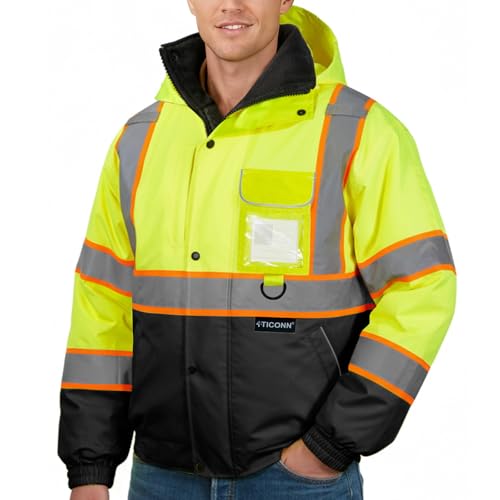 TICONN Hi Vis Safety Bomber Jacket
- 360° High Visibility: Sewn-on 2" wide hi vis…
- Storm Sealed: Built with a 300D Oxford polyester…
- Warm Fleece Lining: This hi vis winter jacket…
| Product | Key specs | |
|---|---|---|
| Ergodyne Unisex Adult Hi Vis Safety GloWear | Temperature rating of -40°F // -40°C WIND + WATER RESISTANT 160g quilted insulation for comfortable warmth without extra… | Check price |
| TICONN Reflective Rain Coat | 360° High Visibility: Sewn-on hi vis reflective tape… Waterproof Protection: 150D Oxford polyester with PU coating… All-Shift Comfort: Adjustable cuffs, underarm vents, and a… | Check price |
| TICONN Hi Vis Safety Bomber Jacket | 360° High Visibility: Sewn-on 2" wide hi vis… Storm Sealed: Built with a 300D Oxford polyester… Warm Fleece Lining: This hi vis winter jacket… | Check price |
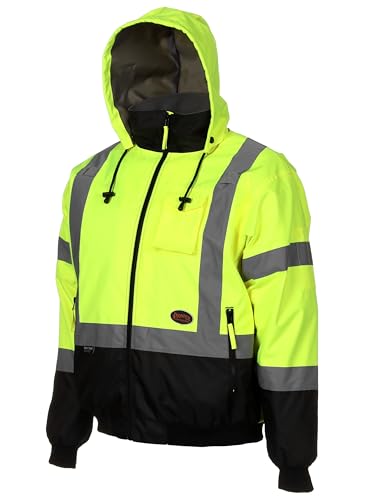 Pioneer Hi Vis Safety Bomber for Men | Pioneer Class 3 waterproof winter safety jacket is… 100% waterproof and windproof PU-coated oxford polyester shell… Safety jacket comes with 2 large zip pockets,… | Check price |
 TICONN Reflective Rain Jacket | 360° High Visibility: Sewn-on hi vis reflective tape… Waterproof Protection: 150D Oxford polyester with PU coating… All-Shift Comfort: Adjustable cuffs, underarm vents, and a… | Check price |
As an Amazon Associate we earn from qualifying purchases at no extra cost to you.
Class 3 vs Class 2: which one your site needs
ANSI/ISEA 107 groups high-visibility garments by how much background (fluorescent) material and retroreflective tape they carry. Type R is for roadway and off-road work, and Class 3 is the highest level, intended for workers near traffic moving above roughly 50 mph, in poor light, or in bad weather. Class 3 normally requires sleeves with reflective bands, which is why almost every serious rain jacket high visibility option is built as Class 3. Class 2 vests or jackets are fine for lower-speed sites, warehouses and parking areas, but many highway, utility and rail contracts specify Class 3 outright, so check your safety plan before you buy.
Two traps to watch for. First, some jackets sold in North America are the European or Canadian version, certified to EN ISO 20471 and EN 343 rather than ANSI/ISEA 107. That may not satisfy a U.S. site audit. Second, some lightweight jackets only reach Class 3 when worn with matching bibs or pants as a suit. If you plan to wear the jacket alone, confirm the label says Class 3 for the jacket by itself.
The main options compared
| Jacket | Waterproofing | Shell fabric | Certification | Notable features | Typical price |
|---|---|---|---|---|---|
| Helly Hansen Workwear Alta Shell (71071) | Helly Tech Performance membrane, breathable | Polyester shell | ANSI/ISEA 107 Type R Class 3 | Detachable hood, YKK zippers, Napoleon pocket | $110–$140 |
| Helly Hansen Workwear Alta Rain Jacket (70266) | PU coating, not breathable | Lightweight polyester | ANSI/ISEA 107 Type R Class 3 | Packable hood, storm flap, adjustable cuffs | $100–$125 |
| Carhartt Hi-Vis Storm Defender Class 3 (106693) | Storm Defender membrane, fully taped seams | 5.25 oz three-layer polyester twill | ANSI/ISEA 107 Type R Class 3 | Droptail hem, tape rated for 75 home washes | $140–$165 |
| Radians RW32-3Z1Y | PU coating | 300D ripstop Oxford | ANSI/ISEA 107 Type R Class 3 | Harness D-ring opening, dual mic tabs, front and back vents; 25-wash limit | $100–$125 |
| Radians RW30-3Z1Y | PU coating | 300D Oxford | ANSI/ISEA 107 Type R Class 3 | Basic, low-cost shell | $45–$70 |
| Ergodyne GloWear 8366 | PU coating, fully taped seams | 150D polyester Oxford | ANSI/ISEA 107-2020 Type R Class 3 | Vented back cape, matching pants available (8376K suit) | $35–$60 |
| Ergodyne GloWear 8365BK | PU coating | 300D polyester | ANSI/ISEA 107 Type R Class 3 | Black lower panels hide grime, two mic tabs | $50–$80 |
Picks by situation
Long active shifts in steady rain: Helly Hansen Alta Shell or Carhartt Storm Defender
If you are walking, climbing, shovelling or flagging for eight to twelve hours, breathability matters as much as waterproofing. A PU-coated jacket will keep rain out, but your own sweat condenses inside it and you end up just as wet by lunch. The Alta Shell and the Carhartt Storm Defender both use a waterproof-breathable membrane instead of a plain coating, so vapour can escape. The Carhartt is the heavier, more workwear-styled of the two, with a twill face that resists snagging and a longer droptail hem that covers your seat when you bend over. The Alta Shell is lighter and cut closer to an outdoor jacket, with a detachable hood that helps when you wear a hard hat with its own rain cover.
Rough sites, harness work and abrasion: Radians RW32
Construction, rigging and utility crews tend to destroy thin shells on rebar, ladders and truck beds. The RW32 uses 300-denier ripstop, which shrugs off scrapes far better than 150-denier Oxford. It also has a pass-through opening for a fall-protection D-ring, so you can wear the jacket over a harness instead of under it, and two radio mic tabs. The trade-off is that it is a coated fabric with vents rather than a membrane, so it runs warm in mild weather, and it is rated for only 25 washes before the reflective performance may fall out of compliance.
Occasional wet days or a truck-box backup: Ergodyne GloWear 8366 or Radians RW30
For a work rain jacket you pull out a few times a month, a light PU-coated Class 3 shell is hard to beat on price. The Ergodyne 8366 has fully taped seams and a vented cape across the back, and it packs small enough to live behind a truck seat. Pair it with the matching pants if you need full-body coverage. The Radians RW30 is the other common budget option with a heavier 300D face.
Dirty jobs: Ergodyne GloWear 8365BK
Fluorescent yellow-green fabric that is caked in mud or grease is no longer very visible, and some safety managers will reject a jacket that is too soiled. Black-bottom designs like the 8365BK keep the lower panels dark so the high-visibility upper body stays cleaner for longer.
Ownership realities: what wears out first
- Reflective tape before fabric. Every certified hi vis jacket has a rated wash limit, from 25 cycles on some coated jackets to 75 on the Carhartt. Washed weekly, a 25-cycle jacket can be out of compliance in about six months. Wash only when needed, on cold, and line dry.
- Fluorescent colour fades in sunlight. UV exposure dulls the background material. If the jacket looks noticeably paler than a new one, replace it even if it still keeps you dry.
- Seam tape peels at stress points. Shoulders and underarms flex the most. Coated jackets with welded or taped seams usually leak there first.
- Coatings crack in cold. PU-coated shells stiffen below freezing and can crack along fold lines if stored crumpled. Hang them rather than stuffing them in a bin.
- Do not add patches or logos carelessly. Covering reflective or background areas with embroidery or stickers can drop a jacket below Class 3 requirements.
Cost per shift: why the cheap jacket is not always cheaper
Consider a crew member who works 150 wet shifts a year. A $50 coated jacket that tears or loses compliance in one season costs about 33 cents per shift. A $150 membrane jacket that lasts three seasons with careful washing costs about 33 cents per shift too, but keeps the worker drier and more willing to keep it zipped up. For daily wear, the better jacket usually wins. For an emergency or visitor jacket worn ten times a year, the budget option is the sensible spend.
Quick buying checklist
- Label states ANSI/ISEA 107 Type R Class 3 for the jacket on its own.
- Fully taped or welded seams, not just “water-resistant” fabric.
- Hood that fits over or under your hard hat, ideally detachable.
- Harness pass-through if you work at height.
- Mic tabs if you use a shoulder radio.
- Size up one if you wear an insulated layer underneath in winter.





