
Key takeaways
- Measure first. Mark the floor with painter’s tape to visualize the footprint, and leave walking space around the piece.
- Choose a shape. L-shapes work on most patios, U-shapes suit large entertaining areas, and modular sets let you adapt later.
- Consider chaise ends. A chaise adds lounging space but takes extra depth.
- Check seat depth. Deep seats feel relaxed but can be hard for shorter people to get out of.
- Plan delivery. Sectionals arrive in several boxes. Check door and stair widths if the set must go through the house.
- Add tables. Leave room for a coffee table or side tables, which often are sold separately.
For most buyers, a modular aluminum or teak-framed sectional with Sunbrella-type performance fabric, such as the West Elm Westport or an Outer or Article sectional, is the best long-term fit, a Polywood sectional suits people who want low maintenance above all, and a budget wicker or olefin-cushion set suits renters and occasional users who accept shorter service life. The right choice depends on your climate, your patio footprint and how much cleaning and covering you are willing to do.
Our top picks

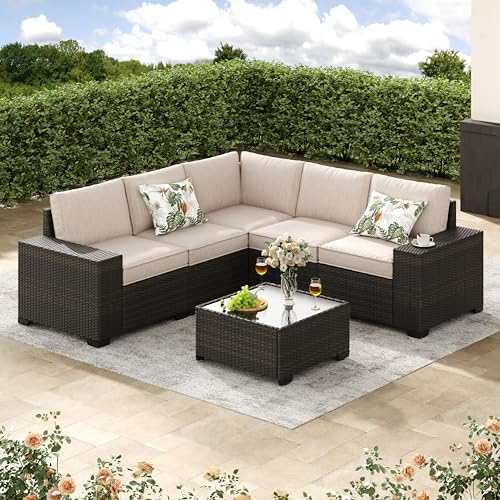


As an Amazon Associate we earn from qualifying purchases at no extra cost to you.
Outdoor Sectionals at a Glance
| Option | Style | Best for | Reported details | Limits |
|---|---|---|---|---|
| West Elm Westport 3-piece L-shaped | Modular L-shape | Overall design and quality, per Forbes Vetted | Forbes Vetted names it best overall | Mid to premium tier |
| Serena and Lily Pacifica modular chaise | Armed chaise sectional | Lounging with a chaise end | Forbes Vetted names it best with chaise | Premium tier |
| Outer Charcoal Aluminum U sectional | U-shaped aluminum | Large patios and entertaining | Forbes Vetted names it best U-shaped; another roundup credits Outer for covers and warranty | Needs generous floor space |
| Neighbor Haven sectional | Modular with Sunbrella | Buyers who want Sunbrella fabric | Forbes Vetted calls it its best Sunbrella pick | Mid to premium tier |
| Polywood Vineyard | Recycled-plastic lumber | Low maintenance, harsh weather | Forbes Vetted names it its low-maintenance pick | Firmer look; premium tier |
| Article outdoor sectionals | Direct-to-consumer | Modern style at mid-range tiers | Named among top brands in a lower-authority roundup | Check frame and cushion details |
| Retailer Sunbrella sectionals (e.g., Praia, Eliana lines) | Modular sets in several sizes | Choosing sizes and colors | Retailer listings, not independent reviews | Quality varies by line |
Independent testing of outdoor sectionals is thin compared with other categories. Forbes Vetted is the main independent roundup in current coverage, and smaller sites echo its brand picks. Treat the table as a guide to where to look, then confirm frame material, warranty and fabric details with each maker.
Frame Materials
Aluminum
Powder-coated aluminum resists rust and is light enough to rearrange. It is the most common frame for modern sectionals, including the Outer pieces mentioned by Forbes Vetted. Check the thickness and finish. Cheaper frames may dent or show chipped coating.
Teak and other hardwoods
Teak weathers to a silver tone and tolerates sun and rain well, but it costs more and may need occasional cleaning or oiling if you want to keep the original color. It suits buyers who like a natural look and plan to keep the set for years.
Recycled-plastic lumber
Polywood frames resist rot and need only cleaning. They can feel heavier and more upright, and the style leans toward classic or coastal. Reviewers pick them for low-maintenance households and harsh climates.
Wicker and resin rattan
All-weather wicker over a steel or aluminum frame gives a softer look at lower tiers. Quality ranges widely: thicker weave and sturdy joints last longer, while thin strands may fray in sun.
Fabric and Cushions
Sunbrella is widely described as the standard for outdoor fabric, with UV resistance, water repellency and mold resistance cited by roundups. Olefin has improved and can deliver similar performance at lower cost, according to a smaller roundup. Polyester options vary, and cheaper fabrics tend to fade or hold moisture.
Cushion fill matters as much as the cover. Quick-dry foam allows water to pass through, while dense foam can hold moisture. Removable covers make cleaning easier. Look for zippers that resist corrosion and covers that can be washed according to the maker’s instructions.
Layout, Size and Fit
- Measure first. Mark the floor with painter’s tape to visualize the footprint, and leave walking space around the piece.
- Choose a shape. L-shapes work on most patios, U-shapes suit large entertaining areas, and modular sets let you adapt later.
- Consider chaise ends. A chaise adds lounging space but takes extra depth.
- Check seat depth. Deep seats feel relaxed but can be hard for shorter people to get out of.
- Plan delivery. Sectionals arrive in several boxes. Check door and stair widths if the set must go through the house.
- Add tables. Leave room for a coffee table or side tables, which often are sold separately.
Budget Tiers
Budget tier
Wicker sets with polyester cushions fill this tier. They look good out of the box and suit sheltered patios or occasional use. Expect cushions to flatten or fade sooner, and plan to cover the set in bad weather.
Mid-range tier
Article, Neighbor, West Elm and similar brands fall here, according to roundups. You typically get aluminum or wood frames, better fabrics and modular pieces. This tier balances style, durability and flexibility.
Premium tier
Serena and Lily, Room and Board and some Outer or Polywood lines sit at the top. These pieces emphasize durability, warranty and design, and suit homeowners who plan to keep the set long term.
Care, Covers and Warranty
Clean cushions and frames regularly with mild soap and water, following the maker’s instructions. Let cushions dry fully before storing them. Covers extend the life of any sectional, and Outer is noted for its covers and warranty. In harsh winters, store cushions indoors if possible.
Read the warranty carefully: what it covers (frame, finish, fabric), how long it lasts and what you must do to keep it valid. Warranty terms differ widely between brands.
Climate and Use Considerations
Hot, sunny regions put the most stress on fabric and finishes, so prioritize UV-resistant covers and frames with a durable powder coat. Wet or coastal climates call for corrosion-resistant hardware and quick-drying cushions, since trapped moisture encourages mildew. In freezing regions, check the maker’s guidance on cold storage, because some foams and fabrics are not meant to stay out in deep winter.
Think about how the space is used, too. A family patio with children and pets needs washable covers and rounded edges, while a quiet adult lounge can lean toward lighter fabrics and softer seating. If the sectional sits under a roof, you have more freedom to choose a design-first set. If it sits in open sun, prioritize durability over looks. Finally, set aside time to inspect hardware, joints and cushion zippers when the set arrives, and contact the maker promptly if anything is damaged.
Pick X If … Decision Table
| Pick this | If you … |
|---|---|
| West Elm Westport | want a well-reviewed L-shape with a clean design |
| Serena and Lily Pacifica | want a chaise end and a premium tier |
| Outer aluminum U sectional | have a large patio and care about covers and warranty |
| Neighbor Haven | want Sunbrella fabric in a modular layout |
| Polywood Vineyard | want minimal upkeep in harsh weather |
| Article outdoor sectional | want modern style at mid-range tiers |
| Wicker budget set | need a short-term or sheltered-patio solution |
Alternatives
- Outdoor sofa plus chairs. A sofa with separate lounge chairs is easier to rearrange in small spaces.
- Daybed or lounge set. For poolside use, a daybed gives a relaxed place to recline.
- Dining-height conversation set. If you eat outdoors more than lounge, a table with bench seating may suit better.
- Add-on pieces. Many modular lines let you buy a corner or ottoman later to expand a smaller start.
Frequently Asked Questions
What material lasts longest in an outdoor sectional?
Powder-coated aluminum, teak and recycled-plastic lumber are the common long-lasting frames. Fabric and cushion quality often determine how long the set looks good. Choose a frame suited to your climate and plan to maintain it as the maker recommends.
Is Sunbrella worth it?
Many roundups describe Sunbrella as the standard for outdoor fabric because of UV resistance and water and mold resistance. Olefin is a lower-tier alternative that has improved. If your patio gets direct sun or heavy rain, a higher-quality fabric often pays off.
Do I need covers for an outdoor sectional?
Covers are not always required, but they extend the life of cushions and frames, especially in snow or heavy rain. Some brands sell fitted covers. Use breathable covers to avoid trapping moisture.
How much space do I need?
Measure the area and leave walking room around the sectional, typically a few feet where possible. Mark the footprint on the ground before buying, and allow for tables and traffic flow.
Can I leave cushions outside year-round?
Some makers state that their cushions can stay outside, but most advise storing them in harsh winters or long rainy periods. Follow the care guidance for your set.
Are modular sectionals better?
Modular sets let you rearrange or expand over time, which helps if your patio or needs change. A fixed set can be simpler and sometimes cheaper. Choose modular if flexibility matters.





