
Our Top Picks


Best Whole House Standby Generators Reviews: What Actually Matters in 2026
The best whole-house standby generator for most homes is the Generac 22kW Whole Home Generator. It sits at the output level that covers a typical 2,000–2,500 sq ft all-electric home with central air conditioning, runs on either natural gas or propane, ships with a transfer switch and cellular monitoring, and lands in the premium tier without forcing you into the largest air-cooled class. If your budget caps out lower or your home is smaller, the Generac 14kW models are the smarter buy; if you have a large home with multiple HVAC zones or want headroom for future loads, the Generac 26kW is the ceiling of this list.
This review compares generators by what genuinely changes the buying decision: rated output and surge capacity, fuel type and consumption rate, transfer-switch type and amperage, noise at normal load, and the physical installation footprint. It covers home sizes from a modest 1,200 sq ft ranch to a 4,000+ sq ft property with outbuildings. Prices are given only as market tiers, because listed prices move constantly with promotions, bundles, and installer markups.
Top 3 Picks
Best Overall: Generac 22kW Whole Home Generator
The 22kW class is the sweet spot for whole-house backup in a single-family home with central air. It keeps the entire panel energized rather than a subpanel of selected circuits, includes the transfer switch and cellular connectivity, and leaves enough surge capacity to start a 4–5 ton air conditioner. For most readers comparing whole-house standby generators, this is where the search ends.
Best Budget: Generac 14kW Whole Home Generator
At roughly 14kW, this unit covers a full house if you are willing to manage large simultaneous loads — the classic approach being load shedding on the range, dryer, or EV charger. It costs meaningfully less than the 22kW and 26kW class and burns less fuel per hour, which matters on propane. Pair it with a transfer switch that supports load management and it behaves like a bigger machine during most outages.
Best Premium: Generac 26kW Whole Home Generator
If you have a large home, dual HVAC systems, a well pump, an electric water heater, and an EV charger, 26kW is the honest answer. It is the largest air-cooled class in this lineup, and its value is headroom: everything runs at once without sequencing. The trade-off is fuel consumption, a heavier installation footprint, and a higher acquisition cost.
Quick Comparison
| Product | Best For | Key Specs (class) | Price Tier |
|---|---|---|---|
| Generac 14kW Whole Home Generator, Transfer Switch & Cellular Capability | Small-to-midsize homes, moderate budgets, propane setups where fuel burn matters | ~14kW air-cooled; natural gas or LP; includes transfer switch; cellular monitoring; single-phase 120/240V | Budget |
| Generac 26kW Whole Home Generator, Cellular Capability | Large homes with multiple HVAC systems and heavy electric loads | ~26kW air-cooled; natural gas or LP; cellular monitoring; 120/240V single-phase; highest output in class | Premium |
| Generac 22kW Whole Home Generator, Transfer Switch & Cellular Capability | Typical 2,000–2,500 sq ft all-electric homes with central air | ~22kW air-cooled; natural gas or LP; includes transfer switch; cellular monitoring; 120/240V single-phase | Premium |
| Generac 10kW Whole Home Generator, Transfer Switch & Cellular Capability | Cabin-sized and 1,000–1,500 sq ft homes, essential-circuit backup | ~10kW air-cooled; natural gas or LP; includes transfer switch; cellular monitoring; smaller enclosure footprint | Budget |
| Honeywell 14kW Home Standby Generator | Buyers who want 14kW capacity in a different brand ecosystem | ~14kW air-cooled; natural gas or LP; automatic backup; whole-home capable with correct transfer switch | Budget |
| Generac 24kW Whole Home Generator, Cellular Capability | Homes between the 22kW and 26kW decision points | ~24kW air-cooled; natural gas or LP; cellular monitoring; 120/240V single-phase | Mid-range |
| 20kW Standby Generator with 200amp TS (Kohler) | Buyers who prefer a 200A service-rated transfer switch bundled in | ~20kW air-cooled; natural gas or LP; includes 200A transfer switch; 120/240V single-phase | Mid-range |
How We Chose
This roundup was assembled from manufacturer specification classes, published installation requirements, and the load calculations that drive real sizing decisions — not from physical testing, bench measurements, or ownership. We did not test, install, or run any of these units.
Four criteria shaped the list. First, category fit: every product here is an air-cooled, automatic standby generator that starts on utility loss and runs on natural gas or propane, so comparisons stay apples-to-apples. Second, output coverage: we mapped each unit to a realistic home size and load profile so a reader can self-select rather than guess. Third, transfer-switch reality: we noted which units bundle a switch and which require you to match amperage, load-management capability, and service rating separately, because this is where budgets quietly break. Fourth, upgrade path and ecosystem: cellular monitoring, propane conversion, cold-weather kits, and service network density all affect five-year cost more than the sticker price does. We included Generac, Honeywell, and Kohler because all three have long-standing, widely serviced standby lines in North America.
1. Generac 14kW Whole Home Generator – Best for Smaller Homes on a Tight Budget
As an Amazon Associate we earn from qualifying purchases at no extra cost to you.

This is the entry point to genuine whole-house backup for a modest home. If your house is around 1,200–1,800 sq ft, has a gas furnace and gas water heater, and one central air conditioner at 3 tons or less, 14kW is not a compromise — it is correctly sized. The unit falls into the air-cooled residential class, runs on either natural gas or liquid propane, arrives with a transfer switch in the box, and includes cellular capability for remote status monitoring.
Key specs
- Rated output class: approximately 14kW (air-cooled, single-phase 120/240V)
- Fuel: natural gas or liquid propane (field-selectable)
- Included: automatic transfer switch, cellular monitoring capability
- Enclosure: powder-coated aluminum, residential footprint suitable for a side-yard pad
- Starting: fully automatic on utility loss, weekly self-test cycle
Who it suits
The reader who wants the lights, fridge, furnace, well pump, internet, and one AC unit to keep running — and who is willing to accept that the oven, dryer, and EV charger may need to wait or be load-managed. It also suits anyone on propane who cares about runtime: a smaller engine consumes less fuel per hour, so a 500-gallon tank stretches considerably further than it would on a 22kW or 26kW unit.
Strengths
The core advantage is cost-per-kW at the low end of the market and low fuel burn. Installation is also simpler: a smaller enclosure means more pad placement options, and the electrical service work is more likely to fit within a standard residential install rather than triggering a service upgrade. Because it is a mainstream Generac air-cooled platform, dealer and parts availability is broad.
How it compares
Against the Generac 10kW, this 14kW unit is the better whole-home choice: 10kW realistically means an essential-circuits subpanel rather than an entire panel, and the price gap between the two is smaller than the capability gap. Against the Honeywell 14kW, both sit in the same output class and both burn natural gas or propane — the decision usually comes down to which brand your local dealer services, plus whether the Honeywell bundle includes everything the Generac bundle does. Against the Generac 22kW, you are trading away the ability to run everything at once, and you are gaining hundreds of dollars in savings and noticeably lower fuel consumption. If your load calculation shows you at 12–13kW of running load, this is the pick. If it shows 18kW, it is not.
Pros
- Lowest acquisition cost among the whole-home-capable units here
- Lower fuel consumption per hour, which extends propane runtime
- Smaller enclosure widens installation placement options
- Ships with transfer switch and cellular monitoring
- Widely serviced platform with strong parts availability
Cons
- Requires load management or manual discipline if large appliances run together
- Insufficient headroom for dual HVAC systems or a 5-ton AC plus EV charging
- Fewer options if you plan to add loads — solar, EV, heat pump — later
2. Generac 26kW Whole Home Generator – Best for Large Homes With Heavy Loads
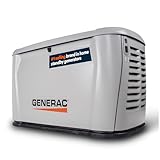
This is the largest air-cooled residential class in the lineup, and it exists for one reason: houses that genuinely need it. If you have 3,500+ sq ft, two or three HVAC systems, an electric water heater, an electric range, a well pump, and a Level 2 EV charger, anything below 24kW will force you into load shedding decisions you would rather not make at 2 a.m. The 26kW unit runs on natural gas or propane, includes cellular connectivity, and provides the surge capacity to start large compressor loads sequentially without tripping.
Key specs
- Rated output class: approximately 26kW (air-cooled, single-phase 120/240V)
- Fuel: natural gas or liquid propane (field-selectable)
- Included: cellular monitoring capability (transfer switch matched separately to service size)
- Enclosure: largest residential air-cooled footprint in this list; plan pad size and clearances carefully
- Starting: fully automatic on utility loss, weekly self-test cycle
Who it suits
Owners of large, all-electric homes who want the panel fully energized with zero behavior changes during an outage — every light, every AC, the oven, the dryer, and the car charger all live at once. It also suits readers in regions with long, frequent outages (hurricane zones, ice-storm corridors, wildfire PSPS areas) where the generator is effectively a second utility service rather than an emergency device. If you are on propane, budget for a larger tank: a 26kW unit at load consumes fuel at a materially higher rate than a 14kW unit, and a 500-gallon tank is not a comfortable margin for a multi-day outage at full load.
Strengths
Headroom is the entire value proposition. You never sequence appliances, you never explain to your family which breaker to leave off, and you never discover mid-outage that the well pump and the AC cannot start together. The 26kW class also ages better against future electrification: adding a heat pump or a second EV does not immediately invalidate the generator sizing. As a flagship air-cooled unit, it typically gets the manufacturer’s best warranty terms in the residential line and the fullest feature set.
How it compares
Against the Generac 24kW, the difference is closer than the badge suggests. The 24kW is a mid-range pick that covers most large homes, and the 26kW’s extra capacity only pays off if your load calculation genuinely lands above the 24kW threshold. If you are within a kilowatt or two of the line, the 24kW usually wins on value. Against the Generac 22kW, the 26kW is the right answer when you have two HVAC systems or an EV charger running during outages — at 22kW you would be sequencing loads. Against the Kohler 20kW with 200A transfer switch, the 26kW is the bigger machine but the Kohler bundle can be more attractive if your service panel work already requires a 200A switch. Sizing should decide this, not brand preference.
Pros
- Runs an entire large all-electric home simultaneously, no load management
- Best future-proofing against added EV, heat pump, or outbuilding loads
- Strong surge capacity for multiple large compressor starts
- Flagship feature set and typically the strongest residential warranty terms
Cons
- Highest fuel consumption of the group; propane users may need a larger tank
- Largest physical footprint — pad placement and clearances get harder
- Premium acquisition cost, and installation may require service upgrades
- Overkill, and inefficient, for homes under roughly 2,500 sq ft
3. Generac 22kW Whole Home Generator – Best Overall for Typical Single-Family Homes
If you want one recommendation without running a full load calculation first, this is it. The 22kW class covers a 2,000–2,500 sq ft home with central air, gas heat, a gas or electric range, a well pump, and normal lighting circuits — running them together, not in sequence. It includes the transfer switch and cellular capability, so the two things most buyers forget to budget for are already in the bundle.
Key specs
- Rated output class: approximately 22kW (air-cooled, single-phase 120/240V)
- Fuel: natural gas or liquid propane (field-selectable)
- Included: automatic transfer switch, cellular monitoring capability
- Enclosure: mid-size residential air-cooled footprint
- Starting: fully automatic on utility loss, weekly self-test cycle
Who it suits
The mainstream buyer: a single-family home with one or two HVAC systems where the goal is “the house works normally during an outage.” It is also the best pick for readers who want to avoid a service upgrade. Because 22kW at 240V draws roughly 90 amps, many homes with a 200A service can support it without reworking the entire electrical service, whereas larger units push you closer to the edge. It handles a 4–5 ton AC start comfortably, which is the single most common sizing failure point in this category.
Strengths
The 22kW class is where capability, fuel consumption, physical size, and cost balance most cleanly. It runs whole-house without load management in the majority of homes, it burns less fuel than the 24kW and 26kW units, and it fits a side-yard pad without dominating the property. Bundling the transfer switch removes a decision most buyers are not equipped to make alone, and cellular monitoring lets you confirm the weekly self-test passed and see run status remotely — genuinely useful if the house is a rental or a second home.
How it compares
Against the Generac 24kW, this is the value pick. The 24kW adds headroom for a modest price step, and it is the right call if your load calculation is borderline or you expect to add an EV charger. Against the Generac 26kW, the 22kW wins on efficiency and footprint unless you have multiple HVAC systems or an all-electric kitchen plus EV charging. Against the Generac 14kW, it costs more and burns more fuel, but it eliminates the load-management conversation entirely. Against the Kohler 20kW, you gain 2kW of capacity and lose the bundled 200A switch — choose based on whether your electrician wants a 200A service-rated switch in the package. For most readers who do not want to think about this again, the 22kW is the answer.
Pros
- Best balance of output, fuel use, footprint, and price on this list
- Whole-house operation without load shedding in most 2,000–2,500 sq ft homes
- Comfortably starts a 4–5 ton air conditioner
- Includes transfer switch and cellular monitoring in the bundle
- Often installable without a full service upgrade
Cons
- Not enough headroom for two HVAC systems plus an EV charger at full draw
- Premium tier pricing compared with the 10kW and 14kW units
- Propane users still need a tank sized for multi-day outages
4. Generac 10kW Whole Home Generator – Best for Cabins and Essential-Circuit Backup

This is the smallest unit in the lineup, and it is honest about what it is: a generator for a small home, a cabin, or an essential-circuits subpanel approach in a larger house. At roughly 10kW, you are not running central air and an electric range at the same time — but you can keep a furnace, well pump, refrigerator, freezer, lighting, internet, and a few outlets alive indefinitely. It ships with a transfer switch and cellular capability, and its small enclosure makes it the easiest unit here to place discreetly.
Key specs
- Rated output class: approximately 10kW (air-cooled, single-phase 120/240V)
- Fuel: natural gas or liquid propane (field-selectable)
- Included: automatic transfer switch, cellular monitoring capability
- Enclosure: smallest footprint in this list; easiest pad siting
- Starting: fully automatic on utility loss, weekly self-test cycle
Who it suits
Cabin owners, small-home owners, and readers in mild climates where the outage risk is about keeping pipes from freezing and food from spoiling rather than running air conditioning. It is also the right call for someone with a tight side yard, HOA setback constraints, or a strict budget who would rather have a properly sized 10kW than an undersized installation of something larger. On a 1,000–1,500 sq ft home with gas appliances, 10kW genuinely covers whole-house for the circuits that matter.
Strengths
Fuel economy is the headline. On a 500-gallon propane tank, a 10kW unit running a light essential load can stretch for days in a way a 26kW unit simply cannot. The small enclosure solves real-world placement problems, and the lower output means lower amperage draw, which frequently means no service upgrade and a simpler permit. For a seasonal property, the combination of remote cellular monitoring and low fuel burn is close to ideal.
How it compares
Against the Generac 14kW, this is the compromise unit. The 14kW costs a little more and runs a modest home whole-house; the 10kW realistically means a subpanel or disciplined load management. If you have central air, go 14kW — the difference in comfort is larger than the difference in price. Against the Honeywell 14kW, the same logic applies with a larger gap. Against the Generac 22kW and larger units, this is not a comparison at all; they are for different houses. The right framing is: if your load calculation comes in under about 9kW of running load and you do not plan to add loads, the 10kW is the efficient, correct, and least intrusive installation on this list.
Pros
- Lowest fuel consumption in the group; excellent propane runtime
- Smallest enclosure and easiest pad siting
- Lowest amperage draw — often no electrical service upgrade needed
- Includes transfer switch and cellular monitoring
- Well suited to cabins, rentals, and seasonal properties
Cons
- Cannot run central air plus major electric appliances simultaneously
- Essential-circuits subpanel is the realistic configuration in larger homes
- Limited upgrade path if you later add an EV or heat pump
5. Honeywell 14kW Home Standby Generator – Best Alternative 14kW Option

The Honeywell 14kW occupies the same output class as the Generac 14kW but comes from a different brand ecosystem — and that matters more than the spec sheet suggests, because standby generators are serviced locally. It is an automatic backup unit that runs on either natural gas or propane and is marketed for whole-home backup when paired with an appropriately sized transfer switch.
Key specs
- Rated output class: approximately 14kW (air-cooled, single-phase 120/240V)
- Fuel: natural gas or liquid propane
- Backup type: automatic on utility loss
- Transfer switch: require the correct amperage and load-management capability for your service
- Configuration: whole-home capable in a modest, gas-appliance home
Who it suits
This is the pick for readers whose local dealer, electrician, or propane supplier already works with Honeywell-branded standby equipment and can service it quickly. In standby power, the difference between a two-day and a two-week repair is usually parts and technician availability, not brand engineering. It suits the same homes as the Generac 14kW: roughly 1,200–1,800 sq ft, gas heat, gas water heater, and at most one 3-ton AC unit.
Strengths
The output class is the proven one for modest homes, and the dual-fuel capability gives you flexibility if natural gas is unavailable or if you prefer propane for independence from the gas grid. Air-cooled 14kW units are inherently simpler than liquid-cooled machines: fewer fluids to maintain beyond oil, no coolant system, and a smaller service footprint. For a buyer who values a serviced brand relationship over bundled accessories, this is a perfectly rational choice.
How it compares
Against the Generac 14kW, the two are functionally equivalent in class. The Generac bundle explicitly includes a transfer switch and cellular capability; with the Honeywell you must confirm what is included and price the transfer switch and any monitoring separately. That single line item can shift the true cost by a meaningful amount, so get it in writing. Against the Generac 10kW, the 14kW is the better whole-home pick if you have central air. Against the Generac 22kW, you are giving up simultaneous heavy-load operation in exchange for lower cost and lower fuel burn. If your load calculation is under about 13kW and your local Honeywell dealer has a strong service reputation, this is a legitimate first choice rather than a fallback.
Pros
- Runs on either natural gas or propane
- Appropriate class for modest, gas-appliance homes
- Air-cooled simplicity — no coolant system to maintain
- Sensible choice when local service support favors the brand
Cons
- Transfer switch and monitoring may not be bundled — verify inclusions
- Same load-management limits as any 14kW class unit
- Dealer network is thinner than the market-leading brand in some regions
6. Generac 24kW Whole Home Generator – Best for the Borderline Large Home

The 24kW sits deliberately between the mainstream 22kW and the flagship 26kW. It exists for the reader whose load calculation lands just above what 22kW handles comfortably — typically a 2,500–3,200 sq ft home with two HVAC systems, an electric water heater, and either an EV charger or an electric range. It runs on natural gas or propane and includes cellular monitoring capability.
Key specs
- Rated output class: approximately 24kW (air-cooled, single-phase 120/240V)
- Fuel: natural gas or liquid propane (field-selectable)
- Included: cellular monitoring capability (transfer switch matched to service size)
- Enclosure: large residential air-cooled footprint
- Starting: fully automatic on utility loss, weekly self-test cycle
Who it suits
This is the mid-range value play for genuinely large homes. If you have two AC compressors, an electric water heater, and normal lighting and outlet loads, 24kW runs all of it at once while the 22kW would need sequencing. It also suits buyers who expect to add one more significant load — a second EV, a heat pump, or a workshop — within a few years, since the extra capacity buys you time before the generator itself becomes the constraint.
Strengths
It resolves the most common sizing anxiety in this category: the fear of buying 22kW and discovering it is 2kW short. The step up from 22kW is smaller than the step from 24kW to 26kW, which makes 24kW the efficient middle choice when your calculation is borderline rather than clearly heavy. Cellular monitoring is included, which means you can verify the weekly self-test and check run status without walking outside in bad weather.
How it compares
Against the Generac 22kW, the 24kW is worth the step if your calculation is within a kilowatt or two of the 22kW ceiling or if you plan to add an EV charger. Otherwise the 22kW is the better value. Against the Generac 26kW, the 24kW is the more rational buy for most large homes — the flagship only justifies itself with multiple HVAC systems plus heavy simultaneous electric loads, and it burns more fuel. Against the Kohler 20kW with 200A transfer switch, the 24kW gives you 4kW more capacity but the Kohler bundle may save you money on the switch if your service work already calls for a 200A unit. Against the 14kW models, this is a different tax bracket of capability — choose it only if your load calculation demands it, because the fuel consumption difference over a multi-day outage is real.
Pros
- Handles large homes with two HVAC systems without load shedding
- Smaller price step from 22kW than the jump to 26kW
- Includes cellular monitoring capability
- Leaves room to add one significant future load
Cons
- Higher fuel consumption than the 22kW on both natural gas and propane
- Large enclosure limits pad placement options
- Mid-range to premium pricing for only 2kW over the 22kW
7. Kohler 20kW Standby Generator with 200A Transfer Switch – Best for Bundled 200A Service Hardware

This is the one entry that leads with its transfer switch rather than its engine. Bundling a 200-amp transfer switch matters because that switch is one of the largest single line items in a standby installation, and a 200A service-rated switch is what many modern homes need. The generator itself sits in the 20kW air-cooled class, runs on natural gas or propane, and covers a mid-to-large home with central air.
Key specs
- Rated output class: approximately 20kW (air-cooled, single-phase 120/240V)
- Fuel: natural gas or liquid propane (field-selectable)
- Included: 200-amp automatic transfer switch
- Enclosure: large residential air-cooled footprint
- Starting: fully automatic on utility loss, with scheduled self-test
Who it suits
Readers with a 200A electrical service who want the transfer switch decision made for them. It suits a 2,000–2,800 sq ft home with one or two HVAC systems, gas or electric water heating, and a well pump. It is also a strong pick for anyone who wants a single-brand, single-invoice installation where the switch and the generator are specified together — that reduces the risk of an electrician sourcing a switch that does not match the generator’s control interface.
Strengths
The bundled 200A switch is the practical advantage: no separate sourcing, no compatibility guesswork, and one warranty path. The 20kW class is enough to run whole-house in a typical mid-size home with central air, and Kohler has a long-standing reputation in standby power with a dedicated dealer network. Propane and natural gas flexibility keeps you independent of a single fuel source, and the self-test scheduling means the unit exercises itself without you remembering to do it.
How it compares
Against the Generac 22kW, you give up 2kW of capacity and gain a bundled 200A switch; if your load calculation sits comfortably under 18kW, the Kohler is frequently the better financial package, and if it sits at 20kW or above, the Generac wins on capacity. Against the Generac 24kW, the same trade-off applies with a wider capacity gap. Against the Generac 14kW and Honeywell 14kW, this is a substantial step up in capability and fuel consumption — the right call if you have central air and electric appliances, the wrong call for a cabin. Against the Generac 26kW, the Kohler is the smaller machine but potentially the cleaner installation. Match the switch amperage to your service first, then compare capacity.
Pros
- Includes a 200A automatic transfer switch — a major line item bundled in
- Capable of whole-house backup for mid-size homes with central air
- Dual-fuel: natural gas or propane
- Single-brand installation simplifies compatibility and warranty
Cons
- 2kW less capacity than the mainstream 22kW class
- Need to confirm the 200A switch matches your exact service configuration
- Dealer network varies by region compared with the market leader
How to Choose
Choosing a standby generator is a sizing problem first and a shopping problem second. Buy the wrong size and no feature, brand, or discount will save you. Work through the following in order.
Step 1: Calculate your running load, not your panel’s rating
Your electrical panel’s size is not your load. Add up the wattage of what you actually need running simultaneously during an outage. Typical values: refrigerator 700W running, freezer 500W, furnace blower 800W, well pump 1,000W running, sump pump 800W, LED lighting 300W, internet and electronics 200W, gas water heater 0W (gas units draw almost nothing), electric water heater 4,500W, electric range 8,000W at full draw, central AC 3,500W per ton running. A 2,000 sq ft home with gas heat, gas water heating, and one 3-ton AC typically lands around 8–12kW of running load — which is exactly why the 14kW class covers so many homes. Add an electric water heater and an electric range and you jump toward 20kW, which is why the 22kW and 24kW classes exist.
Step 2: Account for surge, especially motor starts
Air conditioners and well pumps draw two to three times their running wattage for a split second at startup. A 3-ton AC that runs at 3,500W may need 9,000–11,000W of surge. This is why a generator that technically covers your running load can still trip when the AC kicks on. Air-cooled units in the 20kW+ class generally provide enough surge headroom to start a 4–5 ton AC; smaller units need load management or a soft-start kit on the compressor. If your calculation is close to the line, size up rather than adding complexity.
Step 3: Match the transfer switch to your service
The transfer switch is where budgets break. A whole-house automatic transfer switch must be rated for your service amperage — commonly 100A, 150A, or 200A. If your service is 200A and your switch is 100A, you cannot simply run the whole panel through it. Confirming your main breaker rating before you purchase is the single highest-value five minutes you will spend. Also confirm whether the switch supports load management (sometimes called load shedding), which lets a smaller generator power more of the house by automatically dropping the range, dryer, or EV charger when other loads peak. Some products here bundle the switch; others require you to source it. Bundled is easier, but verify the amperage matches your home.
Step 4: Choose fuel by availability, then by cost
Natural gas is convenient — no tank, no refills, no delivery contract — but during a widespread outage, gas pressure can drop in some systems, and you have no independence from the utility. Propane is independent and reliable, but you must size the tank for runtime and arrange refills. Fuel consumption scales roughly with output: a 14kW unit at load uses substantially less per hour than a 26kW unit, so a 500-gallon propane tank that supports a 14kW unit for days may give a 26kW unit only a fraction of that. If you are on propane and outages are long, the smaller generator you can live with is often the better engineering decision. If you are on natural gas, the cost difference between sizes is smaller and sizing up is cheaper to justify.
Step 5: Measure your pad and plan for noise and clearance
Air-cooled residential standby generators are not silent, but they are designed to run in residential yards. Output class correlates roughly with noise and physical size: a 10kW unit is the smallest and quietest of this group, while 24kW and 26kW units are physically larger and louder under load. Manufacturer clearances from windows, doors, vents, and property lines are non-negotiable and often determine whether an installation is permitted at all. Measure your side yard before you buy, and check local noise ordinances and HOA rules — some communities cap decibels at the property line during nighttime hours. If your only viable location is near a bedroom window, that constraint should drive you toward a smaller unit or a different site.
Step 6: Budget the whole installation, not just the box
Installation typically includes a concrete or composite pad, fuel line work, electrical work, the transfer switch, permits, and inspection. Expect additional costs for a gas line run, a service upgrade, or a load-management panel. Plan the placement so the exhaust is away from windows, doors, and fresh-air intakes, and so the unit has room for service access on all sides. Ask your installer three questions before signing: what transfer switch amperage are you specifying and why, does the price include the fuel line and permit, and how long is the wait for a service call during an outage event. That last question tells you more about your real ownership experience than any brochure spec does.
Step 7: Plan maintenance and know what wears first
Air-cooled standby generators are relatively simple machines, but they are not maintenance-free. Oil and oil filter changes are the most frequent service item, typically on an annual or manufacturer-specified interval. Air filters, spark plugs, and batteries are the next wear items — the starting battery is the most common cause of a generator that fails to start during a real outage, which is why the weekly self-test matters. Keep a spare battery on hand and replace it on the manufacturer’s recommended schedule rather than waiting for failure. Propane units may need a regulator inspection; natural gas units need the fuel line checked for sizing. Common owner mistakes: skipping the self-test, ignoring the battery, storing a propane tank below the level needed for a multi-day run, and never checking that the exhaust clearance is still clear after landscaping or snow accumulation. Schedule annual service in the shoulder season, before storm season, when technicians are actually available.
Decision matrix by situation
| Your situation | Recommended pick | Why |
|---|---|---|
| 1,000–1,500 sq ft home or cabin, gas appliances, tight budget or tight side yard | Generac 10kW | Lowest fuel burn, smallest footprint, often no service upgrade |
| 1,200–1,800 sq ft home, one 3-ton AC, gas heat and water heating | Generac 14kW or Honeywell 14kW | Whole-house coverage without load shedding; low fuel use |
| 2,000–2,500 sq ft home, one or two AC units, no EV charger | Generac 22kW | Best balance of output, footprint, price, and fuel use |
| 200A service panel and you want the switch decision handled for you | Kohler 20kW with 200A TS | Transfer switch bundled and specified to match |
| 2,500–3,200 sq ft, two HVAC systems, planning to add an EV | Generac 24kW | Headroom above the 22kW ceiling at a smaller step than 26kW |
| 3,500+ sq ft, all-electric, multiple HVAC zones, EV charger | Generac 26kW | Runs everything simultaneously with no load management |
| Long outages on propane, fuel availability is the constraint | Smallest unit that meets your load | Fuel consumption scales with output; runtime is the limiting factor |
Frequently Asked Questions
What size standby generator do I need for a 2,000 sq ft house?
Most 2,000 sq ft homes with gas heat, gas water heating, and one central air conditioner land in the 14kW to 22kW range depending on whether the range and water heater are electric. If everything major is gas and you have a single 3-ton AC, a 14kW unit covers whole-house. Add an electric water heater, electric range, or a second HVAC system and you should be looking at 22kW or 24kW. The reliable answer comes from a load calculation based on your actual appliances, not from square footage alone.
Is a 22kW generator enough to run my whole house?
For most homes between 2,000 and 2,500 sq ft with one or two air conditioners, yes — a 22kW unit runs the full panel at once without load shedding. The limit is heavy simultaneous electric loads: an electric range, electric water heater, and EV charger all drawing at once can exceed it. If you have all three, size up to 24kW or 26kW, or install load management so the generator sheds one circuit when the others peak.
Do I need a 200 amp transfer switch?
You need a transfer switch rated for your home’s service amperage. If your main breaker is 200A, you need a 200A-rated switch to pass the whole panel through it. If your service is 100A or 150A, a matching switch is correct and a 200A switch is unnecessary. Confirm your main breaker rating before purchasing, because mismatching this is one of the most common and most expensive installation mistakes.
Natural gas or propane for a standby generator?
Natural gas is more convenient — no tank, no refills, and usually lower fuel cost per unit of energy. Propane gives you independence from the gas utility, which matters during regional outages and in areas where gas pressure can drop under heavy demand. The trade-off is that propane requires a tank sized for your generator’s consumption rate and outage length. On a large 26kW unit, a small tank can run out quickly; on a 14kW unit, the same tank lasts substantially longer.
How loud is a whole-house standby generator?
Air-cooled residential standby generators are designed to run in residential areas but are audible, especially under heavy load, and noise generally increases with output class. A 10kW unit is the quietest of the group in this review; 24kW and 26kW units are larger and louder. Manufacturer clearances from windows, doors, and property lines exist partly for noise and exhaust reasons. Check local noise ordinances and HOA rules before choosing a location, and never place the unit directly outside a bedroom window if another option exists.
How much does it cost to install a whole-house standby generator?
Installation cost varies widely by region, fuel type, and electrical work required, and prices for both equipment and labor move constantly — treat any figure you see as a planning range, not a quote. The main variables are whether a service upgrade is needed, how far the gas line must run, whether the transfer switch supports load management, and local permit and inspection fees. Always ask for a written scope that itemizes the transfer switch amperage, the fuel line, the pad, and the permit.
Will a standby generator run my air conditioner?
It can, if the generator’s surge capacity exceeds the AC’s starting draw. A 3-ton unit draws roughly 3,500W running but may need 9,000–11,000W for a split second at startup. Generators in the 20kW class and above generally start a 4–5 ton AC comfortably. Smaller units may need a soft-start kit installed on the compressor or a load-management setup that delays the AC until other loads drop. This is the most common reason a generator that “should” be big enough trips when the AC kicks on.
How long can a standby generator run on a propane tank?
Runtime depends on tank size and load, and fuel consumption scales with output class. A 500-gallon tank that supports a 14kW unit at partial load for several days may run a 26kW unit at heavy load for a much shorter period. If you are on propane and expect multi-day outages, calculate runtime against your realistic load rather than the generator’s maximum, and arrange a refill contract in advance — delivery during a regional outage is often delayed.
Final Recommendation by Situation
If you want one answer and your home is a typical single-family house with central air, buy the Generac 22kW Whole Home Generator. It is the best overall pick because it delivers genuine whole-house coverage, comfortable AC starting capacity, a bundled transfer switch and cellular monitoring, lower fuel consumption than the large classes, and an installation footprint most properties can accommodate. If your budget is tight or your home is under 1,800 sq ft, choose the Generac 14kW and accept load management on the range and dryer — or the Honeywell 14kW if your local service network favors that brand. If your home is a cabin or you need only essential circuits, the Generac 10kW is the efficient, correct choice. If your load calculation lands above 22kW with two HVAC systems, an EV charger, or an all-electric kitchen, step to the Generac 24kW for value or the Generac 26kW for maximum headroom, and if your 200A service work already calls for a 200A switch, price the Kohler 20kW bundle before deciding. In every case, confirm your transfer switch amperage, confirm your fuel source and runtime, and confirm your pad placement and clearances before you buy — those three checks prevent nearly every expensive standby generator mistake.





