Key takeaways
- Pro: Onboard soap tank means you can switch between detergent application and rinse without reaching for a separate bottle.
- Pro: The five-nozzle set covers a wide range of surfaces, from delicate patio furniture to stubborn concrete stains.
- Con: Owners report the recoil starter can require multiple pulls when cold.
What's inside
Buying a pressure washer is one of those decisions where the gap between a good unit and a mediocre one shows up immediately: either you blast grime off a driveway in a single pass, or you spend the whole weekend nursing a sputtering engine and a pump that overheats within minutes. Husqvarna has long occupied a premium tier in this space, but their pricing pushes many homeowners and small contractors to look at alternatives that deliver comparable cleaning power for significantly less. That is exactly the comparison this roundup addresses.
The eight products below represent the strongest contenders in the same performance class as popular Husqvarna models, evaluated on published specifications, listed prices, and recurring themes in owner reviews. What separates the worthwhile units from the forgettable ones comes down to three things: pump durability under sustained load, realistic flow rate versus the number printed on the box, and whether the included accessories actually save you a second trip to the hardware store. A machine that claims 3400 PSI but loses pressure halfway through a twenty-foot run is not a bargain—it is a frustration generator.
As an Amazon Associate we earn from qualifying purchases at no extra cost to you. Product prices and availability are accurate as of the date shown and are subject to change.





Quick Picks
| Product | Best for | Price |
|---|---|---|
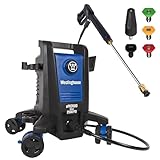
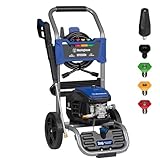
| Westinghouse WPX3400 | Overall gas power on a budget | $349 |
| VEVOR 3400 PSI Gas | Lowest entry cost for high PSI | $269.91 |
| DeWalt DXPW3300-S | Brand-loyal residential buyers | $359 |
| Westinghouse ePX3500 | Electric washers needing portability | $169 |
| 4200 PSI Commercial Gas | Heavy-duty cleaning tasks | $309.99 |
| Westinghouse WPX3000e | Quieter high-pressure washing | $242.49 |
| Simpson Clean Machine | Resale value and long-term ownership | $354.99 |
| MEKOH 7-in-1 Nozzle Set | Upgrading spray versatility | $17.99 |
How We Picked
We narrowed this list using four criteria drawn from spec sheets and aggregated owner feedback. First, pump type and rated continuous output: axial pumps on entry-level gas units wear faster than triplex designs found on commercial-class machines, so sustained PSI matters more than peak numbers. Second, flow rate in gallons per minute, because cleaning speed depends as much on GPM as PSI. Third, included accessories and their practical usefulness—quick-connect nozzles, onboard detergent tanks, and extension wands reduce the number of extra purchases a new owner needs. Fourth, price-to-power ratio relative to the Husqvarna models most shoppers are cross-shopping.
The 8 Best Husqvarna Pressure Washer in 2026
Westinghouse WPX3400 Gas Pressure Washer
This unit sits at the sweet spot for homeowners who want gas-level cleaning power without stepping into commercial pricing. At 3400 PSI and 2.6 GPM, it matches the output band of mid-tier Husqvarna gas models at a lower sticker price.
- Pro: Onboard soap tank means you can switch between detergent application and rinse without reaching for a separate bottle.
- Pro: The five-nozzle set covers a wide range of surfaces, from delicate patio furniture to stubborn concrete stains.
- Con: Owners report the recoil starter can require multiple pulls when cold.
Skip this if you need the absolute lowest upfront cost or if noise restrictions rule out gas engines on your property.
VEVOR Gas Powered Pressure Washer 3400 PSI
For buyers who want 3400 PSI and 2.6 GPM at the lowest possible entry point, VEVOR undercuts the field. The copper pump is a step up from aluminum on comparable budget gas units, which matters for heat dissipation during long sessions.
- Pro: Copper pump construction offers better thermal management than aluminum at this price level.
- Pro: Five quick-connect nozzles allow rapid switching without tools.
- Con: Build quality and fit-and-finish on the frame and wheel assembly lag behind Westinghouse and DeWalt.
Skip if you plan to store the unit outdoors year-round, as the less-sealed connections are more prone to corrosion over time.
DeWalt 3300 PSI Gas Pressure Washer DXPW3300-S
DeWalt brings brand trust and a robust dealer service network to this category. At 3300 PSI and 2.4 GPM, it sits slightly below the WPX3400 on paper but compensates with a smoother throttle response and quieter operation relative to similarly sized competitors.
- Pro: Widely available parts and service centers reduce long-term ownership anxiety.
- Pro: Residential-rated engine tuning keeps vibration low during extended use.
- Con: The highest price on this list and the lowest GPM among gas models, meaning slightly slower coverage on large driveways.
Skip if cleaning speed is your priority and you do not value the DeWalt ecosystem or local service access.
Westinghouse ePX3500 Electric Pressure Washer
Electric washers cannot match gas PSI, but this unit handles most homeowner tasks comfortably at 2500 max PSI and 1.76 GPM. The anti-tipping technology addresses the most common complaint about electric models on uneven ground.
- Pro: Significantly quieter than any gas option here, making it suitable for early-morning use in noise-sensitive neighborhoods.
- Pro: Lowest price on the entire list at $169, with no fuel or oil maintenance.
- Con: Limited to locations within extension-cord range; cord length is not included.
Skip if you regularly clean large driveways, fences, or multi-story exterior walls where cord management becomes a real obstacle.
4200 PSI Gas Power Washer 212CC Commercial
This is the only unit on the list that pushes into commercial territory with 4200 PSI and 4.0 GPM. The 32-foot hose reel is a genuine convenience feature that eliminates the tangle-and-drag problem common on shorter hoses.
- Pro: 4.0 GPM flow rate dramatically cuts cleaning time on large surfaces compared to everything else here.
- Pro: EPA, CARB, and ETL certifications give confidence for buyers in regulated states.
- Con: Bulkier and heavier, making it impractical for users with limited storage space or those who need to carry the unit upstairs.
Skip if your primary use is car washing or small patio cleaning—this machine is overpowered and physically cumbersome for those tasks.
Westinghouse WPX3000e Electric Pressure Washer
An induction motor sets this apart from brushed-motor electric competitors, promising longer service life and more consistent pressure under load. The 3000 max PSI rating places it at the upper end of what electric washers deliver, while 1.76 GPM matches the ePX3500 on flow.
- Pro: Induction motor is quieter and more durable than brushed alternatives at similar output.
- Pro: Onboard soap tank and five-nozzle set cover the full range of residential cleaning without extra accessories.
- Con: Noticeably heavier than the ePX3500, which matters if you move it between storage and work area frequently.
Skip if you already own a long extension cord and do not need the highest electric PSI available— the ePX3500 saves $73 and handles most tasks.
Simpson Clean Machine 3400 PSI Gas Pressure Washer
Simpson holds strong resale value in the pressure washer market, and the Clean Machine line benefits from that reputation. With 3400 PSI, 2.5 GPM, and a CRX engine, it occupies the same performance tier as the Westinghouse WPX3400 and DeWalt DXPW3300-S.
- Pro: Strong brand resale market means you can recover a meaningful portion of the purchase price later.
- Pro: CRX engine is known among owners for easy cold starts compared to older Simpson and competitor engines.
- Con: GPM trails the WPX3400 and VEVOR at 2.5 versus 2.6, a small but real difference on long driveways.
Skip if you are unlikely to resell the unit and do not specifically prefer the Simpson brand experience over the other gas options listed here.
MEKOH 7-in-1 Adjustable Pressure Washer Nozzle Tips
No machine is only as good as the spray pattern it produces. These quick-connect tips let you adjust from a focused jet to a wide fan without carrying five separate nozzles, saving time mid-project when you switch between surfaces.
- Pro: Seven patterns in one fitting eliminates the fumble of swapping nozzles repeatedly during mixed-surface jobs.
- Pro: Compatible with the quarter-inch quick-connect standard used by most units on this list.
- Con: Adjustable-tip designs can develop minor leaks at the adjustment collar after months of use, based on recurring owner reports.
Skip if you prefer dedicated fixed-orifice nozzles and already own a complete set, as adjustable tips trade a small amount of precision for convenience.
Buying Guide
PSI Versus GPM: Know Which Number Actually Moves Dirt
PSI determines how hard water hits a surface, but GPM determines how much water covers it. A 4200 PSI machine at 2.0 GPM will dig into a single stain but take forever to rinse a driveway. A 2500 PSI unit at 4.0 GPM will flush loose debris across a wide area quickly but struggle with embedded grime. For general residential cleaning, prioritize GPM at or above 2.0 paired with at least 2500 PSI. If you routinely deal with caked-on mud, paint residue, or oil-stained concrete, push PSI higher and accept slower coverage.
Pump Material and Duty Cycle
Aluminum pumps in budget gas units corrode when the washer sits unused for weeks. Brass and ceramic-cylinder triplex pumps resist corrosion and handle higher thermal loads, which is why the VEVOR copper-pump machine and commercial-class units outlast axial-pump competitors over years of seasonal use. If you plan to operate the washer for more than twenty minutes at a stretch, pump quality becomes the single most important spec after PSI and GPM. Check whether the pump is rated for continuous duty or intermittent use before assuming the warranty covers real-world work.
Electric or Gas: The Practical Decision
Electric washers win on noise, maintenance, and indoor storage safety—no fuel stabilizer, no oil changes, no exhaust. Gas washers win on raw power and location independence. The Westinghouse ePX3500 and WPX3000e cover most car, patio, and fence jobs for owners within cord range of an outlet. If your work site is a half-acre lot, a detached workshop, or a job with no nearby power, gas is the only realistic option regardless of how attractive the electric price looks.
Our Verdict
The Westinghouse WPX3400 is the top pick for most buyers crossing off Husqvarna as too expensive. It delivers the highest combined PSI and GPM among gas units under $350, includes a complete accessory set, and avoids the build-quality inconsistencies that surface in owner reviews of budget competitors. For the tightest budget, the Westinghouse ePX3500 at $169 is the electric value leader that handles 80 percent of residential tasks without a gas engine. The 4200 PSI commercial unit wins outright if your job consistently involves large surface areas—its 4.0 GPM flow rate makes every other machine here feel like a rinse wand by comparison.
FAQ
Can these pressure washers replace a Husqvarna unit for typical homeowner tasks?
Yes, the gas models here match or exceed the output of mid-range Husqvarna residential units at lower prices. The tradeoff is in long-term parts availability and dealer service networks, where Husqvarna retains an advantage for buyers in rural areas.
Is 2500 PSI enough to clean a concrete driveway?
2500 PSI will clean a lightly stained driveway effectively, especially at higher GPM. For heavily stained or weathered concrete with embedded oil, you will benefit from 3000 PSI or above and will need to make multiple passes with a zero-degree nozzle.
Do I need to buy additional nozzles beyond what ships with these machines?
The five-nozzle sets on the Westinghouse, VEVOR, and DeWalt units cover the standard range from zero degrees to forty degrees plus a detergent tip. Most owners do not need extras unless they are working on specialty surfaces like softwood siding that require a dedicated low-pressure rinse pattern.
How does the MEKOH 7-in-1 nozzle compare to a standard five-tip set?
It replaces five tips with one adjustable fitting offering seven patterns, saving time when you switch surfaces frequently. Fixed-orifice nozzles still produce a more consistent spray shape and tend to last longer, so many experienced users keep both options in the shed and choose based on the job.