Key takeaways
- Pro: Lowest price with scan and copy included.
- Pro: AI-assisted software for basic document tasks.
- Con: No automatic document feeder or duplex printing.
What's inside
Few household purchases create as much regret as a cheap printer. You spend fifty dollars at the store, feel triumphant, and then discover the ink costs more than the machine every six months, or that a scan you need for a lease agreement takes four driver updates and a reboot. The printers and scanners for home that actually earn their spot on a desk share a short list of traits: predictable running costs, connectivity that works without troubleshooting, and a scanner that handles multi-page documents without a manual page-turning dance.
This roundup compares eight models spanning every price tier a typical household might consider, from sub-$70 all-in-ones to a cartridge-free supertank machine pushing $200. The gap between the best and worst here is not print speed or color gamut — it is whether the manufacturer designed the device around consumables revenue or around your convenience. We weighed published specs, current pricing, and consistent owner feedback patterns to sort signal from marketing noise.
As an Amazon Associate we earn from qualifying purchases at no extra cost to you. Product prices and availability are accurate as of the date shown and are subject to change.



Quick Picks
| Product | Best for | Price |
|---|---|---|
| HP DeskJet 2955 | Lowest upfront cost with all functions | $59.99 |
| Canon PIXMA TS4320 | Compact printing with decent photo quality | $69 |
| Canon PIXMA TR4720 | Home office basics with an ADF and fax | $69 |
| HP OfficeJet Pro 8125 | Small office throughput and duplex output | $119.99 |
| Canon PIXMA TR7120 | Duplex scanning and a compact footprint | $99 |
| Canon PIXMA TS6520 | Duplex printing at a moderate price | $80.48 |
| Epson EcoTank ET-4800 | High-volume households that hate ink prices | $199.99 |
| HP DeskJet 2855e | Simple setup with Instant Ink integration | $89.99 |
How We Picked
Four criteria determined ranking. First, total cost of ownership over roughly two years — a printer with cheap cartridges that last three weeks fails where a supertank model thrives. Second, scanner versatility: an automatic document feeder that handles double-sided pages saves real time for anyone digitizing contracts or receipts. Third, connectivity that works without a dedicated IT session — Wi-Fi stability, mobile print support, and driver compatibility matter more than raw speed. Fourth, physical footprint and noise, because the best printer you never want to turn on is useless.
The 8 Best Printers And Scanners For Home in 2026
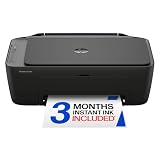
HP DeskJet 2955
The most affordable full-function entry here, designed for someone who prints a dozen pages a month and wants to pay the least at checkout. The AI-capable feature set means HP’s software can assist with document formatting and scan quality adjustments, which owners note works well for simple tasks. It carries a three-month Instant Ink trial, so the first quarter of ink arrives on a subscription you can cancel. The real limitation is throughput: this is a light-use machine. Owners report slower job start times and modest build quality compared to the OfficeJet line. Skip it if you print more than fifty pages weekly or need duplex output, because neither is offered here at this price.
- Pro: Lowest price with scan and copy included.
- Pro: AI-assisted software for basic document tasks.
- Con: No automatic document feeder or duplex printing.
Canon PIXMA TS4320
A compact wireless inkjet aimed at dorm rooms, small apartments, and anyone who prioritizes photo output over office features. Canon’s PIXMA line has a reputation for color accuracy on photo paper, and owners consistently praise print quality for both documents and images at this tier. The tradeoff is function: no ADF, no duplex, and no fax. It prints, scans on the flatbed, copies — the basics and nothing beyond. If your household scans multi-page documents monthly, this will frustrate you quickly. It suits students printing single-page assignments or hobbyists who occasionally produce snapshots.
- Pro: Strong color and photo reproduction for the price.
- Pro: Small footprint fits tight shelves and desks.
- Con: No ADF, no duplex, no fax.
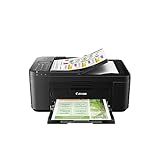
Canon PIXMA TR4720
The best value when you need a document feeder under $100. This is a full all-in-one with an ADF, built-in fax, and mobile printing — features that typically appear two price tiers up. Owners appreciate the completeness of the package at $69, especially for a home office handling occasional scans of multi-page contracts. The compromise is speed and paper handling depth; it is not a workhorse for a busy household. Duplex printing is absent, so two-sided output requires manual re-feeding. It works best for one- or two-person homes with moderate scanning needs and low print volume.
- Pro: ADF and fax at the lowest price point here.
- Pro: Solid mobile printing compatibility.
- Con: No automatic duplex printing.
HP OfficeJet Pro 8125
A step up in every dimension that matters for a working household. The AI-capable suite handles more sophisticated tasks, duplex printing is automatic in both directions, and the ADF supports multi-page two-sided scans. Owners note faster job throughput and a more robust paper path than the DeskJet line. The price reflects this, but Instant Ink integration keeps consumable costs predictable during the trial period. Where it falls short relative to the EcoTank is long-run per-page economics — HP’s business model still depends on cartridge revenue, and those savings from the trial will eventually give way to standard pricing. Skip it if your annual page count exceeds a few thousand and you want true cartridge-free ownership.
- Pro: Automatic duplex printing and two-sided ADF scanning.
- Pro: Faster and more durable build than sub-$100 rivals.
- Con: Cartridge costs rise after Instant Ink trial ends.
Canon PIXMA TR7120
Positioned between the budget TR4720 and premium office models, the TR7120 adds automatic duplex printing and a slightly faster engine while maintaining a compact frame that fits bookshelves. Owners praise the intuitive control panel and clean aesthetic in white. The ADF handles batch scanning without issue. Its limitation is the same as most Canon inkjets in this range: the ink system uses cartridges that run out faster than a supertank alternative, so total ownership cost climbs with volume. If you print two-sided documents weekly and scan contracts, this earns its $99 price. If volume is your primary concern, look elsewhere.
- Pro: Automatic duplex with ADF in a compact body.
- Pro: Clean design and straightforward control panel.
- Con: Cartridge-based consumables penalize high volume.
Canon PIXMA TS6520
At just above eighty dollars, this offers automatic duplex printing without the full office feature set — no ADF, no fax. It targets households that primarily print but occasionally scan, and who value two-sided output to cut paper waste and cost. Photo quality follows the PIXMA standard and owners report satisfaction for both text and images. The missing ADF means flatbed-only scanning, which works fine for single pages but slows multi-document jobs to a crawl. Buy this if duplex printing matters more to you than batch scanning; skip it the moment you need to digitize a stack of pages regularly.
- Pro: Automatic duplex at a sub-$90 price.
- Pro: Reliable print quality across text and photos.
- Con: No ADF — scanning is single-page only.
Epson EcoTank ET-4800
The obvious answer for anyone who has ever stared at an ink cartridge price and felt genuine anger. Supertank design means you pour ink from bottles rather than swapping cartridges, dropping per-page cost to a fraction of traditional inkjet economics. It includes everything an office needs: ADF, duplex, fax, Ethernet, Wi-Fi, and a substantial paper capacity. The $199.99 sticker is the highest here, but two years of printing typically erases the gap against cartridge-based models. Owners note the refill process is mess-free and that print speed is adequate without being fast. Skip it only if your annual volume is genuinely low and you would never recover the premium.
- Pro: Cartridge-free supertank system eliminates recurring ink cost.
- Pro: Full feature set including ADF, duplex, fax, and Ethernet.
- Con: Highest upfront price in this roundup.
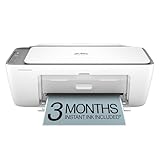
HP DeskJet 2855e
An evolution of the affordable DeskJet concept with a slightly higher price and the “e” designation tied to HP’s ecosystem integration and longer Instant Ink trial. It covers print, scan, and copy with a clean mobile setup process that owners find more forgiving than older HP models. The key spec note: this is a 2.4 GHz-only Wi-Fi printer, which can cause connectivity issues in homes running primarily on 5 GHz networks or dense apartment complexes with channel congestion. If your router broadcasts 2.4 GHz and your volume is modest, it works well. If your network is modern and mixed-band, the limitation is a real friction point at this price.
- Pro: Streamlined setup and good Instant Ink integration.
- Pro: Reliable basic function for light home use.
- Con: 2.4 GHz Wi-Fi only, no 5 GHz support.
Buying Guide
Ink Economics Decide Your Real Price
A $60 printer that needs a $35 cartridge replacement every six weeks costs more in two years than a $200 supertank machine. Before choosing any printers and scanners for home, estimate your monthly page count and research the specific cartridge yield for your candidate. HP’s Instant Ink subscription obscures this by bundling cost, which is convenient but locks you into a recurring fee. Canon’s individual cartridges are cheap per unit but die fast on text-heavy jobs. Epson’s bottles run pennies per page after the initial hardware premium.
ADF and Duplex Are the Functional Divide
Below $80, expect flatbed-only scanning and single-sided printing. Above $80, ADF and duplex become realistic. If you scan anything beyond a single receipt — contracts, medical paperwork, tax documents — the ADF is not optional. Duplex printing saves paper and produces professional-looking documents for two-sided output without a manual re-feed step. Decide what your actual document workflow looks like before paying for features you will never touch or skipping ones you will resent.
Wi-Fi Band and Network Compatibility
The DeskJet 2855e is the clearest example of a hidden spec that becomes a dealbreaker. A 2.4 GHz-only printer on a network that prioritizes 5 GHz, or in an apartment with heavy 2.4 GHz congestion, may disconnect frequently or refuse to pair. Verify your router broadcasts the band your printer supports before purchasing. Dual-band models are safer for modern mixed-device homes but are not universal at entry pricing.
Our Verdict
The HP OfficeJet Pro 8125 is the top pick for most households: it balances automatic duplex, a capable ADF, AI-assisted software, and a reasonable price without the volume penalty of cartridge economics. For the strictest budget, the Canon PIXMA TR4720 delivers an ADF and fax at $69, which no other model at this price matches. The Epson EcoTank ET-4800 wins decisively if your household prints over five hundred pages per month — at that volume, the supertank system pays for itself within a year and the feature set rivals machines twice its cost.
FAQ
How long do printer cartridges typically last?
Yield varies by model and job type, but standard cartridges in budget inkjets generally produce two hundred to four hundred pages of mixed text and color before replacement. High-capacity variants double that range. Supertank models eliminate the question entirely by using refillable ink reservoirs measured in thousands of pages.
Do I need a scanner if I rarely use one?
Flatbed scanning is inexpensive to include, so almost every model here bundles it. The real question is whether you need an ADF for batch jobs. If you scan one document a month, the flatbed suffices and you can skip ADF-equipped models to save money.
What does Instant Ink actually do?
HP’s Instant Ink is a subscription that ships replacement cartridges automatically when ink runs low, bundled at a flat monthly rate based on estimated page volume. It removes the anxiety of a mid-job ink death but introduces a recurring cost you must actively cancel if you stop subscribing.
Are 2.4 GHz-only printers worth avoiding entirely?
Not always. If your router broadcasts 2.4 GHz and your printer sits within reasonable range of the access point, connectivity works reliably. The risk is in dense apartment buildings where 2.4 GHz is congested, or in homes that have disabled the band for speed prioritization. Check your network settings before committing.