
For occasional repairs and DIY projects, a hand riveter such as the Stanley MR100 or Arrow RH200 is the simplest and cheapest choice; for frequent work on sheet metal, trailers or fabrication, a cordless blind rivet tool like the Milwaukee M12 or DeWalt 20V Max, or an air-powered tool like the Astro Pneumatic models, saves time and hand strain. Choose by how many rivets you set, what size they are, and whether you have power or compressed air available.
Our top picks


As an Amazon Associate we earn from qualifying purchases at no extra cost to you.
Rivet Guns at a Glance
| Tool | Type | Best for | Key stated features | Limits |
|---|---|---|---|---|
| Stanley MR100 CheckPoint | Hand riveter | Occasional DIY | The maker lists a lever design for common blind rivet sizes with included nosepieces | Tiring for large jobs, smaller capacity |
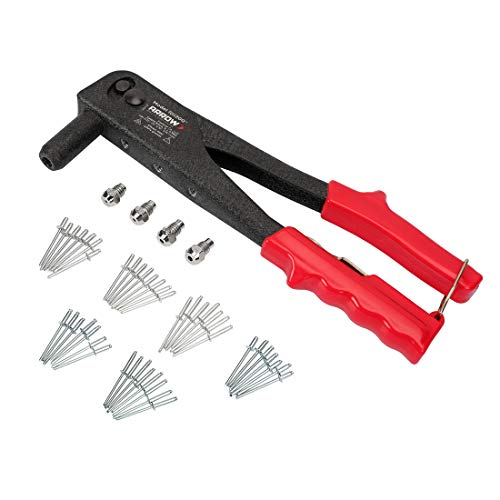
| Arrow RH200 | Heavy-duty hand riveter | Frequent hand work | The maker lists a longer-handled, heavy-duty frame and multiple nosepieces | Still manual effort |
| Milwaukee M12 Blind Rivet Tool | Cordless | Mobile trades, auto and HVAC | The maker lists a compact 12-volt platform and support for common rivet sizes | Battery and tool tier cost |
| DeWalt 20V Max Rivet Tool | Cordless | Heavier or repeated setting | The maker lists a 20-volt platform with common rivet sizes | Larger and heavier |
| Astro Pneumatic air riveter | Air-powered | Shops with a compressor | Pneumatic operation with interchangeable nosepieces per the maker | Needs compressor and hose |
| Marson or Gesipa pro tools | Professional hand, air or battery | Industrial and high-volume use | Professional-grade construction and a range of rivet types | Premium tier |
How Rivet Guns Work
Blind (pop) riveters
Most consumer rivet guns set blind, or pop, rivets. You insert the rivet’s mandrel into the tool’s nosepiece, place the rivet in a drilled hole, and pull the handle or trigger; the mandrel draws back, expands the rivet body and snaps off. The tool needs access to only one side of the work, which makes it handy for sheet metal, gutters, trailers and automotive panels.
Other riveters
Aircraft and structural work may use solid rivets driven with a pneumatic hammer and bucking bar, and some applications use nut-type or threaded rivets. Those are specialist tools and are outside the scope of this guide. If you plan to build or repair aircraft or load-bearing structures, follow the applicable standards and consult a qualified professional.
What to Consider Before Buying
- Rivet size and material: Makers list the rivet diameters and materials their tools can set, such as aluminum, steel and stainless. Stainless and steel rivets require more force.
- Power source: Hand tools need no power. Cordless tools need a battery system you may already own. Air tools need a compressor and often an in-line regulator.
- Frequency of use: A hand tool is fine for a dozen rivets, but a hundred is a different story.
- Nosepieces and mandrel handling: Interchangeable nosepieces fit different rivet sizes. Some tools collect spent mandrels, which reduces mess.
- Handle and grip: Long handles provide leverage; pad quality matters for comfort.
- Ergonomics and weight: Cordless and air tools vary a lot in weight and balance, which matters overhead.
Top Picks by Buyer Type
Stanley MR100: for occasional DIY
The Stanley MR100 is a familiar hand riveter found in many home toolboxes. The maker lists a lever design that works with common blind rivet sizes and includes nosepieces. It is inexpensive and requires no power, but reviewers note that setting many rivets can tire your hand. Choose it for light repairs and small projects.
Arrow RH200: for frequent hand work
Arrow’s RH200 is a heavier-duty hand riveter with a longer lever to reduce effort. The maker lists multiple nosepieces and a sturdy frame. If you rivet regularly but don’t want to buy a powered tool, it is a sensible upgrade over the cheapest models.
Milwaukee M12 Blind Rivet Tool: for compact cordless power
Milwaukee’s M12 rivet tool is designed for tradespeople who need power in tight spaces. The maker lists a compact tool that sets common blind rivet sizes. It is a strong pick if you already own M12 batteries, since you can buy it as a bare tool. Expect a higher cost than a hand riveter.
DeWalt 20V Max Rivet Tool: for demanding jobs
DeWalt’s 20V platform offers more power for bigger rivets and repeated setting. Reviewers appreciate the speed and consistent pull. It is bulkier than 12-volt tools and is best if you are already invested in DeWalt batteries.
Astro Pneumatic: for shops with air
Astro Pneumatic makes air riveters used in auto body and fabrication work. They are lighter than cordless tools and fast, but you need a compressor with adequate capacity and a proper air fitting. Use the supply pressure the maker specifies and wear eye protection.
Professional tools
Brands such as Marson and Gesipa serve industrial users. They are more expensive and designed for high-volume use. Most home buyers do not need them.
Pick X If You Want…
| If you want… | Pick | Why |
|---|---|---|
| A cheap tool for a few repairs | Stanley MR100 | No power and low cost |
| A stronger hand tool | Arrow RH200 | Better leverage |
| A compact cordless tool | Milwaukee M12 | Easy to use in tight spots |
| More power on a 20V platform | DeWalt 20V Max | Handles bigger work |
| Speed in a workshop | Astro Pneumatic | Light and fast with air |
Budget Tiers Explained
Budget tier: Hand riveters for light work. Fine for small jobs, but tiring in volume.
Mid-range tier: Heavy-duty hand tools and basic air riveters. A good choice for hobbyists and small workshops.
Premium tier: Cordless tools from major brands and professional riveters. They save time on frequent or demanding jobs.
Safety and Technique Notes
- Wear safety glasses; mandrels can eject and metal chips can fly.
- Drill the hole to the size the rivet maker specifies, and deburr it for a clean fit.
- Match rivet length to material thickness according to the rivet manufacturer’s chart.
- Disconnect the battery or air supply before changing nosepieces.
- Do not use pop rivets for critical load-bearing or safety-related joints unless a qualified engineer or the relevant standard allows it.
- Follow the tool manual for maintenance and lubrication.
Alternatives to Consider
- Nut-setting or rivet nut tools: create threaded anchor points in thin metal.
- Screws, bolts or sheet metal fasteners: sometimes simpler for removable joints.
- Welding or adhesives: alternatives for permanent joints, subject to skill and the application.
Choosing Rivets and Matching the Tool
The tool is only half of the equation. Rivets come in aluminum, steel, stainless and copper, with different head styles such as dome, large flange and countersunk. Aluminum rivets are easy to set and suit light sheet metal, steel rivets give more strength, and stainless suits wet or corrosive settings. Always match the rivet to the materials being joined so that you avoid galvanic corrosion between dissimilar metals.
Check the size range on the tool, because many hand riveters cover several common diameters with swappable nosepieces, while some cordless tools are rated up to larger sizes. If you plan to use structural or sealed rivets, confirm that your tool is rated for them. A tool that is underpowered will struggle, fail to snap the mandrel, or leave a weak joint.
Finally, practice on scrap material first. Clamping the pieces, drilling cleanly and holding the tool square to the surface all improve the joint, and a test piece shows whether the rivet length and tool settings are right before you commit to the real work.
Storage matters too: keep rivets sorted by size and material in labeled containers, and keep spare nosepieces in a small case so they do not get lost. Wipe the jaws and nosepiece clean of metal shavings now and then, and apply a drop of light oil to moving parts if the manual calls for it. A tool that is cleaned and stored dry will keep gripping mandrels reliably for years of regular use.
Frequently Asked Questions
What size rivets do most rivet guns handle?
Most consumer tools handle common blind rivet diameters in aluminum and steel, and the maker lists exact sizes. Stainless rivets and larger diameters need more force. Always check the tool’s rated capacity before buying.
Is a cordless rivet gun worth it?
If you set rivets regularly, the time savings and reduced hand strain are significant. For a handful of rivets a year, a hand tool is more economical. Consider whether you already own compatible batteries.
Can I use a rivet gun on plastic or wood?
Blind rivets can be used on some plastics and wood with the proper washers or backing, but results vary. The rivet can crush soft materials, so use a larger flange or a backing washer. Check the rivet maker’s guidance.
How do I choose the right rivet length?
Rivet makers publish grip-range charts that match rivet length to the total thickness of the materials. Pick a rivet whose grip range covers your stack. Too short a rivet will not set properly.
Why does my rivet not snap or set properly?
Common causes include the wrong nosepiece, a hole that is too large, or a rivet that is too long. Weak tool force can also be a factor with harder materials. Consult the tool and rivet instructions.
Do I need a compressor for an air riveter?
Yes, a compressor providing the pressure and flow the maker lists is required. A small portable compressor may be enough for occasional use. Use appropriate fittings and hearing protection.





