Key takeaways
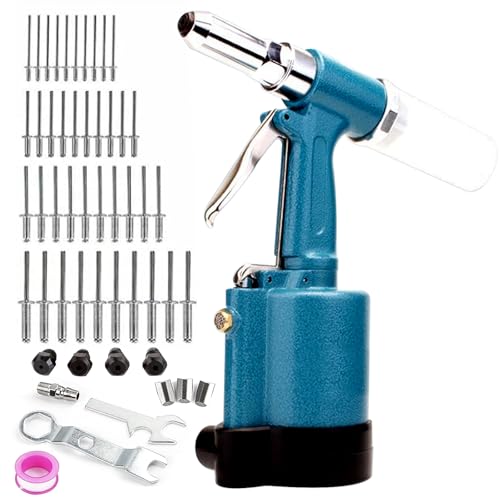
- Pneumatic blind (pop) rivet tools pull a mandrel through a hollow rivet until it snaps. They are used on sheet metal, aluminum panels, trailers, ductwork and body panels, where you can reach only one side of the work.
- Pneumatic hammer riveters drive solid rivets with rapid blows and a bucking bar. They are used in aircraft and structural work. Industrial models such as the Ingersoll Rand AVC13A1 belong to this family, with a stated stroke length and blows per minute.
For most garage, auto-body and light fabrication work, the Astro Pneumatic PR14 is the pneumatic rivet gun most roundups point to, while the Ingersoll Rand 231N air-hydraulic kit suits heavier, more frequent riveting and Milwaukee’s cordless riveters are the alternative if you do not own a compressor. Which one fits depends on rivet size, how many rivets you set in a day and whether your compressor can keep up.
Our top picks



As an Amazon Associate we earn from qualifying purchases at no extra cost to you.
Two Tool Families: Pull Riveters and Hammer Riveters
People searching for a pneumatic rivet gun usually mean one of two tools, and mixing them up is the most common buying mistake.
- Pneumatic blind (pop) rivet tools pull a mandrel through a hollow rivet until it snaps. They are used on sheet metal, aluminum panels, trailers, ductwork and body panels, where you can reach only one side of the work.
- Pneumatic hammer riveters drive solid rivets with rapid blows and a bucking bar. They are used in aircraft and structural work. Industrial models such as the Ingersoll Rand AVC13A1 belong to this family, with a stated stroke length and blows per minute.
This guide concentrates on pull-type air riveters, which is what most hobbyists and shops need, and mentions hammer-type tools in the alternatives.
At a Glance: Pneumatic Rivet Guns Compared
| Tool | Type | Best for | Key stated specs | Limits |
|---|---|---|---|---|
| Astro Pneumatic PR14 | Air pull riveter | All-round shop use | Reviewers cite six nosepieces from 3/32 to 1/4 inch, pulling force up to about 2,400 lb, 90 to 120 psi | Some reviewers find it heavier than rivals |
| Astro 4009 | Air riveter kit, 3/16 inch | Mid-sized rivets with rear exhaust | Rear exhaust deflects air away from the user | Sized for up to 3/16 inch |
| Ingersoll Rand 231N | Air-hydraulic kit, 3/16 inch | Heavy-duty, frequent use | Air-hydraulic action | Higher outlay; needs compressor capacity |
| Ingersoll Rand AVC13A1 | Hammer riveter | Aerospace-style solid rivets | Stated 4 inch stroke, about 1,725 blows per minute | Industrial tool for trained users |
| Astro 1423 and 1442 | Manual hand riveters | No compressor, light use | Lever-operated | Not pneumatic; slower |
| Milwaukee M12 and M18 cordless riveters | Battery-powered | Portability, no air hose | Battery-driven pull action | Not pneumatic; battery cost |
Several roundup sites in this category are affiliate-driven and rank tools without describing methods, so the specs above lean on what makers publish and on the more established outlets. Treat any single ranking cautiously.
What to Look For
Rivet size range
Blind rivets are sold in diameters such as 3/32, 1/8, 5/32, 3/16 and 1/4 inch. A tool with interchangeable nosepieces for each size covers most work. The PR14’s nosepiece set is a main reason it appears so often in roundups. If you only set one size, a dedicated kit can be enough.
Pulling force
Stated pulling force affects whether the tool can set larger or harder rivets, such as steel or stainless. Maker figures, like the roughly 2,400 lb quoted for the PR14, are specifications, not guarantees for every material, so match the tool to the rivet manufacturer’s guidance.
Air requirements
Most pneumatic riveters list an operating pressure range, often 90 to 120 psi. Your compressor and hose must deliver adequate pressure and enough airflow for repeated cycles. A small pancake compressor may keep up with occasional riveting but lag when you set rivets continuously. Read the maker’s air consumption figures against your compressor’s output.
Weight and ergonomics
Repetitive riveting is tiring. Lighter tools reduce fatigue overhead or in tight spaces. Reviewers disagree on the PR14’s weight, which suggests handling is subjective, so holding the tool in a shop before buying is worth doing if you can.
Exhaust and mandrel handling
Some tools direct exhaust air to the rear, away from your face, and collect spent mandrels. These features keep the work area tidy and reduce irritation from blown dust. The Astro 4009’s rear exhaust is one example.
Budget Tiers
Budget
Manual lever riveters like the Astro 1423 sit here. They need no compressor and are fine for occasional repairs, but they are slow and tiring for many rivets.
Mid-range
Pneumatic kits such as the Astro PR14 and 4009 are the typical choice. They give much faster work than hand tools and are priced for home shops.
Premium
Air-hydraulic tools like the Ingersoll Rand 231N and industrial hammer riveters are priced for professionals. They suit production use or demanding materials.
Safety and Care
- Wear eye protection. Mandrels and metal fragments can be ejected during setting.
- Use hearing protection when running air tools for long periods, especially hammer-type riveters.
- Do not exceed the maker’s maximum air pressure. Install a regulator on the line if your compressor can produce more.
- Disconnect the air supply before changing nosepieces or clearing jams.
- Add a few drops of pneumatic tool oil to the inlet as the manual instructs, and drain the compressor tank regularly to limit moisture.
- Keep fingers clear of the nosepiece and the work during the pull stroke.
- Match rivet material and grip range to the thickness of the work; a poor match leads to loose or failed joints.
Pick X If… Decision Table
| If you need… | Pick | Why |
|---|---|---|
| One tool for varied sizes in a home shop | Astro PR14 | Multiple nosepieces and wide range |
| Mostly 3/16 inch rivets and a tidy exhaust | Astro 4009 | Rear exhaust deflection |
| Frequent, heavy riveting | Ingersoll Rand 231N | Air-hydraulic action |
| Only occasional repairs, no compressor | Astro 1423 manual riveter | Low-cost lever tool |
| Mobility without a hose | Milwaukee cordless riveter | Battery power |
Alternatives
- Cordless blind riveters: Milwaukee’s M12 and M18 models are often cited by reviewers for portability and for people without a compressor.
- Manual hand riveters: inexpensive and simple, ideal for infrequent jobs.
- Hammer riveters: for solid rivets in structural or aircraft-style work; these require training and the right bucking bars.
- Self-piercing or threaded insert tools: a different fastening approach for specific applications.
Choosing Rivets and Setting Them Well
The tool is only half of a good joint. Blind rivets come in aluminum, steel, stainless steel and sometimes copper or other materials, and each is suited to certain base metals. As a general principle used by fastener makers, match the rivet material to the material you are joining to limit corrosion between dissimilar metals. Aluminum rivets are common in aluminum sheet and light-duty work, steel rivets in stronger joints and stainless rivets where corrosion is a concern. Read the rivet maker’s data on shear and tensile strength.
Grip range is the total thickness the rivet can clamp. If the stack of materials is too thin or too thick, the rivet will not form properly. Drill the hole to the diameter the rivet maker lists, deburr the edges and keep the nosepiece square to the work. Setting at an angle can leave a rivet partly pulled or bent.
Practice on scrap first. Check that the mandrel breaks cleanly and that the rivet head sits flush against the surface. If mandrels snap early, the rivet may be too small for the tool’s setting, and if they refuse to break, the pulling force or air pressure may be inadequate. Adjust within the maker’s pressure range rather than exceeding it.
For repetitive work, a tool with a mandrel collection bottle keeps the bench clean, and a short whip hose with a swivel fitting reduces wrist strain. Keep spare nosepieces and jaws on hand, since these parts wear with use. If you work with thin sheet, consider backing washers to spread the load and avoid pulling through the metal.
Frequently Asked Questions
What size compressor do I need for an air rivet gun?
Check the tool’s stated air consumption and the pressure range, often 90 to 120 psi. A compressor that delivers more than the tool’s requirement at that pressure will keep up. Small portable units can work for occasional jobs but may struggle with continuous riveting.
Is a pneumatic rivet gun better than a cordless one?
Pneumatic tools are typically lighter in the hand and cost less for the tool itself, but need a compressor and hose. Cordless riveters offer mobility and no air supply. The better choice depends on whether you already own a compressor.
Can an air riveter set steel or stainless rivets?
Some can, within the maker’s stated pulling force and the rivet’s rating. Larger or harder rivets require more force, so read both the tool’s and the rivet maker’s specifications.
Why does my air riveter leave mandrels stuck in the tool?
Jams occur when the nosepiece size does not match the rivet or when the jaws are worn or dirty. Disconnect the air, clean the jaws and confirm the correct nosepiece as described in the manual.
How often should I oil a pneumatic rivet tool?
The manual gives a schedule, commonly a few drops of air tool oil before each work session. Drain your compressor tank regularly, since moisture shortens the life of air tools.
Are pneumatic riveters suitable for aircraft work?
Aircraft repair is governed by strict standards and approved procedures. Hobby-grade pull riveters are not a substitute for approved methods, so follow the aircraft’s maintenance documentation and consult a certified professional.