
Key takeaways
- Cook outdoors or in well-ventilated places only. Never use a camp stove inside a tent, vehicle or enclosed space; carbon monoxide and fire risks are serious.
- Follow the maker’s instructions for attaching canisters and checking for leaks.
- Place stoves on stable, level, non-flammable surfaces away from tent walls and dry grass.
- Do not use oversized pots or reflective shields that trap heat around a canister unless the maker permits it.
- Check local fire restrictions and stove bans, which can apply even to gas stoves in dry conditions.
- Let stoves cool before packing and store canisters upright in a cool place.
For solo hikers who mostly boil water, a canister system such as the Jetboil Flash or MSR PocketRocket 2 is the usual pick; for windy conditions and simmering, a regulated stove like the Soto WindMaster or a Primus Eta suits experienced campers; and for cooking at a campsite for a group, a two-burner like the Camp Chef Everest 2X or the Coleman Classic fits best. Choose by group size, fuel, wind and how much cooking you really do.
Our top picks
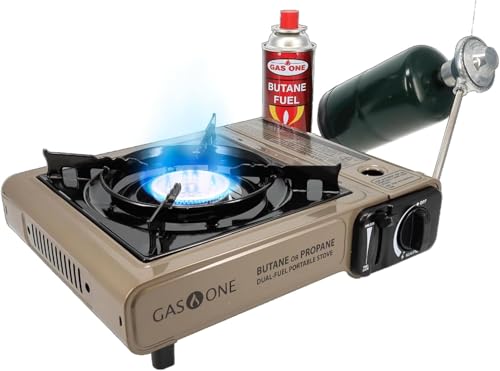

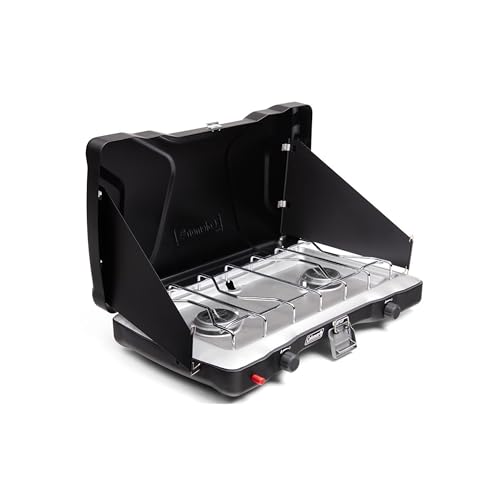

As an Amazon Associate we earn from qualifying purchases at no extra cost to you.
At a glance
| Stove | Best for | Fuel and format the maker lists | Limits |
|---|---|---|---|
| Jetboil Flash | Fast boiling for solo hikers | Integrated canister stove and cooking cup | Not ideal for simmering or large pots |
| MSR PocketRocket 2 | Ultralight, packable | Canister-top stove | Less wind resistance without a shield |
| Soto WindMaster | Windy trails, flexible pots | Canister-top, regulated | Needs a compatible stand for stability |
| Primus Eta | Efficient systems for small groups | Integrated canister cooking systems | Heavier than a bare stove |
| Camp Chef Everest 2X | Car camping, two burners | Propane, two burners | Bulky, needs a flat table |
| Coleman Classic | Budget car camping | Propane two-burner | Heavy, wind screen needed |
| BioLite CampStove 2+ | Wood burning, charging devices | Burns wood, built-in power generation | Slower, heavier |
What to consider
Backpacking versus car camping
Backpackers care about weight and pack size, so small canister stoves lead. Car campers care about burner count and power, so freestanding propane two-burners are the common route. If you do both, a small canister stove plus a two-burner for family trips is a flexible pair.
Fuel type
Isobutane and propane canisters are simple, clean and widely sold, but pressure drops in cold weather. Liquid fuel stoves handle cold and high altitude and refuel from bottles, though they need priming and more maintenance. Wood burners avoid carrying fuel but depend on dry wood and local fire rules. Check availability of your fuel where you travel, and note that some airlines restrict fuel and canisters in luggage.
Boil time and efficiency
Makers publish boil times, but conditions such as wind, cold and altitude change them. Integrated systems like Jetboil and Primus use heat exchangers to speed boils and sip fuel, so they are efficient for boiling water and freeze-dried meals. Open-burner stoves are better for real cooking.
Wind and simmer control
Wind is the major enemy of small stoves. Regulated stoves hold output as canister pressure drops, and a windscreen helps, but never enclose a canister fully because heat buildup can be dangerous. Follow the maker’s instructions on shields. If you simmer sauces, look for fine flame control.
Stability
Wide pot supports and a stable base reduce spills. Tall, narrow stoves can tip with big pots. Use a stand where available.
Option by option
Jetboil Flash
The Jetboil Flash is an integrated system with a cooking cup, burner and a color-changing heat indicator that tells you when the water is hot. The maker markets quick boil times. It suits solo hikers and anyone who mostly rehydrates meals and makes coffee. It is less suited for frying or simmering.
MSR PocketRocket 2
MSR’s PocketRocket 2 is a compact canister-top stove known for its small size and low weight. It works with a range of pots and is a favorite for lightweight backpacking. It is less resistant to wind, so pair it with a windscreen used according to the maker’s guidance.
Soto WindMaster
Soto’s WindMaster uses a recessed burner and regulator that the maker says improve wind resistance and consistent output. It is a good fit for variable weather. Reviewers mention that a stand or additional pot support may help with small pots.
Primus Eta
Primus’s Eta systems, such as the Eta Lite or Eta Spark, combine a stove with a heat exchanger pot. They are compact and efficient, suiting small groups. They weigh more than a bare stove but save fuel on repeated boils.
Camp Chef Everest 2X
Camp Chef’s Everest 2X is a portable two-burner propane stove with a wind panel and burner control. It suits car camping and group meals. The unit is bulky, so it belongs in a vehicle rather than a pack.
Coleman Classic
The Coleman Classic propane stove is a familiar budget two-burner. It does the job for family camping and is simple to use. It’s heavy and benefits from a windscreen.
BioLite CampStove 2+
BioLite’s CampStove 2+ burns wood and converts heat into electricity to power a fan and charge devices. It suits people who want to avoid carrying fuel and enjoy the fire, but cooking can be slower and it is heavier. Check local fire rules before use.
Pick X if you…
| If you… | Pick | Why |
|---|---|---|
| Mostly boil water solo | Jetboil Flash | Fast, integrated |
| Want ultralight and compact | MSR PocketRocket 2 | Small, low weight |
| Hike in windy conditions | Soto WindMaster | Recessed, regulated burner |
| Cook for 2-3 on trail | Primus Eta | Efficient systems |
| Cook for a group at camp | Camp Chef Everest 2X | Two burners |
| Want a low-cost camp stove | Coleman Classic | Budget two-burner |
| Prefer wood fuel | BioLite CampStove 2+ | No canister needed |
Budget tiers
Budget stoves are simple burners and basic two-burner camp stoves, which work well when conditions are mild. Mid-range stoves add regulators, better wind performance and sturdier builds. Premium stoves are integrated systems or feature-rich designs with efficiency and accessories. For backpacking, weight and efficiency justify extra cost; for car camping, burner power and stability matter more.
Safety notes
- Cook outdoors or in well-ventilated places only. Never use a camp stove inside a tent, vehicle or enclosed space; carbon monoxide and fire risks are serious.
- Follow the maker’s instructions for attaching canisters and checking for leaks.
- Place stoves on stable, level, non-flammable surfaces away from tent walls and dry grass.
- Do not use oversized pots or reflective shields that trap heat around a canister unless the maker permits it.
- Check local fire restrictions and stove bans, which can apply even to gas stoves in dry conditions.
- Let stoves cool before packing and store canisters upright in a cool place.
Alternatives to consider
- Alcohol stoves: light and simple but slower and subject to fire restrictions.
- Liquid fuel stoves: for cold, high-altitude or long expeditions.
- Solid fuel tablets: an emergency or ultralight backup.
Planning your cooking system
A stove is only part of a cooking system. Pots, lids, windscreens, fuel, igniters, a lighter as backup and a way to carry everything add up. Decide how you cook: if every meal is boiling water for dehydrated food, an integrated system saves fuel and time. If you saute, scramble eggs or simmer sauces, an open burner with a regulator and a pan will serve better. Think about cleanup too, since non-stick pots are easier to wash with limited water.
Estimate fuel needs. Use the maker’s stated burn times as a starting point, then add a margin for wind and cold. Weigh canisters to track fuel left, and carry a small backup option on long trips. Practice at home before you go: light the stove, check the flame, test the igniter and make sure the pot is stable. Knowing the stove well avoids frustration at camp.
Finally, respect the place. Follow fire restrictions, pack out all trash and food waste, and store food away from wildlife according to local guidance. Use a stable, cleared surface for cooking, and keep children and pets back from the burner. Keep a way to extinguish a flare-up, such as a lid or water supply, nearby.
Common mistakes to avoid
Campers often forget a lighter or igniter backup, bring too little fuel for cold or windy trips, or choose a tall stove with a heavy pot that tips easily. Another common error is cooking too close to a tent or under low branches. Give the stove clear space on all sides, and always keep a watchful eye on a lit burner.
Frequently Asked Questions
What is the best stove for backpacking?
It depends on your meals. A Jetboil-style system suits water boiling and freeze-dried meals, while a small canister stove like the PocketRocket 2 suits those who cook in their own pots. Weigh packability against cooking needs.
Do canister stoves work in cold weather?
Performance drops as temperatures fall, because the fuel pressure lowers. Regulated stoves and isobutane-propane mixes help, and you can keep a canister warm in a jacket. For deep cold, a liquid fuel stove is usually better.
How much fuel should I bring?
This depends on the number of people, meals and conditions. Makers publish fuel consumption estimates, but wind and cold increase use. Bring extra and weigh canisters to track remaining fuel.
Can I use a camp stove inside a tent?
No. Cooking inside a tent creates fire and carbon monoxide risks. Cook outside in a ventilated area, away from tent fabric and flammable materials.
What size pot works best?
Match the pot to the stove’s supports and the maker’s guidance. Small, stable pots work with ultralight stoves, while larger pots suit two-burners. Avoid pots that overhang so far that they tip.
Can I fly with a camp stove or fuel?
Fuel canisters are restricted in carry-on and checked luggage by most airlines and security agencies. Check rules with your airline and aviation authority, and buy fuel at your destination when possible.





