
Key takeaways
- Budget: Basic AAA lamps with a few modes. Good for a backup and for short evening tasks. Skip if you plan night hiking.
- Mid-range: The Spot 400 family and the Actik Core sit here. This is where reviewers find the best balance of output, runtime, weight and features.
- Premium: The BioLite 800 Pro and similar high-output lamps. Worth it for frequent night travel, not for typical weekend camping.
For most campers the Black Diamond Spot 400 family is the safest all-round choice, the Petzl Actik Core suits people who want a rechargeable battery with an alkaline backup, and the BioLite HeadLamp 800 Pro suits those who want maximum brightness and runtime and accept extra weight and a premium tier cost. Campsite lighting is a different job from trail running or caving, so the best headlamp for camping is rarely the one with the biggest lumen number. This guide compares the models reviewers name most often, explains the specs that matter at a campsite, and ends with a decision table and answers to common questions.
Our top picks


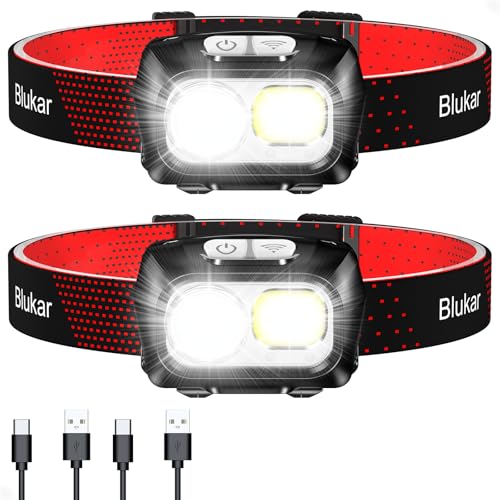
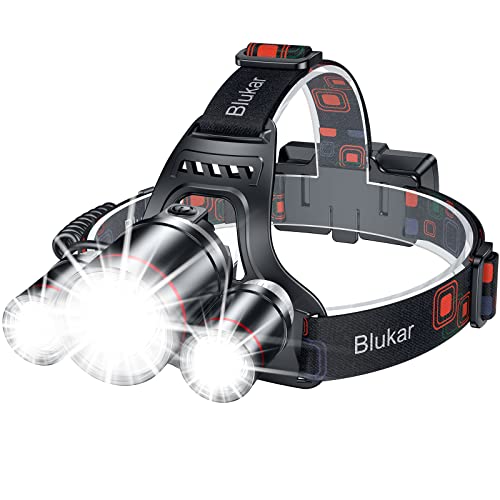
As an Amazon Associate we earn from qualifying purchases at no extra cost to you.
Headlamps for Camping at a Glance
| Model | Best for | Key stated specs | Limits |
|---|---|---|---|
| Black Diamond Spot 400 | Value, general camping | 400 lumens, IPX8 water rating, runs on 3 AAA cells (optional rechargeable cell) | Output steps down after a short time on high; one-button interface needs press-and-hold sequences |
| Black Diamond Spot 400-R | Campers who prefer USB-C charging | 400 lumens, rechargeable, USB-C | Mid-range tier; cannot swap in AAA cells on the trail unless the maker offers that option |
| Petzl Actik Core | Multi-day trips, flexibility | Roughly 600 lumens as reported by reviewers, Core rechargeable battery plus standard AAA compatibility, about 2.6 oz | Rated IPX4, so splash resistant rather than submersible |
| BioLite HeadLamp 800 Pro | Big output, long dark walks, shoulder season | 800 lumens, reviewers report around 7.5 hours on high, about 5.3 oz | Heaviest of the group, premium tier |
| Entry-level lamps (for example Black Diamond Astro or Petzl Tikkina class) | Backup lamp, kids, car camping | Lower lumen output, simple controls, AAA power | Shorter beam throw, fewer modes |
Output and runtime figures above come from the makers and from outlets such as GearJunkie and Camping Mastery. Several roundups publish figures that disagree with one another, so treat lumen numbers as approximate and read the maker’s spec page for the exact model and year.
What Matters Most at a Campsite
Brightness: you need less than you think
Cooking, reading in a tent, finding a bathroom bag and organizing a food hang all happen within a few meters. A low or medium mode of roughly 50 to 150 lumens handles that work. High output matters mostly for night hikes, route-finding and scanning for a trail marker. Reviewers consistently note that lamps advertising several hundred lumens drop to a lower output after a short period on the top setting, so the sustained figure matters more than the headline figure.
Beam pattern: flood versus spot
A wide flood beam lights your whole cooking area evenly and is easier on the eyes. A focused spot beam reaches farther down a trail. Most camping lamps combine both. If you mainly camp near the car, favor a lamp with a clean, wide flood mode; if you hike in after dark, favor a lamp with a defined spot.
Power source: batteries versus rechargeable
This is the biggest practical trade-off. Lamps that take AAA cells, like the standard Spot 400, let you carry spares and swap in minutes, which is useful on trips without a power source. Lamps with an internal rechargeable battery, like the Spot 400-R, are cheaper to run over time and convenient with a power bank, but they stop working when empty unless you can recharge. Hybrid designs such as the Petzl Actik Core accept the maker’s rechargeable battery or standard AAA cells, which is why reviewers often call it the most flexible option for multi-day trips.
Water resistance
The ratings differ. The maker lists the Spot 400 as IPX8, which is the level for temporary submersion. Reviewers report the Actik Core at IPX4, meaning it handles splashes and rain but not a dunk in a stream. For most camping, IPX4 is adequate; if you paddle, fish or camp in persistently wet climates, the higher rating is a real advantage.
Weight and comfort
A lamp around 2.5 to 3 oz is easy to forget on your head. Heavier models around 5 oz with a rear battery pack, such as the BioLite 800 Pro as reported by reviewers, balance the weight at the back of the head, which many people find more comfortable than a front-heavy lamp. Check the headband for adjustability if you wear it over a beanie or hat.
Red light and lock mode
A red mode keeps your night vision and avoids waking tentmates when you need to find something in the dark. A lock feature prevents the lamp from turning itself on in a pack, which drains batteries. Look for both on the maker’s spec list before you buy.
Model Notes
Black Diamond Spot 400 and Spot 400-R
GearJunkie names the 400-R as its top pick overall and reports that it was the best-performing small headlamp in its longevity comparison of more than twenty lamps. Camping Mastery calls the 400-R the right choice for most campers and hikers. The standard Spot 400 is favored on value. The recurring complaint is the single-button interface, which relies on press-and-hold sequences to change modes and takes a little time to learn. If you prefer rechargeable convenience, the 400-R is the one to look at; if you prefer carrying spare cells, choose the AAA version.
Petzl Actik Core
Multiple outlets rank it best overall or best for camping because of its hybrid power. Reviewers report an output in the 600 lumen range and a long runtime on the lowest setting, in the region of 130 hours according to one source, at a weight of about 2.6 oz. The trade-off is the IPX4 rating. It is a strong choice for backpackers who want one lamp that works from a power bank or from drugstore batteries.
BioLite HeadLamp 800 Pro
This is the brightest model in the group at 800 lumens, and one roundup reports about 7.5 hours of runtime on high, the longest of those compared. It is also the heaviest at about 5.3 oz and sits in the premium tier. LuxPro recommends it for long, dark returns to camp and shoulder-season trips when nights are long. For summer car camping it is more lamp than most people need.
Entry-level lamps
Basic AAA lamps in the budget tier, including models in the Black Diamond Astro and Petzl Tikkina class, make sense as a spare, a lamp for a child or a glove-box backup. Expect fewer modes, a shorter beam and simpler water resistance. Always read the maker’s spec sheet for the current version of any model, as names and outputs are updated between generations.
Budget Tiers
- Budget: Basic AAA lamps with a few modes. Good for a backup and for short evening tasks. Skip if you plan night hiking.
- Mid-range: The Spot 400 family and the Actik Core sit here. This is where reviewers find the best balance of output, runtime, weight and features.
- Premium: The BioLite 800 Pro and similar high-output lamps. Worth it for frequent night travel, not for typical weekend camping.
Fit, Care and Safety Notes
- Adjust the strap so the lamp sits level on your forehead; a lamp tilted too far up blinds anyone you face at camp. Tilt it down when talking to others.
- Remove batteries from a lamp before long storage, and store rechargeable lamps with a partial charge unless the maker’s manual says otherwise.
- Alkaline cells can leak; replace them as a set and do not mix old and new cells.
- Follow the maker’s manual for charging. Use the cable and charger the maker specifies, and do not charge a lamp that is wet or damaged.
- Rinse off salt water or mud and let the lamp dry fully before storing, even if it carries a high water rating.
- Carry a small backup light in addition to your main lamp on any trip where a dead battery would be a safety issue.
Pick X If… Decision Table
| Pick this | If you |
|---|---|
| Black Diamond Spot 400 | want a proven, value-oriented lamp that runs on AAA cells and has a high water rating |
| Black Diamond Spot 400-R | prefer USB-C charging and carry a power bank |
| Petzl Actik Core | want rechargeable convenience with AAA backup for multi-day trips and a light carry weight |
| BioLite HeadLamp 800 Pro | hike or walk in the dark often and want maximum output and runtime |
| Entry-level AAA lamp | need a spare, a lamp for kids or a car-camping backup |
Alternatives Worth a Look
- Lantern plus a small lamp: A rechargeable camp lantern lights a group table better than any headlamp, and a small headlamp covers personal tasks. This pairing suits families.
- Clip-on or neck lights: Useful for reading in a tent without a headband, though they throw less distance.
- Running-focused lamps: Some brands sell lamps with a bounce-free strap for trail running; they also work for camping, though the beam is often tuned for speed rather than close tasks.
Frequently Asked Questions
How many lumens do I need for camping?
A range of about 200 to 400 lumens on the top setting is enough for nearly all camping, and the low modes around 50 to 150 lumens do most of the actual work. Higher numbers help on dark trails but usually step down after a short time. Choose based on sustained output and runtime rather than the headline figure.
Are rechargeable headlamps better than battery ones?
Neither is better in every case. Rechargeable models cost less to run and are convenient if you have a power bank, while AAA models let you carry spares and keep going without a charger. Hybrid lamps such as the Petzl Actik Core accept both, which many reviewers consider the best compromise for longer trips.
Is a higher water rating necessary for camping?
For most trips an IPX4 splash-resistant rating handles rain. If you camp near water, paddle or expect heavy wet weather, a lamp with an IPX8 rating like the one the maker lists for the Spot 400 gives more margin. Always dry the lamp after exposure.
Should I use red light mode at camp?
Yes, for close tasks at night. Red light preserves your night vision and is less disruptive to other campers. It is not a substitute for white light when you walk on uneven ground.
How should I store a headlamp between trips?
Remove alkaline batteries to prevent leakage, keep the lamp in a dry place and follow the maker’s guidance for storing rechargeable cells. Switch on the lock mode if the lamp has one before packing it away.
Can a headlamp replace a camp lantern?
For a solo camper, often yes. For groups, a lantern gives even, shared light for cooking and games, and a headlamp stays useful for personal tasks and walking. Many campers carry both.





