
Solid teak is the best outdoor dining table for buyers who want a long-lived, repairable centerpiece and accept a premium tier cost, powder-coated aluminum suits those who want a lighter, low-maintenance table in the mid-range, and aluminum-and-HDPE or folding tables suit smaller budgets and smaller patios. Style matters, but material, size and how you will store or cover the table matter more. This guide compares materials and the table types reviewers mention, explains sizing and clearance, and closes with a decision table and FAQ.
Our top picks



As an Amazon Associate we earn from qualifying purchases at no extra cost to you.
Outdoor Dining Tables at a Glance
| Type / example | Best for | Key stated traits | Limits |
|---|---|---|---|
| Solid teak (examples named by reviewers: Anderson Teak Chelsea, Serena and Lily Crosby, Ash and Ember Savannah) | Long-term investment, hot sun and rain | Grade A teak, seats 6 to 8 on larger rectangular models; ages to a silver-gray unless oiled | Premium tier; heavy; needs cleaning and optional sealing |
| Extendable or drop-leaf teak (for example West Elm Monterey, Titan 47 inch drop-leaf as named by outlets) | Small patios that host larger groups sometimes | Leaves fold or slide to change seating | Mechanisms need cleaning; hinges are wear points |
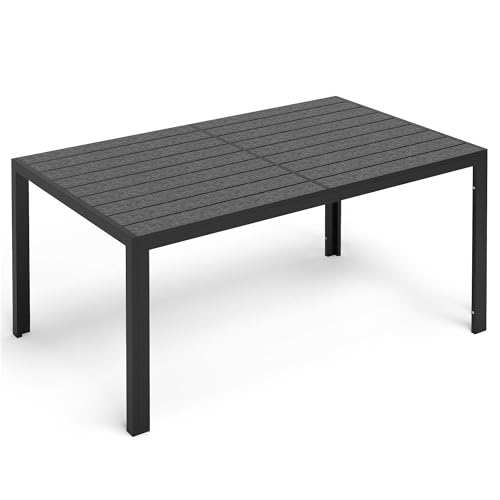
| Powder-coated aluminum (for example Coastal Aluminum Breeze as listed by Teak Warehouse) | Low-maintenance, moveable dining | Rust-resistant frame, lighter than teak, seats 4 in the listed model | Finish can chip; lighter tables can shift in wind |
| Aluminum with teak or composite top (for example Armen Living Portals) | Balanced weight and look | Sold as sets with chairs, mixed materials | Check how the top attaches to the frame |
| Aluminum and HDPE or resin-wicker sets | Budget families, humid regions | Marketed as rust-resistant and UV-protected | Quality varies widely; read the maker’s warranty |
| Folding aluminum tables | Renters, balconies, storage | Light and stowable | Lower stability and smaller sizes |
Model names above come from outlet and retailer lists. Many of those lists are affiliate-driven roundups, and some come from retailers that sell teak, so treat them as starting points and read each maker’s own page for current dimensions and materials.
How to Choose an Outdoor Dining Table
Material
Teak is a dense hardwood with natural oils that resist moisture and insects, which is why it is widely used for outdoor furniture. Outlets agree that premium teak and powder-coated aluminum are the two materials most associated with longevity and weather resistance. Teak weathers to a silver-gray; owners who prefer the honey tone use teak oil or sealers, with the maker’s care guide as the reference. Grade matters: higher-grade teak comes from the heartwood and generally holds up better than lower grades.
Aluminum does not rust, is light and works with many tops. Powder coating gives color but can chip, so touch-up paint from the maker is useful. Lightweight aluminum frames may move in wind unless the table has a heavy top or you weigh it down.
HDPE and resin products mimic wood or wicker and resist moisture. Quality ranges from solid recycled lumber to thin panels, so look at thickness, warranty terms and UV resistance claims from the maker.
Steel and wrought iron are heavy and sturdy but can rust where the coating wears. They suit sheltered patios.
Glass tops look clean but show dirt and need tempered, outdoor-rated glass. They can be a hazard if broken, so choose tempered glass from a reputable maker.
Size and seating
Plan about 24 inches of table edge per person for comfortable dining. A 30 to 36 inch wide table seats a row of diners on each side, while 40 inches or more allows platters in the middle. Rectangular tables seat the most per area, round tables suit conversation and tight corners, and square tables suit small groups. For example, outlets describe a 71 inch round teak table that seats six, and a 47 inch round drop-leaf for small backyards. A table seating six to eight is typically in the 70 to 90 inch length range, as in the Anderson Teak Chelsea style models.
Clearance
Leave about 36 inches behind each chair so that guests can sit and stand without hitting a wall, grill or railing, and 42 to 48 inches if people will pass behind seated diners. Measure the patio with the chairs pulled out, not only the table.
Umbrella hole and base
If you plan to use a parasol, check that the table has a central hole and that the umbrella and base are rated for the wind in your area. A table is not designed to hold a large market umbrella without a heavy base, and wind can lift both. Take umbrellas down in gusty weather.
Weight and stability
Heavier tables stay put but are hard to move. If you want to reconfigure or store the table seasonally, choose aluminum or a table with folding legs.
Care and storage
- Clean teak with mild soap and water, and follow the maker’s guidance on oils, sealers and pressure washing.
- Wipe aluminum and HDPE with mild soap and water; avoid abrasive pads that scratch the coating.
- Use a breathable cover in winter, not a sealed plastic sheet that traps moisture.
- Lift rather than drag furniture to protect finishes and your deck.
- Check bolts and extension mechanisms each season.
Budget Tiers
- Budget: Folding aluminum, resin or steel tables. Good for a balcony or a trial setup, with a shorter expected life.
- Mid-range: Powder-coated aluminum, aluminum-and-HDPE sets and some entry-level teak tables such as those reviewers describe as budget teak picks.
- Premium: Grade A solid teak from designer and specialty makers, often with extendable leaves and long warranties.
Reviewer Picks Worth Knowing
Candie Anderson’s list names the Serena and Lily Crosby Teak Expandable as its best overall pick, with the Pottery Barn Nassau Oval as its best oval and the West Elm Monterey as best extendable. GoTime Patio names the Anderson Teak Chelsea as its best teak, a solid teak rectangular table seating six to eight, and the Calixto square teak as best value. New York Garden reviews the Ash and Ember Savannah round teak table and the Titan drop-leaf for small yards. These are retailer or affiliate-style roundups, not independent laboratory tests, and the lists change over time.
Pick X If… Decision Table
| Pick this | If you |
|---|---|
| Solid teak rectangular | want a long-lived centerpiece and will accept occasional cleaning and a premium tier cost |
| Teak drop-leaf or extendable | have a small yard but host groups occasionally |
| Powder-coated aluminum | want low maintenance, lighter weight and a mid-range cost |
| Aluminum with HDPE or composite top | live in a humid or coastal area and want a no-oil finish |
| Folding aluminum | have a balcony or need to store the table |
Matching Chairs and Layout
A table is only half of the dining set, so check chair seat height against the table. Standard dining tables are about 28 to 30 inches tall, with seats around 17 to 19 inches high. Chairs with arms need extra clearance and may not slide under a table with a thick apron or corner legs. Sets with chairs included make matching easy, as with the Armen Living Portals style set, but buying separately lets you mix a teak table with lighter aluminum chairs. For benches, allow roughly 16 to 18 inches per person.
Think about the surface under the table as well. Pavers, concrete and decking are fine, while soft lawn can leave legs sinking. Rubber or plastic feet protect decks and can prevent scratching, and adjustable glides compensate for uneven ground. If the table has an umbrella hole, a plug keeps the opening clean when no umbrella is in use.
Shopping Checklist
- Compare listed dimensions, weight and seating capacity from the maker, not just photographs.
- Look at the warranty length and what it covers: frame, finish, hardware or tops.
- For teak, ask about the grade and whether it is kiln-dried, and look for joinery such as mortise and tenon rather than only screws.
- For aluminum, check whether the frame is cast or extruded and how the powder coat is applied.
- Consider delivery and assembly, since solid tables can weigh over 100 pounds and often need two people.
Alternatives Worth a Look
- Counter-height or bar-height tables: Suit narrow patios and casual meals, but need matching stools.
- Fire pit dining tables: Combine heat and dining, but follow the maker’s clearance and fuel-safety guidance and check local rules.
- Picnic-style benches: Heavy, simple and often the lowest-cost way to seat many people.
Frequently Asked Questions
Is teak worth the higher cost?
For many buyers yes, if they plan to keep the table for many years and are happy with the natural silver-gray look or willing to oil it. Teak can also be sanded and refinished. If you move often or want low upkeep at lower cost, powder-coated aluminum is a reasonable choice.
How big should an outdoor dining table be?
Allow about 24 inches of edge per person, and about 36 inches of clearance behind chairs. A round table around 47 inches seats about four, while a 71 inch round or a 70 to 90 inch rectangular table seats six to eight depending on the design.
Can I leave an outdoor dining table outside in winter?
Many teak and aluminum tables can, but follow the maker’s care guide. Use a breathable cover, keep legs off standing water and brush off snow. In very harsh climates, storing the table or covering it is wise.
Do I need to seal teak?
No. Teak survives untreated and turns silver-gray. Sealers and oils maintain the golden tone and need reapplication. Follow the maker’s instructions and test on a hidden spot first.
Are glass-top tables safe outdoors?
They can be if the glass is tempered and rated for outdoor use. Keep them away from falling branches and strong wind, and follow the maker’s guidance.
What stops a lightweight table from blowing around?
Choose a model with a heavier top or frame, position it in a sheltered spot, and avoid leaving umbrellas open in strong wind. Some owners use furniture feet or weights recommended by the maker.





