Key takeaways
- Sculling handle simulates real rowing mechanics
- Ergonomic seat reduces lower-back pressure during long sessions
- Rail length may feel short for taller users
What's inside
A rower promises a rare combination in fitness equipment: a full-body, low-impact cardio workout that burns calories without hammering your joints. The rowing machine benefits are real and well-documented — improved cardiovascular endurance, leg drive, back strength, and core engagement in one repetitive motion. But the equipment market has flooded with machines priced anywhere from under two hundred dollars to nearly a thousand, and the experience gap between the extremes is enormous. A buyer who picks the wrong model ends up with a machine that rattles, wobbles, or simply collects dust because it feels nothing like the exercise it advertises.
What separates a worthwhile rower from a disappointing one comes down to a handful of concrete factors: resistance quality, seat ergonomics, rail stability, and how well the monitor keeps you honest about your output. Budget magnetic rowers have improved dramatically, but they still vary widely in build quality. This roundup compares eight popular models on published specifications, listed prices, and recurring themes in owner feedback so you can match a machine to your actual training goals rather than guessing from a product listing alone.
As an Amazon Associate we earn from qualifying purchases at no extra cost to you. Product prices and availability are accurate as of the date shown and are subject to change.

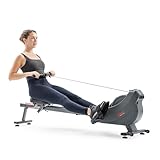
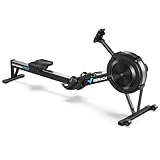


Quick Picks
| Product | Best for | Price |
|---|---|---|
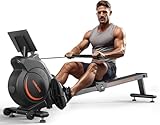
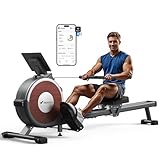
| Merach RS3 Scull | Realistic rowing feel on a budget | $305.99 |
| YOSUDA Magnetic Rower | Entry-level magnetic resistance | $189.99 |
| Merach Q1S | Quietest budget option with app support | $189.99 |
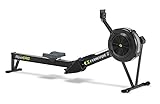
| Concept2 RowErg | Serious training and long-term durability | $990 |
| Sunny Health Smart Magnetic | Dual-rail stability without premium pricing | $199.99 |
| Merach R50 Pro | Professional monitor features at mid-range cost | $559.99 |
| YPOO Foldable Rower | Small-space setups with high weight capacity | $199.99 |
| YOSUDA Water Rower | Aesthetic home gym with water resistance | $299.99 |
How We Picked
We narrowed the field to models with a minimum of published weight capacity data, at least one meaningful resistance adjustment system, and consistent owner feedback across major retail platforms. The three criteria that carried the most weight were resistance smoothness (magnetic and water systems both beat basic air-only budget units), structural stability at full stroke, and whether the included monitor tracks stroke rate, time, and distance rather than just calories. Price-to-feature ratio broke ties between machines that otherwise performed comparably.
The 8 Best Rowing Machine Benefits in 2026
Merach RS3 Scull Rowing Machine
This model earns attention for its sculling handle design, which mimics the pull geometry of an actual oar rather than a single straight cable. Owners consistently note that the motion feels more natural and reduces shoulder strain compared to standard rowers. The ergonomic seat is another standout feature at this price point. However, the build feels lighter than the Merach R50 Pro, and tall users report the rail length limits full extension. Skip this if you are over six feet two and need maximum stroke length.
- Sculling handle simulates real rowing mechanics
- Ergonomic seat reduces lower-back pressure during long sessions
- Rail length may feel short for taller users
YOSUDA Rowing Machine, 16 Resistance Levels
At under two hundred dollars, this rower gives beginners a credible entry point into magnetic resistance training. The sixteen levels offer enough range to start easy and progress without hitting a ceiling quickly. Owner feedback praises the quiet operation but flags that the plastic components flex noticeably at higher resistance settings, which erodes confidence in the stroke. The monitor is basic but functional. Skip this if you plan to train at intensity five days a week; the build does not inspire that kind of trust.
- Affordable magnetic resistance with 16 levels of adjustment
- Whisper-quiet operation suitable for shared living spaces
- Frame flex at higher resistance settings
Merach Q1S Magnetic Rower
The Q1S shares its price tier with the YOSUDA but differentiates itself with a dual slide rail and a 350-pound weight capacity, both of which address the wobble complaints that plague cheaper single-rail designs. App compatibility with an LCD monitor adds a data-tracking layer that many budget rowers lack. Owners appreciate the quiet magnetic resistance and stable platform. The seat is narrower than the RS3 sculling model, which can feel cramped for wider hips. Skip this if seat width is a priority or if you dislike pairing equipment with a phone.
- Dual slide rail provides noticeably more stability than single-rail rivals
- 350-pound capacity accommodates a wider range of body sizes
- Seat is narrower than competitors in this price range
Concept2 RowErg
The gold standard is the gold standard for a reason. The PM5 monitor tracks stroke rate, split time, and distance with the kind of precision that makes the rowing machine benefits measurable and progressive over time. Air resistance scales naturally with effort — pull harder, feel more. Owners who have used rowers at every price tier consistently name this as the one they return to. The $990 price is the obvious barrier, and the air fan produces a noticeable whoosh. Skip this if you are on a tight budget or need near-silent operation for a shared apartment.
- PM5 monitor delivers gym-grade data accuracy with device holder for apps
- Air resistance adapts instantly to your output — no dialing needed
- Premium price point and audible fan noise
Sunny Health & Fitness Smart Magnetic Rower
The dual-rail design gives this Sunny Health model a planted feel that rivals cost significantly more. Owners highlight the smooth magnetic resistance and compact footprint, which makes it a solid choice for apartments where floor space is precious. The smart features allow you to sync with popular fitness apps. The build quality is a step below Concept2, and the seat can feel firm during sessions longer than twenty minutes. Skip this if you need a wider or padded seat for marathon workouts.
- Dual-rail construction delivers stability close to higher-priced models
- App connectivity adds structured workout variety
- Seat firmness causes discomfort during extended sessions
Merach R50 Pro Rowing Machine
Positioned as a mid-range step up, the R50 Pro earns its price with a professional-grade monitor that displays metrics usually reserved for commercial equipment. Owners note the sturdy frame, the quiet magnetic resistance, and the easy-fold storage mechanism that keeps it out of the way in a living room. The $559.99 price is a meaningful commitment for a home rower, though it undercuts the Concept2 by a wide margin. Skip this if you are a first-time buyer still deciding whether rowing will stick; the entry-level options above deliver similar stroke quality at a fraction of the cost.
- Professional monitor tracks detailed performance metrics
- Fold-and-roll design simplifies storage without tools
- Mid-range price is harder to justify before you confirm rowing as a habit
YPOO Foldable Rowing Machine, 350LB Capacity
This machine checks two boxes that matter for apartment dwellers: it folds for storage and supports up to 350 pounds. The 16-level magnetic resistance keeps it quiet, and owners frequently mention the compact footprint as the deciding factor. The trade-off is a basic monitor that tracks time and strokes but lacks the detailed pacing data that drives improvement. Build quality is functional rather than inspiring. Skip this if you want performance metrics beyond a counter; serious training goals will hit a data ceiling here.
- Folds for storage in tight spaces without sacrificing 350-pound capacity
- Quiet 16-level magnetic resistance suits shared or multi-level homes
- Monitor lacks stroke-rate and split-time detail for progress tracking
YOSUDA Water Rowing Machine, CLASSIC-22L Tank
Water resistance provides a naturally progressive load: the harder you pull, the more the paddles push back. The wooden frame gives this model an aesthetic that magnetic and plastic rowers cannot match, and the 400-pound weight capacity is among the highest in this roundup. Owners love the sound of the water and the Bluetooth app integration. The trade-off is weight — filling the tank and moving the machine for cleaning or storage is a two-person job. Skip this if you need something you can roll into a closet between sessions.
- Water resistance scales naturally with effort for a realistic rowing feel
- 400-pound weight capacity and wooden frame suit heavier users and design-conscious buyers
- Heavy when filled; moving it for maintenance or storage requires extra help
Buying Guide
Resistance Type Determines the Workout Feel
Magnetic resistance is quiet, smooth, and adjustable in discrete levels — ideal for shared spaces and progressive interval training. Air resistance scales continuously with your output, making it better for pacing and performance tracking. Water resistance offers a natural, self-regulating load that closely mimics outdoor rowing. If the rowing machine benefits you care about most are cardiovascular conditioning at varied intensities, magnetic or air systems deliver the most practical range. Water rowers are excellent for feel but less convenient to maintain.
Rail Design and Weight Capacity Affect Stability
Dual-rail constructions resist lateral wobble better than single-rail designs, especially for users above two hundred pounds or those who generate a powerful leg drive. Weight capacity ratings are a reasonable proxy for overall frame stiffness — a machine rated for 350 or 400 pounds uses thicker steel and more robust joints than one rated for 250. If you are close to the upper end of a machine’s stated capacity, expect noticeable flex at high resistance.
The Monitor Decides Whether You Actually Improve
A counter that shows elapsed time is barely worth the plastic it is housed in. Useful rowers track stroke rate, split per 500 meters, and total distance — the same metrics Concept2 and rowing apps rely on. If your goal is measurable progress in the rowing machine benefits you are chasing (endurance, power output, calorie burn), a monitor or app integration that captures stroke rate and split is non-negotiable. Budget models that omit these data points often end up unused because the user has no feedback loop.
Our Verdict
The top pick is the Concept2 RowErg. Nothing in this group matches its monitor accuracy, build longevity, or the consistency of its air-resistance stroke. The rowing machine benefits it delivers — measurable, progressive, full-body conditioning — are backed by decades of athlete and gym use, and the device holder makes app integration seamless.
The budget pick is the Merach Q1S at $189.99. The dual-rail frame, quiet magnetic resistance, app compatibility, and 350-pound capacity make it the most stable and versatile option under two hundred dollars.
The one condition where another product wins outright: if you already own a Concept2 erg but want a second machine for a different room or a softer, quieter experience, the YOSUDA Water Rower at $299.99 fills that role beautifully without the fan noise.
FAQ
Do rowing machines build muscle or just cardio?
They do both simultaneously, which is the core rowing machine benefit that sets them apart from a stationary bike or treadmill. The leg drive builds quadriceps and glutes, the pull engages the back and biceps, and the recovery phase maintains core tension. Most users see the cardiovascular gains within the first few weeks and the muscular changes over several months of consistent rowing.
How long should a rowing workout last for real results?
Twenty to thirty minutes of sustained effort at a moderate stroke rate three to four times per week is sufficient for noticeable cardiovascular improvement within a month. Shorter high-intensity intervals can accelerate that timeline but demand a monitor that tracks split pace so you can push to a target and recover properly.
Are water rowers actually better than magnetic rowers?
Better is subjective. Water rowers offer a natural, progressive resistance that feels most like rowing on a river, and many owners find the sound motivating. Magnetic rowers are quieter, require less maintenance, and allow precise resistance settings. If you live in an apartment with sound-sensitive neighbors, magnetic wins for practical reasons alone.
What is the most common mistake buyers make when choosing a rower?
They prioritize price over stroke length and seat comfort. A machine that is too short for your leg span or has a narrow, hard seat will feel wrong from the first session and end up unused. Always check the stated rail length and seat width before buying, especially if you are taller than average or have wide hips.