
The best bike trainers for most riders are direct-drive smart trainers, while wheel-on models remain the better choice when low cost, quick storage, and compatibility with several bikes matter more than maximum accuracy.
Our top picks
 Sportneer Bike Trainer
- Wide Compatibility for Most Bikes: The Sportneer indoor…
- 6-Level Magnetic Resistance Adjustment: Take control of your…
- Quick & Easy Bike Release: Transition from indoor…
 ThinkRider X2Max Smart Bike Trainer,2000w,Simulates 18% Slope,ANT
- Strong compatibility: Supports BLE and ANT + dual…
- Powerful and accurate power output: Using DEPT dynamic…
- Intelligent variable resistance: Simulates a tilt resistance of…
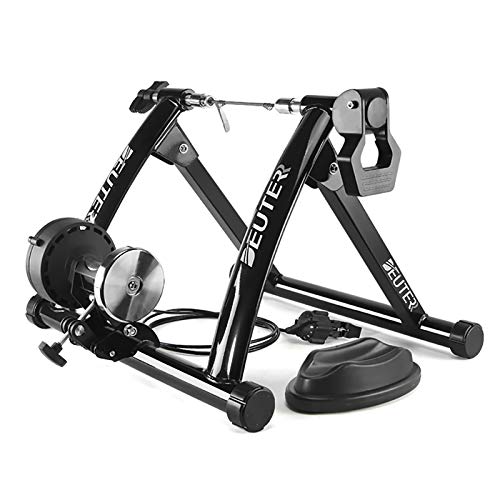 Bike Trainer
- 【Indoor Bike Trainers】: One of the problems with…
- 【Strong Structure & High Load-bearing Capacity】: The unfolded…
- 【6 Level Resistance Adjustable】: The trainer includes a…
| Product | Key specs | |
|---|---|---|
| Sportneer Bike Trainer | Wide Compatibility for Most Bikes: The Sportneer indoor… 6-Level Magnetic Resistance Adjustment: Take control of your… Quick & Easy Bike Release: Transition from indoor… | Check price |
| ThinkRider X2Max Smart Bike Trainer,2000w,Simulates 18% Slope,ANT | Strong compatibility: Supports BLE and ANT + dual… Powerful and accurate power output: Using DEPT dynamic… Intelligent variable resistance: Simulates a tilt resistance of… | Check price |
| Bike Trainer | 【Indoor Bike Trainers】: One of the problems with… 【Strong Structure & High Load-bearing Capacity】: The unfolded… 【6 Level Resistance Adjustable】: The trainer includes a… | Check price |
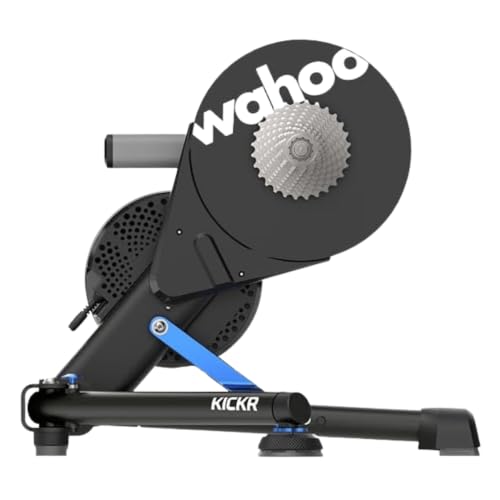 Wahoo KICKR V6 Smart Indoor Trainer | WiFi Connectivity - Offering a robust 2.4 GHz… KICKR Ride Feel - KICKR’s high-inertia flywheel, advanced… KICKR AXIS Feet- KICKR AXIS feet enhance the… | Check price |
As an Amazon Associate we earn from qualifying purchases at no extra cost to you.
Best bike trainers at a glance
| Trainer type or example | Typical price range | Power accuracy | Resistance and incline | Noise | Best for |
|---|---|---|---|---|---|
| Entry-level wheel-on smart trainer | $250–$400 | About ±3% | Usually up to 800–1,500 W; electronic resistance | Moderate; tire and roller noise dominate | Occasional winter riding and small budgets |
| Wahoo KICKR SNAP | $300–$500 | Up to ±3% | Up to 1,500 W; simulated grades around 12% | Moderate to fairly quiet | Riders wanting simple wheel-on smart control |
| Mid-range direct-drive smart trainer | $450–$800 | About ±2% | Typically 1,800–2,500 W; 12–16% simulated grades | Quiet; drivetrain noise is usually louder | Frequent indoor training and virtual riding |
| Wahoo KICKR CORE | $500–$800 | Up to ±2% | Up to 1,800 W; simulated grades up to 16% | Quiet | The strongest all-round direct-drive choice |
| Premium direct-drive trainer, such as Garmin Tacx NEO 2T | $900–$1,500 | About ±1% | Up to roughly 2,200 W; simulated grades up to 25% | Very quiet; no tire noise | Serious training, low-noise rooms, and demanding intervals |
Prices vary by package, cassette inclusion, sales, and regional availability. Specifications can also change through firmware updates, so check the current manufacturer page before buying.
Direct-drive versus wheel-on: the important differences
Power accuracy and resistance range
A direct-drive trainer removes the rear wheel and connects the bicycle chain to a cassette or a supplied single-cog system. The large internal flywheel measures and controls resistance without relying on tire pressure or roller contact. That usually makes power readings more repeatable and sprint resistance more convincing.
Wheel-on trainers press a roller against the rear tire. Their accuracy depends on tire pressure, roller tension, tire compound, and whether the tire slips during hard efforts. A good wheel-on model can be perfectly useful, but it generally needs a consistent setup and occasional calibration. A trainer-specific tire reduces wear and noise, though it cannot eliminate them.
For structured intervals, a direct-drive model with approximately ±2% accuracy and at least 1,800 watts of resistance is ample for most cyclists. Very powerful riders may benefit from a premium unit rated above 2,000 watts, but the grade simulation number matters less than the trainer’s ability to hold steady resistance at your target cadence.
Noise
Direct-drive trainers are usually the better apartment choice. Their electronic and mechanical sounds are relatively subdued, and there is no tire humming against a roller. However, the bicycle itself still produces chain, cassette, freehub, and shifting noise. A clean, lubricated drivetrain and a thick rubber mat help more than many buyers expect.
Wheel-on noise rises with speed and tire pressure. It is rarely intrusive at easy endurance pace, but high-cadence intervals can be noticeably louder. A trainer tire, correct roller tension, and smooth flooring reduce the sound and prevent premature tire wear.
Drivetrain compatibility
Compatibility is the main reason not to buy on price alone. Before choosing a direct-drive trainer, confirm:
- Rear axle standard: common road and gravel bikes use 130 or 135 mm quick release, while many modern bikes use 12 × 142 mm or 12 × 148 mm thru-axles.
- Freehub type: Shimano/SRAM HG, SRAM XD/XDR, and Shimano Micro Spline are not interchangeable without the correct body or adapter.
- Gearing: the trainer cassette or cog must match the chain’s speed and, ideally, its tooth spacing.
- Disc-brake and frame clearance, especially on mountain, gravel, and aero bikes.
- Electronic or unusual drivetrains that may require a specific sprocket, adapter, or virtual-shifting system.
Wheel-on trainers keep the bicycle’s rear wheel and cassette in place, so they are often easier for households with several bikes. They still require the correct axle adapters, and thru-axle bikes may need a compatible skewer or adapter rather than the standard quick-release hardware included in the box.
Decision matrix: which design fits your situation?
| Your situation | Best choice | Why | What to accept |
|---|---|---|---|
| Budget under $400 and fewer than two rides per week | Wheel-on smart trainer | Lower entry cost and easy storage | More noise and less consistent power |
| Three or more indoor rides weekly | Mid-range direct-drive trainer | Better consistency, comfort, and long-term value | Higher initial cost and cassette setup |
| Small apartment or shared living space | Quiet direct-drive trainer | No tire roller noise; usually smoother at high power | Check freehub and drivetrain noise |
| Several bikes used by different riders | Wheel-on, or a direct-drive trainer with multiple compatible cassettes | Faster bike changes and fewer drivetrain concerns | Wheel-on calibration or extra cassette expense |
| Racing, power-based intervals, or frequent virtual events | Direct-drive model rated around ±1–2% | More stable resistance and fewer tire-related variables | More careful installation and compatibility checking |
| Beginner who wants guided workouts | Any ANT+ FE-C or Bluetooth FTMS smart trainer | Broad compatibility with training and cycling apps | Paid app subscriptions may be separate |
App connectivity: what matters beyond the word “smart”
Look for Bluetooth and ANT+ support, plus a standard such as ANT+ FE-C or Bluetooth FTMS for automatic resistance control. These allow applications such as Zwift, TrainerRoad, Rouvy, and Wahoo SYSTM to change resistance or follow a workout. Bluetooth is convenient for phones, tablets, and many laptops; ANT+ is useful when several sensors or a dedicated cycling computer are involved.
Check connection limits before buying. Some trainers can connect to multiple devices for power and control, while others permit only one controlling connection. A trainer may also broadcast power but not cadence, or support one protocol for control and another for data. Firmware updates, calibration tools, and an offline resistance mode are valuable ownership features.
Virtual shifting can make a trainer easier to share because it reduces the need to install a cassette matching every bicycle. It is convenient, but it may require a compatible controller, app, or trainer ecosystem. Riders who want maximum flexibility should prioritize standard cassette compatibility and open Bluetooth or ANT+ support.
Setup time and a practical first-use procedure
A wheel-on trainer can usually be assembled in about 10–20 minutes. A direct-drive trainer commonly takes 20–40 minutes because you must fit the correct freehub parts, install a cassette or cog, and select the right axle spacers.
- Place the trainer on a stable mat and confirm that its feet are level.
- Install the correct axle adapters or skewer. Do not force a thru-axle adapter into a quick-release configuration.
- For direct drive, fit the cassette with the correct spacer and tighten the lockring to the cassette maker’s specification.
- For wheel-on, inflate the tire to the same pressure before each session and tighten the roller until the tire no longer slips under a firm seated acceleration.
- Update firmware, pair the trainer as a controllable trainer, and perform the manufacturer’s calibration procedure if required.
- Ride easily for 5–10 minutes before judging power or resistance behavior.
Calibration matters most on wheel-on models. If the roller is too loose, the tire slips and power becomes erratic; if it is too tight, the tire and roller wear faster without improving accuracy.
Ownership costs and durability
The purchase price is not the entire cost. A wheel-on setup may need a trainer tire every one or two seasons for frequent users, depending on training hours and roller pressure. Direct-drive trainers avoid tire replacement, but their cassette, chain, freehub, and bearings still wear. A heavily used indoor bike can require drivetrain replacement sooner because sweat is corrosive and indoor riding produces little natural cooling or cleaning.
Wipe sweat from the frame and trainer after every session, keep sweat away from the flywheel and electronics, and inspect the chain regularly. Keep the trainer dry and do not spray degreaser into its moving parts. If the trainer develops grinding, unusual play, persistent connection drops, or power readings that drift far from a separate meter, stop using it until the manufacturer’s support team advises you.
For a simple cost-per-use comparison, suppose a $300 wheel-on trainer is used twice weekly for two winters: about 208 sessions, or roughly $1.44 per session before consumables. A $650 direct-drive trainer used four times weekly over the same period gives about 416 sessions, or $1.56 per session. The direct-drive option costs more at checkout, but frequent use can make its added consistency and lower tire wear worthwhile.
Final buying recommendations
Choose a wheel-on smart trainer if you need the lowest upfront cost, store the trainer often, or regularly switch between bikes. Choose a mid-range direct-drive trainer such as the Wahoo KICKR CORE if you want the best balance of accuracy, noise, resistance range, and app support for regular winter fitness. Choose a premium direct-drive model such as the Garmin Tacx NEO 2T when quiet operation, very high accuracy, steep simulated climbs, and advanced training features justify the price.
Whatever the design, confirm axle and freehub compatibility first, then prioritize stable app connectivity and reliable resistance control over headline wattage. For most riders, a trainer that fits the bicycle correctly and gets used consistently is a better purchase than a more powerful model that is difficult to install or leaves compatibility unresolved.





