
Best Binoculars for Birding, Travel, Sports, and Outdoors
The best binoculars for most people are 8×42 models: they balance a steady view, useful brightness, and manageable weight, while 8×32 binoculars suit travel and 10×42 models help when you need more reach in open country. Choose by where and how you’ll use them—not by magnification alone.
Choose by situation
- Birding in woods or around feeders: Look for 8× binoculars with a wide field of view and close focus of about 2–3 m (6.5–10 ft). A 42 mm objective helps in shade; 32 mm is lighter for long walks in good daylight.
- Travel and everyday carry: Compact 8×25 or 8×32 binoculars save space and weight. Choose 8×32 if you expect extended viewing or often watch in overcast conditions.
- Stadium sports and events: 8×25 or 8×32 is usually easier to hold steady than 10× binoculars. A wide field helps follow fast action; close focus matters less from the stands.
- Hiking and general outdoors: 8×32 offers a useful balance for daylight trails. Pick 8×42 if you regularly watch at dawn or dusk, or 10×42 for distant wildlife in open terrain—provided you can keep the image steady.
- Boating or wet-weather use: Prioritize waterproof construction and a secure grip. For use around salt water, rinse the exterior with fresh water after exposure and dry it before storing.
What the specifications mean in practice
Magnification and field of view
In an 8× binocular, an object appears eight times closer than it does to the unaided eye. Higher magnification can reveal more detail at a distance, but it also magnifies hand movement and typically narrows the visible area. That makes a moving bird or athlete harder to find and track. For handheld use, 8× is the most forgiving starting point; consider 10× when distant viewing is more important than a calm, easy-to-follow image.
Our top picks
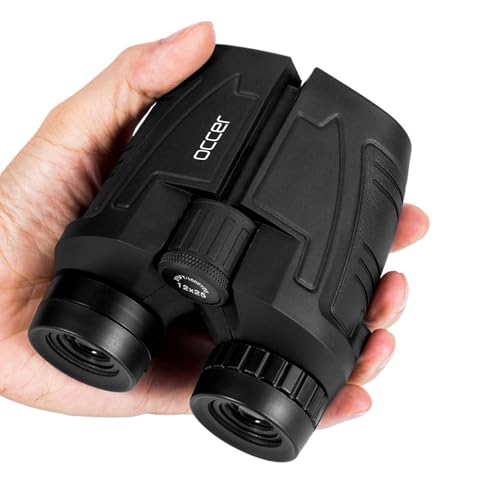 Occer 12x25 Compact Binoculars for Adults and
- 【HIGH-POWERED LARGE EYEPIECE BINOCULARS】 This binoculars for adults…
- 【ADJUSTABLE EYE CUPS FIT EYEGLASS WEARERS OR NOT】The…
- 【FMC BROADBAND COATING TECHNOLOGY】The lightweight cruise binoculars is…
 10x42 ED Optics Binoculars for Adults High
- [Crystal Clear Vision & Extra-low Dispersion] Say goodbye…
- [Gen-2 Flagship 10x42 Binoculars for Adults] As the…
- [24mm Large Eyepiece & Ultra-Wide Field of View…
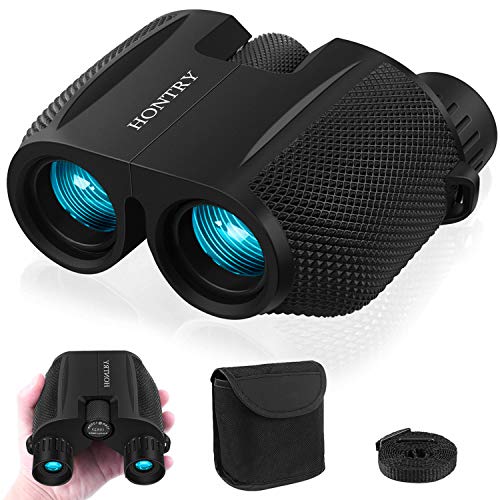 Hontry 10x25 Compact Binoculars for Adults and
- An ideal choice magnification: A 10x magnification strikes…
- Equipped with Bak-4 prisms: These prisms deliver images…
- Compact design: About the size of your palm…
| Product | Key specs | |
|---|---|---|
| Occer 12x25 Compact Binoculars for Adults and | 【HIGH-POWERED LARGE EYEPIECE BINOCULARS】 This binoculars for adults… 【ADJUSTABLE EYE CUPS FIT EYEGLASS WEARERS OR NOT】The… 【FMC BROADBAND COATING TECHNOLOGY】The lightweight cruise binoculars is… | Check price |
| 10x42 ED Optics Binoculars for Adults High | [Crystal Clear Vision & Extra-low Dispersion] Say goodbye… [Gen-2 Flagship 10x42 Binoculars for Adults] As the… [24mm Large Eyepiece & Ultra-Wide Field of View… | Check price |
| Hontry 10x25 Compact Binoculars for Adults and | An ideal choice magnification: A 10x magnification strikes… Equipped with Bak-4 prisms: These prisms deliver images… Compact design: About the size of your palm… | Check price |
 Compact Binoculars for Adults and Kids | 【Glimmer Night Vision】- Low-light night vision allows you… 【Suitable for Adults and Children】 - Mini compact… 【Wide and Clear Field of View】- Professional Ultra… | Check price |
As an Amazon Associate we earn from qualifying purchases at no extra cost to you.
Field of view is usually listed as a width at 1,000 m or 1,000 yd. A larger figure means you see more of the scene at once, which is particularly helpful in woodland, at sporting events, and when scanning for wildlife.
Objective size and low-light performance
The second number describes the diameter of the objective lenses in millimetres: an 8×42 has 42 mm objectives. Larger lenses can gather more light, but they also add bulk. They do not guarantee a brighter image on their own; lens coatings, optical design, your eye position, and the viewing conditions matter too.
For reference, the exit pupil is objective diameter divided by magnification: 42 ÷ 8 = 5.25 mm for an 8×42, while 32 ÷ 8 = 4 mm for an 8×32. A larger exit pupil can make it easier to see a bright image in dim conditions, though it cannot make a dark scene bright. In good daylight, compact binoculars may be entirely adequate.
Close focus, weight, and waterproofing
Close-focus distance is the nearest distance at which binoculars can bring a subject into focus. It matters for butterflies, nearby birds, and details in a garden; it is less important for distant landscapes or games. Check the manufacturer’s stated distance, and remember that your own eyes and the binocular’s focus adjustment affect how close you can focus.
Weight determines how likely a pair is to come along and how comfortable it feels after an hour. Waterproofing is valuable for rain, spray, and damp mornings, but it is not the same as unlimited submersion protection. Look for a stated waterproof rating or depth and a sealed, nitrogen- or argon-purged design if preventing internal fogging is important. Avoid assuming that “water-resistant” means suitable for boating.
Compare common formats
The figures below are typical format characteristics, not specifications for every model. Actual weight, field of view, close focus, and waterproof rating vary by product; check the maker’s current specifications before buying.
| Format | Typical weight | Exit pupil | Best fit | Main trade-off |
|---|---|---|---|---|
| 8×25 | 250–350 g | 3.1 mm | Travel, events, pocketable carry | Less comfortable in dim light; small grip and eyepieces |
| 8×32 | 450–650 g | 4 mm | Daytime birding, hiking, travel | Not as capable in low light as many 42 mm options |
| 8×42 | 600–850 g | 5.25 mm | All-purpose birding and outdoor viewing | Bulkier to pack and carry |
| 10×42 | 650–900 g | 4.2 mm | Open landscapes and distant subjects | Narrower, shakier view for many handheld users |
How to decide before you buy
- Set your carry limit. If the binoculars will live in a small daypack or jacket pocket, start with 8×25 or 8×32. If they’ll be worn on a harness for long birding sessions, compare the weight and balance of 8×32 and 8×42.
- Choose the distance you need. Favor 8× for nearby, moving, or unpredictable subjects. Consider 10× if you mainly observe stationary or distant subjects in open spaces.
- Match brightness to your schedule. For frequent dawn, dusk, or shaded-forest viewing, a good 8×42 is a practical choice. For daytime-only use, 8×32 can reduce both size and weight.
- Check the view, not just the numbers. If possible, look through a demo pair at a distant object and a nearby one. Confirm that you can see the full image comfortably, focus smoothly, and hold the binoculars without excessive shake.
- Verify fit and protection. Eyeglass wearers should check the usable eye relief and whether the eyecups adjust comfortably. For frequent exposure to rain or spray, confirm the waterproof specification rather than relying on vague labeling.
Ownership details that matter
Binoculars are optical instruments, so small care habits make a difference. Dust and grit can scratch coatings if rubbed across the lenses. Blow away loose particles first, then use a clean lens brush or optical cloth; use lens-cleaning fluid made for optics when needed. Avoid paper towels, shirt hems, and household glass cleaner.
Straps, eyecup rubber, and the exterior covering are common wear points. Keep the binoculars in their case when packed, avoid leaving them in a hot vehicle, and inspect the strap attachments periodically. If the image becomes doubled or the housing takes a hard impact, do not try to correct the alignment yourself; contact the manufacturer or a qualified repair service. Waterproof seals can also age, so a previously waterproof pair should not be treated as permanently submersion-proof.
For a single pair to cover birding, travel, and everyday outdoor use, start with 8×42 if brightness and versatility outweigh bulk, or 8×32 if you value a lighter carry. Choose compact 8×25 for portability and 10×42 for reach when distant viewing is the priority.





