
Key takeaways
- Strong cross-bar steel frame
- Supports up to 300 lb
- Max height: 6 ft
Best Camping Cots for a More Comfortable Campsite
The best camping cot for you is the one that fits inside your tent with room for its legs, supports your weight with a comfortable margin, and is manageable to carry and set up. For frequent car camping, choose a sturdy, roomy cot; for backpacking or tight tents, prioritize low packed weight and a smaller footprint. A cot’s ground clearance matters too: more space underneath can make storage easier, but also raises your sleeping surface and may limit tent compatibility.
Camping cot comparison
The models below illustrate different trade-offs, rather than a single winner for every campsite. Dimensions and capacities are manufacturer-listed specifications; confirm the current listing before buying, since versions can change. Packed size is especially important to check: where a maker does not publish a consistent figure, it is marked as not specified rather than estimated.
Our top picks
 Coleman Trailhead II Large Folding Cot with
- Strong cross-bar steel frame
- Supports up to 300 lb
- Max height: 6 ft
 MARCHWAY Ultralight Folding Camping Cot Bed
- Ultralight & Highly Portable: Weighing only 4.9 pounds,…
- Quick & Simple Setup: Stop wrestling with clumsy…
- Engineered for Endurance: Crafted with a tent pole…
 ABORON Camping Cot for Adults
- Cot for Sleeping with Detachable Soft Pad: The…
- Quick Open & Easy Fold: No tools needed—opens…
- Premium 1200D Fabric: Double-layer Oxford resists wear and…
| Product | Key specs | |
|---|---|---|
| Coleman Trailhead II Large Folding Cot with | Strong cross-bar steel frame Supports up to 300 lb Max height: 6 ft | Check price |
| MARCHWAY Ultralight Folding Camping Cot Bed | Ultralight & Highly Portable: Weighing only 4.9 pounds,… Quick & Simple Setup: Stop wrestling with clumsy… Engineered for Endurance: Crafted with a tent pole… | Check price |
| ABORON Camping Cot for Adults | Cot for Sleeping with Detachable Soft Pad: The… Quick Open & Easy Fold: No tools needed—opens… Premium 1200D Fabric: Double-layer Oxford resists wear and… | Check price |
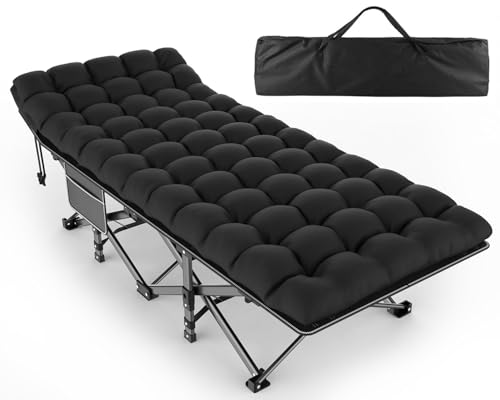 ZENPETIO Camping Cot for Adults | Unrivaled Outdoor Comfort & Durability: Experience the ultimate… Superior Stability & 500 LBS Capacity: Rest confidently… Effortless 10-Second Setup: Maximize your adventure time with… | Check price |
As an Amazon Associate we earn from qualifying purchases at no extra cost to you.
| Cot | Open dimensions | Weight | Capacity | Ground clearance | Best fit |
|---|---|---|---|---|---|
| Helinox Cot One Convertible | About 74.5 × 27.5 in | About 5 lb 1 oz | 320 lb | About 6.5 in | Lightweight travel and compact storage |
| REI Co-op Kingdom Cot 3 | About 82 × 31 in | About 20 lb | 300 lb | About 6 in | Roomy car camping and frequent use |
| Coleman ComfortSmart Deluxe Cot | About 80 × 31 in | About 20 lb | 300 lb | About 15 in | High clearance and under-cot storage |
These are not perfectly like-for-like specifications: accessories, carry bags, and product revisions can affect listed weight or dimensions. Treat the figures as a shortlist, then verify the exact model and measure your tent.
Choose by campsite and sleeping needs
- For a small tent or frequent packing: Look first at a compact, lightweight cot such as the Helinox Cot One Convertible. Its smaller footprint and lower carry weight suit travelers who have to move gear often. The trade-off is a higher price range and less sleeping width than a broad car-camping cot.
- For roomy car camping: A wider model such as the REI Co-op Kingdom Cot 3 gives more space to shift position, but its roughly 20-pound weight is better suited to a vehicle than a long carry. Check whether the cot’s frame and legs fit the tent, not just its sleeping surface.
- For gear storage underneath: The Coleman ComfortSmart Deluxe sits higher than the other examples. That clearance can free up space for bags, but the taller frame can make getting in and out less convenient and may be awkward under a low tent roof.
- For a limited budget: Basic folding cots are often available in a lower general market price range than lightweight travel models. They can be a sensible choice for occasional car camping, provided the frame feels stable, replacement parts are available, and the packed length fits your vehicle.
Weight capacity is a limit, not a comfort rating. Compare your body weight plus anything you’ll keep on the cot with the stated capacity, and leave a margin rather than choosing a cot that is right at its limit. If two people need separate cots, measure the combined footprint and the aisle needed to move around them.
Measure the tent before choosing
A cot’s open width is only part of the space it occupies. Angled legs, support bars, and the room needed to assemble it can extend beyond the fabric sleeping area. Tent walls also slope inward, so a cot that fits on the floor may press against the sidewall higher up.
Use this practical check before ordering:
- Measure the tent’s usable floor length and width, avoiding curved edges and door areas.
- Allow several inches of clearance around the cot frame where possible, especially beside the door and at the foot end.
- Check the cot’s full open dimensions and its packed length against both the tent and your vehicle storage space.
- For two cots, add their widths and the aisle you need between them; don’t assume the tent’s advertised capacity means that layout will be comfortable.
- Check interior height above the cot. A raised sleeping surface reduces headroom, which matters when sitting up or changing clothes.
Setup effort and long-term ownership
Most folding cots are easier to manage with two hands and a clear patch of ground. Assemble the frame on a flat surface, keep fingers away from hinged joints, and follow the maker’s sequence for attaching tensioning bars or end rails. A frame that feels difficult to close may be under uneven tension or assembled out of order; forcing it can damage a joint or cause it to snap shut unexpectedly.
Simple folding frames usually trade low cost for more bulk and weight. Tensioned fabric models can pack smaller, but may take more effort to tension and can require a particular assembly sequence. Before a trip, set the cot up at home once. That exposes confusing steps and lets you confirm that every pole, foot, and strap is present.
With use, fabric seams and the points where fabric meets the frame often show wear first. Repeatedly overloading the cot, dragging it across rough ground, or folding it while wet can shorten its life. Brush off grit, let the fabric dry fully before storage, and inspect joints and feet for cracks or looseness. Avoid improvised repairs to load-bearing parts unless the manufacturer approves them.
Quick decision matrix
| Your situation | Prioritize | Likely direction |
|---|---|---|
| Occasional car camping, tight budget | Simple setup, adequate capacity, manageable packed length | Basic folding cot |
| Frequent trips, roomy tent | Wider sleeping surface, durable frame, easy repeat setup | Full-size car-camping cot |
| Small tent or limited storage | Short packed length, low weight, compact footprint | Lightweight travel cot |
| Need space for bags underneath | Greater ground clearance and stable legs | High-profile cot, if tent height allows |
Is a cot better than a sleeping pad?
A cot lifts you off the ground and can create useful storage space, but it adds frame weight and takes up more room than many sleeping pads. A pad is usually easier to pack and provides insulation directly beneath you. In cold conditions, a cot can feel chilly because air circulates underneath; pairing it with an insulated pad or suitable bedding can help. Choose based on the whole sleep system and the conditions you expect, not just the cot’s height.
Bottom line
For car camping, start with a full-size cot that leaves room to move inside your tent and has a capacity comfortably above your intended load. Choose a compact travel model when carry weight or storage is the constraint, and a higher cot when under-bed storage is worth the added height. The best camping cots are not necessarily the largest or strongest: they are the ones whose open footprint, packed size, setup, and clearance work at your actual campsite.





