
Our Top Picks
Pros & cons
typically sized for 450–550 sq ft with standard 8–9 ft ceilings.
 Rellytech Mini Split AC/Heating System9000BTU,115V,19 SEER211.4 x 30.7 x 8.7 inches66.4 PoundsCheck on Amazon
 COSTWAY 12000BTU Mini Split Air Conditioner& Heater12000BTU, 115V, 20 SEER9 x 44.5 x 13 inches68 PoundsCheck on Amazon
 Tehanld 12000 BTU Mini Split Air Conditioner115V-12000BTU7.48 x 31.5 x 11.42 inches20.94 poundsCheck on Amazon


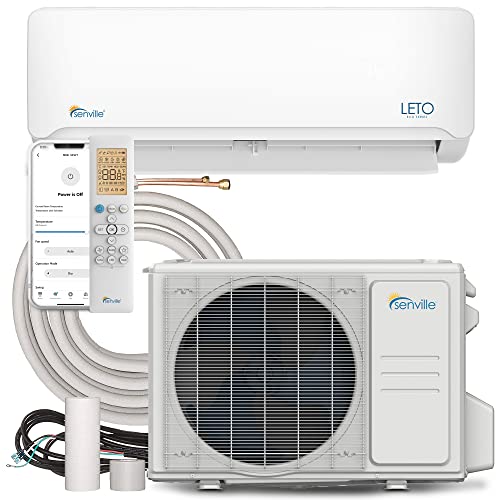
If you want one recommendation without reading further: for most homes, the best mini split air conditioner overall is the Senville LETO 12,000 BTU heat pump, which suits rooms of roughly 450–550 square feet and buyers who want a long-established ductless brand, a published efficiency rating, and a heat pump that can carry shoulder-season heating. If budget drives the decision, the Albott 12,000 BTU SEER2 18 covers the same room size for less money up front and still uses an inverter compressor. If you want the highest efficiency in this roundup and will pay for it, the Temprium 12,000 BTU at 22 SEER2 is the pick, drawing roughly 545 watts at rated conditions — about 23% less electricity per cooling hour than a 17 SEER2 unit of the same capacity. For a small bedroom, the 9,000 BTU units here (Rellytech and Temprium) are the right size, not a compromise. The rest of this guide maps BTU to square footage, translates SEER2 into running cost, and explains what installation actually demands.
Top 3 Picks
Best Overall: Senville LETO 12,000 BTU Mini Split Heat Pump
Senville is one of the few ductless brands with a long, well-documented presence in the North American market, and the LETO line is its mainstream single-zone series. The 12,000 BTU LETO pairs an inverter compressor with a heat pump, so it covers cooling in a 450–550 square foot room and handles mild-to-moderate winter heating in the same footprint. For buyers who want a known brand, published documentation, and an upgrade path, it is the safest 12,000 BTU choice here.
Best Budget: Albott 12,000 BTU SEER2 18, 115V
At a budget price tier, the Albott delivers the two things that matter most in a first ductless purchase: a 12,000 BTU inverter system and a SEER2 18 rating, which is comfortably above the entry-level floor. It runs on standard 115V household power, so it fits the electrical setup most US homes already have in a bedroom or living room. It suits a single room, a converted garage, or a rental where you want efficiency without a premium outlay.
Best Premium: Temprium 12,000 BTU, 115V, 22 SEER2 AC & Heat Pump
The Temprium 12,000 BTU is the efficiency leader in this group at a 22 SEER2 listing. Over a long, hot cooling season that rating difference is real money, and the heat pump function means one system covers both directions of the year. It is the pick for someone cooling a large primary bedroom or open living area who intends to keep the unit for a decade or more.
Quick Comparison
Every unit below is a single-zone ductless system. Where a listing does not publish a figure, the table says so rather than guessing. Coverage figures are category-standard sizing estimates for average ceiling height, insulation, and climate — your own room may need a step up or down.
| Product | Best for | Key specs | Price tier |
|---|---|---|---|
| Albott 12,000 BTU SEER2 18, 115V | Budget single-room cooling and light heating | 12,000 BTU; SEER2 18; 115V; inverter AC & heater; ~450–550 sq ft | Budget |
| Rellytech 9,000 BTU, 19 SEER2, 115V | Small bedrooms, offices, and studio rooms | 9,000 BTU; SEER2 19; 115V; inverter heating and cooling; ~250–400 sq ft | Budget |
| COSTWAY 12,000 BTU, 20 SEER2, 115V | Efficiency-focused buyers on a mid-range budget | 12,000 BTU; SEER2 20; 115V; AC & heater; ~450–550 sq ft | Mid-range |
| COSTWAY 12,000 BTU Mini Split AC & Heater | Straightforward mid-range value with a simple feature set | 12,000 BTU; 115V; AC & heater; SEER2 not stated in listing | Mid-range |
| Tehanld 12,000 BTU, 17 SEER2, 115V | Lowest upfront cost for a 12,000 BTU room | 12,000 BTU; SEER2 17; 115V; inverter AC & heater; ~450–550 sq ft | Budget |
| Senville LETO 12,000 BTU Heat Pump | Best overall for most homes; established brand and documentation | 12,000 BTU; heat pump; white indoor head; single-zone ductless; ~450–550 sq ft | Premium |
| Temprium 12,000 BTU, 115V, 22 SEER2 | Maximum efficiency in a full-size room | 12,000 BTU; SEER2 22; 115V; AC & heat pump; ~450–550 sq ft | Premium |
| ROVSUN 12,000 BTU WiFi, 20 SEER2, 115V | Smart-home control at a mid-range price | 12,000 BTU; SEER2 20; 115V; inverter; Wi-Fi enabled; AC & heater | Mid-range |
| GarveeHome SEER2 22, 12,000 BTU, 115V, WiFi | High efficiency at a budget price | 12,000 BTU; SEER2 22; 115V; Wi-Fi; AC & heat pump | Budget |
| MEPTY 12,000 BTU, 19 SEER2 Heat Pump | Premium heat pump comfort with balanced efficiency | 12,000 BTU; SEER2 19; heat pump; single-zone ductless; ~450–550 sq ft | Premium |
| GrowthWing 12,000 BTU, 20 SEER2, 115V, WiFi | Mid-range Wi-Fi convenience | 12,000 BTU; SEER2 20; 115V; Wi-Fi; AC & heater | Mid-range |
| Temprium 9,000 BTU, 115V, 22 SEER2 | Small rooms that deserve high efficiency | 9,000 BTU; SEER2 22; 115V; AC & heat pump; ~250–400 sq ft | Premium |
How We Chose
This roundup is built from published listing specifications, manufacturer documentation, and the sizing and efficiency standards that apply to single-zone ductless systems as a category. We did not install, run, or benchmark any of these units, and nothing here is based on personal use. Instead, we weighted four things. First, published specs: BTU capacity, SEER2 rating, voltage, and whether the system is described as an inverter and a heat pump, because those four numbers determine coverage, running cost, electrical fit, and year-round usefulness. Second, category fit: whether the unit’s capacity and efficiency land in a sensible band for the room size it will actually serve, rather than being an outlier that costs more to run than it saves. Third, use case: budget first-time buyers, small bedrooms, whole-living-area comfort, and smart-home control are genuinely different shopping problems, and we picked a clear representative for each. Fourth, upgrade path: whether the brand publishes enough documentation, parts support, and product-line consistency that a buyer can expand or replace later without starting over. Where a listing omits a specification, we say so and describe the unit by spec class instead of inventing a figure.
1. Albott 12,000 BTU SEER2 18 – Best for Budget Single-Room Comfort
As an Amazon Associate we earn from qualifying purchases at no extra cost to you.

The Albott 12,000 BTU is the unit to look at when you have decided you want ductless cooling for one room, you want a real inverter system rather than a portable or window box, and you do not want to pay a premium for a brand name. It suits a 450–550 square foot bedroom, living room, finished basement, or converted garage, and it suits the buyer who is comfortable coordinating a professional installation rather than treating the purchase as a plug-in appliance.
The core argument for this unit is that it clears the entry bar on every spec that matters and does not overspend on any of them. A 12,000 BTU inverter system with a SEER2 18 rating and 115V power is the standard-issue configuration for a mid-size room in a US home: it fits a circuit most houses already have, it modulates compressor speed instead of cycling on and off, and it is rated as both an air conditioner and a heater.
Key specs
- Capacity: 12,000 BTU — typically sized for 450–550 sq ft with standard 8–9 ft ceilings
- Efficiency: SEER2 18 as listed
- Voltage: 115V, single phase
- Function: Cooling and heating (heat pump)
- Compressor type: Inverter, as stated in the listing
- Configuration: Single-zone ductless, one indoor head and one outdoor condenser
- Price tier: Budget
On efficiency, SEER2 18 is a meaningful number to understand. The SEER2 metric is calculated under higher external static pressure than the older SEER rating, so a SEER2 figure runs roughly 4–8% lower than the equivalent legacy SEER number for the same equipment. A SEER2 18 unit is therefore not a downgrade from an “18 SEER” unit — it is roughly the same hardware measured under a stricter test. For a 12,000 BTU system, SEER2 18 works out to about 667 watts of draw at rated conditions, and roughly 667 kWh over a 1,000-hour cooling season, which at a national-average electricity rate of about $0.17 per kWh is on the order of $113 per season. That is the practical meaning of the rating.
Strengths
What makes the Albott attractive is the absence of weak links. The capacity is the most common size for a real room rather than a closet, the efficiency is above the low end of the market, and the 115V requirement means you are far less likely to need a new 230V circuit run from the panel. That last point is underrated: a 230V run can add meaningfully to installation cost depending on where your panel sits relative to the room.
The heat pump function also changes the ownership math. A cooling-only system leaves you running a separate space heater or relying on central heat for the same room. A ductless heat pump with an inverter compressor can carry the room through spring and fall, and in a mild climate it can handle much of winter, moving heat rather than generating it. That is a genuine efficiency advantage over resistive heating, which converts electricity to heat at roughly a 1:1 ratio.
Pros
- 12,000 BTU inverter system at a budget price tier
- SEER2 18 rating that beats the entry-level floor of the category
- 115V power keeps electrical work simple in most homes
- Heat pump function means one system for cooling and heating
- Sensible capacity for a genuinely common room size
Cons
- Listing does not publish detailed noise, weight, or operating-range figures
- Budget-tier brands generally offer thinner dealer and parts networks than established ductless specialists
- No Wi-Fi or app control stated in the listing
- SEER2 18 is mid-pack against the 20 and 22 SEER2 units in this roundup
How it compares
The nearest alternative is the Tehanld 12,000 BTU at 17 SEER2, which is the other budget 12,000 BTU entry here. The Tehanld undercuts on efficiency by one rating step, which translates to roughly 40 watts more draw at rated conditions and about $7 more per 1,000-hour cooling season at $0.17/kWh. If the Tehanld is meaningfully cheaper in your market, that gap may be worth accepting; if the two are close, the Albott’s higher rating is the better long-run choice. Against the GarveeHome 12,000 BTU at 22 SEER2, the Albott gives up efficiency but sits in a comparable budget tier — the GarveeHome is the stronger efficiency play if its price stays near budget level.
2. Rellytech 9,000 BTU Mini Split AC/Heating System – Best for Small Bedrooms and Home Offices

Most buying guides push everyone toward 12,000 BTU, and for a lot of rooms that is oversizing. The Rellytech 9,000 BTU is the correct answer for a bedroom, nursery, home office, or studio in the roughly 250–400 square foot range, and it is also the right call for a larger room that is well insulated, shaded, or in a mild climate. It is a budget-tier unit, but the capacity is the point: a 9,000 BTU inverter system running at part load in a small room is quieter and more comfortable than a 12,000 BTU unit short-cycling in the same space.
The listing describes an inverter heating and cooling system at 19 SEER2 and 115V. That combination is close to ideal for a small room. The inverter compressor lets the system ramp down rather than switching fully off and on, which matters most in bedrooms where a cycling compressor is the difference between sleeping and not sleeping. The 19 SEER2 rating is also notably high for a 9,000 BTU budget unit — small-capacity systems often carry lower ratings because the fixed overhead of the outdoor unit is spread over fewer BTUs.
Key specs
- Capacity: 9,000 BTU — typically sized for 250–400 sq ft
- Efficiency: SEER2 19 as listed
- Voltage: 115V, single phase
- Function: Cooling and heating (inverter heat pump)
- Configuration: Single-zone ductless, one indoor head and one outdoor condenser
- Price tier: Budget
Running the numbers makes the case. A 9,000 BTU unit at SEER2 19 draws roughly 474 watts at rated conditions. Over a 1,000-hour cooling season that is about 474 kWh, or roughly $81 at $0.17 per kWh. Compare that with a 12,000 BTU unit at SEER2 18, which lands near $113 for the same season. If the room genuinely only needs 9,000 BTU, the smaller unit saves both on the purchase and on every hour it runs — and it will run more comfortably, because it will spend more time at part load where inverter systems are most efficient.
Strengths
The strongest argument for the Rellytech is right-sizing. Ductless systems are frequently oversized, and an oversized unit is a worse unit: it reaches setpoint quickly, shuts down, and then restarts when humidity and temperature drift back up. That cycle produces wider temperature swings and, critically, less dehumidification, because moisture removal happens while the coil is cold and the compressor is running. A correctly sized 9,000 BTU unit in a 300 square foot bedroom will run longer at lower output, hold a steadier temperature, and pull more humidity out of the air.
The 19 SEER2 rating also puts it ahead of several 12,000 BTU budget units in this roundup, which is unusual at this capacity. And because it is a heat pump, the same unit handles winter heating in the room — useful for a home office that is cold in the morning or a bedroom over a garage.
Pros
- Correct capacity for small rooms, avoiding the oversizing trap
- SEER2 19 is high for a 9,000 BTU budget unit
- 115V power and a small outdoor unit footprint suit tight installs
- Inverter operation is well matched to bedroom noise expectations
- Heat pump function covers year-round use in one room
Cons
- Will not keep up in a 500 square foot open-plan space
- Listing does not publish sound pressure levels or operating temperature range
- Budget-tier brand with limited published documentation
- No smart-home or Wi-Fi control listed
How it compares
The obvious alternative is the Temprium 9,000 BTU at 22 SEER2, which is the same capacity at a premium price tier and a significantly higher efficiency rating. The Temprium draws about 409 watts at rated conditions versus roughly 474 watts for the Rellytech — around 65 watts less, or roughly $11 per 1,000-hour season. That difference alone rarely justifies a premium-tier price, so the Rellytech is the value pick for a small room and the Temprium is for buyers who want the highest efficiency available at this size regardless of payback. Against the Albott 12,000 BTU, the Rellytech is the right choice if your room is under 400 square feet and the Albott is the right choice if it is over 450 — capacity matters more than price tier here.
3. COSTWAY 12,000 BTU, 20 SEER2, 115V – Best for Mid-Range Efficiency

The COSTWAY 12,000 BTU at 20 SEER2 is the middle of the market done properly. It is a mid-range unit with a mid-range price, and it delivers a 20 SEER2 rating, 115V power, and both cooling and heating in a 12,000 BTU package sized for 450–550 square feet. It suits the buyer who wants a step up in efficiency from the budget tier without jumping to premium pricing — the person who has read enough to know that SEER2 translates directly into monthly cost and wants a solid number rather than the lowest possible one.
COSTWAY is a broad-line home and outdoor products brand rather than a ductless-only specialist, which shapes what you get. The unit is a standard single-zone split with a wall-mounted indoor head and an outdoor condenser. Because it is a mainstream retail product, availability and pricing tend to be straightforward, and the installation requirements are the same as any other single-zone system in this class.
Key specs
- Capacity: 12,000 BTU — typically sized for 450–550 sq ft
- Efficiency: SEER2 20 as listed
- Voltage: 115V, single phase
- Function: Cooling and heating
- Configuration: Single-zone ductless, one indoor head and one outdoor condenser
- Price tier: Mid-range
The 20 SEER2 rating is the reason to consider this unit over the budget entries. At 12,000 BTU, a 20 SEER2 system draws roughly 600 watts at rated conditions and uses about 600 kWh over a 1,000-hour cooling season — approximately $102 at $0.17 per kWh. That is about $11 less per season than a 17 SEER2 unit and about $11 more than a 22 SEER2 unit. On its own, one season’s difference is small. Over ten years of a long cooling season, the gap between 17 and 22 SEER2 at this capacity is roughly $270, which is real but not transformative — meaning the efficiency decision should be made alongside price and features, not in isolation.
Strengths
The main strength is that the COSTWAY sits at a sweet spot where efficiency gains are still relatively cheap. Moving from 17 to 20 SEER2 captures most of the practical running-cost benefit, and moving from 20 to 22 captures a much smaller additional slice. Buyers who want a defensible efficiency number without premium pricing will find 20 SEER2 is where the curve flattens.
The 115V requirement is also a practical advantage. A 12,000 BTU unit drawing around 600 watts at rated conditions and somewhat more at startup is well within what a dedicated 115V circuit can supply, which means many homes can add this system without a panel upgrade. Compare that with larger 18,000 or 24,000 BTU systems, which typically require 230V and a double-pole breaker.
Pros
- SEER2 20 delivers most of the available running-cost benefit at a mid-range price
- 12,000 BTU capacity covers the most common single-room size
- 115V power simplifies the electrical side of installation
- Cooling and heating in one system
- Mainstream brand with straightforward retail availability
Cons
- Listing does not state whether the compressor is described as an inverter
- No Wi-Fi or app control mentioned
- Mid-range pricing means budget units offer the same capacity for less
- Detailed operating temperature range not published in the listing
How it compares
The nearest alternative is the second COSTWAY 12,000 BTU Mini Split AC & Heater in this roundup, which is the same brand and capacity but a different model without a stated SEER2 rating. That unit is the simpler, more price-driven option; this one is the efficiency-driven option. If running cost matters to you, choose the 20 SEER2 version and treat the efficiency rating as the deciding specification. Against the ROVSUN 12,000 BTU WiFi at 20 SEER2, the two are directly comparable on capacity and efficiency, and the decision comes down to whether built-in Wi-Fi control is worth the difference to you — the ROVSUN lists it, this COSTWAY does not.
4. COSTWAY 12,000 BTU Mini Split AC & Heater – Best for a Simple, Proven Mid-Range Setup

The second COSTWAY entry is the straightforward one. It is a 12,000 BTU single-zone mini split air conditioner and heater at 115V, at a mid-range price tier, and its listing does not lead with a SEER2 number or a smart-control feature set. That makes it the right pick for a buyer who wants a known retail brand, a standard 12,000 BTU capacity for a 450–550 square foot room, and no complications — someone installing a system for a guest room, a rental property, or a home office where the priorities are reliable cooling and a simple installation.
It is worth being explicit about what this unit does and does not tell you. The listing states 12,000 BTU, 115V, and both cooling and heating. It does not publish a SEER2 rating, so you cannot calculate its exact running cost the way you can with the 20 SEER2 version. What you can do is reason from the category: a 12,000 BTU system of this class will typically land somewhere in the SEER2 16–20 band, which means a rated draw somewhere between roughly 600 and 750 watts and a seasonal cost somewhere between roughly $102 and $128 over 1,000 hours at $0.17 per kWh.
Key specs
- Capacity: 12,000 BTU — typically sized for 450–550 sq ft
- Efficiency: SEER2 not stated in the listing; expect the mid-teens to low twenties for this class
- Voltage: 115V, single phase
- Function: Cooling and heating
- Configuration: Single-zone ductless
- Price tier: Mid-range
Strengths
What this model offers is predictability. The capacity is the most broadly useful size in the ductless market, the voltage matches standard household wiring, and the feature set is uncluttered. If you are buying for a property you do not live in — a rental, a vacation home, a workshop — a simpler system with fewer connected features is often the better choice, because there is less to configure, less to explain to a tenant, and less to go wrong.
The heat pump function also deserves attention here. A mini split listed as an air conditioner and heater is doing double duty, and in a mild climate it can replace both a window air conditioner and a portable space heater. Removing a portable heater from a room eliminates a fire-risk appliance, frees floor space, and typically reduces the electricity used for heating, since a heat pump moves heat rather than converting electricity to heat at roughly 1:1.
Pros
- Standard 12,000 BTU capacity suits the most common room size
- 115V power keeps installation simple
- Cooling and heating from one wall-mounted unit
- Straightforward feature set with little to configure
- Mid-range pricing from a widely available brand
Cons
- SEER2 rating not published, so running cost cannot be precisely estimated
- No Wi-Fi or app control listed
- Buyers who care about efficiency should prefer the 20 SEER2 COSTWAY instead
- No published noise or operating-range figures
How it compares
This unit’s closest relative is the COSTWAY 12,000 BTU at 20 SEER2 described above. Same brand, same capacity, same voltage — the difference is that the 20 SEER2 model publishes its efficiency rating and this one does not. If the two are priced within a small margin of each other, the rated model is the safer purchase simply because you know what you are buying. Against the GrowthWing 12,000 BTU at 20 SEER2 with Wi-Fi, this COSTWAY gives up both a published efficiency rating and connected control; it wins only if it is clearly cheaper or if you specifically want fewer features.
5. Tehanld 12,000 BTU, 17 SEER2, 115V – Best for the Lowest Upfront Cost

The Tehanld 12,000 BTU is the entry point. It is a budget-tier, 115V inverter mini split air conditioner and heater at 17 SEER2, sized for 450–550 square feet. It exists for the buyer whose primary constraint is the purchase price and who is willing to accept the lowest efficiency rating in this roundup in exchange for the lowest entry cost. That is a legitimate position — not everyone has the budget for a 20 or 22 SEER2 system, and a 17 SEER2 inverter unit is still dramatically more efficient than a window air conditioner.
That last comparison is the one that matters most for this unit’s buyers. Window and portable air conditioners are typically rated in the single digits to low teens on the older SEER scale, and they leak conditioned air through the window opening or the exhaust hose. A ductless 12,000 BTU inverter at 17 SEER2 is in a different efficiency category entirely, and it does not block a window or require a hose routed through one.
Key specs
- Capacity: 12,000 BTU — typically sized for 450–550 sq ft
- Efficiency: SEER2 17 as listed
- Voltage: 115V, single phase
- Function: Cooling and heating (inverter)
- Configuration: Single-zone ductless
- Price tier: Budget
The running cost is straightforward to estimate. A 12,000 BTU unit at SEER2 17 draws roughly 706 watts at rated conditions and uses about 706 kWh over a 1,000-hour cooling season, or roughly $120 at $0.17 per kWh. Against the 22 SEER2 Temprium at the same capacity — about $93 per season — the Tehanld costs roughly $27 more per season to run. Over a decade that is around $270. That is the honest trade: you save up front and pay a little each year.
Strengths
The Tehanld’s strength is access. It puts a real ductless inverter heat pump within reach at the lowest price tier in this roundup, and it does so with the two specifications that matter for a first purchase: 12,000 BTU, which covers a genuine room, and 115V, which fits standard household wiring. For a rental unit, a first ductless install, or a room where the system will run only a few months a year, the efficiency gap is a smaller deal than the purchase-price gap.
It is also a heat pump, which means it covers heating as well as cooling. In a mild climate, that can eliminate a portable heater entirely. And because it is an inverter system, it modulates rather than cycling hard on and off, which produces steadier temperatures and better humidity control than a single-speed unit of the same capacity.
Pros
- Lowest upfront cost among the 12,000 BTU units here
- 12,000 BTU inverter capacity suits a common room size
- 115V power avoids a 230V circuit run
- Heat pump function covers both seasons
- Still far more efficient than window or portable alternatives
Cons
- SEER2 17 is the lowest efficiency rating in this roundup
- Higher seasonal running cost than 20 and 22 SEER2 units
- Listing does not publish Wi-Fi, noise, or operating-range details
- Budget-tier brand support and parts availability may be limited
How it compares
The direct alternative is the Albott 12,000 BTU at SEER2 18. One efficiency step separates them: roughly 39 watts at rated conditions and about $7 per 1,000-hour season. That is a small enough gap that price should decide — if the Tehanld is cheaper, buy the Tehanld; if they are within a few percent, the Albott’s higher rating is worth taking. Against the GarveeHome 12,000 BTU at 22 SEER2, the Tehanld is clearly the lower-efficiency option, and if the GarveeHome’s price stays in the budget tier, there is little reason to choose the 17 SEER2 unit at all.
6. Senville LETO 12,000 BTU Heat Pump – Best Overall
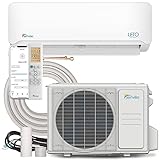
The Senville LETO 12,000 BTU is the best overall pick in this roundup, and the reason is not a single specification — it is the combination of a real ductless brand, a documented product line, a 12,000 BTU heat pump configuration sized for 450–550 square feet, and an ownership experience that does not depend on finding a contractor willing to work with an unfamiliar name. Senville has been selling ductless systems in North America long enough that its model lines, documentation, and support structure are established. For a buyer installing a system they intend to keep for ten years, that matters.
The LETO is Senville’s mainstream single-zone series, and the 12,000 BTU version in white is the configuration most homes want. It is a heat pump, so it cools in summer and heats in the shoulder seasons and beyond, and it uses an inverter compressor for modulating operation. The 12,000 BTU capacity is the right size for a large bedroom, a living room, or an open kitchen-and-dining area in the 450–550 square foot range.
Key specs
- Capacity: 12,000 BTU — typically sized for 450–550 sq ft
- Function: Heat pump — cooling and heating
- Compressor: Inverter
- Voltage: 115V class for the 12,000 BTU configuration
- Configuration: Single-zone ductless, wall-mounted indoor head in white
- Price tier: Premium
Strengths
The single biggest advantage is brand depth. A ductless system is a long-term installation: it is mounted on your wall, it is wired into your panel, and it will need service at some point. Buying from a brand with an established line of systems, published manuals, and a track record in the market reduces the odds that you end up with a unit nobody wants to service in year six. That is not a specification you can put in a table, but it is the most common reason buyers regret a budget ductless purchase.
The LETO’s heat pump capability is the second advantage. In a mild or moderate climate, a ductless heat pump can carry a large share of the room’s annual heating load, and because it moves heat rather than generating it, it is substantially more efficient than resistive heating. In a colder climate, it will still contribute through the shoulder seasons and milder winter days, reducing how often the primary heating system runs.
Third, the 12,000 BTU LETO is a mainstream configuration, which means installation is routine. Any qualified HVAC technician has worked on single-zone systems of this type, and the process — mounting the indoor head, running the line set, evacuating with a vacuum pump, pressure testing, and commissioning — is well understood. That reduces the risk of a poor installation, which is the most common cause of disappointing ductless performance.
Pros
- Established ductless brand with documented model lines and support
- 12,000 BTU heat pump covers cooling and heating for 450–550 sq ft
- Inverter compressor for modulating, steadier operation
- Mainstream single-zone configuration that any qualified technician can install
- Better long-term parts and service outlook than budget-tier alternatives
Cons
- Premium price tier — you pay for the brand and support structure
- Listing does not publish a SEER2 figure in the product name
- No Wi-Fi control in the standard configuration described
- Comparable capacity is available at budget and mid-range prices
How it compares
The closest alternative is the Temprium 12,000 BTU at 22 SEER2. The Temprium publishes a higher efficiency rating and a heat pump function at a premium tier, so on raw specs it looks stronger. The Senville’s counterargument is brand maturity: a documented, long-running product line with an established service footprint is worth something that a SEER2 number does not capture, particularly for a system you plan to keep for a decade. If you want the highest published efficiency, take the Temprium; if you want the lowest risk of a support problem in year five, take the Senville. Against the MEPTY 12,000 BTU at 19 SEER2, the Senville wins on brand depth and the MEPTY wins on published efficiency — again a premium-versus-premium trade rather than a clear hierarchy.
7. Temprium 12,000 BTU, 115V, 22 SEER2 – Best for Maximum Efficiency

The Temprium 12,000 BTU at 22 SEER2 is the efficiency leader in this roundup. It is a 115V air conditioner and heat pump rated at the highest SEER2 figure here, sized for 450–550 square feet, and it is aimed at the buyer who has decided that running cost matters more than purchase price. It suits a large primary bedroom, a home office that runs all day, an addition over a garage, or any room in a hot climate where the cooling season is long and the system will run thousands of hours a year.
The economics of the highest efficiency tier are worth understanding honestly. Moving from 17 to 22 SEER2 at 12,000 BTU reduces rated draw from about 706 watts to about 545 watts — a 23% reduction in electricity per cooling hour. Over a 1,000-hour season at $0.17 per kWh, that is roughly $120 versus $93, a savings of about $27 per year. In a hot climate with a 2,000-hour season, that becomes about $54 per year. Over a fifteen-year life, the difference between the most and least efficient 12,000 BTU units here is somewhere between roughly $400 and $800 depending on climate.
Key specs
- Capacity: 12,000 BTU — typically sized for 450–550 sq ft
- Efficiency: SEER2 22 as listed — the highest in this roundup
- Voltage: 115V, single phase
- Function: Cooling and heating (AC and heat pump)
- Configuration: Single-zone ductless
- Price tier: Premium
Strengths
The 22 SEER2 rating is the headline, and it is a genuinely high number for a 12,000 BTU 115V system. Units in this capacity class commonly land in the SEER2 16–20 range, so 22 represents the top of the mainstream band. Reaching that number requires an efficient compressor, a well-matched coil, and a variable-speed fan and compressor that spend more time at part load — which has a second benefit beyond the rating: part-load operation is quieter and produces smaller temperature swings.
The heat pump function makes the efficiency rating useful year-round. A high-SEER2 system that only cools leaves half the value on the table. Because this unit also heats, the same efficiency advantage applies in the shoulder seasons, when a heat pump is far cheaper to run than resistive heating.
The 115V specification keeps the installation accessible. A 12,000 BTU system at 22 SEER2 draws about 545 watts at rated conditions, well within what a dedicated 115V circuit can supply, so most homes will not need a 230V run.
Pros
- SEER2 22 — the highest efficiency rating in this roundup
- Lowest estimated seasonal running cost among the 12,000 BTU units here
- 115V power avoids a 230V circuit in most installations
- Heat pump covers cooling and heating
- Highest efficiency generally correlates with quieter part-load operation
Cons
- Premium price tier; payback on efficiency alone can take many years in a mild climate
- Listing does not publish Wi-Fi control, noise, or operating-range details
- Same capacity is available at budget prices with lower efficiency
- Premium efficiency delivers no benefit if the room is rarely occupied
How it compares
The nearest alternative is the GarveeHome 12,000 BTU at 22 SEER2 with Wi-Fi, which matches the efficiency rating at a budget price tier and adds connected control. On paper that is a stronger combination, and it is the first thing a careful buyer should check. The Temprium’s advantages are premium-tier build expectations and a brand position in the upper part of the market. Against the Senville LETO 12,000 BTU, the Temprium wins clearly on published efficiency, while the Senville wins on brand maturity and service footprint. Buy the Temprium for the lowest running cost; buy the Senville for the lowest ownership risk.
8. ROVSUN 12,000 BTU WiFi Enabled, 20 SEER2, 115V – Best for Smart Control on a Mid-Range Budget

The ROVSUN 12,000 BTU is the unit for the buyer who wants app control without paying a premium. It is a mid-range, 115V, 20 SEER2 inverter mini split air conditioner and heater with Wi-Fi enabled, sized for 450–550 square feet. It suits a bedroom, a home office, or a living space where you want to adjust the temperature from your phone, set a schedule, or turn the system on before you get home — and you want to do that without moving into the premium price tier.
Wi-Fi control on a mini split is more useful than it sounds. A ductless system is typically mounted high on a wall, and the remote is the only interface. If the remote is on the other side of the room or has been misplaced, you cannot adjust anything. App control solves that, and it adds scheduling and, on many systems, integration with broader smart-home platforms. For a rental property or a vacation home, remote control means you can adjust the system without being on site.
Key specs
- Capacity: 12,000 BTU — typically sized for 450–550 sq ft
- Efficiency: SEER2 20 as listed
- Voltage: 115V, single phase
- Function: Cooling and heating (AC and heater)
- Compressor: Inverter, as stated in the listing
- Control: Wi-Fi enabled
- Price tier: Mid-range
At 20 SEER2, the ROVSUN sits at the point where efficiency gains start flattening out. Rated draw is roughly 600 watts, and a 1,000-hour cooling season uses about 600 kWh — roughly $102 at $0.17 per kWh. That is within about $9 of the most efficient 22 SEER2 units here, so you are giving up very little running cost in exchange for a mid-range price and built-in connectivity.
Strengths
The combination of 20 SEER2 and Wi-Fi at a mid-range price is the ROVSUN’s core value proposition. Many brands charge a premium for connectivity, and many budget units skip it entirely. Getting both efficiency and app control at the mid-tier is the reason to shortlist this unit.
The inverter compressor and heat pump function round out the package. Inverter operation means the system modulates rather than cycling, which produces steadier temperatures and better humidity control. The heat pump means the unit is useful in both seasons, and in a mild climate it can handle a meaningful share of the room’s heating load. Add 115V power, and you have a system that most homes can accommodate without electrical upgrades.
Pros
- Wi-Fi enabled control at a mid-range price tier
- SEER2 20 delivers near-top running cost performance
- 115V power simplifies installation
- Inverter compressor for steady, quiet part-load operation
- Heat pump function covers heating as well as cooling
Cons
- Listing does not publish noise levels or operating temperature range
- Mid-range pricing against budget units with the same capacity
- Smart-home platform compatibility not specified in the listing
- Brand support network is smaller than established ductless specialists
How it compares
The closest alternative is the GrowthWing 12,000 BTU at 20 SEER2 with Wi-Fi, which matches on capacity, efficiency, voltage, and connectivity. There is no meaningful spec difference between them on paper, so the decision comes down to price and whichever brand you can get support for locally. Against the COSTWAY 12,000 BTU at 20 SEER2, the ROVSUN adds Wi-Fi control for a comparable efficiency rating — if app control matters to you, the ROVSUN is the better fit; if not, the COSTWAY is an equivalent cooling system.
9. GarveeHome 12,000 BTU, 22 SEER2, 115V, WiFi – Best for High Efficiency at a Budget Price

The GarveeHome 12,000 BTU is the most interesting unit in this roundup on paper, because it combines the highest efficiency rating here — 22 SEER2 — with Wi-Fi control and a budget price tier. It is a 115V mini split air conditioner with heat pump function sized for 450–550 square feet. If those three attributes hold at the price you find it, it is the best value in this group by a wide margin, and it should be the first unit a value-focused buyer checks.
The caveat is worth stating plainly: a budget-tier brand offering a premium-tier specification is exactly the situation where you should read the listing carefully. Confirm the SEER2 rating, the voltage, the included line set length, and the warranty terms before buying. The specifications as listed are excellent; the question is whether the rest of the ownership package — documentation, parts availability, and support — matches.
Key specs
- Capacity: 12,000 BTU — typically sized for 450–550 sq ft
- Efficiency: SEER2 22 as listed — tied for the highest in this roundup
- Voltage: 115V, single phase
- Function: Cooling and heating (AC and heat pump)
- Control: Wi-Fi enabled
- Configuration: Single-zone ductless
- Price tier: Budget
The efficiency math is the same as for any 22 SEER2 12,000 BTU unit: roughly 545 watts at rated conditions, about 545 kWh over a 1,000-hour cooling season, and roughly $93 at $0.17 per kWh. That is about $27 per year cheaper to run than a 17 SEER2 unit at the same capacity, and it comes at a budget purchase price rather than a premium one.
Strengths
The headline strength is that you get the top efficiency tier without the top price tier. In a hot climate where the cooling season runs 2,000 hours or more, that combination compounds: the annual running cost advantage over a 17 SEER2 unit reaches roughly $54, and the system pays back its own price difference quickly if there is one at all.
Wi-Fi control adds practical value. Being able to schedule the system, adjust it remotely, and check whether it is running is genuinely useful for a bedroom, a rental, or a second home. And the heat pump function means the high efficiency rating applies in both directions of the year, not just cooling.
The 115V specification keeps installation accessible, and 12,000 BTU is the most broadly applicable capacity in the ductless market. On the spec sheet, this unit has no obvious weakness.
Pros
- SEER2 22 — tied for the highest efficiency rating in this roundup
- Budget price tier despite the premium-tier efficiency rating
- Wi-Fi enabled control included
- 115V power avoids a 230V circuit
- Heat pump function covers cooling and heating
Cons
- Budget-tier brand; documentation and parts support may be thinner
- Warranty terms and included accessories should be verified before purchase
- No published noise or operating-range figures in the listing
- Very high efficiency at a very low price warrants careful reading of the listing
How it compares
The direct comparison is the Temprium 12,000 BTU at 22 SEER2. They match on capacity and efficiency; the Temprium sits at a premium tier and the GarveeHome at a budget tier. On pure specifications the GarveeHome is the better value, and the Temprium’s case rests on premium build and brand positioning. Against the Tehanld 12,000 BTU at 17 SEER2, the GarveeHome is five efficiency steps higher at the same nominal price tier — which is exactly why the GarveeHome deserves a careful look and why the Tehanld only makes sense if it is substantially cheaper.
10. MEPTY 12,000 BTU, 19 SEER2 Heat Pump – Best for Premium Heat Pump Comfort

The MEPTY 12,000 BTU is a premium-tier, 19 SEER2 heat pump system for 450–550 square foot rooms. It sits in an unusual spot: a premium price with a mid-band efficiency rating. That combination makes sense only if the value is elsewhere — build quality, documentation, warranty coverage, or heat pump performance — and it makes the MEPTY the unit to consider when you want a heat pump that is built and supported like a long-term installation rather than a seasonal appliance.
For buyers in a climate with a real heating season, heat pump quality matters more than the SEER2 number. Cooling efficiency is rated under standard conditions, but heating performance depends on how much capacity the system retains as outdoor temperatures drop. A system that holds capacity at low outdoor temperatures will heat the room through more of the winter; a system that loses capacity quickly will fall back to the primary heating system sooner. The MEPTY’s positioning as a heat pump system rather than an air conditioner with a heating mode is the relevant distinction.
Key specs
- Capacity: 12,000 BTU — typically sized for 450–550 sq ft
- Efficiency: SEER2 19 as listed
- Function: Heat pump — cooling and heating
- Voltage: 115V class for this capacity
- Configuration: Single-zone ductless
- Price tier: Premium
At 19 SEER2, the MEPTY draws roughly 632 watts at rated conditions and uses about 632 kWh over a 1,000-hour cooling season — roughly $107 at $0.17 per kWh. That is about $13 more per season than a 22 SEER2 unit and about $13 less than a 17 SEER2 unit. So the efficiency is solidly in the middle of the band and not the reason to choose this unit.
Strengths
The reason to buy a premium heat pump is durability and support. Premium ductless systems typically come with better documentation, longer warranty coverage, and a service network that is more likely to have parts. For a system mounted permanently on your wall and wired into your panel, that is worth considering. A failed compressor in year four on a budget unit with no parts channel is an expensive problem; on a supported unit it is a warranty claim.
Heat pump performance is the second reason. In a climate with a real winter, a system designed as a heat pump first will generally retain more heating capacity as outdoor temperatures fall than an air conditioner with a reversing valve added on. That means more of the heating season is covered by the efficient heat pump rather than by resistive backup or a separate system.
The 12,000 BTU capacity is the most useful size in the market,





