
Our Top Picks
 LOTUS & WINDOWARE 2.5-inch Cordless Faux Wood Blind23"W x 24"H25.76 x 22.5 x 3.35 inches4.6 PoundsCheck on Amazon
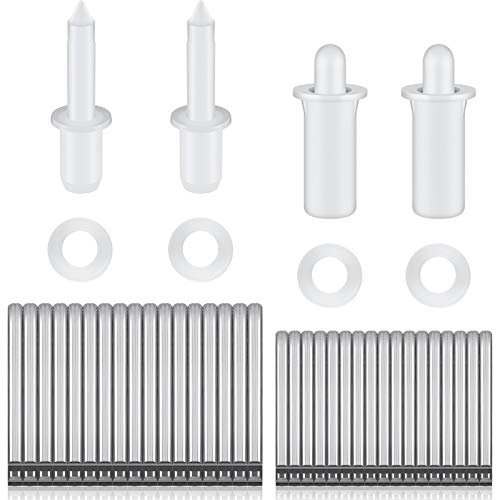 Jetec 85 Pieces Plantation Shutter Repair Staples PinsMixed Sizes5.91 x 4.13 x 0.51 inchesCheck on Amazon
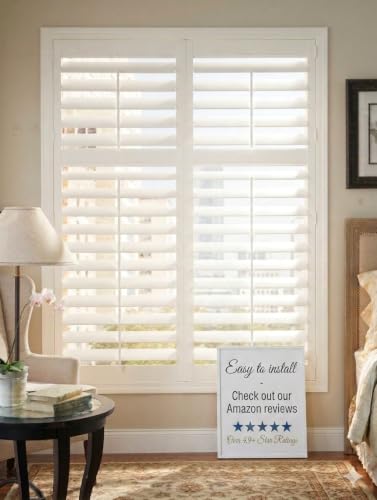 SUNCRAFT SHUTTERS-Plantation Shutters-Interior-Window COVERINGS-Custom Made in 10 Days-20"W x 31"HCheck on Amazon


The best plantation shutters for most rooms in 2026 are custom-made panels matched to the opening, and the best overall pick for dry living spaces is the Suncraft Shutters custom-made plantation shutter with the hidden rear tilt — it delivers the clean, rod-free look that makes shutters feel built into a house rather than bolted onto it, and it suits living rooms, dining rooms, home offices and master bedrooms where humidity stays moderate. If the room is a bathroom, kitchen, laundry or sunroom, step down to a faux-wood or composite custom shutter such as the KIFFUN faux wood plantation shutters, because moisture resistance matters more there than the crisp finish of real wood. Renters, and anyone who needs coverage on a single small window this week, are better served by a cordless 2.5-inch faux-wood blind in a plantation style. And if your existing shutters simply have loose louvers, a Jetec or Maitys repair kit is the cheapest fix in this guide. The three material families — solid wood, composite, and vinyl/faux wood — differ mainly in how they handle humidity, how much they weigh, and how they age.
Top 3 Picks
Best overall: Suncraft Shutters custom-made plantation shutters with no front tilt rod. A made-to-measure wood-class shutter with the tilt mechanism hidden behind the louvers, so each panel reads as a clean grid instead of a rod down the middle. It is the pick for dry rooms where the shutter is a permanent architectural feature and you are willing to pay premium-tier money for the look.
Best budget: Jetec 85-piece plantation shutter repair staples and pins. Not a shutter at all — a hardware kit. It is the budget answer for anyone whose shutters work fine except for a handful of louvers that flop, rattle or refuse to stay tilted, and it costs a fraction of a single replacement panel.
Best premium: KIFFUN wood plantation shutters with a front tilt rod. Solid wood, custom made, traditional front rod. This is the choice for a formal living room, library or dining room where you want the classic shutter silhouette and the paint finish that only real wood takes.
Quick Comparison
| Product | Best for | Key specs | Price tier |
|---|---|---|---|
| Suncraft Shutters custom-made, no front tilt rod | Best overall for dry rooms that need clean sight lines | Custom made to your opening; hidden rear tilt (no front rod); DIY bracket install; wood-class material | Premium |
| LOTUS & WINDOWARE 2.5 in. cordless faux wood blind, plantation style | Renters and fast coverage on a small window | 2.5 in. slats; 23 in. wide x 24 in. long; cordless lift; smooth bright white faux wood | Mid-range |
| Jetec 85-piece plantation shutter repair staples and pins | Restoring loose louvers on shutters you already own | 85 pieces; mixed staple and pin sizes; white | Budget |
| KIFFUN faux wood custom plantation shutters | Humid rooms: bathrooms, kitchens, laundry | Custom made; faux wood; white; interior window mount | Mid-range |
| Suncraft Shutters custom made in 10 days | Buyers who need a custom order fast | Custom made; advertised 10-day build; DIY install; domestic manufacture per the listing | Premium |
| KIFFUN wood plantation shutters with front tilt rod | Formal rooms and a traditional rod look | Solid wood; front tilt rod; white; custom interior fit | Premium |
| Maitys 40-piece spring-loaded repair pins | Replacing broken louver pins in mixed stile sizes | 40 pieces; spring-loaded; long and short lengths; white | Budget |
| KIFFUN cafe plantation shutters with front tilt rod | Half-height privacy on street-facing windows | Cafe height (lower portion of the window); front tilt rod; interior | Mid-range |
| Jetec 40-piece louver staples, 0.6 x 0.19 in. | Stocking repair hardware for a whole house of shutters | 40 pieces; 0.6 x 0.19 in.; louver staples; white | Budget |
Tiers reflect relative market position, not exact figures — listing prices move daily and custom shutters are quoted per window anyway.
How We Chose
This roundup was assembled from published product specifications, manufacturer measuring and installation guidance, and long-standing category standards for interior window coverings — not from owning or physically trying the products. The first filter was category fit: a genuine plantation shutter is a rigid, hinged or framed panel with louvers that tilt, so custom shutter panels, cafe-height panels, and plantation-style blinds were kept separate rather than lumped together, and repair hardware was included only because louver failure is the single most common ownership problem and the kits solve it for far less than a new panel.
The second filter was material and moisture class, since that is what decides which room a shutter belongs in. Wood-class products were grouped for dry rooms, faux wood and composite products for baths, kitchens and laundries, and everything was judged on the same four axes: moisture resistance, light control, maintenance burden, and window fit — including how the product handles depth, trim clearance, and unusually wide or tall openings.
The third filter was upgrade path. A cordless plantation-style blind is a legitimate entry point for a renter, and a repair kit is a legitimate entry point for an owner, but neither pretends to be a permanent fixture. Products were placed in tiers so a reader can see exactly what they give up at each step, and the comparison notes name the nearest alternative in this list so the trade-off is explicit.
1. Suncraft Shutters Custom-Made No-Front-Tilt-Rod Shutters – Best for Clean-Line Custom Fit
As an Amazon Associate we earn from qualifying purchases at no extra cost to you.
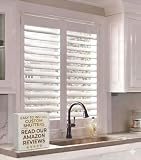
This is the shutter to buy when the shutter itself is part of the design. The defining feature is the absence of a front tilt rod: the mechanism that tilts the louvers lives behind the panel, so the front face of each shutter is nothing but a clean grid of louvers inside a frame. It is a made-to-measure interior shutter, sold as a custom window covering, and the listing positions installation as a do-it-yourself job with the mounting hardware approach rather than a contractor visit. It suits anyone who has looked at traditional shutters and been bothered by the vertical rod cutting each panel in half.
Key specs at a glance
- Type: custom-made interior plantation shutter panel system
- Tilt mechanism: hidden rear tilt — no front tilt rod
- Fit: built to your own opening measurements; inside or outside mount depending on window depth
- Material class: wood-class at the premium tier (the listing headline does not name the species)
- Installation: DIY, frame-and-bracket method
- Price tier: premium
Why the hidden rod matters. A front tilt rod is the traditional way to link louvers, and it works. It also creates three practical annoyances: it collects dust, it is the part most likely to be bent or snapped by a child or a moving box, and it visually chops a wide window into narrow vertical strips. Moving the linkage behind the louvers removes all three problems at once. The trade-off is that rear-tilt and gear-tilt mechanisms are more complex to manufacture, which is part of why this sits in the premium tier rather than the mid-range one.
Custom fit is the other half of the value. Because the panels are made to your measurements, you get edge-to-edge coverage with no side gaps, no stacked slats in the middle of a wide window, and the ability to split a wide opening into two or three panels with a divider rail where you want the break. That is the difference between a shutter that looks installed and a stock-size product that looks adapted. On a 60-inch-wide window, for example, two 30-inch panels read as a deliberate pair, while three 20-inch panels read as a set of tall narrow doors — same window, completely different result.
Ownership realities. Wood-class shutters are the most forgiving to look at and the least forgiving to neglect. Dust the louvers with a dry microfiber mitt or a soft brush attachment roughly once a month; a damp cloth is fine on painted wood but standing moisture is not. Keep indoor humidity in the moderate band — roughly 30 to 50 percent relative humidity — and wood stays dimensionally stable. Let a bathroom run at 70 percent for months and you will eventually see the paint film at the louver edges soften and the panels cup. That is not a defect in this product; it is what wood does. If your house runs humid, choose the faux-wood custom option below instead and accept a slightly less refined finish.
Installation is genuinely DIY-able, with caveats. The job is mostly measuring, leveling and screwing mounting frames into the window jamb or the wall, then hanging the panels. Two people make it much easier on anything wider than about 24 inches, because a tall wood panel is awkward and you do not want to drop one. Budget an hour per window for a straightforward inside mount, more if the jambs are out of square, and check that the window has enough depth for the panel plus its frame before you order — a shallow jamb forces an outside mount, which changes the look entirely.
Pros
- Clean, uninterrupted louver grid with no front rod to snag, bend or dust
- Made to your exact opening, which eliminates the light gaps that ruin the blackout effect
- Wood-class finish takes paint beautifully and can be repainted down the road
- Permanent fixture — it stays with the house and reads as a selling feature
- DIY installation keeps the total project cost below a full professional install
Cons
- Premium tier; the hidden mechanism pushes it above conventional-rod shutters
- Wood is the wrong material for a shower wall or a steamy laundry room
- Custom lead time applies — you are waiting on a build, not pulling a box off a shelf
- Rear-tilt linkage is harder to service yourself if something does bind
Compared with the nearest alternative in this list. The direct sibling is the Suncraft custom-made-in-10-days shutter. Both are premium, both are custom built, both are positioned as DIY installs, and both come from the same manufacturer — the difference is what each one optimizes for. This listing optimizes for appearance and the hidden tilt, while the 10-day listing optimizes for turnaround speed. If your deciding factor is “the rod bothers me,” buy this one. If your deciding factor is “the contractor is coming in two weeks and I need windows covered,” buy the 10-day version and accept the conventional look. Against the KIFFUN wood shutters with a front tilt rod, the choice is almost purely aesthetic: both are premium wood-class, but KIFFUN gives you the traditional rod silhouette while Suncraft gives you the rod-free one.
2. LOTUS & WINDOWARE 2.5-Inch Cordless Faux Wood Blind – Best for Renters and Fast Coverage

This is a plantation-style blind, not a plantation shutter, and that distinction is the whole point of the entry. It is a 23-inch-wide by 24-inch-long cordless faux-wood blind with 2.5-inch slats in a smooth bright white finish. It gives you the horizontal-slat look and the tilt-and-lift function of a shutter without a custom order, without drilling a frame into the jamb, and without spending premium-tier money on a window you may not own for long. It suits renters, first apartments, dorm rooms, laundry rooms, small bathroom windows, and anyone covering a single awkward opening while they save for a permanent solution.
Key specs at a glance
- Type: cordless horizontal blind in plantation style
- Slat width: 2.5 inches
- Size: 23 in. wide x 24 in. long
- Lift system: cordless — raise and lower by hand
- Material: faux wood (PVC-class), smooth bright white
- Price tier: mid-range
Where 2.5-inch slats land. Slat width is the single biggest visual and functional decision in this category, and 2.5 inches is the middle of the road. Narrower slats — 1-inch and 1.5-inch — give a busier, more traditional look with more slats per window and more edges to dust. Wider slats — 3-inch and 4.5-inch — give a cleaner, more architectural look with fewer, sturdier slats and better overlap when closed. At 2.5 inches you get a moderate slat count, decent light control when closed, and a profile that does not overwhelm a small 23-inch window the way a 4.5-inch slat would.
Faux wood in a small window is a smart pairing. PVC-class material does not care about steam, splashes or humidity swings, so a bathroom or kitchen window is exactly where it belongs. It also wipes clean with a damp cloth and mild soap — no dry-dusting ritual, no fear of water rings. The traditional weakness of faux wood is weight and stiffness: a wide panel can bow over time, and wide faux-wood blinds are noticeably heavier to raise. At 23 inches wide you are nowhere near that limit, so the material’s main drawback simply does not apply here.
Cordless is a real safety and convenience feature. There is no dangling cord loop, which matters in a house with small children or pets, and there is nothing to tangle or fray. The trade-off is that cordless lift mechanisms rely on a spring or friction system, so very tall or very heavy blinds can feel stiff to operate. At 24 inches long this one is light and easy.
Maintenance and lifespan. Expect to dust or wipe the slats every few weeks in a kitchen, where cooking grease settles on horizontal surfaces. Expect the lift mechanism, not the slats, to be the first thing to wear — typically after several years of daily use. That is the honest trade-off against a shutter: a blind is a wear item with a service life measured in years, while a shutter is a fixture with a service life measured in decades. If you plan to stay in the house, the math eventually favors the shutter; if you plan to move, it favors the blind.
Pros
- Immediate availability — no custom measuring, no build lead time
- Cordless operation is safer around kids and pets and never tangles
- Faux wood handles bathroom and kitchen humidity without swelling or staining
- 2.5-inch slats suit a small window without looking heavy
- Renter-friendly: it removes and travels with you
Cons
- It is a blind, so it hangs in the opening rather than sitting flush in the jamb
- Slats can be bent by a careless hand or a pet, and a bent slat is visible
- Light leaks around the edges are larger than with a fitted shutter
- Fixed size — this is a stock dimension, not a made-to-measure product
Compared with the nearest alternative in this list. The natural upgrade from here is the KIFFUN faux wood custom plantation shutter. You keep the same moisture resistance and the same white finish, but you trade the hang-in-the-opening blind for a made-to-measure panel that sits inside the jamb, blocks far more edge light, and lasts decades instead of years. The trade is money and waiting. A reader who rents, or who is covering a single small window while renovating, should take this blind; a reader who owns the house and is doing the room properly should skip straight to the custom faux-wood shutter.
3. Jetec 85-Piece Plantation Shutter Repair Staples and Pins – Best for Restoring Loose Louvers

Shutters rarely fail as a whole. What fails is one small piece of hardware — a louver pin or a staple — and then a single louver flops out of alignment while the other twenty on the panel are perfectly fine. This kit exists for exactly that moment. It is an 85-piece assortment of plantation shutter repair staples and pins in mixed sizes, and it is the most economical way in this guide to make a shutter that looks broken work like new again. It suits homeowners with existing shutters, landlords maintaining units between tenants, and anyone who has been quoted a service call for a five-minute fix.
Key specs at a glance
- Type: plantation shutter repair hardware assortment
- Piece count: 85 pieces
- Contents: staples and pins in mixed sizes
- Finish: white
- Compatible with: louver-to-tilt-rod and louver-to-stile connections on common shutter constructions
- Price tier: budget
What actually wears out first. In a plantation shutter, each louver is held in the frame at both ends, and it is connected to the tilt mechanism so that moving the rod tilts every louver together. Two small components do that work: the pin or pivot at each end of the louver, and the staple or clip that links the louver to the tilt bar. Heat cycling from sun through glass, repeated tilting, and cleaning pressure all work on those tiny parts. The staple loosens first and the louver starts to lag behind its neighbors when you tilt; later the pin can snap and the louver drops out of the frame entirely. Because the parts are tiny and white, they are also easy to lose during a move or a repaint.
Why a mixed-size kit is the right purchase. Shutter stiles come in different thicknesses and louver widths differ by manufacturer and slat size, so the pin length that fits one panel will not fit another. A mixed assortment means you can repair the panel in front of you without measuring first and ordering a single size. With 85 pieces you are effectively buying a lifetime supply for a typical house — most homes will never need more than a handful.
How the repair goes. Pop the loose louver out of the frame, note how the original pin or staple was oriented, remove any broken fragment, and seat the replacement. A staple typically presses or taps into the louver edge and hooks the tilt bar; a pin seats into the louver end and drops into the stile hole. Reassemble, tilt the rod through its full travel to confirm the louver moves in step with the others, and you are done. Allow five to ten minutes per louver once you have the panel off the window, and work on a table with a towel down so dropped pins do not vanish into carpet.
The economics. A multi-piece repair kit generally costs less than one replacement louver, and a replacement louver costs far less than a replacement panel, which in turn costs a fraction of a whole new window’s worth of shutters. A single professional service visit, by contrast, typically carries a minimum charge that dwarfs the hardware itself. That means the kit pays for itself the first time you use it, and everything after that is pure savings. Keep the leftovers in a labeled bag in the junk drawer; you will want them eventually.
Pros
- 85 pieces in mixed sizes covers most common shutter constructions
- White finish blends with the white louvers and stiles used on most interior shutters
- Repairs take minutes and require no special tools beyond a small screwdriver
- Dramatically cheaper than a service call or a replacement panel
- Useful to have on hand for a rental portfolio, not just one house
Cons
- Hardware only — it cannot fix a cracked stile, a warped panel or a broken tilt mechanism
- Mixed sizes mean some pieces in the kit will not fit your particular shutter
- No instructions are implied by the listing, so you need to observe the original part before removing it
- Small parts are easy to lose, and there is no organizer tray in the description
Compared with the nearest alternative in this list. The Maitys 40-piece spring-loaded pin set is the closest competitor, and the difference is specialization versus breadth. Jetec gives you 85 pieces spanning both staples and pins, which is the better buy if you do not yet know what has failed or if you maintain more than one style of shutter. Maitys gives you 40 pins specifically, in long and short lengths, which is the better buy if you have already diagnosed the problem as a broken pivot pin and want a deeper stock of that one part. If you are unsure, start with Jetec; if you are sure, Maitys is more targeted. The Jetec 40-piece louver staple set is the third option and the most focused of all — staples only, in one size — which is ideal only if staples are the specific failure you keep seeing.
4. KIFFUN Faux Wood Custom Plantation Shutters – Best for Humid Rooms on a Mid-Range Budget

This is the practical answer for the rooms where wood goes wrong. It is a custom-made interior plantation shutter in white faux wood, built to your window measurements, and it targets the bathrooms, kitchens, laundry rooms, mudrooms and sunrooms that would wreck a solid wood panel over a few seasons. It suits homeowners who want the built-in look of a real shutter — panels sitting inside the jamb, no edge light, no dangling cords — but who are not willing to gamble premium money on a material that dislikes steam. It also suits anyone doing a whole house on a budget who wants consistent white shutters from the front bedroom to the back bath.
Key specs at a glance
- Type: custom-made interior plantation shutter
- Material: faux wood (PVC/composite class)
- Color: white
- Fit: made to your opening measurements; interior window mount
- Moisture behavior: does not swell, warp or stain from humidity the way wood does
- Price tier: mid-range
Why faux wood wins in wet rooms. Solid wood moves with moisture. It expands in summer humidity and contracts in winter heating season, and every one of those cycles works on the paint film, the joints and the louver edges. In a bathroom that runs steamy for twenty minutes twice a day, that cycle never really stops. A PVC or composite shutter does not absorb water, so it does not move, so the paint does not crack at the edges and the panel does not cup. That is the entire argument, and it is a strong one: a mid-range faux-wood shutter in a bathroom will very likely outlast a premium wood shutter in the same room.
What you give up. Faux wood is heavier than wood of the same dimensions, which means taller panels can feel stiff when you tilt them and can put more load on the hinges. It is also slightly less crisp in finish — the louver edges are a little softer, and the surface reflects light differently than painted wood. On a white shutter, viewed from across a room, most people cannot tell the difference. Up close, in raking afternoon light, some can. The other consideration is color stability: lighter PVC products exposed to strong direct sun for years can shift slightly, so a south-facing window with no exterior shading is worth thinking about before you commit to a long run of them.
Custom fit still applies. Because this is made to measure, you get the same benefits as any custom shutter: panels that fill the opening, your choice of where the divider rail sits on a tall window, and a clean split on wide windows rather than a stack of stock sizes. On a 36-inch-wide bathroom window, one panel is usually enough. On a 48-inch window, two panels read better and put less stress on the frame. On anything over about 30 inches wide, splitting into two panels is generally the smarter call regardless of material, and it matters more with the heavier faux-wood stock.
Maintenance is the easy part. Wipe the louvers with a damp cloth and a drop of mild dish soap when they look dull, and dry them. No wax, no oil, no special cleaner. Because the material tolerates water, you can clean a bathroom shutter without the careful dry-dusting routine that wood demands. Expect to wipe down kitchen shutters every month or two to deal with airborne grease, and bathroom shutters every few months.
Pros
- Custom made to your opening for a genuine built-in look
- Immune to the humidity cycling that damages wood in baths and kitchens
- Wipes clean with soap and water; no special products required
- Mid-range tier makes a whole-house run far more affordable than wood throughout
- White finish matches the most common trim and door color
Cons
- Heavier than wood, so tall panels feel stiffer to operate
- Finish quality is slightly less refined than painted hardwood up close
- Lighter PVC tones can shift over years of intense direct sun
- Custom lead time applies, and you must measure accurately yourself
Compared with the nearest alternative in this list. The obvious head-to-head is with the KIFFUN wood shutters with a front tilt rod, which sits one tier up. They are the same brand, the same custom approach, the same white color — the difference is material and rod design. Choose faux wood for a bathroom, kitchen or sunroom, and choose the wood version for a dry formal room where the surface quality is the point. Against the Suncraft no-front-tilt-rod shutter, the trade is material versus mechanism: Suncraft hides the tilt rod for a cleaner face, KIFFUN’s faux wood gives you moisture immunity at a lower tier. If your window is in a wet room and you also hate the look of a front rod, that is the one combination this list cannot fully satisfy — prioritize moisture resistance, because a cupped wood panel is a permanent problem while a front rod is only a preference.
5. Suncraft Shutters Custom Made in 10 Days – Best for Fast Turnaround Custom Orders
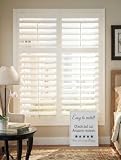
Custom shutters normally mean waiting. This listing makes speed the headline: a made-to-measure interior plantation shutter with an advertised 10-day build, positioned as a do-it-yourself installation and described by the listing as domestically manufactured. It suits anyone on a deadline — a renovation with a fixed completion date, a house going on the market, a room being photographed, or a homeowner who has already ordered flooring and paint and does not want to hold up the schedule for window coverings. It is a premium-tier product, so it is not the budget route, but it removes the one thing that most often derails a custom shutter project.
Key specs at a glance
- Type: custom-made interior plantation shutter
- Build time: advertised at 10 days
- Fit: made to your opening measurements
- Installation: DIY
- Origin: domestic manufacture per the listing
- Price tier: premium
Why lead time is a real specification. Most buyers compare shutters on material, slat width and price, and treat lead time as an afterthought. Then the shutters arrive three weeks after the painters leave and the room sits unfinished. A 10-day build compresses that gap enough to slot into a normal renovation schedule, and it also matters in less obvious cases: replacing a failed window covering before a rental turnover, matching a delivery window for a move, or covering a window before a nursery is occupied. Treat build time the way you treat slat width — as a criterion you decide on deliberately, not one you discover later.
Domestic manufacturing and the repair angle. Buying from a domestic maker matters less for patriotism than for parts. Louver pins, staples and tilt hardware are not universal, and when a shutter is made by a company that still exists and still produces the same line, replacing a single louver years later is straightforward. That is a genuine long-term ownership advantage over a custom order from a maker you cannot identify later. If you are buying shutters for a house you intend to keep, the ability to get a matching replacement panel in five years is worth real money.
DIY installation, realistically. The installation is a frame-and-bracket job: mount the frame square in the jamb, hang the panels, check the tilt travel, and touch up any screw holes. The hard part is not the drilling; it is the measuring that happened weeks earlier, because a frame that is a quarter inch out of square will show as a visible gap at one corner. Check the opening at three points across the top, three down the side, and three for depth, and order to the tightest of each. Also confirm what is in the window — a crank handle, a deep sill, a curtain rod bracket — because any of those can force an outside mount.
What to expect over the years. Wood-class shutters in a dry room are among the lowest-maintenance window coverings you can own. Dust monthly, keep humidity moderate, and repaint when the finish eventually dulls — typically many years in. The first things to need attention will be small: a louver pin that snaps, a staple that works loose, a hinge screw that needs a quarter turn. Those are all ten-minute fixes, and they are the reason a repair hardware kit is worth keeping in the house alongside a premium shutter order.
Pros
- Advertised 10-day build fits inside a normal renovation schedule
- Custom made to your opening, so no stock-size compromises
- Domestic manufacture improves the odds of getting matching replacement parts later
- DIY install avoids labor charges on top of a premium product
- Permanent fixture that adds to the room rather than dressing it temporarily
Cons
- Premium tier pricing, even before you account for the fast build
- Wood-class material is still the wrong choice for a steamy bathroom
- 10 days is advertised, not guaranteed, and holidays can stretch it
- You own the measuring risk — an error means a remake, not a return
Compared with the nearest alternative in this list. This is the speed-focused twin of the Suncraft no-front-tilt-rod shutter. Both are premium, both custom, both DIY, both from the same maker; this one prioritizes turnaround, the other prioritizes the hidden tilt mechanism and clean face. If both matter, ask yourself which mistake you would regret more: waiting three extra weeks, or looking at a front rod for the next fifteen years. For most people, the rod is the longer-lasting regret, which is why the no-front-tilt-rod version takes the overall pick. But if you are mid-renovation with a deadline, the 10-day listing is the one that keeps the project on track, and it is still a better long-term buy than dropping to a stock blind just to save time.
6. KIFFUN Wood Plantation Shutters with Front Tilt Rod – Best Premium Wood Look

This is the traditional shutter done properly. It is a custom-made interior plantation shutter in solid wood, finished white, with a conventional front tilt rod running vertically down each panel. It suits formal living rooms, dining rooms, libraries, home offices and master bedrooms — dry rooms where the shutter is meant to look like it was always part of the architecture and where the owner is willing to pay premium-tier money and do the upkeep that real wood requires. It also suits anyone restoring an older house who wants the profile that matches the original millwork.
Key specs at a glance
- Type: custom-made interior plantation shutter
- Material: solid wood
- Tilt control: front tilt rod
- Color: white
- Fit: made to your opening measurements
- Price tier: premium
The case for the front rod. It has become fashionable to treat the front tilt rod as something to hide, but there are real reasons to keep it. The rod lets you tilt every louver in a panel with one grip, which is faster than reaching behind the louvers. It is a visible mechanical link, so if a louver stops tracking with the others you can see which one and why. And it is the silhouette most people picture when they hear “plantation shutter,” which matters in a period house or a room designed around traditional trim. The trade-offs are dusting around it and the risk of bending it, both of which are manageable with a little care.
What solid wood gives you. Painted hardwood has the crispest louver edges in the category. Light rakes across those edges and produces a sharp, clean shadow line that PVC and composite cannot quite replicate, and the paint film on properly dried and sealed wood resists yellowing far better than most plastics. Wood is also repairable in a way plastics are not: a scratch can be filled, sanded and repainted, and a dulled panel can be recoated rather than replaced. That repairability is a significant part of why premium wood shutters hold up over decades.
The humidity contract. Buying wood shutters is a deal you make with your house. Keep indoor relative humidity roughly between 30 and 50 percent year-round and wood behaves. Push it higher in summer without air conditioning, or let a bathroom run steamy, and the panels will move. What you will see first is usually not catastrophic: paint film softening at the louver edges, a slight bow in a wide panel, a hinge that needs adjusting as the frame shifts. Address it early and it stays cosmetic. Ignore it for years in a wet room and the panel can cup permanently. If you cannot control humidity in a space, this is the wrong product for that space — the faux-wood version is the right one.
Maintenance rhythm. Dust the louvers and the rod every two to four weeks with a dry microfiber mitt or a soft brush; work along the louver rather than across it so you do not push dust into the frame. Wipe the frame edges with a barely damp cloth when needed and dry immediately. Avoid spray polishes, which can build a film on painted surfaces and attract more dust. Once a year, run a screwdriver over the hinge screws and give any loose ones a quarter turn — that single habit prevents the sagging panel that makes people think their shutters have failed.
Pros
- Solid wood takes the crispest, most durable paint finish in the category
- Front tilt rod is fast to operate and makes a mis-tracking louver obvious
- Traditional silhouette suits period homes and formal rooms
- Custom made to your opening, with your choice of panel splits
- Repairable and repaintable, so it can be refreshed rather than replaced
Cons
- Premium tier — the most expensive material and configuration here
- Wood is vulnerable to sustained humidity, so wet rooms are off limits
- The front rod must be dusted and is the part most likely to be bent
- Heavier and less forgiving to install than a stock blind
Compared with the nearest alternative in this list. The nearest rival is the Suncraft no-front-tilt-rod shutter, and the decision is almost entirely about the rod and the mechanism behind it. Suncraft hides the linkage for a cleaner face and a slightly easier dusting routine; KIFFUN keeps it visible for faster operation and a traditional look. Both are premium and both are wood-class. If you are matching existing traditional millwork or you like seeing the mechanism, take KIFFUN. If the rod has always bothered you, take Suncraft. The other comparison worth making is against KIFFUN’s own faux-wood custom shutter, one tier down: identical brand, identical custom process, different material. Same rule applies — dry room gets wood, wet room gets faux wood.
7. Maitys 40-Piece Spring-Loaded Repair Pins – Best for Mixed Pin Lengths

When a louver drops out of a shutter frame, the culprit is almost always the pivot pin at one end, and the pin you need is the one that matches your stile thickness. This kit addresses that specific problem with a targeted assortment: 40 spring-loaded plantation shutter repair pins in white, supplied in both long and short lengths. It suits anyone who has already diagnosed a broken pivot — the louver hanging loose, one end out of the frame — and who wants a deeper stock of the exact part rather than a broad assortment. It also suits landlords and property managers who keep a small repair drawer for multiple units.
Key specs at a glance
- Type: plantation shutter louver repair pins
- Piece count: 40 pieces
- Design: spring loaded
- Lengths included: long and short
- Color: white
- Price tier: budget
Why spring-loaded matters. A spring-loaded pin compresses so you can seat it into the louver and then release it into the stile hole, which is what makes a louver installable and removable without dismantling the frame. It also provides the small amount of give that lets the louver pivot smoothly when you tilt the rod. A pin that is too short will not reach the hole and the louver falls out again; a pin that is too long will not compress enough to seat, or will bow the louver. That is precisely why a kit with two lengths is more useful than a kit with forty identical pieces — stile thickness varies between manufacturers and between product lines.
The two-length advantage. Long pins are typically needed where the louver sits deeper in the frame or where the stile is thicker; short pins suit shallower constructions. If you own shutters from more than one maker — common in a house that has been renovated in stages — you will very likely need both. Buying both lengths in one 40-piece set means you do not have to identify the brand and model of your shutter before ordering, which is often impossible years after installation.
How to replace a pin. Take the panel off the window and lay it flat on a padded surface. Identify the failed end of the louver, remove any broken pin fragment — sometimes it stays in the stile hole, sometimes in the louver — and clean the hole so the new pin seats fully. Compress the new spring pin, insert it into the louver end, align the louver with the stile hole, and release. Tilt the rod through its full range to confirm the louver tracks with the others and that no other pin is about to go. Allow five to ten minutes for the first one and less for the rest, and check the neighboring louvers while the panel is down, because pins often fail in pairs after the same heat exposure.
What this kit cannot do. It will not fix a cracked stile, a stripped hinge screw hole, a bent tilt rod, or a louver that has physically warped. It also will not help if the failure is in the staple linking the louver to the tilt bar rather than the pivot — that is a different part, which is why the Jetec 85-piece kit includes both. If you are not sure which part has failed, examine the panel before ordering: a louver that hangs loose at one end is a pin problem, while a louver that stays seated but lags behind its neighbors when you tilt is a linkage problem.
Pros
- Two pin lengths cover stiles from more than one manufacturer or product line
- Spring-loaded design seats without dismantling the shutter frame
- 40 pieces is far more than a typical household will ever need
- White finish disappears against standard white louvers and stiles
- Budget tier — cheaper than a single replacement louver
Cons
- Pins only; no staples for louver-to-tilt-rod failures
- Two lengths still may not match an unusual stile thickness
- Spring pins can be fiddly to seat the first time, especially on a tall panel
- Loose pieces are easy to lose without a small parts organizer
Compared with the nearest alternative in this list. The Jetec 85-piece kit is the direct competitor and the better general-purpose purchase: it covers both staples and pins, so it handles whichever failure you actually have. This Maitys set is the better specialist purchase if you





