
Our Top Picks
 BarberPub 1100W Orbiting Hair Dryer Processor24"(L) x 18.3"(W) x 52.4"-64"(H)12.4 x 20.3 x 26.4 inches16.8 PoundsCheck on Amazon
 Semokia Professional Infrared Hair Color Processor Stand Salon18.5 x 1 x 61.81 inches14.66 PoundsCheck on Amazon


The best professional hair color processor for most salons is the BarberPub 1100W Orbiting Hair Dryer Processor, Smart Panel Black HDP01. Its orbiting head and smart control panel address the two things that decide whether a processor earns its floor space — even heat distribution around a set head, and timing you can repeat across a full book of clients — at a mid-range price that fits a single-chair studio as comfortably as a multi-station floor. If budget is the deciding factor, or you need a unit you can roll from chair to chair, the YUASDUU 1200W Standing Hair Dryer with infrared technology and a rolling base is the value pick. If precision matters more than price — digital timers, dialed-in temperature, consistent results service after service — the ZYUIOTHJK Digital Control Infrared Processor is the premium answer. Everything else in this guide is a variation on those three themes: heat source, timing control, coverage area, mobility, and how much cleaning the unit demands between clients.
Top 3 Picks
Best overall: BarberPub 1100W Orbiting Hair Dryer Processor, Smart Panel Black HDP01. The orbiting head moves heat around the head instead of parking it in one spot, and the smart panel gives you a repeatable timing reference you can hand off to an assistant. It is the most balanced unit here for a salon that processes color and perms several times a day without wanting to think about the equipment.
Best budget: YUASDUU Standing Hair Dryer, 1200W with Infrared Technology and Rolling Base. Infrared heat, 1200W of output, and a wheeled base at the lowest tier in this roundup. It will not give you the fine-grained timing control of a premium digital unit, but for a booth renter or a salon adding a second processing station, it covers the essentials without a capital commitment.
Best premium: ZYUIOTHJK Digital Control Infrared Hair Color Perm Processor with Adjustable Timer and Temperature. Digital control over both timer and temperature is the feature that separates a processor you tolerate from one you rely on. If your service mix leans on bleach, high-lift color, or perms where ten minutes of drift shows up in the result, this is the unit to build the station around.
Quick Comparison
| Product | Best for | Key specs | Price tier |
|---|---|---|---|
| Senyuzhilan Hair Color Processor, 1200W, Black | Home salons, single-chair studios, all-in-one drying | 1200W; freestanding hooded design; salon or home use | Mid-range |
| BarberPub 1100W Orbiting Hair Dryer Processor, Smart Panel Black HDP01 | Most salons — best overall balance of heat, timing, coverage | 1100W; orbiting head; smart control panel; black finish | Mid-range |
| Semokia Professional Infrared Hair Color Processor Stand with LCD | Colorists who want visible timing feedback at the chair | Infrared heat; stand-mounted; LCD readout; perm and styling modes | Mid-range |
| AceFox Stand Hair Dryer, Orbiting Rotating Hair Processor | Perm, roller-set and accelerator work | Orbiting rotating head; freestanding stand; accelerator airflow | Mid-range |
| InSyoForeverEC Multifunctional Freestanding Salon Hair Dryer and Steamer | Steam-assisted color, treatments and conditioning services | Freestanding; built-in steamer function; multifunction salon unit | Premium |
| Xarchy 19Pcs Professional Hair Bleach Kit | Bleach and lightening prep — support kit, not a processor | 19-piece consumable kit; mixing and application tools | Budget |
| ZYUIOTHJK Digital Control Infrared Hair Color Perm Processor | Precision timing and temperature across a heavy service book | Digital control; adjustable timer; adjustable temperature; infrared | Premium |
| SyyBhb Wall Mount Hooded Salon Hair Dryer, Ionic Processor | Space-limited salons that need the floor clear | Wall-mount hooded head; ionic output; adjustable temperature and drying | Premium |
| YUASDUU Standing Hair Dryer, 1200W Infrared with Rolling Base | Entry-level processing, booth renters, second stations | 1200W; infrared technology; standing design; rolling base | Budget |
| Pibbs TL931 Infrared Hair Processor, 3 Head Salon Heat Lamp, 750W | Multi-station coverage in open-plan salons | Three heat heads; 750W; infrared lamp output | Premium |
| LIECARYAM Infrared Hair Color Processor with 5 Heating Lights, 750W | Budget flexibility with an articulated arm | Five heating lights; 750W; flexible arm; wheeled base | Budget |
| Colortrak Gentle Hair Color Remover Wipes, 100 Count Canister | Cleanup and stain control — consumable, not a processor | 100-count canister; gentle formula for skin cleanup | Budget |
How We Chose
This roundup is built from published product specifications and the practical requirements of salon processing work, not from hands-on trials. Every unit was assessed against five criteria that show up in real service use. First, heat source and output: infrared lamp arrays behave differently from forced-air hoods, and wattage determines how quickly a unit recovers between clients. Second, timing control — whether a unit offers a mechanical dial, a digital countdown, or nothing at all — because repeatability is what makes a processor a professional tool rather than a convenience. Third, coverage: how much of the head sits in the heat field at once, which decides whether you are repositioning a client or walking away. Fourth, mobility and mounting: freestanding, wheeled, or wall-mounted, each of which maps to a different floor plan. Fifth, cleaning and ownership load — vents, hoods, arms, cords and consumables that determine the true weekly cost of owning the unit.
We also separated processors from support items. Two entries in this list — a bleach kit and a canister of color remover wipes — are consumables, not machines, and they are included because salons routinely buy them alongside a processor. Category fit and upgrade path were weighted equally: a mid-range unit with a real timer beats a premium unit whose controls you will never use, and a budget unit that covers a second station well is a better purchase than a premium unit that sits idle.
1. Senyuzhilan Hair Color Processor, 1200W – Best for Home Salons and Small Studios
As an Amazon Associate we earn from qualifying purchases at no extra cost to you.
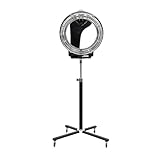
The Senyuzhilan 1200W Hair Color Processor is the unit to consider when your processing work happens in a compact space — a home salon, a converted spare room, a single-chair studio, or a booth where you cannot bolt anything to a wall. It is a freestanding, hooded design rated at 1200W, which puts it in the higher output bracket of this roundup and means it reaches working temperature quickly rather than idling while a client waits. The black finish is a small detail, but in a room where color bowls, foils and towels are already the visual noise, a neutral housing is easier to live with than a bright one.
Key specs
- 1200W heating output — the highest wattage tier in this roundup alongside the YUASDUU unit
- Freestanding hooded design, no wall mounting required
- Marketed for both salon and home use
- Black housing, single-piece floor-standing form factor
The practical strength here is simplicity. There is no installation step, no drilling, no dedicated mounting height to get right, and no permanent change to the room. You unbox it, position it, and process. For a stylist who moves between a home base and a rented chair, or for a salon owner who is not yet sure where the processing station should live, that flexibility has real value — you can test the placement with actual clients before committing to anything permanent.
Where it sits relative to the rest of this list depends on how much timing control you need. The listing describes it as a hair color processor and salon hair dryer rather than as a digitally timed unit, so treat it as a heat source you manage with your own timer rather than a machine that manages the clock for you. In a studio where you are processing one or two clients at a time and staying in the room, that is completely workable. In a busy floor where you are juggling a bleach lift, a toner and a perm simultaneously, you will want the timer feedback that the Semokia or ZYUIOTHJK units provide.
Cleanability is straightforward: a hooded unit collects product mist on the interior surface and around the intake, and that residue hardens. Wiping the hood interior after each color service — before the mist dries — takes about thirty seconds and prevents the slow buildup that eventually forces you to disassemble the unit. This is true of every processor here, but it matters most on units you cannot easily take apart.
Pros
- 1200W output reaches temperature quickly, useful when clients are seated back to back
- Freestanding design needs no installation, drilling or wall fixing
- Suits home salons and small studios where permanent fixtures are impractical
- Neutral black housing fits most salon interiors
- Simple controls mean less to learn and less to break
Cons
- No stated digital timer or temperature readout in the listing — you supply the clock
- Freestanding footprint occupies floor space you may need for a trolley
- Less suited to simultaneous multi-client processing than a multi-head lamp
- Hood interior needs routine wiping to prevent dried product buildup
Compared with the YUASDUU standing dryer — the other floor-standing unit at the budget end — the Senyuzhilan sits a tier higher in price but offers the same 1200W class of output. The difference is the positioning: YUASDUU pairs its output with infrared technology and a rolling base, which makes it the better choice if you need to move the unit between stations. Choose the Senyuzhilan if the processor will stay in one place and you would rather spend the difference on the higher-spec housing and hooded form factor.
2. BarberPub 1100W Orbiting Hair Dryer Processor, Smart Panel Black HDP01 – Best Overall for Most Salons

If you are buying one processor and you want it to handle the widest range of services without a specialist’s price tag, the BarberPub HDP01 is the most defensible choice in this roundup. Two features do the work. The orbiting head moves the heat source around the client’s head rather than holding it in a fixed position, which reduces the hot spot that builds up directly under a static hood and shortens the repositioning you would otherwise do mid-process. The smart control panel gives you a readable, repeatable timing interface — the single most useful feature on any processor, because it lets an assistant take over a processing service without guessing where the clock stands.
Key specs
- 1100W heating output — a step below the 1200W units, comfortably above the 750W lamp-style processors
- Orbiting head design for distributed heat around the head
- Smart control panel for timing and operation
- Black housing, model designation HDP01
The orbiting mechanism matters more than it sounds. In a static hood, the crown and the nape sit at different distances from the heat source, so the client’s experience ranges from comfortable at the front to uncomfortably warm at the back. An orbiting head sweeps the heat field around the head, which evens out the exposure. It does not eliminate the need to check on the client, but it reduces the number of times you interrupt a service to reposition a hood or slide a lamp.
At 1100W, the HDP01 sits in the middle of the output range. That is a deliberate trade: lower wattage draws less current, which matters if your processing station shares a circuit with a blow dryer, and it still heats faster than the 750W lamp-style processors lower in this list. For a salon running color, toner and perm services through the day, 1100W with an orbiting head is a workable baseline. If your book is dominated by bleach and high-lift work where recovery time between clients is tight, the 1200W units will edge it out.
Ownership load is moderate. The orbiting mechanism adds a moving part, which is the component most likely to need attention over a long service life, and the head assembly should be kept free of product residue — dried color and lightener dust in a rotating joint is the classic cause of a stiff or noisy orbit. A weekly wipe-down of the housing and a periodic check that the head rotates freely will keep it running.
Pros
- Orbiting head distributes heat more evenly than a static hood
- Smart control panel supports repeatable timing across a busy book
- 1100W balances heat-up speed against electrical draw
- Works for color, toner, perm and treatment services without reconfiguration
- Mid-range pricing makes it viable as a first serious processor purchase
Cons
- The orbiting mechanism is a moving part and the most likely long-term failure point
- Slightly lower wattage than the 1200W units here
- Panel controls require a brief learning curve for staff who are used to a simple dial
- Residue in the rotating joint can stiffen the head if maintenance slips
Against the AceFox orbiting unit — the other orbiting design in this roundup — the BarberPub wins on control interface. AceFox pairs its orbiting head with accelerator airflow and markets itself toward perm and styling work, which makes it the more specialized tool. The HDP01 keeps the orbiting advantage while adding the smart panel, so it covers more of a general salon’s service mix. If your work is overwhelmingly perm and roller-set, look at the AceFox; for everything else, the BarberPub is the broader instrument.
3. Semokia Professional Infrared Hair Color Processor Stand with LCD – Best for Visible Timing at the Chair

Semokia’s infrared processor is built around a stand and an LCD readout, and that combination is aimed at a specific frustration: not being able to see the timer without walking to the unit or checking your phone with wet hands. An LCD you can read from the chair means you know where a processing service stands at a glance, which is exactly what you need when you are working three clients in sequence and one of them is a bleach lift that cannot drift.
Key specs
- Infrared heat source rather than forced hot air
- Stand-mounted, freestanding configuration
- LCD display for status and timing reference
- Marketed for color processing, perming and styling
Infrared heat is the defining characteristic here, and it behaves differently from a hooded dryer. Infrared warms by radiant transfer, so the heat reaches the hair directly rather than by heating the surrounding air and moving it across the head. In practice, that means less airflow disturbance on a wrapped perm, and a different feel for the client — warmth on the surface rather than a moving current of hot air. It also means the unit does not need a sealed hood to be effective, which is why so many infrared processors in this category are open lamp arrays rather than enclosed dryers.
Because the listing does not state wattage, treat the Semokia as a mid-output infrared stand unit rather than assigning it a number. What the listing does specify is the LCD, the stand format, and the processor’s intended use across color, perm and styling — a generalist profile. For a salon whose processing mix spans all three, that breadth matters more than a single headline spec.
Setup is minimal: a stand-mounted unit needs floor space and a nearby outlet, and the head height should be adjusted so the heat field lands on the hair rather than the client’s face. That adjustment is worth getting right once and marking, because an infrared lamp aimed too low is both uncomfortable and less effective on the mid-lengths and ends where processing often needs the most encouragement.
Pros
- LCD readout makes timing visible from the chair
- Infrared heat does not disturb a wrapped perm the way forced air can
- Stand format requires no wall installation
- Broad service coverage — color, perm and styling in one unit
- Open lamp configuration is easy to inspect and clean
Cons
- No wattage stated in the listing, so output must be judged in person
- Radiant heat requires more careful aiming than a hooded dryer
- Open lamps leave the client’s face and ears more exposed than a hood
- Stand units occupy floor space that a wall-mount would free up
Its nearest competitor is the ZYUIOTHJK digital infrared unit. Both use infrared and both give you visible feedback, but the ZYUIOTHJK adds explicitly adjustable timer and temperature controls — the ability to set a target rather than read a status. If you want to dial in a repeatable recipe for a specific bleach or perm service, the ZYUIOTHJK is the more precise tool. If you mainly want to see where the clock stands without leaving the chair, the Semokia delivers that at a lower tier.
4. AceFox Stand Hair Dryer, Orbiting Rotating Hair Processor – Best for Perm and Roller-Set Work

AceFox’s stand unit is positioned squarely at perm and styling work: an orbiting rotating head, a freestanding stand, and the accelerator function that pushes processing along on a wrapped set. If perms, roller sets and textured styling are a meaningful part of your service mix, this is the unit in this list built most specifically for that job rather than adapted to it.
Key specs
- Orbiting rotating head for distributed heat
- Freestanding stand configuration
- Accelerator function for faster processing on wrapped hair
- Marketed for perm and styling as primary use cases
The accelerator feature is the differentiator. On a perm, the chemistry needs consistent warmth to develop predictably, and a unit that circulates heat around a wrapped head shortens the wait without forcing you to raise the temperature — which is the trade you want, because cranking heat on a fresh perm solution is how you get an uneven result or an unhappy scalp. An orbiting head plus accelerator airflow spreads that warmth around the wrap instead of concentrating it.
Because the head orbits, coverage is better than a fixed lamp on a client with a dense wrap, where the outer rollers can shade the inner ones from a static heat source. The rotating motion sweeps the heat past those shaded areas over the course of a processing cycle. In practical terms, that means fewer mid-service adjustments and a more consistent result across the whole head.
The stand format is a mixed blessing. It is easy to position precisely, easy to move between chairs if the base permits, and requires no installation — but it does occupy floor space in a way a wall-mounted unit does not. In a tight salon, that footprint is the main argument against it. The unit is also a moving-part design: the orbit mechanism and the fan both wear over time, and keeping product residue out of the head assembly is the maintenance task that extends its life.
Pros
- Purpose-built for perm and roller-set processing
- Orbiting head sweeps heat past shaded areas on a dense wrap
- Accelerator function shortens processing without a temperature increase
- No installation required — freestanding stand
- Positioning is adjustable chair by chair
Cons
- No stated wattage or digital timing in the listing
- Narrower fit for bleach and high-lift color than a generalist processor
- Freestanding base takes up floor space
- Moving parts — orbit and fan — are the likely wear points
Set against the BarberPub HDP01, the AceFox is the more specialized machine. Both orbit, so both distribute heat well, but the AceFox leans into accelerator airflow and perm styling while the BarberPub pairs its orbit with a smart control panel for general salon work. If your week is mostly perms and sets, the AceFox’s focus is an advantage. If you need one unit to cover color, toner and perm, the BarberPub is the safer single purchase.
5. InSyoForeverEC Multifunctional Freestanding Salon Hair Dryer and Steamer – Best for Steam-Assisted Services

The InSyoForeverEC unit is the only processor in this roundup that combines a freestanding salon dryer with a steamer function. That combination points at a specific service menu: color services where you want moisture and gentle warmth rather than dry heat, conditioning and treatment services that rely on steam to open the cuticle and drive product in, and any salon that sells add-on treatments as a profit center rather than a freebie.
Key specs
- Freestanding, floor-standing salon configuration
- Built-in steamer function alongside drying
- Multifunctional design marketed for salon use
- Premium tier within this roundup
Steam changes what a processor can do. Dry forced air on a color service accelerates evaporation from the hair, which is fine for a straightforward permanent color but less ideal when you are working with a lightener that you want to keep active and moist. Steam-assisted processing keeps the hair surface damp and warm, which supports the kind of slow, controlled development that a cautious bleach service needs. It also gives you a genuine treatment capability — a steam session with a conditioning mask is a service you can price, and it uses the same machine that handles your color processing.
The freestanding format suits salons with a dedicated treatment corner or a processing area where the unit lives permanently. It is not a device you will move between chairs, and it is not a wall-mount. Treat it as a station: a fixed position with a chair, a trolley and an outlet, where the machine does one job repeatedly and well.
Because the listing does not specify wattage or tank capacity, plan the purchase around the steam function rather than around a number. The ownership question that matters most with a steamer is water quality: mineral-heavy tap water leaves scale in the reservoir and the heating element, and scale is the most common reason a steamer underperforms after a year. Using filtered or distilled water, and emptying the reservoir after each use rather than leaving it full, is the maintenance habit that protects the investment.
Pros
- Steam plus drying in a single freestanding unit
- Supports treatment and conditioning services you can sell
- Gentler on lightener than dry forced air
- No installation required
- Covers two service categories with one capital purchase
Cons
- Premium tier pricing
- Reservoir scale from hard water is the main long-term risk
- Steam adds a maintenance routine — emptying and descaling
- Not a wall-mount and not a mobile unit, so it needs a permanent spot
Its closest alternative in this list is the SyyBhb wall-mount hooded unit. Both are premium, but they solve opposite problems: the InSyoForeverEC is about adding a service capability, while the SyyBhb is about reclaiming floor space. Choose the steamer if your growth plan is treatment-driven; choose the wall-mount if your constraint is square footage.
6. Xarchy 19Pcs Professional Hair Bleach Kit – Best for Bleach and Lightening Prep

The Xarchy 19-piece bleach kit is not a processor, and it would be misleading to present it as one. It is a consumable support kit — the mixing, application and protection tools that sit on the trolley next to your processor — and it earns a place in this roundup because salons buy it in the same purchasing decision as the machine. If you are setting up a lightening station from scratch, a bundled 19-piece kit is usually cheaper than assembling the same items individually.
Key specs
- 19-piece kit, per the listing
- Professional hair bleach and coloring support tools
- Budget tier — a consumable purchase, not capital equipment
- Kits of this type typically include a mixing bowl, tint brush, foils, gloves and sectioning clips
The value of a kit like this is standardization. When every stylist at a station has the same bowl, the same brush and the same clips, mixing ratios get more consistent and the “where is the good brush” problem disappears. For an apprentice or a newly qualified colorist building a kit, a 19-piece bundle covers the basics in one order rather than five.
What a kit cannot do is replace technique or protect the client. Bleach and lightener are the most damaging products in a salon’s inventory, and the tool that matters most is not in the box: the patch test. Any lightening service should be preceded by a patch test and a strand test, particularly for a first-time client or someone with a history of reactions. If a client reports burning, itching or any unusual sensation during processing, the service stops and the product comes off — that is general salon practice, and anything beyond it is a question for a qualified professional.
Consumables also have a shelf life and a consumption rate you can estimate. A busy lightening station will go through foils, gloves and mixing bowls far faster than a quiet one, and buying in kits rather than singles is usually the cheaper path. The trade-off is that a kit locks you into one brush shape and one bowl size, which may not suit every stylist’s preference.
Pros
- Covers the essential bleach application tools in one purchase
- Standardizes tools across a station or team
- Budget tier — low commitment
- Useful for apprentices building a first kit
Cons
- Not a processor — it does no heating or timing work
- Kit contents are fixed; individual preferences may not be met
- Consumables run out and must be repurchased
- Does not substitute for patch and strand testing
Its natural companion in this list is the Colortrak wipes canister. The kit covers what you apply; the wipes cover what you clean up afterward. Buy them together and treat both as recurring consumable costs rather than one-time purchases — that is the honest way to budget a lightening station.
7. ZYUIOTHJK Digital Control Infrared Hair Color Perm Processor – Best for Precision Timing and Temperature

The ZYUIOTHJK unit is the most controllable processor in this roundup. Digital control, an adjustable timer and adjustable temperature, all built around an infrared heat source — that combination means you can set a target and repeat it, which is the difference between a processor you operate and one you rely on. For a salon with a heavy bleach and high-lift book, or a perm clientele where consistency is the product, this is the machine to build the processing station around.
Key specs
- Digital control interface
- Adjustable timer — set the processing duration rather than watching a clock
- Adjustable temperature — dial in heat level rather than choosing on or off
- Infrared heat source
- Premium tier within this roundup
Two dials are worth more than they look. An adjustable timer means an assistant can take over a processing service and know exactly how long remains, which is what makes delegation safe. Adjustable temperature means you can run a gentle, longer cycle on a sensitive scalp or fine hair, and a warmer, shorter cycle on resistant hair — a real variable in a service that otherwise runs on guesswork. Together they turn processing from something you monitor into something you schedule.
Infrared as the heat source complements those controls. Radiant heat reaches the hair directly and does not depend on moving a large volume of hot air through a hood, so the unit responds to a temperature change more directly than a forced-air dryer does. That responsiveness is what makes an adjustable temperature setting meaningful rather than decorative.
Ownership reality: digital controls are electronics, and electronics are the component most sensitive to moisture and product mist in a salon environment. Keep the control housing wiped and dry, avoid positioning the unit where a rinse station or a spray bottle can reach it, and it will outlast a mechanically controlled equivalent. The infrared elements themselves are generally long-lived, but the control board is the part to protect.
Pros
- Adjustable timer supports delegation and repeatable results
- Adjustable temperature lets you match heat to hair type and scalp sensitivity
- Infrared heat responds quickly to setting changes
- Digital readout removes ambiguity mid-service
- Best fit for bleach and high-lift work where drift is visible
Cons
- Premium tier pricing
- Electronics are vulnerable to moisture and product mist
- More settings mean more training for new staff
- Overkill for a salon that mostly does single-process color
Against the Semokia LCD stand unit, the ZYUIOTHJK is the more precise instrument. The Semokia shows you where a service stands; the ZYUIOTHJK lets you set where it should go. If your processing is largely reactive — you watch the clock and check the hair — the Semokia is sufficient. If you want to write down a recipe and reproduce it next month on the same client, the ZYUIOTHJK is the unit that makes that possible.
8. SyyBhb Wall Mount Hooded Salon Hair Dryer, Ionic Processor – Best for Space-Limited Salons

The SyyBhb unit answers the constraint that most salons actually have: not enough floor. It mounts to the wall, hoods the head, and adds ionic output and adjustable temperature and drying settings. In a salon where every square foot is a station, a wall-mounted processor frees the floor entirely and eliminates the trip hazard that a wheeled base creates in a narrow aisle.
Key specs
- Wall-mount configuration — no floor footprint
- Hooded head for enclosed heat coverage
- Ionic output
- Adjustable temperature and drying settings
- Premium tier within this roundup
The hooded design is the other half of the argument. A hood encloses the head, so heat surrounds the hair rather than reaching it from one side, and the client’s face and ears are shielded in a way an open infrared lamp does not achieve. For clients who find radiant heat uncomfortable, or for longer processing cycles where comfort determines whether they rebook, a hood is the more considerate design.
Ionic output is a secondary benefit — it is aimed at reducing static and smoothing the hair surface during drying. It is not a processing function, and it should not be the reason you buy the unit. The reason is the mounting.
Installation is the real cost here. A wall-mount requires a suitable wall, a fixing height that suits your chairs, and an outlet positioned so the cord is not stretched or crossing a walkway. Get that wrong and you will be re-drilling. Measure the seated client’s head height at your chair, add the hood clearance the unit needs, and mark the fixing point before you drill. Also check what is inside the wall — a mount that lands on a stud is secure; one that lands on hollow plasterboard needs the appropriate anchor.
Pros
- Zero floor footprint — ideal for narrow aisles and small salons
- Hooded design surrounds the head and shields the face
- Adjustable temperature and drying settings
- Ionic output reduces static during drying
- No trip hazard from a wheeled base
Cons
- Requires drilling and correct wall anchoring
- Not movable once installed — you commit to a chair position
- Premium tier pricing
- Cord routing and outlet placement need planning
The comparison that matters is against the InSyoForeverEC steamer. Both are premium and both are fixed-position, but the SyyBhb solves space while the InSyoForeverEC solves service range. If your salon is cramped, the wall-mount is the better buy. If you have room and want to add treatment revenue, the steamer earns more per square foot.
9. YUASDUU Standing Hair Dryer, 1200W Infrared with Rolling Base – Best Budget Mobile Processor
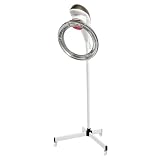
The YUASDUU standing dryer is the value pick of this roundup and the one to look at first if you need processing capability without a capital outlay. It pairs 1200W of output — the top wattage tier here — with infrared technology and a rolling base, which together cover the two things a budget processor most often lacks: heat-up speed and mobility.
Key specs
- 1200W heating output — top tier in this roundup
- Infrared heat technology
- Standing, freestanding design
- Rolling base for movement between stations
- Budget tier
The rolling base is the feature that makes this unit genuinely useful rather than merely cheap. In a booth-rental setup, or a salon where the processing station is wherever the client happens to be sitting, a processor that rolls means you do not need one machine per chair. One unit can serve three stations across a day, which changes the economics of the purchase entirely. If you are running a two-chair salon and considering two fixed processors, one rolling 1200W unit may cover the same work at a fraction of the cost.
Infrared at 1200W is a strong combination for a budget unit. Radiant heat reaches the hair without needing to move a large air volume, and the wattage means the elements come up to temperature quickly. The trade-off at this tier is control: expect simpler operation than the digital units above, and plan to manage timing yourself with a separate timer rather than relying on the machine.
Wheeled units have their own maintenance profile. Castors collect hair — and in a salon, hair wraps around an axle faster than anywhere else on earth. A weekly check and a pair of scissors will keep the base rolling smoothly; a castor that stops turning drags and eventually damages the base. The cord should also be checked regularly, because a unit that moves is a unit whose cord is being flexed and stepped over.
Pros
- 1200W output — fastest heat-up tier at the lowest price tier
- Infrared heat reaches the hair directly
- Rolling base lets one unit serve multiple stations
- No installation required
- Lowest-commitment way to add processing capability
Cons
- Simpler controls than the digital units — no adjustable timer stated
- Castors need regular cleaning to keep rolling
- Moving the unit repeatedly flexes the power cord
- No hood, so radiant exposure to the face is a consideration
Its nearest alternative is the LIECARYAM 750W flexible-arm unit, which is also budget tier and also wheeled. The difference is wattage and form: LIECARYAM uses five heating lamps at 750W on a flexible arm, which gives you more precise aiming at a lower output, while YUASDUU gives you more raw heat from a standing position. If aiming precision matters more than heat-up speed, the LIECARYAM is the pick; if you want the faster unit, this is it.
10. Pibbs TL931 Infrared Hair Processor, 3 Head Salon Heat Lamp, 750W – Best for Multi-Station Coverage

The Pibbs TL931 is the odd one out in this roundup in the best possible way: it is a three-head infrared heat lamp rated at 750W, built to cover more than one client at a time. Pibbs is a long-established salon equipment brand, and a multi-head lamp is the traditional solution for an open-plan floor where processing happens in the chair rather than in a dedicated drying area.
Key specs
- Three separate heat heads
- 750W total output
- Infrared lamp heat source
- Salon heat lamp format, model designation TL931
- Premium tier within this roundup
The three-head design is a coverage strategy, not a power strategy. At 750W, this unit is well below the 1200W standing dryers in raw output, and it is not trying to compete with them on heat-up speed. What it does is position radiant heat over three chairs at once, so a colorist working a row of clients does not have to move a machine between them. On a floor where three processing clients are common and a single shared unit would create a bottleneck, the arithmetic changes.
Infrared lamps of this type warm by radiant transfer and are aimed rather than enclosed. That makes them easy to inspect and clean, and it makes them easy to position precisely — but it also means the client’s face and ears are exposed unless the heads are angled carefully. Aim each head so the beam lands on the hair, not across the face, and check in on clients at regular intervals.
At 750W, this is the lowest-output tier in this list alongside the LIECARYAM unit, so recovery between clients is slower than with the 1200W machines. Where it wins is coverage per dollar of floor space: three heads over three chairs versus one mobile unit shared between them. If your processing volume is spread across an open floor rather than concentrated in a station, this is the design that matches.
Pros
- Three heads cover multiple clients simultaneously
- Radiant lamp design is easy to aim and easy to inspect
- Established salon equipment brand with a long-standing product line
- Suits open-plan floors with no dedicated processing station
- Simple lamp construction with few moving parts
Cons
- 750W is the lower output tier — slower to heat than 1100W–1200W units
- Open lamps expose the face and ears unless carefully aimed
- Premium tier pricing for a lamp-format unit
- No hood, so no enclosed heat retention
Compared with the SyyBhb wall-mount hooded unit, the Pibbs solves a different problem. SyyBhb gives one client excellent enclosed coverage in zero floor space; the Pibbs gives three clients open radiant coverage. If you process one client at a time, the SyyBhb is the better single-station tool. If your floor regularly holds three processing clients, the Pibbs covers all of them without a queue.
11. LIECARYAM Infrared Hair Color Processor with 5 Heating Lights, 750W – Best Budget Flexible-Arm Processor

The LIECARYAM processor takes a different approach to the budget tier: five heating lamps on a flexible arm, mounted on a wheeled base, at 750W. Where the YUASDUU gives you more heat from a standing position, the LIECARYAM gives you more aiming precision — an articulated arm you can bend to put the heat exactly where the processing needs it.
Key specs
- Five separate heating lights
- 750W total output
- Flexible articulated arm
- Wheeled base
- Infrared heat, budget tier
The flexible arm is the selling point. Five lamps on an adjustable arm let you shape the heat field — spread them for a full head, angle them toward a section that is developing more slowly, or pull them back from a sensitive area without moving the whole machine. That kind of control is unusual at this price tier, where fixed hoods and rigid stands are the norm.
The trade-off is output. At 750W shared across five lamps, each individual lamp is low power, and the unit as a whole will take longer to bring a head up to processing temperature than a 1200W standing dryer. For a color service that needs twenty-five or thirty minutes anyway, that is not a problem — the processing time is the processing time. For a salon trying to turn chairs quickly, it is a real constraint.
Wheeled and articulated means more joints and more moving parts, and those are where wear shows first. The arm pivots should be checked periodically for stiffness, the lamps wiped free of product mist, and the castors cleared of hair. A flexible arm that gets sticky is a flexible arm that stops being adjusted, and at that point you have paid for a feature you are not using.
Pros
- Five lamps on an articulated arm give precise, adjustable aiming
- Budget tier pricing
- Wheeled base moves between chairs
- Individual lamps can be angled away from sensitive areas
- Low per-unit cost makes it viable as a second or third processor
Cons
- 750W total across five lamps means lower output per head
- More joints and pivots mean more wear points
- Slower heat-up than the 1100W–1200W units
- Articulated arms need periodic tightening and cleaning
Against the YUASDUU standing dryer, the choice is output versus precision. LIECARYAM wins if you need to aim heat at specific sections, work around a client’s sensitivity, or process a partial head. YUASDUU wins if you want the fastest heat-up and the simplest operation. Both are budget tier, both roll, and neither will give you the digital timing of the premium units.
12. Colortrak Gentle Hair Color Remover Wipes, 100 Count Canister – Best for Cleanup and Stain Control

The Colortrak wipes canister is the second consumable in this roundup and the one you will reach for most often. A hundred-count canister of gentle color remover wipes lives on the trolley and handles the small accidents — color on the hairline, tint on the ear, a smear on the neck — before they become a stain or an apology. Colortrak is an established name in salon color accessories, and a canister format keeps the wipes accessible and damp rather than drying out in a drawer.
Key specs
- 100-count canister
- Gentle formula intended for skin cleanup around color services
- Colortrak brand — established salon color accessories
- Budget tier consumable
Cleanup is the least glamorous part of color work and the part clients notice most. A hairline stain that sets while the client is under the processor becomes a visible mark at the end of the service, and it is the kind of detail that shapes whether someone rebooks. Wipes are cheap; a redo or a lost client is not. Keeping a canister within arm’s reach of every color station is one of the highest-return small purchases a salon can make.
On skin sensitivity: these are described as gentle, and they are intended for cleanup rather than for extended contact. If a client has known sensitivities or a reactive scalp, keep the wipe to intact skin around the hairline, avoid the eyes entirely, and follow the product’s own directions. Any persistent irritation, redness or reaction is a question for a qualified professional, not something to manage with a wipe.
Consumables have a predictable consumption rate, and that makes them easy to budget. A busy color station goes through wipes faster than a quiet one, and a 100-count canister will not last indefinitely in a salon running multiple color services a day. Treat the canister as a recurring line item alongside foils, gloves and mixing bowls.
Pros
- Handles hairline and skin cleanup before stains set
- Canister format keeps wipes accessible and moist
- Gentle formula suited to skin around the hairline
- Budget tier — low cost per use
- Established brand in salon color accessories
Cons
- A consumable — must be repurchased regularly
- Not a substitute for careful application technique
- Canister dries out if left open
- Not for use near the eyes or on broken skin
Its companion in this list is the Xarchy 19-piece bleach kit. The kit covers mixing and application; the wipes cover the cleanup that follows. Both are consumables, both belong on the trolley, and both should be budgeted as recurring costs rather than one-time buys — which is the honest way to plan a color station’s running costs.
How to Choose
Choosing a processor is a four-variable problem: heat source, timing control, coverage, and where the machine physically lives. Get those four right and the brand decision becomes almost trivial. Get them wrong and no amount of premium pricing will rescue the purchase.
Start with heat source: infrared or forced air
Infrared processors warm by radiant transfer — the heat reaches the hair directly rather than by heating air and blowing it across the head. Forced-air hooded dryers heat the air and move it. The practical differences show up in three places. First, airflow: forced air disturbs a wrapped perm and can dry out a lightener, while infrared leaves the wrap alone and keeps the surface moist. Second, comfort: infrared is warmer on the surface and cooler on the scalp than hot air, which many clients prefer. Third, aiming: infrared lamps are directional, so you must position them deliberately, while a hood encloses the head and is more forgiving of imprecise setup.
If your service mix is dominated by color and perms, infrared is usually the better fit. If you do a lot of drying and styling alongside processing, a hooded unit covers both jobs. Several units in this roundup split the difference — the SyyBhb pairs a hood with ionic output, and the InSyoForeverEC pairs drying with steam.
Then decide how much timing control you actually need
This is where salons most often overspend or underspend. There are three tiers of control:
- No timer. The machine heats; you supply the clock. Workable for one client at a time when you stay in the room.
- Visible status. A display shows the unit’s state or an elapsed count, so you can see where a service stands from the chair. The Semokia LCD unit is in this tier.
- Adjustable target. You set a duration and a temperature, and the machine holds them. The ZYUIOTHJK is in this tier.
The test is delegation. If you ever hand a processing client to an assistant, or work more than two processing clients simultaneously, you need at least visible status, and preferably a set-and-hold timer. If you process one client at a time and never leave the room, a timer is a convenience rather than a requirement — and that is a legitimate reason to save money.
Match wattage to your throughput, and to your electrical circuit
Wattage determines heat-up speed and recovery between clients. The tiers in this roundup are 750W, 1100W, and 1200W. A 750W lamp-format unit will process a head perfectly well given enough time; it will not turn a chair quickly. A 1200W unit comes up to temperature fast and recovers between clients, which matters when your book is tight.
Wattage also determines electrical load, and this is the specification salons most often overlook. A 1200W processor on a 120V circuit draws roughly 10 amps. A standard North American branch circuit is 15A or 20A. A 15A circuit can carry 1200W comfortably on its own — but add a 1875W blow dryer on the same circuit and you are drawing well past the breaker’s rating. If your processing station shares a circuit with a dryer, a curling iron and a steamer, you will trip breakers at the worst possible moment.
Run the numbers before you buy. Two 1200W processors running simultaneously is 2400W, or roughly 20A at 120V — which needs a dedicated 20A circuit, not a shared 15A one. Two 750W lamp units total 1500W, or about 12.5A, which fits a 15A circuit with little headroom. If your salon’s processing area is on one circuit, choosing two 750W units over two 1200W units may be the difference between a working station and a tripped breaker every afternoon. Have a licensed electrician confirm your circuit capacity before adding high-draw equipment.
Work out coverage: one client at a time, or several
Coverage is a floor-plan question as much as a machine question. Three patterns exist:
- Single-station processing. One machine, one chair. Best served by a hooded or orbiting unit that covers the whole head — the SyyBhb, BarberPub, AceFox or Senyuzhilan.
- Mobile processing. One machine serving several chairs. Requires a rolling base — the YUASDUU or LIECARYAM.
- Multi-client coverage. Several clients processed at once on an open floor. Requires multiple heads — the Pibbs TL931.
Estimate your peak. If your busiest hour regularly holds two processing clients, a single mobile unit means one of them waits. If it holds three, a three-head lamp earns its premium quickly. The calculation is not about average volume — it is about the peak, because that is when the bottleneck costs you money.
Decide where the machine lives before you buy it
Wall-mount, freestanding, or wheeled. A wall-mount frees the floor entirely but commits you to a chair position and requires drilling into a wall that can take the load — a stud or a proper anchor, not bare plasterboard. A freestanding stand needs floor space and a spot where the cord will not cross a walkway. A wheeled base needs clearance to roll and a parking spot that is not in the middle of the salon.
Measure before you order. For a wall-mount, measure the seated client’s head height at your chair, add the hood clearance, and mark the fixing point. For a freestanding unit, mark the footprint on the floor with tape





