Our Top Picks
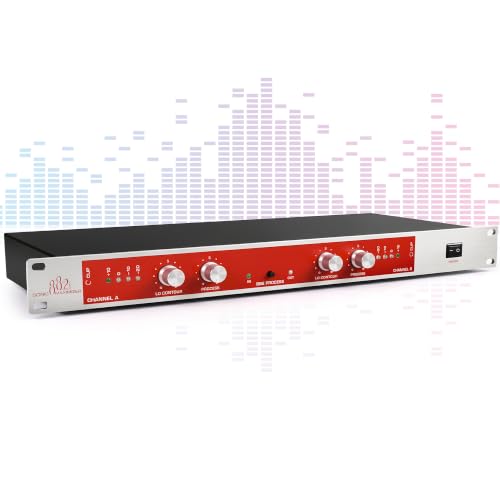 KOYDSNX 882i Professional Audio Exciter Processor & Sonic19 x 5.5 x 1.8 inches6.8 PoundsCheck on Amazon


The best rack-mount signal processor for most professional recording studios is the Gslxheal Digital Audio Processor, a quad-core DSP multi-effects unit with 199 presets, MIDI control and 24-bit preset/programmable operation — it covers the widest range of everyday studio jobs in a single rack space and can be recalled instantly between sessions. It suits hybrid studios that track through a DAW but want hardware reverb, delay, modulation and dynamics-style processing available on demand rather than buried in plugin menus. If budget is the deciding factor and you mainly need glue and level control across two channels, the MICNAUX dual-channel compressor with noise gate and sidechain insert is the value pick. If you are chasing the most serious dynamics tool in this group, the IMOYBBR single-channel compressor/limiter is the premium choice — worth its price only if you track critical sources one channel at a time. Everything below is compared on processor type, channel count, connectivity, control surface, rack-space needs and upgrade path.
Top 3 Picks
Best Overall: Gslxheal Digital Audio Processor
The Gslxheal is the most flexible single purchase in this group because it is a multi-effects processor rather than a single-purpose box: quad-core DSP, 199 presets, MIDI program control and 24-bit preset/programmable operation cover reverb, delay and modulation duties that would otherwise need two or three separate units. It suits a studio that wants repeatable, recallable hardware processing without dedicating an entire rack to it. If you can only add one processor this year, this is the one that keeps working across the most sessions.
Best Budget: MICNAUX Audio Compressor
The MICNAUX delivers the two features that matter most in an entry-level outboard dynamics unit — dual-channel compression and a sidechain insert — plus a noise gate that makes it usable on noisy sources and guitar amps. Two channels in one chassis means you can process a stereo bus or a pair of microphones at the same time. For a first outboard purchase, it covers the widest ground per unit of spend.
Best Premium: IMOYBBR Single-Channel Compressor Limiter
The IMOYBBR is the specialist pick: a single-channel, 1U rack-mount compressor/limiter with dedicated threshold, ratio and attack controls, built for engineers who want to ride one critical source — a lead vocal, a bass DI, a mono overhead — with hands-on control instead of a mouse. It costs more per channel than anything else here, and that is the point. Buy it when one channel of genuinely good dynamics matters more than four channels of adequate dynamics.
Quick Comparison
The table below compares all six processors on the criteria that actually change a purchase decision: what the unit does, how many channels it handles, what its control surface and recall options look like, and how much rack space it occupies. Price tiers are deliberately broad — budget, mid-range and premium — because listing prices on rack gear move constantly with stock and promotions, and a tier is far more stable than a number.
| Product | Best for | Key specs | Price tier |
|---|---|---|---|
| Gslxheal Digital Audio Processor | Versatile multi-effects with preset recall in one space | Quad-core DSP; 199 presets; 24-bit; MIDI; preset/programmable; rack-mount multi-effects | Mid-range |
| MICNAUX Audio Compressor | Budget two-channel dynamics with gating | Dual-channel compressor; noise gate; sidechain insert; dynamic processor; rack chassis | Budget |
| KOYDSNX 882i Audio Exciter Processor | Instant tonal enhancement and perceived clarity | Two-channel exciter/sonic maximizer; analog-style enhancement; rack-mount; no presets or MIDI listed | Mid-range |
| IMOYBBR Single-Channel Compressor Limiter | Premium hands-on dynamics for one critical source | Single channel; 1U rack-mount; threshold, ratio and attack controls; limiter stage | Premium |
| Generic 24-Bit Rackmount Effects Processor | Cheapest route to 24-bit dual-channel reverb and delay | 24-bit; dual-channel; 199 presets; programmable reverb and delay; rack-mount | Budget |
| Generic Digital Reverb Multi-Effect DSP Processor | Premium DSP effects plus equalization in one unit | 24-bit DSP; digital reverb; multi-effect; equalizer processing; preset/programmable; rack-mount | Premium |
How We Chose
Selection here is based on documented specifications and category fit, not on bench testing or hands-on use. Every unit was assessed on four criteria. First, specification substance: does the listing state concrete, checkable facts — bit depth, preset count, channel count, control set, rack format — or does it lean on vague adjectives? Units that publish 24-bit operation, 199 presets, MIDI, sidechain inserts or named dynamic controls rank above units that do not. Second, category fit: a compressor, an exciter and a multi-effects processor solve different problems, so each was judged against the job its category is supposed to do rather than against a single universal standard. Third, use case: we mapped each processor to the studio situation it serves best — tracking, mixing, mastering-style bus work, or live-in-studio reinforcement. Fourth, upgrade path: a good first outboard purchase should still earn its rack space after the studio grows, either as a dedicated bus processor, a tracking front end, or a recallable effects unit.
1. Gslxheal Digital Audio Processor – Best for Versatile Multi-Effects in One Rack Space
As an Amazon Associate we earn from qualifying purchases at no extra cost to you.

The Gslxheal Digital Audio Processor is the most broadly useful unit in this roundup because it is not a single-purpose box. The listing describes a quad-core DSP engine running multi-effects with 199 presets, MIDI control, and a preset/programmable 24-bit architecture — which, taken together, describes a processor that can handle reverb, delay, modulation and effects-style dynamics work while remaining fully recallable between sessions. That combination is what separates it from the analog-style units here, which sound good instantly but cannot be saved and restored.
Who it suits. This is the right processor for a hybrid studio that records into a DAW but wants hardware processing available at mixdown without a rack full of dedicated reverb, delay and modulation units. It also suits engineers who work with repeat clients and need session recall — if you can send a MIDI program change and have the box jump to the same settings you used last month, you have solved the single biggest practical problem with outboard gear. It is less suited to a purist who wants one specific analog colour and nothing else.
Key specs at a glance
- Processing engine: quad-core DSP, which in this class implies enough parallel headroom to run several effect blocks simultaneously
- Preset memory: 199 presets, described as preset/programmable
- Resolution: 24-bit operation
- Control: MIDI, enabling program change and remote recall from a DAW, sequencer or foot controller
- Format: rack-mount chassis — confirm rack units and chassis depth against your rack before purchase, since deep chassis can foul shallow studio racks
- Category: multi-effects digital signal processor
Strengths. The headline strength is breadth with recall. A 199-preset library gives you a starting point for almost any source within seconds — plate and hall reverbs, tempo-synced delays, chorus and modulation — and the programmable architecture means those starting points can be edited and stored rather than simply selected. MIDI control is the feature that makes the unit genuinely studio-grade rather than merely convenient: it lets a DAW session recall the processor’s state automatically, which removes the human error that plagues outboard workflows. Quad-core DSP is meaningful here because multi-effects processing is parallel by nature — reverb plus delay plus modulation at once — and more DSP cores generally mean less compromise when several blocks run together.
Practical notes. Digital multi-effects processors of this class typically accept line-level input, so they sit best on an aux send, an insert on a line-level source, or a bus rather than directly in front of a microphone. Gain staging matters: because the unit processes a line-level signal, feeding it a hot signal and then padding it back down adds noise for no benefit. Set the input so the loudest passages sit comfortably below clipping, then adjust the wet/dry balance at the processor rather than fighting it with fader moves in the DAW. Also plan ventilation — a rack of digital processors generates heat, and a 1U vent gap between the Gslxheal and any tube or class-A analog gear above it is cheap insurance.
Pros
- 199 presets plus programmable storage means fast setup and repeatable sessions
- MIDI control enables automated recall from a DAW — rare at this price tier
- Quad-core DSP handles multiple simultaneous effect blocks
- 24-bit operation keeps the noise floor low enough for mix bus work
- Covers reverb, delay, modulation and effects-style dynamics in one chassis
Cons
- Digital multi-effects will not replace a dedicated analog compressor for character
- Preset libraries take time to audition — 199 options is not always a shortcut
- Menu-driven editing is slower than a panel of dedicated knobs
- Rack depth and unit height must be confirmed against your specific rack
How it compares. Against the KOYDSNX 882i, the choice is philosophical. The 882i is an exciter and sonic maximizer — it enhances what you feed it in real time with no presets and no recall, so it is instant and tactile but not repeatable. The Gslxheal is repeatable but requires a moment of menu work. If you mix the same way every day and want a permanent tonal stamp on your bus, the 882i is the more direct tool. If you need different effects for different songs and must recall them later, the Gslxheal wins by a wide margin. Against the Generic premium DSP processor later in this list, the Gslxheal trades equalizer capability for a larger preset library and MIDI — the deciding question is whether you need EQ in the box or remote recall.
2. MICNAUX Audio Compressor – Best Budget Dual-Channel Dynamics with Gating

The MICNAUX Audio Compressor is a dual-channel dynamic processor in a black rack chassis with a noise gate and a sidechain insert. In plain terms, it is the classic first outboard purchase: two channels of compression you can use as a stereo pair across a bus or as two independent mono channels across a pair of tracking sources, with a gate to clean up noisy material and a sidechain insert to make the compression react to something other than the signal it is processing.
Who it suits. This is the right unit for a studio that is adding its first piece of outboard dynamics gear and wants maximum function per unit of spend. Two channels means you are not forced to choose between tracking and bus work. The sidechain insert is the feature that lifts it above a bare-bones compressor: it lets you duck one signal against another, which is the basis of classic pumping effects, voice-over-over-music ducking, and de-essing style tricks when combined with an external EQ. The noise gate makes it practical on guitar amps, noisy pedals, drum rooms and any source with a hum problem.
Key specs at a glance
- Channels: dual-channel — usable as a stereo-linked pair or two independent mono channels
- Processing: compression with standard dynamic control
- Noise gate: onboard gating for noisy sources
- Sidechain insert: allows external control of gain reduction — ducking, pumping and related techniques
- Format: rack chassis, black finish
- Category: outboard dynamic processor
Strengths. The value proposition is density: two channels, a gate and a sidechain insert in one chassis at a budget price tier. A gate alone is worth having in a small studio — it is the difference between usable and unusable on a noisy amp or a room mic that picks up the air conditioning. The sidechain insert is the more advanced feature and the one that rewards experimentation: route a bass drum into the sidechain and the compressor ducks the bass guitar on every hit, which is a technique that has been a staple of dance and pop production for decades. Because the unit is a traditional analog-style dynamic processor rather than a preset-driven digital box, every move you make with it teaches you something transferable.
Practical notes. Budget dynamic processors reward patience with gain staging more than expensive ones do, because their noise floor is typically higher. Feed the unit a healthy line-level signal rather than a weak one, and avoid stacking heavy input gain with heavy make-up gain — that combination raises the noise floor twice. When using the gate, set the threshold just above the noise and just below the quietest real signal; gating too aggressively chops note tails and makes a tracked performance sound artificial. As with any compressor, the goal is usually 3-6 dB of gain reduction on peaks for glue, not constant heavy pumping. If the gate or sidechain behaves unexpectedly, check cable routing first — the insert path is the most common source of confusion on any dual-channel dynamic processor.
Pros
- Two channels at a budget price tier — the best value-per-channel in this roundup
- Sidechain insert unlocks ducking and pumping techniques usually found on pricier units
- Onboard noise gate makes it practical on guitar amps and noisy rooms
- Traditional control layout teaches transferable compression skills
- Works as a stereo bus compressor or two independent mono channels
Cons
- No presets and no MIDI — every setting is manual and must be written down
- Budget-tier components generally mean a higher noise floor than premium units
- No digital recall, so session repeatability depends on your notes
- Not a character compressor — expect clean control rather than colour
How it compares. Against the IMOYBBR single-channel compressor limiter, this is a straightforward density-versus-refinement trade. The MICNAUX gives you two channels, a gate and a sidechain for a budget-tier spend. The IMOYBBR gives you one channel with dedicated threshold, ratio and attack controls and a limiter stage at a premium-tier spend. If you need to process a stereo bus or two sources simultaneously, the MICNAUX is the only one of the two that can do it. If your entire workflow centres on one critical mono source and you want the most control per channel, the IMOYBBR is the better instrument — it simply costs several times more per channel. Against the Generic budget effects processor, they barely compete: one is dynamics, the other is time-based effects, and most studios will eventually want both.
3. KOYDSNX 882i Audio Exciter Processor – Best for Instant Tonal Enhancement
The KOYDSNX 882i is a two-channel professional audio exciter and sonic maximizer. It belongs to a well-established category of processor that does not compress, does not add reverb and does not store presets — it reshapes the harmonic and phase relationships of a signal to make it sound brighter, clearer and more present. The classic use is on a mix bus, a guitar bus, or a vocal bus, where a small amount of enhancement adds perceived clarity without an obvious EQ boost.
Who it suits. The 882i suits engineers who have already solved their compression and effects needs and are now chasing the last few percent of polish. It is a finishing tool, not a problem solver. It is particularly well suited to small studios mixing dense arrangements where individual elements compete for space: a gentle application of enhancement across a bus can make a mix feel more open without carving frequencies with an EQ. It is less suited to a first-time outboard buyer, because it assumes you already have dynamics and effects covered.
Key specs at a glance
- Channels: two-channel, usable as a stereo pair
- Processing: exciter and sonic maximizer — harmonic and low-frequency phase enhancement
- Control: analog-style front-panel controls; no presets or MIDI listed
- Format: rack-mount chassis
- Category: signal enhancement / psychoacoustic processor
Strengths. The 882i does one job and does it with no learning curve. There are no menus, no preset numbers and no recall to manage — you turn two controls until the source sounds better and stop. That immediacy is genuinely valuable in a mixing session, where a decision made in five seconds is often better than one made in five minutes. The two-channel format means it drops onto a stereo bus without any setup, and because enhancement is a subtractive-free process — you are adding definition rather than removing frequencies — it tends to sound less surgical than aggressive EQ. In a small studio where monitoring is imperfect, that is a real advantage: you are shaping perceived clarity rather than making frequency decisions you cannot reliably hear.
Practical notes and the reality of ownership. Enhancement processors are easy to overuse. The standard mistake is to dial in an amount that sounds impressive soloed and then discover the mix is fatiguing twenty minutes later — a well-known phenomenon with any processor that adds high-frequency energy. A practical method: set the enhancement by bypassing and unbypassing repeatedly at matched levels, and keep the amount lower than your first instinct. Because this unit has no memory, write your settings down or photograph the panel; when you return to a project weeks later, you will not remember where the knobs were. There are no consumables and no batteries to replace, but the controls and switches are the parts that see wear, and the power supply is the component most likely to fail first in any rack unit — leave ventilation space above and below.
Pros
- Instant, tactile results with no menus or preset management
- Two-channel format drops straight onto a stereo bus
- Adds perceived clarity without the phase side effects of heavy EQ
- Simple enough to use confidently on imperfect monitoring
- No digital conversion in the signal path
Cons
- No presets, no MIDI and no recall — settings must be documented manually
- Easy to over-apply, which leads to fatiguing mixes
- Does not solve dynamics or effects problems
- A finishing tool, so it is a poor first outboard purchase
How it compares. Against the Gslxheal multi-effects processor, the 882i is the specialist and the Gslxheal is the generalist. The 882i gives you one thing — enhancement — with zero setup friction and no recall. The Gslxheal gives you many things with full recall but requires menu navigation. A studio that mixes fast and consistently will get more daily value from the 882i; a studio that needs different processing per project will get more from the Gslxheal. Against the Generic premium DSP processor, the contrast is analog immediacy versus digital flexibility: the Generic unit can equalize and add reverb with stored presets, while the 882i can only enhance. Neither replaces the other, and studios that do a lot of bus work often end up with both a dynamics unit and an enhancement unit in the same rack.
4. IMOYBBR Single-Channel Compressor Limiter – Best Premium Dynamics for One Critical Source

The IMOYBBR is a single-channel audio compressor and limiter in a 1U rack-mount chassis with dedicated threshold, ratio and attack controls. It is the most focused unit in this roundup: one channel, one job, hands-on control. Where the MICNAUX spreads its capability across two channels at a budget price, the IMOYBBR concentrates it into one channel at a premium price — and the entire argument for buying it rests on whether that concentration is worth the money to you.
Who it suits. This is the processor for an engineer with a defined workflow: tracking a lead vocal, a bass DI, a mono drum overhead or a voice-over, one source at a time, with a hand on the threshold control. It suits a studio that has already solved its bus compression and effects needs and now wants one channel of genuinely good dynamics that can be set by feel rather than by preset. It is a poor fit for anyone who needs to process stereo material in a single pass, and a poor fit for a first outboard purchase, because its price per channel is several times that of the budget dual-channel option.
Key specs at a glance
- Channels: single channel
- Format: 1U rack-mount — the standard 19-inch rack width and roughly 44 mm of rack height
- Controls: threshold, ratio and attack, plus limiter function
- Category: dynamic processor — compressor and limiter
- Use profile: mono tracking, insert processing, one source at a time
Strengths. Dedicated controls on a single channel is the whole point. On a two-channel unit, controls are often shared or switched, and on a preset-driven digital unit, the controls you actually want may be two menu levels deep. Here, threshold, ratio and attack are physical and immediate. That matters most during tracking, when a singer is mid-take and you have three seconds to fix a compressor that is grabbing too hard — reaching for a knob is faster and less disruptive than navigating a menu. The limiter stage adds a second layer of protection: compression shapes the dynamics, the limiter catches the peaks that slip past, which is exactly what you want on a tracking chain where a clipped take is an unusable take. The 1U format is also the most rack-friendly here — it costs the least vertical space of any unit in this list and leaves room for a second processor in the same rack shelf.
Practical notes. A single-channel premium compressor rewards a specific technique: set ratio first, then attack, then threshold, then make-up gain. Doing it in that order means the threshold you dial in is the threshold you actually want, rather than one you arrived at by accident. Attack time is the control that most defines character — fast attack tames transients and can dull a source, slow attack lets the initial hit through and keeps the punch. On a vocal, a slow attack with a moderate ratio and a few dB of gain reduction is usually the sweet spot; on a bass DI, a faster attack keeps the low end even. Because there is no recall, note your settings in the session file. Watch the rack: a 1U unit with a heavy power supply benefits from a blank panel above it, and the front-panel controls are the first parts to wear on any hands-on processor.
Pros
- Dedicated threshold, ratio and attack controls — fastest possible adjustment during a take
- Separate limiter stage adds protection on tracking chains
- 1U format conserves rack space
- Single-channel focus encourages deliberate, skill-building settings
- Premium-tier build and control layout relative to budget dual-channel units
Cons
- One channel only — cannot process a stereo pair in a single pass
- Highest cost per channel in this roundup
- No presets, MIDI or digital recall
- Overkill if your main need is bus glue rather than critical mono tracking
How it compares. Against the MICNAUX dual-channel compressor, the IMOYBBR is the refinement-versus-density decision. The MICNAUX covers two channels plus a gate and a sidechain at a budget tier; the IMOYBBR covers one channel with finer control at a premium tier. If your studio tracks bands, the MICNAUX will be in use more often. If your studio tracks one voice at a time and the vocal is the product, the IMOYBBR earns its place. Against the Generic premium DSP processor, they do not overlap at all: one is analog-style dynamics, the other is digital effects and equalization. In a mature rack, they sit side by side — the IMOYBBR in front of the converter, the DSP unit on an aux send.
5. Audio Effects Processor 24-Bit Dual-Channel Rackmount Unit – Best Budget Entry into Digital Reverb and Delay

This Generic 24-bit dual-channel rackmount effects processor is the least expensive way in this roundup to get digital reverb and delay into a hardware rack. The listing describes a 24-bit signal path, dual-channel operation, 199 presets and programmable reverb and delay processing in a rack-mount chassis. It is a straightforward utility unit: no MIDI is listed, and the feature set is deliberately narrow, which is exactly what you would expect at a budget price tier.
Who it suits. This unit suits a studio that wants hardware reverb and delay for monitoring, for a live room, or for a secondary rack position where a premium processor would be wasted. It is also a reasonable choice for a teaching studio, a rehearsal space, or a project setup where the primary reverb work happens in the DAW but a hardware option is wanted for tracking. It is not the right pick for a studio that needs automated session recall or that intends to build a mix around its hardware effects.
Key specs at a glance
- Resolution: 24-bit signal processing
- Channels: dual-channel
- Presets: 199, described as programmable
- Processing: reverb and delay as the headline effects
- Format: rack-mount chassis — verify rack units and depth before buying
- Control: front-panel selection and programming; no MIDI listed
Strengths. The core strength is 24-bit processing at a budget tier. Bit depth is the specification that most directly governs the noise floor and the headroom of a digital processor, and 24-bit operation means the unit is quiet enough to sit on a line-level aux send without adding audible hiss. Dual-channel operation means it can be used as a stereo pair for a reverb return or as two independent mono effects. A 199-preset library, while not a guarantee of quality, means you will find a usable starting point quickly rather than building an effect from scratch. Programmable presets mean edited versions can be stored, so the unit is at least partly repeatable even without remote recall. And because it is a dedicated effects unit rather than a hybrid, its front panel is likely to be simpler and faster to navigate than a multi-purpose processor’s.
Practical notes and ownership realities. Budget digital effects units are best deployed where their limitations do not matter. Put one on a reverb return and its noise floor and converter quality are far less consequential than they would be across a mix bus. Expect the presets to be broad starting points rather than finished effects — the value in a 199-preset library is the ten or fifteen settings you actually use, and you will find them faster by auditioning systematically than by scrolling. Two ownership notes apply to every rack-mount processor and especially to budget ones: the power supply is the component most likely to fail first, and the front-panel buttons and encoder wheels are the parts that physically wear out. Keep the unit ventilated, dust it with dry compressed air rather than a damp cloth, and never spray cleaner directly at a control surface — liquid migration into a rotary encoder is a common and avoidable failure. There are no consumables and no batteries in a unit like this, so a well-ventilated rack position is essentially the entire maintenance plan.
Pros
- 24-bit processing at a budget price tier
- Dual-channel operation for stereo or two independent effects
- 199 presets with programmable storage for edited versions
- Single-purpose design keeps the front panel simple
- Low-risk way to add hardware reverb and delay to an existing setup
Cons
- No MIDI listed, so no automated session recall
- Budget-tier converters are best kept off critical buses
- Reverb and delay only — no compression, gating or EQ
- Preset quality varies; expect to program your own settings
How it compares. Against the Gslxheal multi-effects processor, this Generic unit is the stripped-down alternative: both offer 24-bit operation, 199 presets and programmable storage, but the Gslxheal adds a quad-core DSP engine and MIDI control at a mid-range tier. If MIDI recall matters to you, the price difference pays for itself the first time a session reopens with the wrong reverb. If you only need reverb on a return and will set it by hand, the Generic unit saves money without giving up much. Against the Generic premium DSP processor, the trade is EQ capability and DSP headroom for price — the premium unit is the better long-term investment, but the budget unit is a perfectly reasonable first step.
6. Audio Processor Equalizer Digital Reverb Multi-Effect DSP Processor – Best Premium Digital Effects and EQ Combo

This Generic digital reverb multi-effect DSP processor with equalizer processing is the most capable digital unit in the roundup on paper. The listing describes a 24-bit signal processor combining digital reverb, multi-effect DSP and equalizer functions with preset/programmable operation in a rack-mount chassis. It is the unit to consider when you want the flexibility of a digital processor but are not willing to give up EQ — the one function the budget effects unit and the Gslxheal do not cover in the same box.
Who it suits. This processor suits a studio that wants a single digital unit to handle both tonal shaping and time-based effects — an EQ for corrective work on a bus, plus reverb and multi-effects for creative work — without adding two separate chassis to the rack. It is well matched to a hybrid studio where some processing happens in hardware for feel and some happens in the box for precision, and where having EQ available outside the DAW is genuinely useful during tracking. It is a less obvious choice for a studio that already has strong hardware EQ and only needs effects, in which case the budget unit does the job for less.
Key specs at a glance
- Resolution: 24-bit digital signal processing
- Processing: digital reverb, multi-effect DSP and equalizer functions
- Presets: preset/programmable operation for stored settings
- Format: rack-mount chassis
- Category: multi-function digital signal processor
- Price tier: premium
Strengths. Combining EQ with reverb and multi-effects in one chassis is the differentiator. In practice, that means one unit can correct a boomy room-mic signal and then add a plate reverb to it, or shape a synth bus and place it in a space, without patching between two boxes. Fewer chassis means fewer cables, fewer power outlets, less rack space and one fewer conversion stage in the signal path — a real advantage in a small studio where every extra device adds a little noise and a lot of cable management. The premium tier suggests better converter and DSP hardware than the budget unit, which matters if the processor will be used on a bus rather than on an effects return. Programmable presets keep the unit repeatable, and a multi-effect engine gives you room to grow into the device rather than outgrowing it.
Practical notes and common mistakes. Multi-function digital processors invite one specific error: doing too much at once. If you use the EQ to correct a problem and the reverb to add space in the same pass, and the result is wrong, you cannot tell which stage caused it. The reliable approach is to bypass everything, set the EQ first with the effects off, then bring in the reverb, then add any modulation. Gain staging matters for the same reason — digital processors have a defined headroom limit, and driving the input hard to “get warmth” simply clips the converter. Set the input so peaks land comfortably below the unit’s maximum, and make up level after the processor, not before it. On the ownership side, the same realities apply as to any rack unit: the power supply is the most likely failure point, the controls are the parts that wear, ventilation is the whole maintenance plan, and dry compressed air is the right cleaning tool. Keep a written note of your favourite settings — programmable memory helps, but knowing which of the stored presets is which saves time in a session.
Pros
- EQ plus reverb plus multi-effects in a single rack chassis
- 24-bit processing suitable for bus work
- Premium tier suggests better conversion and DSP headroom than budget units
- Preset/programmable operation keeps settings repeatable
- Fewer devices means fewer cables, outlets and conversion stages
Cons
- Premium price tier for a brand-generic unit — warranty and support are worth verifying
- Multi-function design means a deeper menu structure than a single-purpose box
- No MIDI listed, so no automated recall from a DAW
- Doing EQ and effects in one pass makes troubleshooting harder
How it compares. Against the Generic budget effects processor, the premium unit buys you equalizer capability, presumably better converters and a deeper DSP engine for a higher price. If you already own outboard EQ, the budget unit is the smarter buy; if you do not, the premium unit replaces two purchases with one. Against the Gslxheal, the trade is clear: the Gslxheal offers MIDI recall and a quad-core multi-effects engine, while this unit offers EQ. Studios that automate everything should lean Gslxheal; studios that need hardware EQ in the rack should lean here. Against the KOYDSNX 882i, the comparison is between digital precision and analog-style enhancement — the 882i makes a bus sound better with two knobs, this unit lets you decide exactly which frequencies to change.
How to Choose
Choosing a rack-mount signal processor comes down to six questions, and answering them in order will narrow the field faster than reading specifications. The order matters because each answer constrains the next: your processor type determines your channel count, your channel count determines your rack space, and all three determine your budget.
1. Decide what the processor is actually for
Rack processors fall into three functional families, and they do not substitute for each other. Dynamics processors — compressors, limiters, gates — control level and are the foundation of any outboard chain. Effects processors — reverb, delay, modulation — add space and movement. Enhancement processors — exciters and sonic maximizers — change the perceived clarity of a signal without altering its level or adding time-based effects. A studio that has none of the three should buy dynamics first, because level control solves more problems than reverb does, and because a compressor teaches you more about audio than any other single device. A studio that already has good in-the-box dynamics might reasonably start with effects or enhancement instead.
2. Count the channels you genuinely need
Channel count is where most buyers overspend or underbuy. The practical rule: if you process stereo material — a mix bus, a stereo synth, a pair of overheads — you need two channels, and they should be usable as a linked pair so that both sides compress identically. If you process one source at a time, one channel is enough, and spending the same money on one excellent channel beats spending it on two adequate ones. The common mistake is buying a single-channel unit for stereo work and then discovering that processing only the left side is not a solution. The second most common mistake is buying a two-channel unit for mono tracking work and never using the second channel. In this roundup, the MICNAUX covers two channels at a budget tier, the IMOYBBR covers one channel at a premium tier, and the digital units are dual-channel by design.
3. Work out your rack budget in U before you buy anything
A standard 19-inch rack measures one rack unit (1U) as 44.45 mm of vertical height, or about 1.75 inches. A typical 12U rack therefore offers roughly 533 mm of usable vertical space, which sounds generous until you count a power conditioner (1U), an interface (1U to 2U), a patchbay (1U), a monitor controller (1U) and a couple of preamps (2U). That leaves perhaps four to six U for processors. Most of the units in this roundup are 1U, so the vertical budget is rarely the binding constraint — depth is. Standard rack depth varies widely, and shallow studio racks can be as little as 300 mm deep, while deep chassis units can run past 300 mm including connectors. Before buying, measure the internal depth of your rack, subtract 50 mm for cable bend radius at the rear, and compare that figure to the unit’s chassis depth. Also allow one blank 1U panel or vent gap between any two units that run warm.
| Studio situation | Priority | Recommended pick from this list | Why |
|---|---|---|---|
| First outboard purchase, tight budget | Dynamics, two channels, maximum function | MICNAUX Audio Compressor | Dual-channel compression plus gate and sidechain at a budget tier |
| One critical mono source tracked repeatedly | Control resolution, per-channel quality | IMOYBBR Single-Channel Compressor Limiter | Dedicated threshold, ratio and attack plus a limiter stage |
| Hybrid studio needing recallable effects | Preset memory, MIDI, breadth | Gslxheal Digital Audio Processor | 199 presets, quad-core DSP and MIDI program change |
| Mix bus polish, no menu time | Instant, tactile enhancement | KOYDSNX 882i Exciter | Two-knob enhancement with no presets to manage |
| Need hardware reverb on a small budget | Lowest cost of entry | Generic 24-Bit Rackmount Effects Processor | 24-bit, dual-channel, 199 presets at a budget tier |
| Want EQ and effects without two chassis | Function density, converter quality | Generic Digital Reverb Multi-Effect DSP Processor | Equalizer, reverb and multi-effects in one premium unit |
4. Understand what connectivity and control actually cost you
Connectivity is the specification most often skimmed and most often regretted. Line-level analog inputs and outputs are the baseline for rack processors, and balanced connections are strongly preferred in a studio with long cable runs because they reject interference that unbalanced runs pick up. Where a unit offers a sidechain insert, that is a functional expansion, not a convenience — it enables ducking and gating techniques you cannot achieve any other way. Where a unit offers MIDI, that is a workflow expansion: MIDI program change lets a DAW or controller recall the processor’s state, which converts outboard gear from a manual chore into an automated part of the session. That single feature is the main practical difference between the mid-range Gslxheal and the budget Generic effects unit in this list, and it is worth real money to anyone who reopens sessions weeks later. Finally, consider control ergonomics: a panel of dedicated knobs is faster during tracking, while a menu-driven interface with presets is faster during setup. The best racks have both kinds of device.
5. Run the cost-per-channel calculation before you commit
Price tiers hide a lot. A more useful comparison is cost per channel, because that is what you are actually buying. Take a budget-tier dual-channel dynamics processor — if it sits in the lower part of the market’s budget band, and that band runs from roughly the low hundreds into the mid hundreds of dollars, then a two-channel unit at the middle of that band works out to a few tens of dollars per channel. A premium-tier single-channel compressor in the several-hundred-dollar band works out to several hundred dollars for one channel — an order of magnitude more per channel. That is not a reason to avoid the premium unit; it is a reason to be honest about whether one channel of better control is worth eight channels of adequate control to you. The same logic applies to digital units: a mid-range multi-effects processor with MIDI costs more than a budget reverb unit, but if it replaces two single-purpose boxes, the effective cost per function may be lower. Write the numbers down. The calculation forces the decision.
6. Plan the upgrade path so nothing becomes dead weight
Outboard gear should compound. A well-chosen first processor becomes a dedicated bus compressor when you buy a better one; a budget effects unit becomes the reverb on a drum room or a rehearsal PA when the main reverb moves in the box; an enhancement unit stays on the mix bus forever because nothing else does its job. What makes a purchase dead weight is redundancy without role — a second two-channel compressor with identical character to the first, or a digital effects unit that duplicates a plugin you already prefer. Before buying, ask what role the unit will hold in three years. If the answer is “the same role, better,” it is a good purchase. If the answer is “it will be replaced,” buy the cheaper one and put the difference toward the thing you actually want.
Common mistakes to avoid
- Buying effects before dynamics. Level control solves more problems than reverb, and it is harder to fix in the box once a take is tracked hot.
- Ignoring rack depth. Vertical space is easy to count; chassis depth and cable bend radius are what actually stop a unit from fitting.
- Assuming presets equal quality. A 199-preset library usually contains ten to fifteen genuinely useful settings. Budget time to find them.
- Skipping gain staging. Feeding a processor a signal that is too hot, then padding it back down, adds noise for no benefit. Set input level first.
- Over-applying enhancement. Brightness that sounds impressive soloed often becomes fatigue across a full mix.
- Forgetting to document settings. Units without recall require notes or photographs. This is the single most common cause of “I can’t get that sound back.”
- Stacking heat. Leave a vent gap between warm units and keep the rack’s rear open. The power supply is the component most likely to fail first in any processor.
Frequently Asked Questions
Do I need hardware signal processors if I mix entirely in the box?
Not strictly — plugins cover compression, reverb and EQ comprehensively, and many professional mixes are made entirely in software. Hardware earns its place in three specific situations: when you want zero-latency processing while tracking, when you want a tactile control surface you can reach without a mouse, and when you want the same processing available across sessions without plugin version changes. If none of those apply to your workflow, hardware is optional. If you track live sources regularly, a hardware compressor in the input chain solves a problem software cannot: it prevents a hot take from clipping before the converter.
What does 1U mean, and how much rack space do I actually need?
1U is one rack unit of vertical height, equal to 44.45 mm, or about 1.75 inches, in a standard 19-inch-wide rack. Most processors in this category are 1U, so vertical space is usually less of a constraint than depth. A practical allowance is 1U of vent space between warm units, plus enough rear clearance for cables — subtract roughly 50 mm from your rack’s internal depth for cable bend radius before comparing it to a chassis depth figure. A 12U rack provides about 533 mm of usable height, which after a power conditioner, interface, patchbay and a couple of preamps leaves room for four to six processors.
What is the difference between a compressor and an exciter or sonic maximizer?
A compressor reduces the dynamic range of a signal — it turns down loud peaks so quieter detail can be raised, making a performance sound more even and controlled. An exciter or sonic maximizer does not touch level; it reshapes harmonic content and phase relationships to make a signal sound brighter, clearer and more present. They are complementary, not interchangeable. A compressor solves the problem of an uneven performance; an exciter solves the problem of a mix that sounds dull or congested. Most studios end up wanting one of each rather than choosing between them.
Can these processors be used for live sound as well as studio recording?
Yes, and many of them are well suited to it. Rack-mount processors are standard in live rigs because they are built to be installed, powered continuously and controlled from a front panel. A dual-channel compressor with a gate and sidechain insert is genuinely useful on a live vocal or drum bus, an exciter can add clarity to a PA in a dead room, and a multi-effects processor handles live reverb duties. The main caveats are that live use demands fast, glove-friendly control rather than menu navigation, and that settings which flatter a recording may be too aggressive at PA levels.
What does MIDI control add to a rack processor?
MIDI program change lets an external device — a DAW session, a sequencer or a foot controller — tell the processor which preset to load. In practice this means your outboard effects can be recalled automatically when you reopen a project, instead of being dialled in by hand from memory. That turns hardware from a manual liability into an automated part of the session, and it is the single feature that most improves repeatability in a hybrid studio. If you frequently return to old projects, MIDI is worth paying for. If you set a unit once and leave it, it is not.
Do I need balanced connections for rack processors?
Balanced connections are strongly preferred in any studio with long cable runs, because a balanced cable carries the signal on two conductors and cancels interference picked up along the way. Unbalanced connections work fine over short distances in a treated, electrically quiet room, but they are more susceptible to hum and radio-frequency noise. If your interface offers balanced outputs, use them. If a processor only offers unbalanced connections, keep its cables as short as practical and route them away from power cables and transformers.
How should I set gain staging with an outboard processor?
Set the level at the source, not after the processor. Feed the unit a healthy line-level signal so the loudest passages sit comfortably below its maximum input, then adjust make-up gain at the output stage to restore level. The mistake to avoid is sending a hot signal into the processor and padding it down afterwards, which adds noise without adding headroom. On digital processors the same rule applies with an extra caution: converters have a hard ceiling, so pushing the input hard to “get warmth” produces clipping rather than character.
How long do rack-mount processors last, and what wears out first?
Rack processors are generally long-lived, and there are no consumables or batteries to replace in a typical analog or digital unit. The parts that fail first are predictable: the power supply, then the physical controls — knobs, buttons and rotary encoders — which see mechanical wear from hands. Keeping the unit ventilated is essentially the whole maintenance plan, because heat is what shortens a power supply’s life. Clean with dry compressed air rather than a damp cloth, never spray cleaner directly at a control surface, and leave a vent gap between warm units in the rack.
Final Recommendation by Studio Situation
If you are adding your first outboard processor and your budget is tight, buy the MICNAUX Audio Compressor. Two channels, a noise gate and a sidechain insert at a budget tier give you the most function per unit of spend, and a compressor is the one processor that improves almost every session you will ever run.
If you track one critical source at a time and want the best control available, buy the IMOYBBR Single-Channel Compressor Limiter. Its dedicated threshold, ratio and attack controls and limiter stage make it the most refined dynamics tool in this roundup, and its 1U format keeps your rack open for what comes next. Accept the cost per channel as the price of focus.
If your studio runs on session recall and you need hardware effects that come back exactly as you left them, buy the Gslxheal Digital Audio Processor. Quad-core DSP, 199 presets and MIDI program change make it the most workflow-friendly unit here, and it covers reverb, delay and modulation in a single space.
If your mixes sound technically correct but dull, buy the KOYDSNX 882i. It will not solve dynamics or effects problems, but two knobs of enhancement on a bus can open up a dense arrangement faster than any EQ curve, and there is nothing to configure or remember.
If you simply need hardware reverb and delay without spending much, buy the Generic 24-bit dual-channel rackmount effects processor. Keep it on an effects return rather than a critical bus, and 24-bit processing with 199 programmable presets will serve you well for years.
If you want one digital unit that shapes tone and adds space, buy the Generic digital reverb multi-effect DSP processor with equalizer processing. Combining EQ, reverb and multi-effects in one premium chassis removes cables, outlets and a conversion stage from your rack — and if you set the EQ first and the effects second, it will earn its place on your bus.