
For most beginners the best RC sailboat is the Joysway Dragon Force 65 (DF65): a 650 mm one-design yacht that arrives almost ready to run, sails happily on a backyard pond, and generally sells for around $180–$260. Skippers with more water and a bigger budget should look at the 950 mm DragonFlite 95 (DF95), the best all-round step up at roughly $280–$400, while the one-metre RC Laser is the pick if strict one-design club racing matters more than price or scale detail.
Our top picks
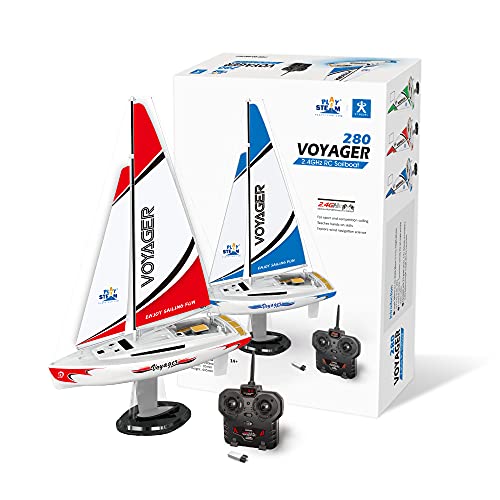 PLAYSTEAM Voyager 280 RC Controlled Wind Powered
- Control your own RC sailboat - 2-channels with…
- Powered by the wind! Does not need (or…
- No assembly required
 PLAYSTEM Voyager 400 RC Controlled Wind Powered
- Control your own RC sailboat - 2-channels with…
- Powered by the wind! Does not need (or…
- No assembly required
 PLAYSTEAM Voyager 280 RC Controlled Wind Powered
- Control your own RC sailboat - 2-channels with…
- Powered by the wind! Does not need (or…
- No assembly required
| Product | Key specs | |
|---|---|---|
| PLAYSTEAM Voyager 280 RC Controlled Wind Powered | Control your own RC sailboat - 2-channels with… Powered by the wind! Does not need (or… No assembly required | Check price |
| PLAYSTEM Voyager 400 RC Controlled Wind Powered | Control your own RC sailboat - 2-channels with… Powered by the wind! Does not need (or… No assembly required | Check price |
| PLAYSTEAM Voyager 280 RC Controlled Wind Powered | Control your own RC sailboat - 2-channels with… Powered by the wind! Does not need (or… No assembly required | Check price |
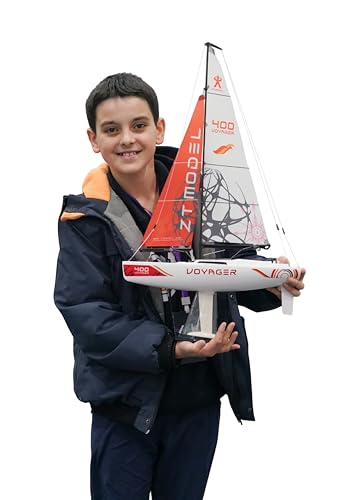 PLAYSTEAM Voyager400 2.4GHz RC Motor Powered Sailboat | Length 400mm, width 100mm, height 672mm, scale 1:30 Includes detachable electric motor for fun sailing indoors… 3-channel control | Check price |
As an Amazon Associate we earn from qualifying purchases at no extra cost to you.
Quick comparison of the best RC sailboats
All four classes below are established, widely supported designs with published class rules and spare parts. Figures are approximate A-rig numbers taken from manufacturer and class spec sheets; your rig, radio and battery choice will shift the all-up weight.
| Pick | Best for | Hull length | Approx. sail area (A rig) | Approx. all-up weight | Price range (USD) |
|---|---|---|---|---|---|
| Joysway Dragon Force 65 (DF65) | Best overall for beginners | 650 mm | ≈0.22 m² | 1.1–1.3 kg | $180–$260 |
| Joysway DragonFlite 95 (DF95) | Best step-up / all-rounder | 950 mm | ≈0.35 m² | 1.6–1.9 kg | $280–$400 |
| RC Laser | Best for one-design racing | ≈1,000 mm | ≈0.30 m² | ≈4 kg | $600–$900 |
| Graupner Micro Magic | Best for tiny water and storage | 530 mm | ≈0.14 m² | ≈0.5 kg | $150–$250 |
| Kyosho Seawind / Thunder Tiger Victoria | Best scale-looking 1 m cruiser | ≈990–1,000 mm | 0.35–0.40 m² | 2.2–2.5 kg | $170–$450 |
The picks in detail
Best overall for beginners: Joysway Dragon Force 65
The DF65 is the closest thing the hobby has to a default first boat. Per Joysway’s spec sheet it is a 650 mm hull with a two-channel 2.4 GHz radio, a sail winch rather than a standard servo, and a mast-and-boom assembly that most people finish in 30–45 minutes with a screwdriver. It is a genuine one-design class, so a beginner can turn up at a club and race on equal terms without buying anything exotic.
Who it suits: anyone with a pond at least 15 m across, a modest budget, and no interest in building from a kit.
Main trade-off: it is light and small. In chop it gets pushed around, and above roughly 12 mph of wind you need the smaller B rig or it will round up and lie on its side. That is normal for a 650 mm boat, not a defect.
Best step-up: Joysway DragonFlite 95
The DF95 uses the same design language at 950 mm with roughly 0.35 m² of A-rig sail area and an all-up weight near 1.7 kg. The extra 300 mm of waterline makes a disproportionate difference: it carries momentum through tacks, tracks straighter in gusty air, and stays sailable when a DF65 is already overpowered. Assembly is a 45–60 minute job, and it still fits in most car boots in one piece.
Who it suits: skippers who already know how a sail winch works, or beginners with a large lake and a $300+ budget who would rather buy once.
Main trade-off: cost and transport size. It also wants more open water — on a narrow canal you will spend more time avoiding the bank than sailing.
Best for one-design racing: RC Laser
The RC Laser is a scaled-down Laser built for strict one-design competition. It ships with scaled A, B and C rigs, uses a heavy displacement hull of roughly 4 kg, and is famously tough — the hull is designed to shrug off the kind of contact that would crack a thin fibreglass yacht. Because every boat is identical and the rigs are controlled, results come down to tactics and tuning.
Who it suits: club racers, windy sites, and anyone who wants a boat that arrives effectively ready to sail with almost no assembly.
Main trade-off: price and light-air performance. It is the most expensive pick here, and its low sail-area-to-weight ratio means it is sluggish in a 5 mph breeze where a DF95 is still moving nicely.
Best for small water and tight storage: Graupner Micro Magic
At 530 mm and around 500 g, the Micro Magic is the boat you can sail in a garden pond, carry in a backpack, and store on a shelf. Assembly is minimal and it needs only a couple of metres of clear water to manoeuvre. It is a long-running class with an active owner community in Europe in particular.
Who it suits: apartment dwellers, parents sailing with kids, and anyone whose only water is small.
Main trade-off: it is a fair-weather boat. Much above 8 mph and it is simply overpowered, and at distance it becomes hard to see which way it is pointing.
Best scale cruiser: Kyosho Seawind and Thunder Tiger Victoria
If you want something that looks like a yacht rather than a racing machine, these one-metre designs are the traditional answer. Both are around 990–1,000 mm with 0.35–0.40 m² of sail and 2.2–2.5 kg of displacement, which gives them a planted, unhurried feel in a breeze. The Victoria in particular has been a first one-metre boat for a lot of skippers.
Who it suits: casual sailors on larger ponds and lakes, and anyone who enjoys the building and detailing as much as the sailing.
Main trade-off: older designs with thinner local racing scenes. Spares are still available but you may wait longer for them than for DF65 or DF95 parts.
How to choose: match the numbers to your water and your wind
Two numbers do most of the work: hull length (which sets how much water you need) and sail-area-to-weight ratio (which sets how much wind the boat likes).
- Water. As a rule of thumb, allow roughly 20 hull lengths of clear runway in the prevailing wind direction and about 10 across it. A 650 mm DF65 therefore wants a pond around 15 m × 8 m minimum; a one-metre boat wants closer to 25 m × 12 m before it stops feeling cramped.
- Sail-area-to-weight. Divide A-rig sail area by all-up weight. The DF65 works out near 0.18 m²/kg and the DF95 near 0.20 m²/kg — lively, quick to accelerate, quick to get knocked down. The RC Laser lands near 0.075 m²/kg, which is why it feels steady and heavy and needs real breeze to come alive. Neither figure is “better”; they suit different sites.
- Radio gear. Two channels is all you need — one for the sail winch, one for the rudder. Kits that include a 2.4 GHz transmitter save you $60–$150, but a bundled radio is usually the first thing an experienced skipper upgrades.
- Assembly. Budget 30–60 minutes for a small ARTR boat, 60–90 minutes for a one-metre yacht, and several evenings if you buy a kit that needs the hull finished.
Decision matrix: pick by situation
| Your situation | What to prioritise | Suggested pick |
|---|---|---|
| Total beginner, under $250, calm pond | Simple assembly, cheap spares, class support | Dragon Force 65 |
| Small garden pond or canal, no storage | Under 700 mm, low weight | Micro Magic or DF65 |
| Large lake, breezy afternoons | Higher displacement, B and C rigs available | DragonFlite 95 |
| Club racing, one-design rules | Class legality and identical equipment | DF65, DF95 or RC Laser |
| Regular 15+ mph wind, exposed site | Heavy hull, tough rig | RC Laser |
| Experienced, wants scale looks | One-metre hull, build enjoyment | Kyosho Seawind or Thunder Tiger Victoria |
Rigs and wind handling: when to change down
Nearly all of these boats are sold with a single A rig and can be upgraded with smaller B and C rigs. Changing down is the single biggest performance and durability decision you make on the water — sailing an A rig in too much wind is the fastest way to break a mast or fill the hull with water.
| Rig | Typical wind range | Approx. sail area vs A rig | Switch when… |
|---|---|---|---|
| A (light) | 3–10 mph | 100% | Default rig |
| B (medium) | 10–16 mph | ~75–80% | The boat heels hard and rounds up into the wind constantly |
| C (heavy) | 16–22 mph | ~60% | The bow buries on every gust and you are fighting the rudder |
Wind ranges are approximate and hull-dependent: a heavy RC Laser will carry its A rig in wind that would flatten a DF65. Above roughly 22 mph, put the boat away — the risk of losing it to a capsize or a broken mast outweighs any fun.
Ownership realities: what wears first and how to keep it sailing
The consumables on an RC sailboat are predictable, and replacing them on schedule costs far less than repairing the damage they cause when they fail.
- Sheet line (winch line). This stretches, frays and takes a set. Replace it every season or whenever it starts to look furry — it is a $10–$20 item and a snapped sheet mid-race ends your day.
- Receiver battery. Most boats run a 4.8 V NiMH pack. Expect roughly 2–4 hours of sailing per charge depending on how much winch work you do. Store it around half charge, not flat and not full, and replace it every few years.
- Sails. UV and heat are the enemies. Creases become permanent, and a soft, stretched sail loses shape and pointing ability. Store the boat with the rig off the hull and out of direct sun.
- Keel and rudder fittings. Check the keel bulb screws and rudder linkage every few outings; vibration loosens them. A drop of threadlock is cheaper than a lost bulb.
- Hatch seal. The most common cause of a “mystery electrical fault” is a few millilitres of water inside the hull. Tape the hatch every session and empty and dry the hull afterwards.
After salt water, rinse the hull, keel, rudder and fittings with fresh water and dry the sails before packing up. The three mistakes that cost beginners the most money are sailing the A rig in too much wind, leaving the boat in a hot car where the hull can distort and the sails crease, and holding the winch against its end stop — that stalls the servo, drains the battery and eventually burns it out.
Frequently Asked Questions
How much should a beginner spend on a first RC sailboat?
Plan on $180–$300 all-in for a small ready-to-run boat, including a spare battery and a set of rechargeable AA cells for the transmitter. That budget buys a Dragon Force 65 and enough spares to keep it sailing for a season. Spending less usually means a toy-grade boat with no class support or spare parts.
What size RC sailboat do I need for a small pond?
A 530–650 mm hull is the practical sweet spot for anything under about 20 m across. As a rough guide, give the boat 20 hull lengths of clear water in the wind direction, so a 650 mm boat wants roughly 13 m of runway. Larger one-metre boats can be sailed in small water but you will spend most of the time turning rather than sailing.
Do RC sailboats have a motor?
No. A pure RC sailboat carries two servos — a sail winch that trims the sheets and a rudder servo that steers. There is no propeller or motor, so there is nothing to run out of fuel, but it also means you cannot motor back to shore if the wind dies; a retrieval stick or a small rowing boat is worth having at a large lake.
How much wind is too much for an RC sailboat?
For a 650 mm boat, roughly 12–15 mph is the practical limit with the standard rig, and about 22 mph even with a C rig. One-metre boats with heavier displacement handle more. If the water is covered in whitecaps and the boat is burying its bow on every gust, change down a rig or call it a day.
Can I sail an RC sailboat in salt water?
Yes, and many classes race on the sea. The catch is maintenance: rinse the hull, keel, rudder and all metal fittings with fresh water after every session and dry the sails before storing. Salt left on linkages and screws causes corrosion that is far more annoying to fix than the rinse takes.
Is the Dragon Force 65 or the DragonFlite 95 better for a beginner?
The DF65 is the better first boat if your water is small or your budget is tight — it is cheaper, quicker to assemble and easier to transport. The DF95 is the better first boat if you sail on a large lake and expect to keep the hobby going, because it handles chop and breeze that will sideline a DF65. Both are one-design classes with strong parts support.





