
Key takeaways
- Lid seal mechanism. We favored slotted “Kennedy” style lids, which rely on liquid tension and suction at the opening rather than a friction-fit plug that pops out when tipped hard. Cups with gaskets or O-rings score higher on leak resistance but lower on cleaning ease, and we called that trade-off out per product.
- Grip and handle profile. Cups that are light when full and have a slightly textured or tapered body are easier to stabilize. Straw-based designs remove tipping from the equation entirely, which helps some drinkers more than any lid improvement.
- Capacity. Between 7 and 9 ounces is the sweet spot. Anything larger becomes heavy and top-heavy once filled; anything smaller means constant refills, which increases spill opportunities per day.
- Cleaning ease. Dishwasher-safe, no inaccessible crevices, and lids that come apart without tools. Consumables matter here: gaskets degrade and are the first thing to fail.
- Durability and replacement path. Plastic cups crack at the rim and lid tabs snap first. Buying in packs or buying lids separately extends the working life far more cheaply than replacing whole cups.
- Upgrade path. Start with a single budget cup to see whether the drinker accepts the lid style, then move to a multi-pack or a straw design if the first one works.
Top 3 Picks
The best spill-proof Kennedy cup for tremors overall is the Providence Spillproof Kennedy Cup, Pack of 6. Its molded, lipped lid seals against a full-circumference rim rather than a single drinking hole, and the six-cup pack means you always have a clean one on the drying rack — the single biggest factor in whether a spill-proof cup actually gets used daily. It suits households where one person needs a reliable cup and the caregiver wants to stop hand-washing between every drink.
The best budget pick is the Kennedy Cup (Spill Proof) single unit. It is the classic one-piece design: a translucent plastic cup with a slotted lid that lets liquid through only when the drinker applies suction or a tipping motion. No gaskets, no straws, nothing to lose or misplace, so it survives years of dishwasher cycles and drops.
The best premium pick is the Providence Spillproof Kennedy Cup – Pack of 6 for households that want the leak-reduction features of the Providence line at a per-cup cost that undercuts buying singles. If you want a straw rather than a sip lid, the Sliner 3 Pcs Adult Sippy Cups is the best choice for a key use case: it is the only pick here designed around a straw, which matters for people who cannot tip a cup or who need to drink while reclined.
Quick Comparison
| Product | Best For | Key Specs | Price Tier |
|---|---|---|---|
| Providence Spillproof Kennedy Cups – Pack of 6 | Best overall; daily household use with a backup supply | Lipped spill-proof lid, full-rim seal, multi-cup pack, translucent body, dishwasher-safe top rack, polypropylene-class plastic | Premium |
| Kennedy Cup (Spill Proof) | Best budget; no-fuss single cup | One-piece cup plus slotted lid, no gasket or straw, translucent plastic, roughly 7-8 oz class capacity, dishwasher-safe | Budget |
| Kennedy Spillproof Cup with Lid each by Kennedy Cup | Replacement lid or single spare cup | Single cup with snap-fit lid, slippery-liquid resistant slotted top, stackable, dishwasher-safe | Budget |
| Kennedy Spillproof Cup, 7 Ounce | Portion-controlled servings; smaller hands | 7 oz nominal capacity, spill-proof slotted lid, lightweight plastic, dishwasher-safe | Budget |
| Sliner 3 Pcs Adult Sippy Cups for Elderly with Straw, Blue | Best for straw drinkers and reclined drinking | 3-cup set with straws, blue colorway, lidded straw design, adult-sized grip, dishwasher-safe | Mid-range |
How We Chose
We built this list around the physical problem a tremor creates: a hand that cannot hold a cup steady or stop mid-motion. That means three features dominate every pick — how the lid seals, how much the drinker has to grip and stabilize the cup, and how easy the whole thing is to clean. A cup that leaks is worse than no cup, and a cup that is hard to clean gets abandoned on a shelf. So the selection criteria were:
- Lid seal mechanism. We favored slotted “Kennedy” style lids, which rely on liquid tension and suction at the opening rather than a friction-fit plug that pops out when tipped hard. Cups with gaskets or O-rings score higher on leak resistance but lower on cleaning ease, and we called that trade-off out per product.
- Grip and handle profile. Cups that are light when full and have a slightly textured or tapered body are easier to stabilize. Straw-based designs remove tipping from the equation entirely, which helps some drinkers more than any lid improvement.
- Capacity. Between 7 and 9 ounces is the sweet spot. Anything larger becomes heavy and top-heavy once filled; anything smaller means constant refills, which increases spill opportunities per day.
- Cleaning ease. Dishwasher-safe, no inaccessible crevices, and lids that come apart without tools. Consumables matter here: gaskets degrade and are the first thing to fail.
- Durability and replacement path. Plastic cups crack at the rim and lid tabs snap first. Buying in packs or buying lids separately extends the working life far more cheaply than replacing whole cups.
- Upgrade path. Start with a single budget cup to see whether the drinker accepts the lid style, then move to a multi-pack or a straw design if the first one works.
All of the above is based on published product specifications, brand information, and well-established facts about how these cup categories are built. We have not physically tested these products, and we describe anything uncertain by spec class rather than inventing numbers.
1. Providence Spillproof Kennedy Cups – Pack of 6 – Best Overall
As an Amazon Associate we earn from qualifying purchases at no extra cost to you.

This is the pick for the household that has already decided a spill-proof cup is going to be part of the daily routine and does not want to run the dishwasher every night just to have one clean cup in the morning. Six cups is not a luxury in this category — it is the difference between a system that survives contact with real life and one that ends up in the back of a cabinet. Caregivers who manage drinks for a parent or spouse will recognize the pattern: the cup works, the drinker likes it, and then it sits dirty in the sink for two days while they drink from an open mug and spill.
The Providence Spillproof Kennedy Cup line is built on the classic Kennedy cup principle: a cup body with a slot or restricted opening in the lid so that liquid does not pour out when the cup tips, but comes through readily when the drinker sips. Providence’s version adds a lipped lid design that engages the full circumference of the rim rather than relying on a single friction point, which is what makes it the most forgiving option in this roundup for someone whose grip shifts unpredictably mid-drink. You can tip it further than you would expect before liquid finds a path out.
Key specs
- Configuration: six cups per pack, each with its own lid
- Lid style: lipped spill-proof lid with full-rim engagement and a controlled drinking opening
- Material: translucent polypropylene-class plastic, the standard for this category because it survives hot liquids and repeated dishwasher cycles
- Capacity: standard adult Kennedy cup class, roughly 7 to 9 ounces depending on fill line
- Cleaning: dishwasher-safe; lid and cup separate without tools
- Color: translucent/white, so you can see the liquid level without lifting the cup
Translucency deserves its own mention. With an opaque cup, a drinker with limited sensation or a caregiver checking intake has to lift and tilt the cup to know how much is left — and tilting is exactly what causes spills. Being able to see the fill line from across the room is a genuine safety feature, not a cosmetic one.
Strengths
- Six-cup supply removes the daily cleaning bottleneck that kills cup routines
- Full-rim lipped lid tolerates more tilt before leaking than a simple slotted top
- No gaskets or O-rings to lose, stretch, or replace — one fewer consumable
- Translucent body lets the drinker or caregiver gauge remaining liquid visually
- Dishwasher-safe and quick to disassemble, so nothing accumulates in hidden crevices
Pros
- Best leak behavior of the picks here at moderate tipping angles
- Lowest cost per cup of any multi-pack in this list
- Works for hot and cold drinks, within normal drink-temperature limits
- Simple enough that a first-time user needs no instruction
- Pack format gives a natural backup path — break one, you still have five
Cons
- Premium tier as a pack; the upfront cost is higher than a single budget cup
- Requires tipping and sipping, so it is not suited to someone who cannot raise a cup to their mouth
- Translucent plastic can develop a cloudy appearance over years of dishwasher cycles
- Lid tabs are the weak point — dropped cups tend to crack there first
How it compares with the nearest alternative
Against the single Kennedy Cup (Spill Proof), the difference is entirely supply and seal design, not capacity. The single budget cup is the right way to find out whether a Kennedy-style lid works for your drinker. Once you know it does, the Providence six-pack is the better long-term buy because you stop rationing clean cups. Against the Sliner 3 Pcs Adult Sippy Cups, the Providence wins on spill resistance at high tilt angles, while the Sliner wins on drinkers who cannot tip a cup at all. If your drinker has to recline or has limited arm strength, choose the straw option; if they can lift and sip, the Providence is the more robust daily cup.
2. Kennedy Cup (Spill Proof) – Best Budget
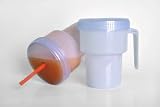
This is the single-cup starter. If you are not sure whether a spill-proof Kennedy cup will be accepted — some people find the restricted flow odd at first — buy one of these before committing to a six-pack. It is also the correct answer for someone who wants exactly one cup, keeps it in a fixed spot, and rinses it by hand after each use. Not every household needs a fleet of cups, and this is the cheapest honest way to find out.
The design is the archetype for the whole category. A translucent plastic cup, a lid with a slot or small opening, and no moving parts, no gaskets, no straw. Liquid stays put when the cup is knocked over because the opening is small and the liquid has to travel against the lid, but it flows freely on a normal sip. That simplicity is why this style has lasted decades in hospitals, care homes, and homes with a family member who has tremors.
Key specs
- Configuration: single cup with lid
- Lid style: spill-proof slotted Kennedy lid, no gasket
- Material: translucent plastic, food-contact rated
- Capacity: standard Kennedy cup class, approximately 7 to 8 ounces
- Cleaning: dishwasher-safe; hand-rinses in seconds
- Assembly: two pieces, press fit
Strengths
- Lowest possible entry cost — a genuine trial purchase
- Two pieces means nothing to assemble wrongly and nothing to misplace
- No gasket to degrade, which eliminates the most common failure mode in this category
- Slim profile fits standard cup holders and bedside tray tables
- Dishwasher-safe at top-rack temperatures
Pros
- Budget tier; ideal first cup or a spare for a travel bag
- Effectively maintenance-free for months at a time
- Restricted-flow lid meaningfully reduces spills at moderate tilt
- Lightweight even when full, which helps a shaky hand
- Easy to replace if the lid tab eventually cracks
Cons
- Wider tilting angles will still defeat a simple slotted lid
- Single unit only — no backup when it is dirty
- No straw option, so it is unsuitable for anyone who cannot raise a cup
- Restricted flow takes a few days to get used to
How it compares with the nearest alternative
Compared with the Providence six-pack, this cup performs a nearly identical job at a fraction of the upfront cost but with a simpler lid seal and no backup supply. The Providence lid engages the full rim and holds at steeper angles; the single Kennedy cup relies on the slotted opening alone. For someone with mild tremor who mostly drinks sitting upright at a table, the difference is small and the budget cup is the smarter buy. For someone who has already spilled repeatedly from a normal mug, the Providence lid geometry is worth the premium.
3. Kennedy Spillproof Cup with Lid each by Kennedy Cup – Best as a Replacement or Spare
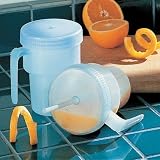
This listing is most useful as a lid replacement or an extra cup rather than as a first purchase, and that is a genuinely important role in this category. The lid is the part that fails. Rim cracks in the cup body are annoying, but a snapped latch tab or a warped lid edge from a dishwasher’s heat element turns a perfectly good cup into a leaking cup overnight. Buying the cup and lid as a unit is the cheapest way to restore a cup you already own, and it is also the right pick if your household needs a second cup in a different spot — one upstairs, one in the kitchen.
The specs mirror the other single Kennedy cups here: snap-fit spill-proof lid, translucent plastic body, stackable profile. The stackability is worth noting if you keep a few in a cupboard; these cups nest, so three of them take the space of one mug.
Key specs
- Configuration: single cup with snap-fit lid
- Lid style: spill-proof slotted top with snap engagement
- Material: translucent food-contact plastic
- Capacity: standard Kennedy cup class, roughly 7 to 8 ounces
- Cleaning: dishwasher-safe top rack recommended
- Storage: stackable with matching cups
Strengths
- Restores an existing Kennedy cup for the price of a single unit
- Snap-fit lid is quicker to seat one-handed than a friction press-fit
- Stackable, so spares cost almost no cabinet space
- Same restricted-flow behavior as the rest of the category, meaning no relearning
Pros
- Budget tier and genuinely useful as a maintenance purchase
- Simple two-piece assembly with no gasket to track
- Good second cup for a bedside or a reading chair
- Consistent with other Kennedy cups, so lids from the same style often interchange
Cons
- Not an upgrade over the basic single Kennedy cup — it is a spare
- Snap tabs are still the most likely failure point under repeated drops
- No capacity or seal advantage over the budget single
- Not appropriate for drinkers who need a straw
How it compares with the nearest alternative
Against the providence six-pack, this is the pragmatic choice when you already own cups and only need one more working unit. Against the standard single Kennedy cup, the difference comes down to lid engagement: the snap-fit is easier to seat one-handed, which matters if the person using the cup has limited dexterity in both hands. If your drinker can press a lid down with one palm while holding the cup with the other, either works. If not, the snap-fit is the friendlier of the two.
4. Kennedy Spillproof Cup, 7 Ounce – Best for Portion Control

The 7-ounce version is the pick when full-cup weight is the problem. A standard 8-ounce cup filled to the brim weighs noticeably more than most people expect, and for a drinker with tremor, weight is what turns a stable grip into an unstable one. A 7-ounce nominal capacity means a lighter cup at any given fill level, and it also nudges toward smaller, more frequent drinks rather than one heavy mug that gets set down hard.
It is also the better size for smaller hands. A cup that the drinker can wrap their fingers around rather than palm is easier to control, and the difference between a comfortable grip and a marginal one shows up immediately when the hand starts shaking. Clinically, smaller servings can also be relevant for people on fluid restrictions or those being encouraged to drink regularly through the day; that is a conversation for a doctor or dietitian rather than something a cup can solve.
Key specs
- Nominal capacity: 7 ounces
- Lid style: spill-proof slotted Kennedy lid
- Material: lightweight food-contact plastic
- Weight: lighter than an 8-ounce filled cup by roughly the weight of one fluid ounce of liquid
- Cleaning: dishwasher-safe
- Use: bedside, table, and tray-table service
Strengths
- Lower filled weight, which directly improves grip stability
- Smaller diameter suits smaller hands and a tighter finger wrap
- Encourages more frequent, smaller drinks instead of one heavy mug
- Same familiar restricted-flow lid, so no adaptation period if switching from another Kennedy cup
Pros
- Budget tier with a clear functional reason to exist
- Best option here for a smaller-handed drinker
- Reduces the volume of any single spill
- Simple two-piece construction, dishwasher-safe
Cons
- More refills per day, which means more chances for a spill at the pour
- Not enough volume for someone who drinks a lot in one sitting
- Same lid limitations as other slotted Kennedy cups at steep angles
- No straw, so unsuitable for reclined drinking
How it compares with the nearest alternative
Against the standard Kennedy Cup (Spill Proof), the choice is purely about filled weight and hand size. If the drinker manages a full-size cup without strain, buy the standard and refill less often. If they set the cup down awkwardly or grip it with their palm rather than their fingers, the 7-ounce version will be easier to control from the first use. Against the Sliner straw cups, the trade is the same as elsewhere in this list: the 7-ounce cup still requires lifting and tipping, while the Sliner removes tipping entirely but introduces a straw to clean.
5. Sliner 3 Pcs Adult Sippy Cups for Elderly with Straw, Blue – Best for Straw Drinkers

This is the only pick in the roundup built around a straw, and for a specific group of drinkers that makes it the only workable option. Anyone who cannot reliably tip a cup — because of weakness, limited range of motion, or because they drink while reclined in bed or in a recliner — gets almost no benefit from a better lid. The straw removes tipping from the equation entirely. The drinker only has to bring the straw to their mouth, which is a much smaller movement than raising a full cup and rotating it.
The three-cup set is blue, which matters more than it sounds. Color-coding cups is one of the simplest ways to prevent mix-ups in a household where more than one person uses adaptive cups, and a distinct color also makes the cup visible on a bedside table against white sheets or a white tray. Three cups also creates the rotation that keeps a clean one available.
Key specs
- Configuration: three cups with lids and straws
- Color: blue
- Drinking method: straw through a lidded top, no tipping required
- Grip: adult-sized profile rather than a child sippy-cup scale
- Cleaning: dishwasher-safe components; straws benefit from a dedicated straw brush for the inner bore
- Material: food-contact plastic with a straw of matching food-contact material
Strengths
- Works for reclined drinking, where no tipping cup can succeed
- Straw flow rate is easier to control than a slot or an open rim
- Three-cup set provides rotation without the cost of a six-pack
- Distinct blue colorway reduces cup mix-ups in shared households
- Lidded design still limits spills if the cup is knocked over, as long as the straw is seated
Pros
- Best option here for limited arm strength or bed-based drinking
- Removes the tilt-and-lift motion that causes most tremor spills
- Set of three is a reasonable middle ground between single and six-pack
- Familiar sippy-cup mechanics that most users already understand
Cons
- Straws are the cleaning weak point — the inner bore needs a brush, not just a rinse
- Straws are also the first thing to be lost or chewed; replacements can be fiddly to source
- Higher per-cup cost than the budget Kennedy cups
- A straw left in the cup can dribble if the cup is laid on its side
How it compares with the nearest alternative
Against the Providence Spillproof Kennedy Cup six-pack, the dividing line is mobility. If the drinker can lift a cup to their mouth and hold it there, the Providence is the stronger choice: better seal at tilt, no straw to clean, six cups instead of three. If lifting and holding is the hard part, no lid improvement will help and the Sliner is the correct purchase. Against the 7-ounce Kennedy cup, the Sliner wins on drinkers who cannot tip but loses on cleaning simplicity and on users who will happily sip from a slot.
How to Choose
Picking the right cup comes down to four measurable things: how much the drinker can tilt, how much they can grip, how often the cup needs to be cleaned, and how much liquid you want in play at once. Work through them in that order, because the first one eliminates entire categories.
Step 1: Decide whether the drinker tips or sips from a straw
This is the fork in the road. If the drinker can raise a cup to their mouth and hold it there long enough to drink, you are choosing among Kennedy-style slotted cups — the Providence pack, the standard single Kennedy cup, the snap-fit version, or the 7-ounce size. If they cannot, or if they drink reclined, no slotted lid will help and you need a straw design like the Sliner set. There is no partial answer here: a straw cup used by someone who can tip is usually just a more annoying cup, and a tipping cup used by someone who cannot lift is a guaranteed spill.
Step 2: Match cup weight to grip strength
Weight is the most underrated variable. A full 8-ounce cup holds roughly half a pound of liquid before you count the cup itself, and that mass moves when the hand shakes. Two levers reduce it: a smaller nominal capacity, or filling less. The 7-ounce Kennedy cup is the direct answer, but you can also simply fill any of these cups halfway and accept more frequent refills. If the drinker’s grip is marginal, a lighter filled cup at 4 ounces beats a heavy cup at 8 ounces every time, even if the heavy one has the better lid.
Step 3: Choose capacity by drinking pattern, not by convenience
Here is the actual arithmetic most people skip. If someone drinks 48 ounces of fluid a day from an 8-ounce cup, that is six fills. From a 7-ounce cup, it is roughly seven fills. Each fill is a pouring event, and pouring is a spill risk that no lid design eliminates, because the spill happens at the pitcher, not the cup. So a smaller cup means more pouring risk but lighter handling; a larger cup means fewer pours but heavier lifting. For most people with tremor, lighter handling wins, because the tremor affects the cup far more often than the pitcher.
| Daily intake target | Fills with 7 oz cup | Fills with 8 oz cup | Practical implication |
|---|---|---|---|
| 32 oz | ~5 | 4 | Small difference; choose on weight |
| 48 oz | ~7 | 6 | 7 oz adds about one pour per day |
| 64 oz | ~10 | 8 | Refill frequency starts to matter; consider bedside pitcher |
The practical fix for high-intake drinkers is a bedside pitcher the caregiver fills once, so the drinker only handles the cup. That caps pouring events at two or three a day regardless of cup size.
Step 4: Understand what lid seal actually means
Spill-proof is a spectrum, not a binary, and no cup in this category is spill-proof in the sense of holding liquid when fully inverted and shaken. What these lids do is resist spilling during the tipping and knocking that happens in normal use. A slotted Kennedy lid restricts the opening so liquid has to travel a longer path, which handles small tilts and knocks well. A lipped lid with full-rim engagement, as on the Providence cups, extends that tolerance to steeper angles. A straw lid does not rely on tilt resistance at all — it works because the cup does not need to tilt in the first place, though liquid can escape through the straw opening if the cup is laid flat. Match the mechanism to how the cup is most likely to fail in your house.
Step 5: Count your cleaning capacity honestly
This is the criterion that decides between a single cup and a multi-pack, and it has nothing to do with the cup’s engineering. If you or the caregiver will wash a cup after each use, one or two cups are sufficient. If dishes pile up for a day or two, you need a pack — three minimum, six if the user drinks frequently. A six-pack is not about having six drinks; it is about having one clean cup available on a bad day. Households that buy a single cup and then find it dirty at bedtime end up using an open mug instead, which defeats the entire purchase.
Step 6: Plan for the parts that wear out
Nothing here lasts forever, and knowing what fails first saves money. In order of likelihood:
- Lid tabs and snap points. These break first, usually from drops onto hard floors. A dropped cup with a cracked tab will leak at the rim. Replacement is cheap — a new cup-and-lid unit costs little, which is why the snap-fit single listing is useful as a maintenance purchase.
- Straws. Only relevant to the Sliner set. Straws get lost, chewed, or crack at the bend. Buy a set with spares or accept periodic replacement.
- Gaskets and O-rings. None of these picks use them, which is a deliberate part of their durability. If you choose a gasketed cup elsewhere, treat the gasket as a consumable and inspect it monthly, because a stretched gasket leaks worse than no gasket.
- The cup body itself. Plastic rims crack and bodies cloud over after years of hot dishwasher cycles. Top-rack washing and avoiding the heating element extends this considerably.
- Flow restriction loosening. Slotted lids do not really wear, but the drinking opening can deform if the cup is used for very hot liquids, so keep fill temperatures reasonable.
Step 7: Sizing and material notes that actually matter
Material in this category is almost universally polypropylene-class food-contact plastic, chosen because it tolerates hot liquids and dishwasher temperatures without the brittleness of cheaper plastics. If a listing specifies only “plastic,” assume this class. Avoid thin, clear, brittle plastics that crack at the rim; the difference is immediately obvious when you flex the cup edge gently.
Sizing in the Kennedy category clusters around 7 to 9 ounces because that range balances weight and refill frequency. There is no benefit to a 16-ounce spill-proof cup for a person with tremor: by the time it is full, it is too heavy to hold steadily, which negates the lid. If you need larger volumes, use a pitcher and refill the cup.
Step 8: When to ask a professional
Cups solve a handling problem, not a medical one. If someone’s fluid intake is dropping noticeably, if swallowing has become difficult or coughing occurs during drinking, or if a tremor is changing, that is a conversation with a doctor, nurse, or speech-language pathologist — thickened liquids or other strategies may be appropriate, and no cup design substitutes for that assessment. A spill-proof cup is an everyday convenience and a dignity-preserving tool; it is not a treatment.
Frequently Asked Questions
Are Kennedy cups actually spill-proof?
They are spill-resistant, not spill-proof in the strict sense. A slotted Kennedy lid restricts the opening so liquid resists escaping during normal tipping and knocking, but a fully inverted and shaken cup will still leak. What they reliably prevent is the everyday spill — the cup knocked over on a tray table, or tipped too far during a shaky sip.
Which cup is best for someone who cannot lift a cup?
A straw-based design, which in this roundup means the Sliner 3 Pcs Adult Sippy Cups. Straw cups remove the lifting-and-tipping motion that causes most spills for people with limited arm strength. A slotted Kennedy cup cannot help in that situation, because it still requires the drinker to raise and tilt the cup.
How often should these cups be washed?
After every use for anything other than water, and daily at minimum for water. All the picks here are dishwasher-safe, which is the practical answer for most households. Hand-rinsing works between dishwasher runs, but the lid opening benefits from a proper wash because liquid residue can build up around the slot.
Do Kennedy cups work for hot drinks like coffee or tea?
Yes, within normal drinking temperatures, since the plastic class used in these cups tolerates hot liquids. Let the drink cool to a normal drinking temperature first, and avoid boiling liquid, which can deform the lid opening. Hot drinks in a spill-proof cup also hold heat longer than an open mug, so expect it to stay warm considerably longer than you are used to.
What size cup is best for someone with a tremor?
Usually 7 to 8 ounces, or a larger cup filled only partway. The controlling factor is filled weight: a heavier cup is harder to hold steady, and an unstable cup defeats the best lid. Smaller hands also do better with the slimmer diameter of a 7-ounce cup.
How long do these cups last?
With normal use and dishwasher washing, expect years from the cup body, with the lid being the first component to fail — typically from a drop that cracks a tab or warps the rim. Because of that, single cups bought as spares or replacements are a sensible ongoing purchase rather than a sign the original cup was poor quality.
Can I buy just replacement lids?
Sometimes, depending on the brand and style, and it is worth checking before discarding a cup with a damaged lid. Within the same Kennedy cup style, lids often interchange across listings, so a cheap cup-and-lid unit can effectively serve as a lid replacement. That is the practical role of the single snap-fit Kennedy cup listing in this roundup.
Are these cups suitable for children?
They are adult-sized, so they are larger and hold more than a child’s sippy cup, but they are not unsafe for children old enough to drink from an open cup. The intended use is adults managing tremor, limited grip, or reduced coordination, and the sizing reflects that. For young children, a purpose-made child cup with matching flow rate is usually the better fit.
The Short Answer by Situation
If the drinker can lift and sip but spills often: buy the Providence Spillproof Kennedy Cups six-pack. The full-rim lipped lid tolerates more tilt than the alternatives, and six cups means a clean one is always available. If you are not yet sure the cup will be accepted: start with a single Kennedy Cup (Spill Proof). It costs almost nothing to find out, and if it works you can add a pack or a replacement lid later. If the drinker’s hands are small or full cups feel heavy: choose the 7-ounce Kennedy Spillproof Cup and fill it partway, prioritizing light handling over fewer refills. If you already own cups and one lid has failed: the snap-fit Kennedy cup with lid is the cheapest way to restore a working cup, and it is easier to seat one-handed. If the drinker cannot tip a cup, or drinks reclined: the Sliner 3 Pcs Adult Sippy Cups with straws is the only pick here that solves the problem, and no lid improvement on the Kennedy cups will substitute for it. Whichever you choose, buy at least two — the cup that stays in the cabinet because it is dirty is the one that gets replaced by an open mug, and that is how the spills start again.





