
Our Top Picks
 Nature's Generator 15 Amp Manual Transfer Switch 4-Circuit15A-4 Circuits13 x 9 x 4 inches13 poundsCheck on Amazon


The best transfer switch for most backup-power setups is the Nature’s Generator 50 Amp Manual Transfer Switch, 12-Circuit 120/240V. It covers the widest range of real outages: a 50-amp feed from a portable generator, twelve branch circuits, and both 120V and 240V legs, so a well pump, a furnace blower, and the kitchen outlets can all sit behind one panel without gymnastics. If your generator is small and your budget is tight, the EZ Generator Switch is the simpler, cheaper answer for a handful of 120V essentials. If you have a permanently installed standby generator and want the house to restore itself, the Generac 200 Amp Next Gen Automatic Transfer Switch is the premium pick. Everything below is sorted by amperage, circuit capacity, generator compatibility, and installation requirements, so you can match a switch to your generator, your breaker panel, and your willingness to pull a permit.
Top 3 Picks
Best Overall: Nature’s Generator 50 Amp Manual Transfer Switch, 12-Circuit 120/240V
A 50-amp, 120/240V feed at 12,000 watts covers the practical middle of the market: large enough for a 9,500–15,000W portable generator, small enough to install on a standard 200-amp service without a service-entrance rework. Twelve circuits is enough to give each major load its own breaker instead of doubling up a refrigerator and a sump pump on one run. It suits the homeowner who wants one panel, one inlet, and a clear set of labeled breakers.
Best Budget: The Original EZ GENERATOR SWITCH
A compact, UL/CSA-listed manual kit made in the USA, aimed at the person who wants a few essential circuits protected and does not want to spend a weekend in the panel. It is the right call when your generator is a 2,000–3,500W inverter and your goal is lights, internet, phone charging, and the refrigerator — not central air.
Best Premium: Generac 200 Amp Next Gen Automatic Transfer Switch
Service-entrance rated at 200 amps with a built-in surge protective device, this is the switch you pair with a permanently installed standby generator so the transfer happens on its own, whether or not anyone is home. It costs more and it requires a licensed install, and for a whole-home standby setup that is exactly the trade you want.
Quick Comparison
| Product | Best for | Key specs | Price tier |
|---|---|---|---|
| Tzechkii 200 Amp Manual Generator Transfer Switch | Whole-home manual switching on a large generator | 200A, 120/240V, 48,000W, manual, double-throw style | Mid-range |
| The Original EZ GENERATOR SWITCH | Small DIY essentials on a compact inverter generator | Manual, UL/CSA approved, made in USA, multi-circuit kit | Budget |
| Nature’s Generator 30 Amp Manual Transfer Switch 6-Circuit | 120V-only essentials with a small generator | 30A, 6 circuits, 120V, UL Listed, non-automatic | Mid-range |
| Nature’s Generator 50 Amp Manual Transfer Switch 12-Circuit | Balanced whole-home essentials including 240V loads | 50A, 12 circuits, 120/240V, UL Listed, non-automatic | Premium |
| Nature’s Generator 30A Non-Automatic Transfer Switch, 12-Circuit | Many circuits on a modest 30A feed | 30A, 12 circuits, 120/240V, UL Approved, non-automatic | Premium |
| Connecticut Electric Series 2 Transfer Switch Kit | All-in-one portable hookup with cord and outlet | 50A, 10 circuits, 120/240V, 25′ cord, outdoor outlet box | Premium |
| Nature’s Generator Manual Transfer Switch Kit 15A 4-Circuit | Indoor light-load backup on a small inverter | 15A, 4 circuits, 120V, indoor enclosure | Mid-range |
| GEYA 2P 63A Automatic Transfer Switch | Automatic dual-source switching for small systems | 2-pole, 63A, AC110V class, millisecond-level transfer | Budget |
| Generac 200 Amp Next Gen Automatic Transfer Switch | Whole-home automatic standby power | 200A, service-entrance rated, SPD included, automatic | Premium |
| MUJURUR 100A Generator Transfer Switch | Value manual double-throw safety switching | 100A, 120/240V, 24,000W, double-throw safety switch | Budget |
| Nirakoka RV Automatic Transfer Switch | RV and marine shore-power switching | 240VAC class, 50A/70A neutral rating, automatic | Budget |
| Reliance Controls 30A 6-Circuit Transfer Kit | Classic six-circuit essentials panel | 30A, 240V, 2 spaces, 6 circuits, surface mount | Mid-range |
Read the amperage column first. Circuit count is the headline most listings push, but the feed rating sets the ceiling on everything the panel can ever deliver, and a 12-circuit switch on a 30-amp feed is still a 7,200-watt switch.
How We Chose
These picks were selected by reading published specifications, manufacturer documentation, and category standards rather than by handling the units. Four filters did most of the work. First, electrical honesty: a switch has to state its amperage, voltage configuration, and circuit count, because those three numbers determine whether it can carry the loads a buyer actually has. Second, category fit: a 200-amp service-rated automatic switch and a 15-amp indoor kit solve completely different problems, so each was judged against the job it claims to do, not against the others. Third, generator compatibility: the inlet and feed rating has to line up with a generator class a real person owns, from a 2,200W inverter to a 22kW standby unit. Fourth, upgrade path: whether the switch can accept a larger generator later, accept 240V breakers, or be swapped for an automatic unit without rebuilding the whole installation. Products that blurred their ratings or implied whole-home coverage from a 15-amp feed were left out.
1. Tzechkii 200 Amp Manual Generator Transfer Switch – Best for Whole-Home Manual Switching
As an Amazon Associate we earn from qualifying purchases at no extra cost to you.

The Tzechkii 200-amp manual transfer switch is the heavy end of the manual category. Its rating lines up exactly with a standard 200-amp residential service: 200 amps at 240 volts is 48,000 watts, which is the number the listing leads with. That is not marketing math, it is Ohm’s law, and it tells you immediately who this is for — someone with a generator big enough to carry a whole house, or someone who wants the switch sized to the service even if the generator is smaller and the load is managed by hand.
This suits three kinds of buyers. The first is a homeowner with a large standby generator who prefers manual control and wants no control board, no battery, and no automatic logic that can fail silently. The second is a rural property with a tractor-driven PTO generator in the 15–25kW class. The third is anyone replacing an old double-throw safety switch at the service entrance who wants a modern enclosure and clean labeling.
Key specs
- Amperage: 200A
- Voltage: 120/240V single-phase
- Capacity: 48,000W at 240V
- Operation: manual, non-automatic
- Typical mounting: surface mount, service-adjacent or service-entrance position depending on configuration
- Generator class: 20kW and up, or a PTO unit
The honest strength here is headroom. A 200-amp switch does not care whether you are running a 12kW portable today and a 22kW standby in three years; the wiring and enclosure are already sized. That is a real upgrade path that a 50-amp kit cannot offer. Manual operation is also a genuine reliability feature — no sensing circuitry, no transfer relay, no start battery. You flip a handle, and either the utility or the generator is connected, never both.
The trade is weight, cost, and installation complexity. A switch at this rating is a substantial enclosure, it lands close to the service, and in many jurisdictions the work touches the service entrance itself, which means a permit, an inspection, and almost certainly a licensed electrician. You also need to be home to use it, and you need to manage load by hand — a 200-amp switch will happily let you overload a 12kW generator if you turn everything on.
Pros
- Matches a standard 200-amp service with no adapter or derating gymnastics
- Enormous upgrade headroom for future generator changes
- No electronics to fail; operation is entirely mechanical
- Makes a clean, code-friendly alternative to a backfed breaker and interlock in jurisdictions that require a listed transfer device
Cons
- Requires a large generator to be useful at full rating
- Heavy and expensive to install; service-entrance work usually demands a licensed electrician
- Manual means someone has to be home, and load management is on you
- Overkill for a 7,500W portable and six essential circuits
How it compares
The nearest alternative in this list is the Generac 200 Amp Next Gen Automatic Transfer Switch. Both are 200-amp, service-scale devices; the difference is automation. The Generac handles the transfer by itself and adds surge protection, at premium pricing and with a standby generator ecosystem around it. The Tzechkii is the manual, mid-range version of the same idea — you save money and gain mechanical simplicity, and you give up the automatic transfer. If you already own a portable generator and will always be home during outages, manual is the better economics. If the point is that the house stays powered when nobody is there, the Generac is the answer.
2. The Original EZ GENERATOR SWITCH – Best for Small DIY Essentials
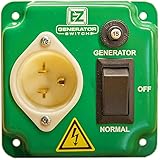
The EZ Generator Switch is the entry point to the category, and it is a well-known one: a patented, UL- and CSA-approved manual transfer switch made in the USA, sold as a kit rather than a bare box. It is aimed squarely at the homeowner with a compact inverter generator who wants the refrigerator, the furnace, the internet, and a few lighting circuits to keep running, and who wants the installation to be approachable.
This is the pick for a first-time backup-power buyer. If your generator is in the 2,000–3,500W class — the kind you can lift into a truck bed — you do not need a 50-amp feed or a 12-circuit panel, and buying one wastes money and panel space. What you need is a small, listed switch with clearly labeled circuits, a short harness, and instructions that a competent DIYer can follow with the main breaker off.
Key specs
- Operation: manual, non-automatic
- Listing: UL and CSA approved
- Origin: made in the USA
- Feed class: small-portable generator class; confirm the exact amperage and circuit count from the manufacturer’s current spec sheet before ordering
- Form factor: compact panel-mounted kit with pre-wired harness
- Typical generator match: 2,000–3,500W inverter
The strengths are simplicity and confidence. UL/CSA listing matters more than most buyers realize — an inspector, an insurer, and an electrician all look for it, and a homemade backfeed setup fails all three tests. Made-in-USA manufacturing also means replacement parts and support are straightforward to source. The kit format means you are not separately hunting a cord, a connector, and a mounting box.
The limitations are the flip side of the design. This is an essentials-class device: it is not going to carry a 240V well pump, a central air conditioner, or an electric range, and the total load ceiling is set by the feed rating rather than by how many circuits you can squeeze in. It also assumes a reasonably standard panel with room for the included breakers. Older panels, crowded panels, and panels with unusual busbar layouts can turn a two-hour job into a frustrating one.
Pros
- UL and CSA approved, which keeps the installation defensible with inspectors and insurers
- Made in the USA with a documented, patented design
- Kit format reduces the parts-shopping that trips up first-time installers
- Lowest-cost realistic path to a code-compliant essentials backup setup
Cons
- Small feed class; not suitable for whole-home or 240V-heavy loads
- Manual operation only
- Circuit count is limited, so you have to choose your essentials carefully
- Panel fit can be awkward in older or non-standard load centers
How it compares
Its closest neighbor here is the Nature’s Generator Manual Transfer Switch Kit 15A 4-Circuit Indoor. Both are small, indoor-oriented kits for light loads. The EZ Generator Switch leans on its UL/CSA listing, US manufacturing, and established install base; the Nature’s Generator 15A kit is a simpler, lower-capacity option with four circuits and a 15-amp ceiling of roughly 1,800 watts. If you are running a 2,200W inverter and want maximum circuit flexibility, the EZ kit is usually the better fit. If your load list is genuinely tiny — a furnace, a fridge, and two lighting runs — the 15A kit is enough and simpler to place.
3. Nature’s Generator 30 Amp Manual Transfer Switch 6-Circuit 120V – Best for 120V-Only Essentials

This is the straightforward middle of the small-switch market: 30 amps, six circuits, 120 volts, UL Listed, non-automatic. The math is simple and worth stating plainly — 30 amps at 120 volts is 3,600 watts, and with a continuous-duty derate of 80 percent you are realistically budgeting about 2,880 watts of steady load. That is a well pump’s worth of nothing and a refrigerator-and-lights setup’s worth of plenty, depending on your house.
It suits the homeowner with a 3,500–5,000W 120V-class generator or an inverter with a 30-amp RV-style outlet. Six circuits is the sweet spot for a first essentials panel: furnace blower, refrigerator, sump pump, one lighting circuit, one bedroom/office outlet run, and one spare that inevitably becomes the internet closet. It is a mid-range pick because it is more capable than a four-circuit kit but costs less than a 12-circuit 120/240V unit.
Key specs
- Amperage: 30A
- Circuits: 6
- Voltage: 120V only
- Capacity: 3,600W at 120V; roughly 2,880W continuous at an 80 percent derate
- Listing: UL Listed
- Operation: manual, non-automatic
The advantage of a 120V-only switch is that it is genuinely simple. Every circuit is single-phase 120V, the wiring is uniform, and there is no confusion about which breakers sit on which leg of a 240V feed. For a household whose critical loads are all 120V — which describes most homes except for the well pump, the central AC, and the electric range — that simplicity is worth real money.
The hard limitation is exactly that: no 240V. If your well pump is 240V, if you have a 240V sump pump or a 240V septic pump, or if you want the option of running a window AC on a dedicated circuit, this switch cannot help you. You also need to respect the 3,600W ceiling. Six circuits does not mean six circuits’ worth of simultaneous load; it means you have six places to put loads, and a total budget of roughly 2,880 watts running.
Pros
- Clean, simple 120V wiring with no leg-balancing confusion
- Six circuits gives each major essential its own breaker
- UL Listed and reasonably priced for the mid-range tier
- Straightforward install on a standard panel with available space
Cons
- No 240V capability, which rules out well pumps and central AC
- 3,600W total ceiling is modest for a household with multiple motor loads
- Manual operation only
- Six circuits can fill up faster than buyers expect
How it compares
The nearest alternative is the Reliance Controls 30A 6-Circuit Surface Mount Kit, which is the classic version of this exact configuration. Both are 30-amp, six-circuit units; the Reliance is a 240V-capable design with two spaces that can accept a 240V breaker, which means it can serve one 240V load that the Nature’s Generator 120V unit cannot. If your only 240V concern is a single well pump, that difference decides the purchase. If everything you need is 120V, the Nature’s Generator unit is the more focused, simpler install.
4. Nature’s Generator 50 Amp Manual Transfer Switch 12-Circuit 120/240V – Best Overall
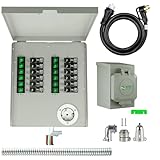
This is the pick that solves the most problems at once. Fifty amps at 240 volts is 12,000 watts, and twelve circuits at 120/240V means both legs of the panel are available — so a 240V well pump, a 240V furnace, and a dozen single-pole circuits can coexist behind one UL Listed, non-automatic switch. It is the premium tier of the manual category, and it earns that position on capability rather than cosmetics.
Who it suits: the homeowner with a 9,500–15,000W portable generator and an L14-50 or 14-50 outlet, running a house where the critical loads include at least one 240V item. That is a very large slice of the suburban and rural market. It also suits anyone who has been frustrated by a six-circuit panel and wants to stop rotating the refrigerator and the freezer on the same breaker.
Key specs
- Amperage: 50A
- Circuits: 12
- Voltage: 120/240V
- Capacity: 12,000W at 240V; roughly 9,600W continuous at an 80 percent derate
- Listing: UL Listed
- Operation: manual, non-automatic
- Generator match: 9,500–15,000W portable, or a small standby unit
Twelve circuits is the number that changes daily life during an outage. Instead of triaging, you assign: well pump on its own 240V breaker, furnace on its own, refrigerator, chest freezer, sump pump, kitchen outlets, two lighting runs, the office, the garage door, and two spares. The panel stays closed, the labels stay meaningful, and nobody has to remember which switch to flip when the microwave runs.
The 12,000W ceiling is generous but not unlimited, and this is where buyers get into trouble. A 50-amp feed with an 80 percent continuous derate gives you about 9,600 watts of steady load. Add a 240V well pump, a 240V electric water heater, and a central AC and you will exceed it — a transfer switch does not create power, it just routes it. You also need a generator with a matching 50-amp outlet, and you need to run adequately sized conductors from the inlet to the switch, which is a real materials cost on a long exterior run.
Pros
- 120/240V capability covers well pumps, furnaces, and 240V motors
- Twelve circuits eliminates load rotation during outages
- 12,000W ceiling matches the most popular large-portable generator class
- UL Listed and mid-panel installation rather than service-entrance work
Cons
- Premium tier pricing; more than most six-circuit buyers need to spend
- Requires a 50-amp-capable generator and inlet to be fully used
- Larger enclosure and more conductors mean a longer, more careful install
- Manual only; you still have to be home and flip the switch
How it compares
The nearest alternative is the Nature’s Generator 30A 12-Circuit 120/240V unit. Both have twelve circuits and both handle 240V, so the circuit count is a wash and the difference is entirely amperage: 12,000 watts versus 7,200 watts, and roughly 9,600 versus 5,760 watts continuous. If your load list includes a well pump plus a 240V furnace plus normal household circuits, the 50-amp version is the one that will not leave you managing breakers. If your generator is a 7,500W portable and your essentials are modest, the 30-amp version saves money and is easier to wire. Choose based on the generator you own, not the generator you might own.
5. Nature’s Generator 30A Non-Automatic Transfer Switch, 12-Circuit 120/240V – Best for Many Circuits on a Modest Feed

This switch makes a specific and useful trade: it gives you twelve circuits and full 120/240V capability, but caps the total feed at 30 amps — 7,200 watts, or roughly 5,760 watts continuous. It is the answer for the homeowner who has plenty of small loads to cover and a generator that cannot deliver 50 amps, and who would rather have granularity than raw capacity.
The case for it is real. A 7,500W portable generator with an L14-30 outlet is one of the most common backup setups in North America. Twelve circuits lets you put the furnace on one breaker, the refrigerator on another, the sump pump on a third, the freezer on a fourth, and still have eight left for lighting, outlets, and a 240V well pump. Compare that to a six-circuit panel where the freezer and the refrigerator have to share, and the value is obvious.
Key specs
- Amperage: 30A
- Circuits: 12
- Voltage: 120/240V
- Capacity: 7,200W at 240V; roughly 5,760W continuous at an 80 percent derate
- Listing: UL Approved
- Operation: manual, non-automatic
- Generator match: 5,000–8,000W portable with a 30-amp outlet
The strength is circuit granularity on a budget generator. It is also a genuinely good match for a 240V well pump plus a handful of 120V circuits, because the 240V breaker consumes two of the twelve positions and leaves ten for single-pole loads. At 5,760 watts continuous you can run a 1,000-watt well pump, a 700-watt furnace blower, a 700-watt refrigerator, a 400-watt freezer, a 1,050-watt sump pump, and 150 watts of electronics with room to spare — about 4,000 watts running, comfortably under the ceiling.
The limitation is surge, not steady state. Motor starting loads stack in ways people underestimate: a refrigerator’s compressor can draw three times its running wattage for a second, and a sump pump cycling on while the furnace blower is already running can momentarily push a 30-amp feed hard. The 7,200W figure is the wire’s ceiling, not the generator’s, and the generator’s surge rating is usually the real constraint. Twelve circuits also invite the temptation to load all twelve at once, which is the most common way people trip a 30-amp feed.
Pros
- Twelve circuits on a modest 30-amp feed means no load rotation
- 120/240V capability handles a well pump or a 240V furnace
- Matches the very common 7,500W portable generator with an L14-30 outlet
- Premium build quality in a size that fits more homes than a 50-amp unit
Cons
- 7,200W total ceiling caps how much can run simultaneously
- Premium tier pricing for what is ultimately a 30-amp feed
- Twelve circuits can create unrealistic expectations about total capacity
- Manual operation only
How it compares
Its nearest alternative is the Nature’s Generator 50 Amp 12-Circuit version, and the comparison is almost purely about the generator in your garage. Same circuit count, same voltage configuration, different ceiling: 7,200W versus 12,000W. If you own a 5,000–8,000W portable with a 30-amp outlet, buying the 50-amp switch gains you nothing except a heavier enclosure and a bigger inlet you cannot feed. If you own or plan to own a 9,500W-plus generator, the 50-amp unit is the correct choice and this one becomes a bottleneck you will notice on the first cold morning.
6. Connecticut Electric Series 2 Backup Power Manual Transfer Switch Kit – Best All-in-One Kit

The Connecticut Electric Series 2 kit is the most complete package in this roundup: 50 amps, 10 circuits, 120/240V, and it ships with a 25-foot cord and an outdoor outlet box. That last part matters more than it sounds. Most transfer switch projects stall not on the switch but on the plumbing — the inlet box, the cord, the conduit run, the weatherproofing. A kit that includes the cord and the outdoor outlet removes the two most commonly mis-ordered parts.
It suits the homeowner with a 9,500–12,500W portable generator who wants a portable-generator hookup rather than a hardwired standby connection, and who values a single purchase over assembling a bill of materials. The 25-foot cord is the practical detail: it lets you park the generator outside the garage or away from a window while still reaching the inlet, which is exactly what carbon monoxide safety guidance recommends.
Key specs
- Amperage: 50A
- Circuits: 10
- Voltage: 120/240V
- Capacity: 12,000W at 240V; roughly 9,600W continuous at an 80 percent derate
- Included: 25-foot cord and outdoor outlet box
- Operation: manual, non-automatic
- Generator match: 9,500–12,500W portable
Ten circuits is a considered number. It is enough for a well pump or a 240V furnace plus eight single-pole circuits, which covers the realistic essentials list in most homes without the “what do I do with twelve breakers” problem. The included outdoor box means the inlet is weather-rated from day one, and the cord length gives you placement flexibility that a hardwired standby connection cannot offer.
The trade-offs are the usual ones for a premium kit. You pay for the bundled accessories, and if you already own a cord or plan a hardwired inlet, you are buying parts twice. Ten circuits is also two fewer than the 12-circuit Nature’s Generator units, which matters if your essentials list runs long. And because it is a portable-generator kit, it presumes you will be home, will roll the generator out, and will connect it in the weather — a manual process by definition.
Pros
- Includes the cord and outdoor outlet box, removing the most common ordering mistakes
- 50-amp, 120/240V feed handles 240V well pumps and furnaces
- 25-foot cord allows safe generator placement away from doors and windows
- Established brand with a documented Series 2 product line
Cons
- Premium pricing partly reflects bundled accessories you may not need
- Ten circuits is slightly fewer than the 12-circuit competitors
- Manual operation; no automatic transfer
- Outdoor box placement requires planning for weather and cord routing
How it compares
The nearest alternative is the Nature’s Generator 50 Amp 12-Circuit unit. Both are 50-amp, 120/240V, premium-tier manual switches with the same 12,000W ceiling. The Nature’s Generator gives you two more circuits; the Connecticut Electric gives you the cord and outdoor box in the box. If you are starting from zero and want one purchase, the kit wins on convenience. If you already have an inlet and cord, or you want the extra two circuits, the Nature’s Generator unit is the better value.
7. Nature’s Generator Manual Transfer Switch Kit 15A 4-Circuit Indoor – Best for Tiny Indoor Loads

The 15A, four-circuit indoor kit is the smallest practical transfer switch in this list, and it is honest about it. Fifteen amps at 120 volts is 1,800 watts, or about 1,440 watts continuous. That is not a whole-home solution and it does not pretend to be. It is a targeted device for a targeted problem.
Who it suits: someone with a 1,500–2,200W inverter generator or a large portable power station who needs a furnace, a refrigerator, and a couple of lighting or outlet circuits to keep running. It is also a reasonable choice for a cabin, a garage, or a workshop where the load list is short and predictable. Indoor mounting means it lives inside the house, near the panel, with no weatherproofing to plan.
Key specs
- Amperage: 15A
- Circuits: 4
- Voltage: 120V
- Capacity: 1,800W at 120V; roughly 1,440W continuous at an 80 percent derate
- Mounting: indoor enclosure
- Operation: manual, non-automatic
- Generator match: 1,500–2,200W inverter or power station
The value here is proportionality. A 15-amp kit costs less, installs faster, uses thinner conductors, and fits in tight panels where a 50-amp enclosure simply will not go. Four circuits forces a discipline that is actually useful: you write down the four things that matter and you stop there. For a furnace, a refrigerator, a sump pump, and one lighting circuit, this is complete.
The limitation is that 1,440 watts continuous disappears fast. A furnace blower at 700 running watts plus a refrigerator at 700 running watts is already 1,400 watts — essentially the entire budget, with nothing left for a sump pump’s 1,050-watt draw. In practice you run the furnace and the refrigerator and accept that the sump pump waits. There is also no 240V capability and no realistic upgrade path within the same enclosure; if your needs grow, you replace the switch.
Pros
- Lowest-capacity, lowest-friction install in the roundup
- Indoor enclosure simplifies placement and weatherproofing
- Matches small inverter generators and portable power stations
- Forces a realistic essentials list, which many buyers need
Cons
- 1,800W total is a hard ceiling; simultaneous motor loads will exceed it
- No 240V capability
- Four circuits leaves no room for growth
- Manual operation and a full replacement if needs change
How it compares
The nearest alternative is The Original EZ GENERATOR SWITCH. Both are small, manual, indoor-friendly kits aimed at the same buyer, and both will run a furnace and a refrigerator. The EZ Generator Switch brings UL/CSA listing, US manufacturing, and a slightly broader circuit count; the Nature’s Generator 15A kit is the more compact, lower-capacity option with a clearly stated four-circuit limit. If your generator is 2,200W and your essentials list has five items on it, the EZ switch is the better fit. If it has four, the 15A kit is enough and simpler.
8. GEYA 2P 63A Automatic Transfer Switch – Best Automatic Switching for Small Systems

The GEYA unit is a different animal from everything else here: it is a compact two-pole automatic transfer switch rated at 63 amps, designed to switch between two AC sources automatically, with millisecond-level transfer. It is not a whole-house generator switch and it does not claim to be. It is a dual-power ATS for small systems — inverter-to-grid switching, a battery bank and a utility feed, or a small off-grid setup where continuity matters more than capacity.
Who it suits: someone running a hybrid or off-grid system with an inverter, who wants the load to move from grid to inverter without a manual step. It is also a reasonable fit for a small critical-load subpanel where the loads are modest and the goal is uninterrupted switching. In the budget tier, it is the only automatic option in this list, and that alone makes it worth understanding.
Key specs
- Poles: 2P (two-pole)
- Amperage: 63A
- Voltage class: AC110V as listed; confirm the exact configuration for your system before ordering
- Operation: automatic, dual-source
- Transfer: millisecond-level switching
- Typical use: inverter/grid changeover, small off-grid and hybrid systems
The appeal is automation at a budget price point. Automatic transfer is normally a premium feature reserved for service-rated switches paired with standby generators. A compact ATS like this brings automatic changeover to a small system for far less, and millisecond-level transfer means most electronics ride through without rebooting — which is the entire point for a router, a NAS, or a home automation hub.
The limitations are important and easy to misread. Sixty-three amps at 110 volts is roughly 6,900 watts, but this is a two-pole device in a compact form factor; it is not a substitute for a 200-amp service-rated transfer switch, and it is not designed to sit at the service entrance of a house with a 22kW standby generator. It also requires a proper installation with correct conductor sizing and enclosure protection for its location. Buyers who assume “63A ATS” means “whole-house automatic backup” are the ones who end up disappointed.
Pros
- Automatic transfer at a budget price tier
- Millisecond-level switching protects sensitive electronics
- Compact form factor suits small panels and tight enclosures
- Two-pole design handles 240V-class small systems
Cons
- Not a whole-house service-rated transfer switch
- 63A rating limits total connected load
- Voltage and configuration details need careful verification before purchase
- No circuit-level load management; you are switching the whole feed
How it compares
The nearest alternative is the Generac 200 Amp Next Gen Automatic Transfer Switch, and the comparison illustrates the category split perfectly. Both are automatic. The Generac is a 200-amp, service-entrance-rated device built for a permanently installed standby generator and a whole house. The GEYA is a compact 63-amp ATS for small dual-source systems. They are not competitors so much as different tools: if you are switching an inverter and a utility feed for a subpanel, the GEYA is the right scale. If you are backing up an entire home with a standby generator, only the Generac-class device is appropriate.
9. Generac 200 Amp Next Gen Automatic Generator Transfer Switch – Best for Whole-Home Automatic Backup

The Generac Next Gen is the premium end of the category and the only device here built for a fully automatic, whole-home standby installation. Two hundred amps, service-entrance rated, with a surge protective device integrated into the enclosure. It is designed to sit between the utility meter and the main panel and to transfer the entire house to a standby generator without anyone touching anything.
Who it suits: a homeowner with a permanently installed standby generator — typically in the 18–26kW class — who wants the house to restore itself whether they are home, at work, or asleep. It also suits anyone whose critical loads include medical equipment, a home business, or a sump system that cannot wait for someone to return. The SE rating means it can be installed as the service disconnect, which simplifies the overall installation compared to adding a separate disconnect.
Key specs
- Amperage: 200A
- Service rating: SE rated (suitable for service-entrance use)
- Surge protection: integrated SPD
- Voltage: 120/240V single-phase
- Capacity: 48,000W at 240V
- Operation: automatic
- Generator match: permanently installed standby, roughly 18–26kW
The strengths are automation and integration. There is no handle to flip, no generator to roll out, and no cord to connect in the rain. The built-in surge protective device adds a layer of protection for the electronics in the house, which is a meaningful benefit when utility power returns and the transfer happens under load. The 200-amp SE rating matches a standard modern residential service, so it slots into the architecture most homes already have.
The costs are real and worth stating plainly. This is premium-tier hardware, and it only makes sense alongside a standby generator, which is a separate and larger investment. Installation involves the service entrance, so a licensed electrician and a permit are effectively mandatory, and the utility may need to be involved for a meter pull. It is also automatic by design, which means if the control logic or the sensing circuit fails, you have less manual recourse than with a mechanical double-throw switch.
Pros
- Fully automatic transfer with no manual intervention
- 200-amp service-entrance rating matches standard residential services
- Integrated surge protective device protects household electronics
- Purpose-built to pair with a permanently installed standby generator
Cons
- Premium pricing, and only rational if you own or are buying a standby generator
- Service-entrance work requires licensed installation, permit, and inspection
- Automatic controls add failure points a mechanical switch does not have
- Overkill — and incompatible — for portable generator users
How it compares
The nearest alternative is the Tzechkii 200 Amp Manual Transfer Switch. Both are 200-amp, 48,000-watt, 120/240V devices sized for a standard residential service. The difference is the entire reason both exist: the Generac transfers automatically and adds surge protection; the Tzechkii is mechanical, manual, and mid-range priced. If you own a standby generator and want the house to restore itself, the Generac is the only sensible choice of the two. If you own a large portable or PTO generator and will always be present, the Tzechkii delivers the same amperage for less money and with fewer parts to fail.
10. MUJURUR 100A Generator Transfer Switch – Best Value Double-Throw Safety Switch
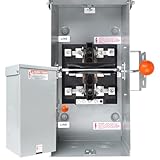
The MUJURUR 100-amp unit is a heavy-duty double-throw safety switch rated for 24,000 watts at 120/240V, and it occupies a genuinely useful niche: the budget tier of the service-scale category. One hundred amps is more than most portable generator setups need and less than a full 200-amp service, which makes it the natural fit for a 12–20kW generator feeding a large subpanel or a mid-sized service.
Who it suits: a homeowner with a 12–20kW generator who wants a manual, mechanical, service-adjacent switch without paying 200-amp prices. It is also a strong option for a detached shop, a barn, or an outbuilding where the load is substantial but not whole-house. Double-throw design means it is mechanically impossible to connect the generator and the utility at the same time, which is the safety property that matters most in this category.
Key specs
- Amperage: 100A
- Voltage: 120/240V
- Capacity: 24,000W at 240V; roughly 19,200W continuous at an 80 percent derate
- Type: double-throw safety switch
- Operation: manual
- Generator match: 12–20kW
The strength is the mechanical interlock. A double-throw switch physically cannot backfeed the utility, which is the failure mode that injures and kills line workers during outages. It also has no electronics, no sensing circuit, and no battery — it works in the cold, after a flood, and years after installation without maintenance beyond an occasional exercise of the handle. The 24,000-watt rating gives real headroom over a 12–15kW generator.
The limitations follow from the design. Manual operation means someone must be home. There is no circuit-level control — this switches the whole feed, so load management happens at the main panel and you have to be disciplined about what you turn on. Installation at this amperage is not a beginner project: conductor sizing, enclosure placement, and grounding all matter, and in many jurisdictions the work touches the service, which means a permit and a licensed electrician





