
Our Top Picks
 Genie 6072H-O Residential Wall Mounted Garage Door Opener7 x 8.8 x 12.01 Inches26.9 PoundsCheck on Amazon


Top 3 Picks
The Chamberlain Wall Mount myQ Garage Door Opener with Battery Backup is the best overall wall-mount opener for low-ceiling garages: it mounts on the wall beside the door, runs on household current, keeps working through a power outage, and adds app and voice control without giving up jackshaft-style clearance savings. For tighter budgets, the Genie 6072H-O Residential Wall Mounted Garage Door Opener delivers the same core side-mount clearance benefit with a simpler feature set. Buyers who need to lift heavy or tall doors should look at the Genie B6172H Wall Mount Smart Garage Door Opener, rated for doors up to 14 ft high and 850 lb, which is the strongest option in this roundup.
Quick Comparison
Every product below is a wall-mount opener, a mounting/hanging kit, or an accessory that supports a low-clearance installation. Because retail pricing moves constantly, each entry is labeled by tier rather than a fixed price.
| Product | Best for | Key specs | Price tier |
|---|---|---|---|
| Chamberlain Wall Mount myQ Garage Door Opener, Battery Backup | Best overall wall-mount opener | Side-mount (jackshaft) format; battery backup included; myQ app and voice-assistant control; integrated LED lighting; wall-mount frees full overhead ceiling clearance | Premium |
| Genie 6072H-O Residential Wall Mounted Garage Door Opener | Budget-friendly wall-mount opener | Wall-mounted side-mount format; residential duty cycle; black housing; designed for standard sectional doors; no overhead rail | Mid-range |
| Genie B6172H Wall Mount Smart Garage Door Opener | Heavy or tall doors | DC motor; lifts doors up to 14 ft high and up to 850 lb; smart connectivity; wall-mount design; black housing | Premium |
| Skylink Smart Side Mount Garage Door Opener & Wireless Keypad Bundle | Bundle value with keypad | Side-mount opener plus wireless keypad; smart controls; low-clearance-friendly wall mounting; no overhead rail | Mid-range |
| XDTKML Replacement for Linear Garage Door Opener HAE00001 Wall Mount | Replacing a failed Linear wall-mount unit | Aftermarket replacement part matching Linear HAE00001 wall-mount application; wall-mount form factor | Budget |
| Yuleimy Heavy Duty Garage Door Opener Mounting Bracket Hanging Kit, 4 PCS | Reinforcing an overhead install | Four-piece heavy-duty bracket/hanging kit; steel hardware; used for suspended mounting | Budget |
| Garage Door Opener Hanging Kit, 14/20/20/26 Inch, 4 Pack | Adjustable overhead hanging angles | Four-piece kit; 14 in, 20 in, 20 in and 26 in pieces; adjustable hanging lengths | Mid-range |
| Garage Door Opener Remote Wall Mount – Organized, Secure & Easy to Install (1, White) | Storing the remote at eye level on the wall | Single wall-mount remote holder; white; screw-in installation | Budget |
How We Chose
This roundup is built from published product specifications, manufacturer documentation, and category knowledge about how wall-mount openers behave in real garages. No product here was tested, benchmarked, or owned by the author. Selection started with the core constraint of the search: overhead space. Anything that required a ceiling rail was excluded unless it was a mounting kit, because a ceiling rail is exactly what low-ceiling owners are trying to avoid. From there, we filtered on four criteria. First, mounting format: side-mount/jackshaft openers that bolt to the wall beside the door track earn priority because they leave the entire ceiling bay clear for storage, a car roof, or a lifted truck. Second, door compatibility: we kept openers whose listings state a weight or height limit, since low ceilings often come with oversized or unusually heavy doors. Third, safety and control features: battery backup, obstruction sensing, auto-reverse, lighting, and app/voice control were weighted heavily. Fourth, installation reality: whether the product needs a 110 V outlet near the door, a torsion-bar mount, or reinforcing hardware, and whether that hardware is included. We also included mounting and hanging kits and a remote holder, because in a low-ceiling garage the opener is only half the job—how you secure it and how you control it matter just as much. Finally, we kept one budget-tier opener, one mid-range opener, and two premium openers so readers can match spending to door weight and feature appetite rather than buying the most expensive unit by default.
1. Chamberlain Wall Mount myQ Garage Door Opener with Battery Backup – Best Overall
As an Amazon Associate we earn from qualifying purchases at no extra cost to you.

This is the unit to buy if you want a low-ceiling garage to stop feeling like a low-ceiling garage. Chamberlain’s wall-mount design bolts to the wall beside the door, so the ceiling stays completely open—no rail, no motor head hanging in the middle of the bay, no clearance lost to a chain or belt assembly. It suits homeowners with a standard sectional door who want full smart-home capability, a built-in light, and, critically, battery backup that keeps the door operable when the power fails. That last feature matters more than most buyers realize: a jackshaft opener is often the only way in and out of an attached garage, and a dead opener during an outage strands the car.
Key specs
- Mounting type: wall-mount / side-mount (jackshaft-style), installed alongside the door track rather than overhead.
- Battery backup: integrated battery included, so the opener can cycle the door during an outage.
- Connectivity: myQ app control plus voice-assistant compatibility for open/close and status.
- Lighting: built-in LED illumination aimed at the door area.
- Clearance profile: zero overhead rail, which is the entire point in a low-ceiling garage.
- Power: requires a 120 V outlet within reach of the wall-mount position.
Strengths
The headline strength is that it solves the actual problem. A traditional opener needs roughly 7 ft of headroom at the center of the door for the rail and motor head; a wall-mount unit needs almost none. That frees space for a roof rack, a lifted vehicle, overhead shelving, or a kayak hoist—things a ceiling-rail opener quietly forbids. The second strength is the battery backup, which turns a convenience purchase into a resilience purchase. Third, the myQ integration gives real-time door status and remote operation, useful if you regularly wonder whether you left the garage open. Fourth, because there is no rail, there is also no rail to sag, no trolley to wear, and no chain or belt to tension—maintenance drops to lubricating the door’s own torsion springs, rollers, and hinges, plus occasional opener-housing cleaning.
The trade-off is power delivery. Wall-mount openers use the door’s torsion bar, so they can only lift what the spring system is balanced for. If your door is unusually heavy, poorly balanced, or fitted with undersized springs, this opener will struggle regardless of how good it is. Chamberlain’s unit is designed around standard residential sectional doors, which covers the large majority of homes but not every barn door or custom oversized panel.
Pros
- Eliminates the overhead rail entirely—maximum ceiling clearance.
- Battery backup included, so the door works during power outages.
- myQ app and voice control for remote operation and status checks.
- Built-in LED lighting illuminates the door zone.
- Fewer wear points than a rail-based opener: no belt, chain, or trolley to service.
- Clean, uncluttered look that suits a workshop or finished garage.
Cons
- Premium tier pricing; the highest-cost opener in this roundup.
- Needs a power outlet near the wall-mount location—an electrician may be required.
- Requires a properly balanced door and sound torsion springs to perform well.
- Not the right choice if your door hardware has no torsion bar to drive.
- Smart features depend on your Wi-Fi network being available for remote access.
How it compares
Against the Genie 6072H-O, the Chamberlain costs more but adds battery backup, app control, and integrated lighting—features the Genie’s simpler package leaves out. Against the Genie B6172H, the Chamberlain is the better all-rounder for standard residential doors, while the Genie wins on raw capacity for doors up to 14 ft high and 850 lb. If your door is standard and you want the most complete package, Chamberlain is the pick; if your door is genuinely heavy or tall, the Genie B6172H is the one to compare it against.
2. Genie 6072H-O Residential Wall Mounted Garage Door Opener – Best Budget-Friendly Wall Mount

The Genie 6072H-O is the practical answer for a low-ceiling garage when you want the wall-mount clearance benefit without paying for battery backup, app integration, or premium motor ratings. It mounts to the wall beside the door, clears the entire ceiling bay, and handles ordinary residential sectional doors. It suits the homeowner whose priority is simply getting the overhead obstruction out of the way—someone storing a car with a roof box, hanging bikes, or working under a lower-than-average ceiling.
Key specs
- Mounting type: residential wall-mounted opener, installed at the side of the door rather than overhead.
- Duty cycle: residential use rating—well matched to a home garage that opens a handful of times per day.
- Housing: black finish, typical compact wall-mount footprint.
- Door compatibility: standard sectional doors; the opener drives the door via the torsion-bar side of the system.
- Clearance profile: no overhead rail; ceiling stays open.
- Power: standard household current with a nearby outlet required.
Strengths
Genie has been in the garage door opener business for decades, and the 6072H-O reflects that experience in its straightforward design. You get the core jackshaft advantage—the door moves without anything crossing the ceiling—and you get it at a mid-range price that undercuts premium competitors. Installation is comparatively simple because there is no rail to assemble, no header bracket to align, and no chain or belt to tension; the opener attaches near the door’s torsion bar and connects to the door. The reduced parts count also means fewer failure points. If something does go wrong, the common culprits are predictable: the door’s own springs, rollers, and hinges, and the opener’s internal drive and circuit board. That makes troubleshooting easier and replacement parts more findable than with a complicated belt-drive system.
A second strength is quiet, vibration-free operation relative to many ceiling-mounted chain units. Because the motor is bolted to the wall rather than suspended from the ceiling by angle iron, there is less resonance transmitted through the building structure. In a garage with living space above it, that difference is audible.
Pros
- Genuine wall-mount clearance savings at a mid-range price.
- Simple design with fewer wear parts than rail-based openers.
- Straightforward installation—no rail, chain, or belt to assemble and tension.
- Compact black housing that stays out of the way.
- Quieter in-structure resonance than many ceiling-hung units.
- Established brand with broad parts availability.
Cons
- No battery backup—the door is inoperable during a power outage unless you add a separate solution.
- No built-in smart-home/app control in this model.
- Lifting capacity is limited to what the door’s torsion springs are balanced for.
- Residential duty cycle only; not intended for high-cycle commercial use.
- Requires a power outlet near the wall-mount location.
How it compares
Compared with the Chamberlain Wall Mount myQ unit, the Genie 6072H-O gives up battery backup, app control, and integrated lighting in exchange for a lower price. That is a reasonable trade if outages are rare in your area and you are comfortable with a separate remote or keypad. Compared with the Skylink Smart Side Mount bundle, the Genie lacks the included wireless keypad but offers the familiarity and service network of a major opener brand. If you need to lift a door taller than a standard residential height or heavier than a typical insulated sectional, step up to the Genie B6172H instead.
3. Genie B6172H Wall Mount Smart Garage Door Opener – Best for Heavy or Tall Doors

The Genie B6172H is the capacity play. Its listing states a DC motor rated to lift doors up to 14 ft high and up to 850 lb, which puts it in a different class from the standard residential wall-mount units above. It suits owners of oversized doors—tall carriage-house panels, heavy insulated doors, or doors on a garage with an unusually high opening—who still want the wall-mount clearance benefit and smart connectivity. If you have ever been told your door is too heavy for a jackshaft opener, this is the model to check against your door’s actual weight.
Key specs
- Motor: DC motor, which generally means smoother starts and stops than AC equivalents.
- Lifting capacity: doors up to 14 ft high and up to 850 lb, per the product listing.
- Mounting type: wall-mount, keeping the ceiling clear.
- Smart features: smart opener connectivity for remote operation and status.
- Housing: black finish.
- Power: household current with an outlet at the wall-mount location.
Strengths
Capacity is the whole story here, and the numbers matter. A typical single-car insulated sectional door weighs in the neighborhood of 90–130 lb; a double-car insulated door commonly falls in the 150–250 lb range. An 850 lb rating therefore covers essentially every residential sectional door plus a large margin for aftermarket insulation, windows, and hardware. That margin is not just about lifting—it also means the opener is not working near its limit on an everyday door, which tends to translate into longer service life and less strain on the door’s springs and hardware. The DC motor contributes to that: DC drives ramp up and down gradually, reducing the shock load on the door and the torsion system with every cycle.
The 14 ft height rating matters for a specific buyer: someone with a tall garage opening, often in a shop, RV bay, or carriage-style garage, where a standard opener’s travel simply will not cover the door. Pairing that height capability with a wall-mount format is unusual and useful, because tall doors on low-ceiling garages are exactly the combination where overhead openers become awkward—the higher the door opening, the less headroom remains above it for a rail.
Pros
- Highest rated capacity in this roundup: up to 14 ft high and 850 lb.
- Smooth DC motor operation with gentle start and stop.
- Wall-mount design preserves overhead clearance.
- Smart connectivity for app-based control and monitoring.
- Suitable for heavy insulated or oversized custom doors.
- Black housing blends into most garage interiors.
Cons
- Premium tier pricing—the cost of that 850 lb rating.
- Overkill for a light standard door if budget is the priority.
- Still requires properly balanced torsion springs to reach full capacity.
- Needs a power outlet at the mounting location.
- Larger physical unit than standard wall-mount openers, so measure your side clearance.
How it compares
Against the Chamberlain Wall Mount myQ unit, the Genie B6172H gives up battery backup but wins decisively on lifting capacity and height range—if your door is heavy or tall, that trade goes the Genie’s way. Against the Genie 6072H-O, it is the same brand and the same mounting philosophy, but at a much higher capacity rating and with smart features the 6072H-O does not have. The clearest decision rule: standard residential door and you want the most complete feature set, choose Chamberlain; heavy or tall door, choose the B6172H.
4. Skylink Smart Side Mount Garage Door Opener & Wireless Keypad Bundle – Best Bundle Value

The Skylink Smart Side Mount bundle packages a wall-mount opener together with a wireless keypad, which is a sensible pairing for a low-ceiling garage: the opener clears the ceiling, and the keypad gives you keyless entry without adding a wall-mounted control panel or leaving a remote loose in the car. It suits households with several drivers, delivery access needs, or anyone who has lost a remote and does not want to buy one separately. It sits in the mid-range tier, below the premium Chamberlain and Genie B6172H but above budget no-frills units.
Key specs
- Bundle contents: side-mount garage door opener plus wireless keypad.
- Mounting type: side mount—installed beside the door, no overhead rail.
- Smart controls: app-based operation and monitoring.
- Keypad: wireless, mountable outside the garage for code-based entry.
- Clearance profile: preserves ceiling space in low-headroom garages.
- Power: standard household current at the wall location.
Strengths
The keypad is the differentiator. On its own, a wireless keypad usually costs meaningfully more than people expect, so bundling it means the effective cost of the opener is lower than the sticker suggests—a point worth calculating before you compare it against a bare opener. Practically, the keypad also solves a real low-ceiling problem: if your garage ceiling is low, you may also have limited wall space for a full control panel, and a weather-resistant keypad outside the door is a compact alternative. Combined with the side-mount design, you get the two things that matter most in a tight garage—clearance and convenient entry—in one purchase.
Skylink is an established name in home automation and garage door control products, and pairing its opener with app control means you can check whether the door is open from your phone, which is a modest but genuinely useful convenience. Installation follows the standard side-mount pattern: mount the opener near the door’s torsion bar, wire it to power, then mount and program the keypad. Because there is no rail to assemble, the job is shorter than a comparable ceiling-mounted installation.
Pros
- Opener and wireless keypad in one purchase—better value than buying separately.
- Side-mount format frees the entire overhead bay.
- Keyless entry via the included keypad, ideal for multiple drivers.
- Smart app control for remote operation and status checks.
- Simpler installation than a rail-based opener.
- Mid-range tier pricing.
Cons
- No stated battery backup, so outages will disable the door.
- Brand service network is smaller than the major opener manufacturers.
- Capacity details are less prominently stated than with the Genie B6172H—verify against your door weight.
- Still requires a nearby power outlet.
- Keypad needs a sheltered mounting spot to maximize its service life.
How it compares
Against the Genie 6072H-O, the Skylink bundle costs a bit more but hands you a keypad you would otherwise buy separately, which narrows or eliminates the price gap. Against the Chamberlain Wall Mount myQ unit, Skylink gives up battery backup and the polish of a top-tier ecosystem in exchange for the bundled keypad and a lower entry price. If you need keyless entry anyway and your door is standard weight, the bundle math often favors Skylink; if you need outage resilience, step up to Chamberlain.
5. XDTKML Replacement for Linear Garage Door Opener HAE00001 Wall Mount – Best Replacement Part

This is not a full opener purchase—it is an aftermarket replacement wall-mount unit intended for the Linear HAE00001 application. It matters in a low-ceiling opener roundup because the wall-mount units that fail most often are the ones already installed in tight garages, and replacing a failed unit with a matching part is often cheaper and faster than re-engineering the installation for a different brand. It suits the owner who already has a compatible Linear wall-mount setup and whose unit has quit, and who wants to restore a working door without rewiring or relocating hardware.
Key specs
- Type: aftermarket replacement wall-mount unit for the Linear HAE00001 application.
- Mounting: wall-mount form factor, matching the original side-mount position.
- Role: restores function to an existing compatible installation rather than constructing a new one.
- Tier: budget—replacement parts typically cost a fraction of a new opener.
Strengths
The strength of a targeted replacement is fit. When your opener dies, the last thing you want is to discover that the new unit’s mounting holes, wiring harness, and travel limits do not align with what is already bolted to your wall. A replacement specified for the HAE00001 application is designed to drop into that footprint, which keeps the job to disconnecting power, removing the old unit, mounting the new one, and reconnecting the door linkage. In a low-ceiling garage this is doubly valuable, because relocating an opener can mean re-running power and re-drilling into masonry or framing in a cramped space.
Cost is the second advantage. Because it is a component-level replacement at the budget tier, it is the cheapest path back to a working door in this entire roundup. For a rental property, a secondary garage, or a door you plan to replace soon anyway, that economics makes sense. The trade-off is that a replacement part inherits the limitations of the platform it replaces: no battery backup, no smart features, and capacity matched to the original specification rather than upgraded.
Pros
- Lowest-cost way to restore a compatible failed wall-mount opener.
- Designed to match an existing HAE00001 installation footprint.
- No need to re-engineer mounting or relocate power.
- Preserves the low-ceiling clearance of the original side-mount layout.
- Good fit for rental properties and secondary garages.
Cons
- Compatibility is specific—verify your existing unit matches before ordering.
- No battery backup or smart connectivity.
- Capacity is not an upgrade over the original specification.
- Aftermarket part, so documentation and support may be thinner than factory.
- Not a sensible purchase if your existing hardware is a different brand or format.
How it compares
Against buying a new Genie 6072H-O or Chamberlain Wall Mount myQ unit, this replacement saves money but gains you nothing in features—you end up with the same capability you had before. The decision rule is simple: if your existing wall-mount hardware is compatible and otherwise sound, replace the part; if the installation is aging, undersized, or you want outage backup and app control, spend the extra and move up a tier.
6. Yuleimy Heavy Duty Garage Door Opener Mounting Bracket Hanging Kit, 4 PCS – Best Overhead Reinforcement Kit
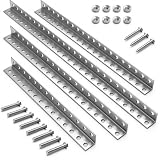
Not every low-ceiling garage can go fully rail-free. Sometimes the door hardware, the spring system, or the ceiling structure rules out a jackshaft opener, and you are left mounting a conventional opener as high and as tight to the ceiling as possible. The Yuleimy heavy-duty bracket and hanging kit exists for exactly that job: solid steel hardware for suspending an opener from the ceiling with proper support rather than relying on whatever angle iron happened to be in the previous owner’s junk pile. It suits the DIY installer and the owner of an older garage whose existing hangers are rusted, bent, or missing.
Key specs
- Contents: four-piece heavy-duty mounting bracket / hanging kit.
- Material class: steel hardware intended for load-bearing suspension.
- Use case: hanging a garage door opener from ceiling framing.
- Tier: budget.
Strengths
An opener hanging from inadequate hardware is one of the most common—and most avoidable—failure modes in a garage. Over years of cycling, a door opener transmits vibration into its supports; undersized or loose brackets loosen further, and eventually the unit sags, shifts out of alignment with the rail, or drops. A proper bracket kit gives you a known quantity: hardware sized for the load, in a consistent set, so both sides of the suspension match. That alignment matters for the opener’s travel limits and for the safety reverse system, which depends on the door meeting consistent resistance to trigger correctly.
In a low-ceiling garage the geometry is tighter, which makes accurate hanging more important, not less. When the opener sits only a few inches below the ceiling, you have very little margin to correct a sagging mount. Installing a rigid kit from the start avoids the slow droop that forces a re-installation later. The kit is also useful when repurposing an existing opener into a lower position or when transferring an opener between garages.
Pros
- Heavy-duty steel hardware sized for opener suspension loads.
- Four-piece set keeps both sides of the mount consistent.
- Prevents sag and misalignment that lead to opener faults.
- Budget tier—cheap insurance against a much more expensive failure.
- Useful for retrofits, relocations, and replacing rusted original hangers.
Cons
- Does not reduce overhead clearance—it supports an overhead install, it does not replace it.
- Requires locating and securely fastening into ceiling framing or joists.
- No instructions can substitute for confirming your ceiling structure can carry the load.
- Not needed at all if you install a true wall-mount opener.
- Hardware finish and corrosion resistance vary by batch.
How it compares
Against the Granatan 14/20/20/26 inch hanging kit, the Yuleimy set emphasizes heavy-duty brackets and a four-piece count, while the Granatan kit emphasizes multiple adjustable lengths for reaching awkward ceiling framing. If your joists are directly above the opener, either works; if your ceiling framing is offset, the adjustable lengths win. Neither is a substitute for a wall-mount opener—treat them as the honest fallback when a rail-free install is not possible.
7. Granatan Garage Door Opener Hanging Kit, 14/20/20/26 Inch, 4 Pack – Best Adjustable Hanging Kit

The Granatan hanging kit is the flexible option for suspending an overhead opener in a garage where the ceiling framing does not line up conveniently with the opener’s mounting points. With pieces at 14, 20, 20, and 26 inches, it gives you multiple reach options in a single purchase, which is exactly what older garages with irregular joist spacing demand. It suits the installer who has already discovered that a fixed-length bracket kit does not quite span the gap.
Key specs
- Contents: four-piece hanging kit.
- Lengths included: 14 in, 20 in, 20 in, 26 in.
- Use case: adjustable-length suspension of a garage door opener from ceiling framing.
- Tier: mid-range.
Strengths
Adjustability is the point. When you hang an opener, the two or more support points must all reach solid framing while keeping the rail level—and a level rail is what allows the opener’s travel limits and safety reverse to behave predictably. In a low-ceiling garage, the rail sits close to the ceiling, so any mismatch in framing height or joist position has to be absorbed within a short vertical distance. Having 14, 20, and 26 inch pieces on hand means you can build a matched pair of supports without cutting, welding, or improvising with scrap. That saves an extra trip and produces a cleaner final installation.
The longer 26 inch piece is particularly useful where the opener must be dropped below a duct, a beam, or a low obstruction while still keeping the door area clear. In practice, many low-ceiling garages are low because of exactly those obstructions, and a kit that can reach past them is more valuable than a rigid one. As with any hanging kit, the installation quality depends entirely on how well you anchor into structural framing—lag bolts into joists, not drywall anchors, and both support points aligned.
Pros
- Four lengths in one kit: 14, 20, 20, and 26 inches.
- Accommodates irregular joist spacing and offset framing.
- Lets you maintain a level rail even in an uneven ceiling.
- Enough pieces to build a properly matched pair of supports.
- Useful around ducts, beams, and other low-ceiling obstructions.
Cons
- Mid-range tier pricing for what is fundamentally hardware.
- Does not create clearance—it supports an overhead installation.
- Requires careful anchoring into structural framing for safety.
- Longer pieces can flex under load if not installed taut and level.
- Unnecessary if you choose a wall-mount opener instead.
How it compares
Against the Yuleimy heavy-duty bracket kit, the Granatan kit trades some emphasis on bracket robustness for a wider range of adjustable lengths. Choose Granatan when framing alignment is the problem; choose Yuleimy when you need maximum rigidity with direct overhead framing. If you can install a true wall-mount opener, neither kit is required—and that remains the better answer for a genuinely low ceiling.
8. Garage Door Opener Remote Wall Mount – Best for Organizing Remote Controls

The small accessory that fixes a small but persistent annoyance. This single white wall-mount remote holder gives your garage door remote a fixed home at eye level near the door, which matters more in a tight garage than people expect: when ceiling and wall space are at a premium, a remote that lives in a cupholder or on a shelf gets lost, and a lost remote means a car parked outside. It suits any garage, but especially one where the opener itself is a wall-mount unit with no built-in ceiling control panel location.
Key specs
- Type: wall-mount holder for a garage door opener remote.
- Quantity: one holder, white.
- Installation: simple screw-in mounting; no wiring.
- Tier: budget.
Strengths
The strength is simplicity and consistency. A fixed mount means every driver in the household knows exactly where the remote is, the remote does not get crushed in a bag or left in a hot car, and the button does not get pressed accidentally by whatever else is in the same drawer. In a low-ceiling garage where the opener is mounted on the side wall, the natural place to reach for the door is near the entry door, so mounting the remote there creates a single, reliable control point. It also works as a home for a spare remote you keep as a backup.
Installation is a single screw or two into a stud or wall anchor, and there is nothing to wire or program. That makes it a five-minute upgrade with no compatibility questions—unlike keypads and smart controllers, a holder works with essentially any remote of comparable size.
Pros
- Cheapest item in this roundup and the simplest to install.
- Creates one consistent location for the remote.
- No wiring, no programming, no compatibility worries.
- Protects the remote from accidental presses and loss.
- Useful as a designated spot for a spare remote.
Cons
- Holds one remote only.
- Requires drilling into the wall or door frame.
- Does not add any opener functionality.
- Fit depends on your remote’s dimensions.
- Purely an organizational convenience.
How it compares
Against the Skylink bundle’s wireless keypad, a remote holder is the low-cost, low-tech alternative: the keypad gives you keyless entry for anyone, while the holder just keeps a remote where you can find it. If multiple people need access, the keypad is worth the extra spend; if you simply keep losing the remote, the holder solves it for a couple of dollars.
How to Choose
Choosing a wall-mount opener for a low-ceiling garage comes down to four measurable questions: how much clearance you actually need to recover, what your door weighs and how tall it is, where power is available, and what safety and control features you refuse to live without. Work through them in that order—clearance first, because that is the reason you are shopping in this category at all.
Start with the clearance math
A conventional ceiling-mounted opener typically needs roughly 2 to 3 inches between the top of the door and the ceiling for the rail, plus additional working space for the motor head, and most manufacturers specify around 7 ft of headroom at the door opening for a standard installation. A wall-mount opener needs none of that overhead room because the drive unit sits beside the door track, usually at the height of the torsion bar, roughly 6 to 7 ft up the side wall. If your garage ceiling is under about 7 ft, or if you have a beam, duct, or storage rack intruding into the bay, the wall-mount format is not a preference—it is the only layout that reliably works. To quantify what you gain: measure from the floor to the lowest obstruction in the middle of the door bay. If that number is less than your vehicle’s height plus a few inches of clearance, a ceiling-rail opener is off the table entirely.
Match lifting capacity to real door weight
Wall-mount openers drive the door through its torsion bar, so they can lift what the springs are balanced to lift. That makes two numbers critical. First, door height: standard residential openings are 7 ft, with 8 ft common in newer homes; the Genie B6172H is rated up to 14 ft, which covers tall and carriage-style openings. Second, door weight: a single-car insulated sectional door typically runs about 90–130 lb, a double-car insulated door about 150–250 lb, and heavier custom or fully insulated doors can exceed 300 lb. A standard wall-mount opener is designed around standard residential doors; the B6172H’s stated 850 lb rating provides large headroom for heavy doors. If your door has never been balanced properly—you can feel it—fix the springs before blaming the opener. A door that takes real effort to lift by hand at the midpoint is out of balance, and no opener will compensate for that indefinitely.
Confirm the door type supports a jackshaft drive
Wall-mount openers pair with doors that use a torsion spring system across the header—the vast majority of sectional garage doors. They are not the right fit for doors using extension springs only, for one-piece tilt-up doors, or for rolling steel doors without the appropriate drive interface. Before buying, look at the hardware above your door: if you see a horizontal steel shaft spanning the width of the opening with springs coiled around it or positioned at each end, you have a torsion system and a wall-mount opener is a candidate. If you see two long springs running parallel to the horizontal tracks above the door, you have extension springs, and you should confirm compatibility with the specific opener before ordering.
Plan the power and the mounting surface
Every opener in this roundup runs on household current and needs an outlet near the wall-mount position—typically an outlet within a few feet, at the side of the door, at roughly mid-wall height. If your garage has no outlet there, budget for an electrician, because running an extension cord to an opener is a bad idea in a space where cars park and doors move. Mounting surface matters too: wall-mount openers bolt to the wall framing beside the door, so you need solid wood framing or masonry with appropriate anchors, not drywall alone. In a garage with a finished and insulated wall, confirm there is blocking where the opener will hang. Also check side clearance: premium units like the Genie B6172H are physically larger than standard wall-mount openers, so measure the distance from the door track to the nearest wall.
Decide which safety and control features are non-negotiable
All modern openers include the safety essentials—obstruction detection and auto-reverse, plus the photoelectric safety sensors at the door opening. What varies is everything else:
- Battery backup. Included with the Chamberlain Wall Mount myQ unit and absent from the Genie 6072H-O, the Skylink bundle, and the XDTKML replacement. If your garage is the primary way into the house, this is the feature that saves you during an outage.
- Smart connectivity. Present on the Chamberlain, Genie B6172H, and Skylink bundle; absent on the Genie 6072H-O and the XDTKML replacement. Useful for status checks and remote operation, and for granting temporary access.
- Keypad entry. Bundled with the Skylink unit, useful for households with multiple drivers or service access.
- Integrated lighting. Present on the Chamberlain unit; a real convenience in a garage with poor lighting.
- Motor type. DC motors, as in the Genie B6172H, generally start and stop more gently, reducing shock on door hardware.
Understand the ownership realities
Wall-mount openers have fewer consumable parts than rail-driven units—there is no belt or chain to tension and no trolley to replace—but they are not maintenance-free. What wears first, in rough order of likelihood: the door’s own torsion springs (typically the first major component to fail, and not part of the opener), the door rollers and hinges, the opener’s drive gears or internal motor components, and the circuit board. Practical maintenance means lubricating the door’s springs, rollers, and hinges a couple of times a year with a garage-door-specific lubricant—not general-purpose grease, which attracts grit—checking that the safety sensors are aligned and their lenses clean, and testing the auto-reverse function monthly by placing a piece of wood in the door’s path. A common mistake is over-tightening the wall bracket or forcing the opener to compensate for an unbalanced door, which accelerates wear on both the opener and the springs. Another is skipping the balance check after installing new weatherstripping or adding insulation to the door, which changes its weight and can push an opener past its comfortable working range. If you add windows, insulation, or a heavier bottom section, re-check balance before assuming the opener is at fault.
Use a decision matrix by situation
| Your situation | Recommended pick | Why |
|---|---|---|
| Standard residential door, want best all-round package and outage backup | Chamberlain Wall Mount myQ with Battery Backup | Battery backup, app control, integrated light, rail-free clearance |
| Tight budget, standard door, outages rare | Genie 6072H-O | Core wall-mount clearance at mid-range pricing |
| Door taller than standard (up to 14 ft) or heavier than about 250 lb | Genie B6172H | Rated to 850 lb and 14 ft; DC motor for smooth cycles |
| Multiple drivers, need keyless entry | Skylink Smart Side Mount bundle | Includes wireless keypad; side-mount clearance |
| Existing compatible Linear wall-mount unit failed | XDTKML HAE00001 replacement | Cheapest route back to a working door with a matching footprint |
| Cannot go rail-free; must hang a conventional opener | Yuleimy bracket kit or Granatan adjustable hanging kit | Proper support prevents sag, misalignment, and safety-reverse faults |
| Keep losing the remote | Wall-mount remote holder | Fixed, consistent control point for a couple of dollars |
Budget tiers, plainly
At the budget tier you get restoration and support hardware: a replacement wall-mount unit for a compatible existing installation, hanging kits, and a remote holder. At the mid-range tier you get a complete, new wall-mount opener with the clearance benefit and either smart features or a bundled keypad. At the premium tier you get battery backup, polished smart integration, integrated lighting, and—in the case of the Genie B6172H—heavy-duty capacity up to 850 lb and 14 ft of door height. The honest advice is to spend at the tier your door demands, not the tier your enthusiasm suggests: a light standard door does not need an 850 lb rating, and a heavy insulated door should not be pushed by a unit rated only for standard residential service.
Frequently Asked Questions
Can a wall-mount garage door opener really work with a low ceiling?
Yes—that is precisely what the format is for. Because the drive unit mounts on the wall beside the door rather than on a rail across the ceiling, it needs essentially no headroom above the door opening. That makes it the standard solution for garages with ceilings below roughly 7 ft, or with beams, ducts, or storage intruding into the bay. The trade-off is that it depends on the door’s torsion spring system being properly balanced.
How much ceiling height do I need for a wall-mount opener instead of a regular one?
A conventional opener generally wants about 7 ft of headroom at the door opening plus a few inches of clearance above the door for the rail and motor head. A wall-mount opener removes that overhead requirement entirely, needing only enough side-wall space beside the door track to mount the housing—typically around the height of the torsion bar. In practice, that recovers the full ceiling bay for storage or a taller vehicle.
Will a wall-mount opener lift my heavy insulated door?
It depends on the unit’s rating and your door’s weight. Standard residential insulated doors commonly fall between about 90 lb for a single-car door and 250 lb for a double-car door, and most standard wall-mount openers are built around that range. If your door is heavier or taller, choose a unit explicitly rated for it—the Genie B6172H states capacity up to 850 lb and 14 ft high, which covers heavy custom doors with margin.
Do I need battery backup on a garage door opener?
If your garage is the main way in and out of your home, it is worth having. Without backup, a power outage means the door will not open, and releasing the manual disconnect to lift a heavy door by hand is difficult and sometimes impossible for one person. The Chamberlain Wall Mount myQ unit includes battery backup; the other openers in this roundup do not, though you can weigh that against a lower purchase price.
What is the difference between a wall-mount opener and a jackshaft opener?
The terms are often used interchangeably. Both describe a unit mounted on the side wall that drives the door through the torsion bar rather than pulling it with a chain or belt on an overhead rail. Some manufacturers reserve “jackshaft” for units that mount directly on the torsion shaft itself, while “wall-mount” covers side-wall mounting generally. Functionally, the clearance benefit is the same.
Can I install a wall-mount opener myself?
Many homeowners can, because there is no rail to assemble, no belt or chain to tension, and no header bracket to align—the job is mounting the unit, connecting it to the door, and wiring power. The constraints are real, though: you need a nearby outlet, solid wall framing for the mounting bolts, and a properly balanced door. If your garage lacks an outlet at the door or your wall has no blocking, bring in an electrician or installer for those parts.
Why do hanging kits and mounting brackets matter for a low-ceiling installation?
If your garage geometry forces you to keep an overhead opener, the hangers carry the entire load and transmit vibration every cycle. Undersized or misaligned brackets loosen over time, letting the unit sag out of alignment with the rail, which disturbs travel limits and the safety reverse system. A proper steel kit with consistent, adjustable lengths keeps the rail level and both support points matched—cheap insurance against an expensive failure.
How do I know if my door is compatible with a wall-mount opener?
Look above the door for a horizontal steel shaft spanning the opening with torsion springs on it or at each end. If you see that shaft, your door uses a torsion system and a wall-mount opener is a candidate. If instead you see long springs running parallel to the horizontal tracks above the door, you have extension springs, and you should verify compatibility with the specific opener before ordering. Also confirm the door is balanced: a door that is hard to lift by hand at the midpoint needs spring adjustment first.
Closing Recommendation by Situation
If your door is a standard residential sectional and you want the most complete solution—battery backup, app control, integrated lighting, and full ceiling clearance—choose the Chamberlain Wall Mount myQ Garage Door Opener with Battery Backup. If budget is the priority and outages are rare, the Genie 6072H-O gives you the essential clearance benefit for less. If your door is unusually heavy or up to 14 ft tall, the Genie B6172H is the only unit here rated for that job. If you need keyless entry for several drivers, the Skylink Smart Side Mount bundle packages the opener and keypad sensibly. If you are simply replacing a failed compatible Linear wall-mount unit, the XDTKML replacement is the economical fix. And if your garage forces you to keep an overhead opener, do it right with the Yuleimy bracket kit or the Granatan adjustable hanging kit, then keep the remote where you can find it with a simple wall-mount holder.





