Key takeaways
- Best Overall: Corona BP 3180D Forged Classic Bypass Pruner, 1-inch cut capacity with a replaceable blade.
- Best Premium: Felco F2, Swiss-made, forged aluminum handles, every part replaceable.
- Best Value for Thicker Stems: Fiskars Forged Steel Bypass Pruning Shears, 1-inch capacity, SoftGrip handle.
- Best for Light Work and Beginners: Fiskars Bypass Pruning Shears, 5/8-inch capacity with a self-cleaning sap groove.
- Best Budget: VOTREK 8.5-inch Bypass Pruning Shears with an SK5 steel blade.
- Best for Weak Grip: Gerossi Ratchet Pruning Shears, an anvil ratchet design made for reduced hand strength.
The best pruning clippers for most gardeners are the Corona BP 3180D bypass pruner for everyday value and the Felco F2 for people who want a professional tool they can sharpen and repair for years. Both are bypass designs, which cut live stems cleanly like scissors, and both are rated for stems about an inch thick. If your budget is tight, the Fiskars bypass pruning shears and the VOTREK 8.5-inch bypass shears cover light work for a fraction of the cost, while a ratchet model such as the Gerossi is built for anyone who struggles with a full squeeze.
This guide is research-based. We did not personally use these tools. We compared product listings with manufacturer pages and independent gardening publications, and we only state specifications that those sources support. When something is not stated, we say “not listed”. Prices are shown as tiers only, because they change often.
Our top picks



As an Amazon Associate we earn from qualifying purchases at no extra cost to you.
Top Picks at a Glance
- Best Overall: Corona BP 3180D Forged Classic Bypass Pruner, 1-inch cut capacity with a replaceable blade.
- Best Premium: Felco F2, Swiss-made, forged aluminum handles, every part replaceable.
- Best Value for Thicker Stems: Fiskars Forged Steel Bypass Pruning Shears, 1-inch capacity, SoftGrip handle.
- Best for Light Work and Beginners: Fiskars Bypass Pruning Shears, 5/8-inch capacity with a self-cleaning sap groove.
- Best Budget: VOTREK 8.5-inch Bypass Pruning Shears with an SK5 steel blade.
- Best for Weak Grip: Gerossi Ratchet Pruning Shears, an anvil ratchet design made for reduced hand strength.
Comparison Table
| Product | Best for | Key specs | Watch for | Price tier |
|---|---|---|---|---|
| Corona BP 3180D | All-round garden use | Bypass; 1 in. cut capacity; replaceable blade | One review site lists 3/4 in., the maker says 1 in. | Mid-range |
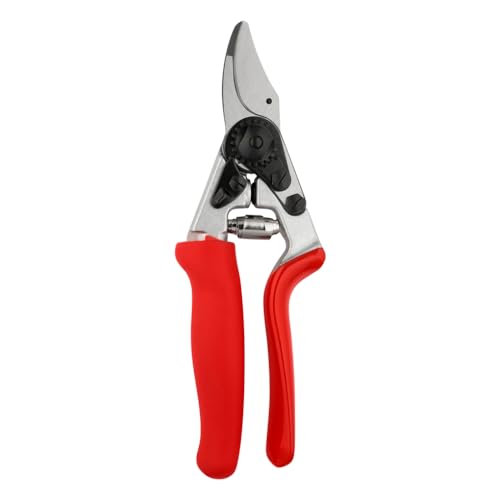
| Felco F2 | Long-term, frequent pruning | Bypass; about 9.25 in. long; forged aluminum handles; replaceable parts | Cost; sized for average to large hands | Premium |
| Fiskars Forged Steel Bypass | Orchard and shrub work | Bypass; 1 in. capacity; SoftGrip handle | Check the blade for rust after wet jobs | Mid-range |
| Fiskars Bypass Pruning Shears | Roses, perennials, houseplants | Bypass; 5/8 in. capacity; sap groove | Capacity limit on woody stems | Budget |
| VOTREK 8.5-inch Bypass | Cheap spare or starter pair | Bypass; SK5 blade; spring; non-slip grip | Capacity not stated in the title | Budget |
| Gerossi Ratchet Pruning Shears | Weak grip, tougher stems | Anvil with ratchet; 8 in. | Anvil crushes live stems more than bypass | Budget |
1. Corona BP 3180D: Best for All-Round Garden Use
- Forged bypass pruner with a 1-inch cut capacity per the maker.
- All-steel construction with a replaceable blade.
- About 8.75 inches overall, with a blade near 2.5 inches.
- Bright red handles that are easier to spot in the grass.
Best for: mixed gardens with roses, hydrangeas, berry canes and the odd woody branch. Skip if: you have small hands or need a very light tool for hours at a time.
The BP 3180D earns first place because it is a proper forged bypass pruner at a mid-range cost, and Corona sells replacement blades. That last point is easy to overlook. A pruner is a cutting tool, and every cutting tool dulls. If the blade can be swapped, the tool outlives its first edge; if not, you replace the whole pruner. The steel handles feel more solid than plastic-coated budget shears, but they are also less forgiving on cold mornings, so gloves help.
One honesty note: a review site we checked lists the cut capacity at three quarters of an inch, while Corona and retailer listings say one inch. We trust the manufacturer figure, but in practice it is wise to treat the maximum as a limit rather than a target. Cutting stems at the very edge of capacity strains the blade and pivot; if a stem needs a twist to fit, switch to loppers.
Pros: 1-inch rated capacity, replaceable blade, forged build, good everyday value. Cons: heavier than coated budget shears, steel handles feel cold, capacity discrepancy online.
2. Felco F2: Best Premium Pruner for Frequent Use
- Swiss-made bypass pruner, about 9.25 inches long.
- Forged aluminum handles and a hardened carbon steel blade, per independent descriptions.
- About 1 inch (25 mm) cutting capacity, per the sources we reviewed.
- Reported weight of about 7.7 ounces, so it is not a heavy tool.
- Every part, including blade, spring and bolt, can be replaced.
Best for: gardeners who prune weekly, orchard owners, and anyone tired of replacing cheap pruners. Skip if: you prune twice a year, or you have small hands (look at the F6 or another smaller model instead).
The F2 is the tool most often named as the classic professional pruner, and the reason is serviceability. Felco publishes a full parts list, so a worn blade, a bent spring or a loose bolt is a repair, not a disposal. Over a decade, a premium pruner you maintain can cost less per year than a series of low-cost ones, as long as you actually look after it: wipe the blade after use, add a drop of oil to the pivot, and keep a sharpening stone handy.
Fit is the other consideration. The F2 is a mid-size tool and suits average to larger hands. If your hand span is small, a pruner that is too large causes fatigue and poor cuts, and that is where the Felco F6, which appears in the same product family, is meant to help. Left-handed gardeners should look at the maker’s left-hand model instead of assuming an ambidextrous design.
Pros: excellent serviceability, light for its class, replaceable parts, strong reputation. Cons: premium cost, may be too large for small hands, needs routine maintenance to justify the investment.
3. Fiskars Forged Steel Bypass Pruning Shears: Best Value for Thicker Stems
- Bypass design with a 1-inch cut capacity.
- SoftGrip handle.
- Forged steel construction with a rust-resistant finish, per the listing.
- Right-handed design; left-handed fit is not listed.
Best for: gardeners who want 1-inch capacity without the cost of a Swiss tool. Skip if: you want guaranteed replaceable parts.
Fiskars sits in the middle of the market: more robust than the thin-bodied budget pairs, less expensive than a Felco. The forged steel and SoftGrip handle are aimed at people who prune for an hour or two at a time, where a cushioned grip reduces hotspots on the palm. A rust-resistant finish is a sensible feature for tools that are used on wet plants and sometimes left in the shed over winter.
The question to ask is serviceability. Fiskars tools are generally treated as sealed consumer tools, and the listing does not mention replaceable blades. That is not a flaw so much as a design choice: you accept that the pruner has a service life measured in years of regular use and you replace it when the blade is beyond sharpening.
Pros: 1-inch capacity, comfortable grip, widely available, sensible price tier. Cons: replaceable parts not listed, right-hand oriented, heavier than some coated pairs.
4. Fiskars Bypass Pruning Shears: Best for Light Work and Beginners
- Bypass blade with a 5/8-inch cut capacity.
- Low-friction blade coating and a self-cleaning sap groove, per the maker.
- Alloy steel blade and handle; reported weight about 0.72 pounds.
- Non-slip handle.
Best for: deadheading, roses, tomatoes, herbs and houseplants. Skip if: you regularly cut branches thicker than a pencil.
The key number is 5/8 of an inch. That is plenty for flowers, soft shoots and most rose canes, but it is a clear step below the one-inch tools above. If you find yourself twisting the stem or squeezing with both hands, you are asking too much of it and risking a crushed cut, which bruises the plant and invites disease. The sap groove is a small but useful extra: it helps prevent sticky buildup when you are working through evergreens or fruit trees, which makes cleaning quicker.
Because it is inexpensive and light, this is a good first pruner and a sensible second pair for the greenhouse or balcony. Treat it as a light-duty tool, keep a separate pair for woody stems, and it will do its job reliably.
Pros: easy to use, sap groove, low cost, light-duty versatility. Cons: limited capacity, not designed for heavy branches, not built to be rebuilt.
5. VOTREK 8.5-Inch Bypass Pruning Shears: Best Budget Pair
- 8.5-inch bypass shears, described as jam-proof with a spring return.
- SK5 steel blade, anti-rust coating claim in the listing.
- Ergonomic non-slip handle.
- Cut capacity: not listed in the title; check the full listing before buying for thick stems.
Best for: a spare pair in the garage, a starter set for a new gardener, or a sacrificial pair for rough jobs. Skip if: you want a documented service plan or brand-backed spare parts.
SK5 is a Japanese high-carbon steel grade that is commonly used in lower-cost shears. It takes a sharp edge and is easy to maintain, but high-carbon steels rust if neglected, which is why any coating matters less than your habit of wiping the blade dry. At this tier, you are buying a pruner that does the job today rather than one designed to last decades, and that is fine if your expectations match.
A practical way to use a budget pair is as the “dirty work” tool: cutting through ivy, brambles near soil, or stems with grit, so your better pruners stay sharp. That alone can justify the small outlay.
Pros: very low cost, bypass design, handy as a spare. Cons: unclear capacity, no replaceable parts listed, longevity depends on care.
6. Gerossi Ratchet Pruning Shears: Best for Weak Grip
- Anvil-style ratchet pruner, 8 inches long.
- The listing advertises cutting with less effort, aimed at weak grip or arthritis; we make no health claims.
- Ratchet mechanism cuts in several small steps.
- Cut capacity: not listed in the title.
Best for: people with reduced hand strength, and anyone cutting dry or dead stems. Skip if: you mainly prune live roses or fruit trees where a clean bypass cut matters.
A ratchet pruner lets you squeeze, release and squeeze again while the blade advances in steps. The trade is speed for force, which suits a gardener who cannot comfortably close a regular pruner in one go. The catch is the anvil blade: it presses against a flat surface rather than passing it like scissors, which tends to crush the stem. That is acceptable on dead wood, and a poor choice on a precious rose cane. If you have a joint condition, speak to a healthcare professional about tool choice; this guide cannot give medical advice.
Pros: reduces the squeeze needed, easy for dead wood, low cost. Cons: crushes live stems more, slower, capacity not listed.
Also Consider
- Fiskars Power-Lever Anvil Pruning Shears: a 5/8-inch anvil design for dry stems and small branches.
- Felco F6: a smaller Swiss pruner for medium hands, if the F2 is too large.
- Corona MAXFORGED BP 6250: an aluminum bypass pruner with 1-inch capacity and replaceable parts.
- Fiskars 28-inch Bypass Loppers: for branches beyond a pruner’s reach, with a 1.5-inch capacity.
How We Chose
We looked for pruners that fit a real pruning plan: a mix of roses, shrubs and fruit trees. This guide is research-based. We did not personally use these products. We read manufacturer pages for Corona, Felco and Fiskars, compared product listings, and consulted independent publications such as comparison articles that look at Felco, Corona and ARS bypass pruners. Where a source disagreed, we sided with the manufacturer.
The criteria were: bypass versus anvil design, stated cut capacity, build material, presence of replaceable parts, grip design and hand fit, and the clarity of the listing. We limited each brand to two main picks, used tier words instead of prices, and flagged specs we could not confirm.
Buying Guide
Bypass versus anvil
Bypass pruners have two blades that pass each other like scissors. They cut live, green stems cleanly, which is better for the plant. Anvil pruners press a blade against a flat surface, like a knife on a cutting board; they are good for dead or dry wood but crush living tissue. For roses, shrubs and fruit trees, choose bypass. Keep an anvil or ratchet pruner for deadwood only.
Cut capacity
Capacity is the maximum thickness you should cut. A practical rule: pick a pruner with at least 1/4 inch more capacity than your usual stem. Most garden pruning falls under 1/2 inch, so a 5/8-inch pruner handles it. For fruit trees and older shrubs, buy a 1-inch pruner and use loppers above that. A pruning saw is the right tool for anything over about 1.5 inches.
Blade material and care
Carbon steel holds an edge and sharpens easily but rusts; stainless steel resists rust but can be harder to sharpen; coatings reduce friction and sap buildup but wear. Whatever the material, wipe blades after use, oil the pivot, and sharpen at the first sign of tearing.
Hand size and grip
A pruner that is too large causes fatigue, and one that is too small forces you to squeeze harder. If you wear a small or medium glove, look for a mid-sized pruner. Left-handed gardeners should look for left-hand models.
Serviceability
Replaceable blades and springs turn a tool into a long-term investment. Felco and Corona offer parts; for many budget models, parts are not listed. If you prune often, serviceability is worth the premium.
Common Mistakes to Avoid
- Cutting stems thicker than the capacity, which damages the blade and the plant.
- Using anvil pruners on live roses.
- Leaving pruners wet or dirty after use.
- Pruning diseased plants and then healthy ones without cleaning the blades.
- Ignoring the cut angle: make cuts just above a bud or node, slightly angled so water runs off.
Matching Clippers to the Job
Roses
Roses reward clean cuts. Late winter or early spring, remove dead, damaged and crossing canes, then shorten the remainder to just above an outward-facing bud. A bypass pruner with 5/8-inch capacity handles most canes, and a one-inch model such as the Corona BP 3180D or the Felco F2 handles old, woody bases. Wear thick gloves; thorns and a loose grip are a bad combination. Between plants, wipe the blades if any cane looks diseased.
Shrubs
Flowering shrubs differ in when they should be cut. Spring bloomers are usually pruned right after flowering and summer bloomers in late winter, but check the plant tag. For thinning cuts, remove an older stem at the base; this needs the extra leverage of a one-inch bypass pruner and, for stems thicker than that, loppers. A budget pair like the VOTREK is fine for light tidying, but do not force it through thick stems.
Fruit trees
Fruit trees need clean cuts that heal quickly, so bypass is the right design. Use a pruner for stems up to its rated capacity, loppers up to about 1.5 inches, and a pruning saw beyond that. Dormant-season pruning is common for apples and pears, but timing varies by species and region, so consult your local extension service. Disinfect blades between trees if you suspect disease.
Dead wood and tidy-up jobs
This is where a ratchet or anvil model earns its keep. Dry wood does not need a clean scissor cut, and the ratchet action reduces the force required. Keep a cheap anvil pair for this and protect your bypass pruners from dirty, gritty cuts.
Care, Sharpening and Safety
A pruner’s life depends on how it is cleaned. After each session, wipe the blade with a cloth, remove sap with a little rubbing alcohol if it has built up, dry the tool, and add a drop of light oil at the pivot and on the blade. Store pruners closed with the safety latch engaged, in a dry place. If your pruner has replaceable parts, order a spare blade and spring once you notice looseness or nicks, rather than waiting for the tool to fail mid-season.
When sharpening, work only on the beveled edge of the cutting blade, using a fine file or stone in one direction and following the factory angle. Do not sharpen the flat inner face. After sharpening, close the pruner on a sheet of paper; a sharp bypass pruner should slice cleanly. Wear eye protection when pruning overhead branches and cut away from your body. Keep children and pets away from open blades, and lock the pruner when you are walking between plants.
Budget Planning: How Many Pruners Do You Need?
Most gardens are well served by two tools. The first is a quality bypass pruner for live growth, such as the Corona BP 3180D or the Felco F2, which you keep sharp and clean. The second is a cheap, tough pair for dirty or dead jobs, such as the VOTREK or the Gerossi ratchet. Splitting the work this way protects the expensive blade from grit, rust and twisting, and it means you never have to choose between a clean cut on a rose and a quick chop through old, dry stems. Add loppers only when you regularly meet branches thicker than the pruner’s limit, and a saw if you have mature fruit trees. This approach is also kinder to your budget than buying one costly tool for every task.
Frequently Asked Questions
What are the best pruning clippers for roses?
A bypass pruner with at least 5/8-inch capacity is best for roses because it makes clean cuts. The Fiskars bypass shears suit light rose care, and the Corona BP 3180D handles thicker canes.
What is the difference between pruning clippers and pruning shears?
There is no practical difference; both terms describe one-handed pruners. Shop by blade type (bypass or anvil), cut capacity and hand fit rather than by name.
Are bypass or anvil clippers better?
Bypass is better for live stems, and anvil is better for dead wood. Most gardeners should own a bypass pair and add an anvil pair only if they have a lot of dry branches.
How thick a branch can pruning clippers cut?
Hand pruners generally cut stems from about 5/8 inch to 1 inch, depending on the model. For anything thicker, use loppers or a pruning saw.
Is a Felco worth the money?
If you prune often and maintain your tools, yes, because parts are replaceable and the pruner can last for years. For occasional use, a mid-range pruner is enough.
How do I sharpen pruning clippers?
Use a fine diamond file or sharpening stone on the beveled edge of the bypass blade only, following the original angle, and then wipe off metal dust and oil the tool. Check the maker’s instructions for your model.
Should I disinfect pruners?
Yes, when moving between plants known to be diseased. Wipe the blades with rubbing alcohol or a similar disinfectant and dry them afterward to prevent rust.
Which One Should You Buy?
Buy the Corona BP 3180D if you want one solid pruner for a mixed garden. Choose the Felco F2 if you prune often, want replaceable parts and your hands fit a mid-size tool. Pick the Fiskars Forged Steel Bypass for one-inch capacity at a friendlier tier, the Fiskars Bypass Pruning Shears for light work and beginners, and the VOTREK as a budget spare. Choose the Gerossi ratchet model only if grip strength is the main problem and your cutting is mostly dead wood. Whatever you pick, match the capacity to the stems you actually cut and keep the blades clean and sharp.
Sources
- Corona Tools: ClassicCUT BP 3180D product page
- Felco: F2 pruner product page and parts information
- Fiskars: bypass pruner product pages
- Outdoor Plant Care: Best Bypass Pruners comparison
- Thomas Acres: Every One Is a Bypass guide
Last updated: October 2026