
Key takeaways
- You backpack in spring through fall and want the best warmth for the weight.
- You sleep on your side and want real cushioning without a heavy pad.
- You are comfortable repairing a pad in the field with the supplied kit.
For most backpackers the Therm-a-Rest NeoAir XLite NXT is the all-round pick, the NeoAir XTherm NXT suits cold-season camping, the ProLite and ProLite Apex suit people who want a self-inflating pad that tolerates rough ground, and the Z Lite Sol is the durable, budget foam option that doubles as a backup or an insulation layer under an inflatable. The NeoLoft, a thick comfort-focused inflatable, fills the car camping and short-carry niche; it appears to have replaced the older NeoAir Topo Luxe. Which one fits depends mainly on three things: how cold the ground will be, how much weight you will carry, and how much risk of punctures you accept.
Our top picks

As an Amazon Associate we earn from qualifying purchases at no extra cost to you.
How Therm-a-Rest Organizes Its Pad Lineup
Therm-a-Rest sells three broad families. NeoAir pads are fully inflatable, built from internal baffles and reflective layers, and sit at the light, packable end of the range. The ProLite series is self-inflating: open-cell foam inside an airtight shell expands when the valve is opened, then gets topped off with a few breaths. Z Lite pads are closed-cell foam that folds accordion-style, with nothing to inflate and nothing to puncture. Each family trades weight, comfort, warmth, and ruggedness differently, so there is no single best pad, only a best fit for a given trip.
Specs below are drawn from the brand’s published figures as relayed by outlets such as OutdoorGearLab, Switchback Travel, CleverHiker, and Gear Institute. Weights and sizes shift slightly between production years and sizes, and sources sometimes disagree by an ounce or two, so treat figures as approximate and confirm the exact number for the size you buy on the brand’s own product page.
Understanding R-Value
R-value measures how well a pad resists heat loss into the ground. Higher is warmer. Since the industry adopted a common test standard (ASTM F3340), ratings from different brands are comparable, whereas older numbers from before that standard sometimes ran a little higher; so figures quoted in older reviews may not match current listings. The brand states the following values: Z Lite Sol 2.0, ProLite 2.4, ProLite Apex 3.8, NeoAir XLite NXT 4.5, NeoLoft 4.7, and NeoAir XTherm NXT 7.3 (the older Topo Luxe was listed at 3.7).
Rough guidance used by many reviewers: an R-value around 2 is a summer-only number, 3 to 4 stretches into spring and fall, 4.5 handles most three-season camping, and 5 and above is where winter camping starts. Because R-values add when pads are stacked, a Z Lite Sol (2.0) under an XLite NXT (4.5) gives a combined figure near 6.5, a common trick for cold trips. Your own sleeping bag or quilt, tent, humidity, and personal metabolism also matter, so use R-value as a guide rather than a guarantee.
Therm-a-Rest Sleeping Pad Models Compared
| Model | Best for | Key stated specs (Regular unless noted) | Notable limits |
|---|---|---|---|
| NeoAir XLite NXT | Three-season backpacking, weight-focused hikers | R 4.5; the brand lists 13 oz for the Regular (OutdoorGearLab measured about 13.6 oz); about 3 in thick; packs to roughly 9 x 4.1 in; Short about 11.5 oz, Wide about 16 oz, Large about 17 oz | Thin fabric punctures more easily than foam; included pump sack described as below average; premium tier cost |
| NeoAir XTherm NXT | Cold-season and winter camping, mountaineering | R 7.3; about 15.5 oz | Heaviest and costliest of the lightweight NeoAir pads; more warmth than many three-season trips need |
| NeoLoft | Car camping, short carries, side sleepers wanting thickness | R 4.7; the brand lists 1 lb 9 oz (710 g) for the Regular, while OutdoorGearLab measured about 25 oz and CleverHiker about 27.5 oz; 4.6 in thick | Heavier and bulkier than the XLite; some reviewers report it sleeps cooler than its R-value suggests |
| ProLite | Budget-minded campers and hikers who want self-inflation | R 2.4; the brand lists 1 lb 2 oz (about 18 oz) for the Regular, though some reviews list 14 oz or 17 oz, so sources vary; about 1 in thick | Thin; summer-leaning warmth; heavier than an inflatable of similar warmth |
| ProLite Apex | Backpackers who want plush self-inflating comfort and rugged feel | R 3.8; about 1 lb 6 oz; about 2 in thick | Bulkier when packed than a NeoAir; heavier than the XLite |
| Z Lite Sol | Thru-hikers, backups, stacking under another pad, quick rest stops | R 2.0; about 10 oz (Small) or 14 oz (Regular); about 0.75 in thick | Bulky to carry outside the pack; firm and thin; lowest comfort |
Two earlier models still turn up in older reviews and used listings. The NeoAir UberLite (R 2.3) is reported by reviewers to be discontinued, with sources differing on when it ended. The NeoAir Topo Luxe (R 3.7, about 4 in thick) appears to have been discontinued in favor of the NeoLoft, with retailers showing it as sold out and one review site noting it seems discontinued; it may still be sold in some regions. Treat both as previous generation and do not assume they can be bought new.
NeoAir XLite NXT: The Default Choice
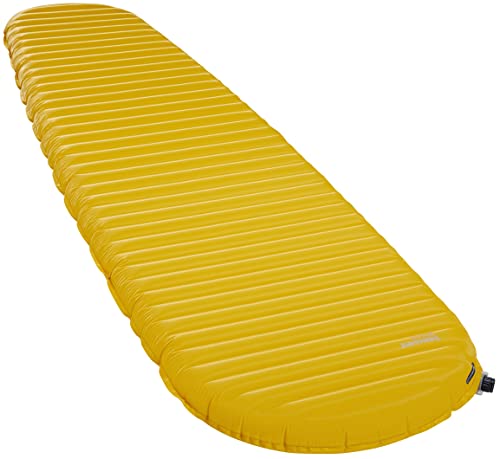
The XLite NXT is what many reviewers point to when asked about a lightweight three-season pad. Outlets including CleverHiker and OutdoorGearLab highlight its warmth-to-weight ratio: R 4.5 at 13 ounces for the Regular (per the brand) is hard to beat. CleverHiker reports it as significantly quieter than earlier NeoAir generations, which had a reputation for crinkling when the sleeper shifted. Three inches of loft cushion side sleepers better than a thin foam pad, and the packed size is about the volume of a water bottle. Reviewers generally treat it as a three-season pad, and CleverHiker would not choose it as a stand-alone winter pad.
The main drawbacks are durability and fuss. The thin fabric needs care with sharp sticks, thorns, and gear that pokes through a tent floor, and Switchback Travel notes the horizontal baffles can feel stiff and slippery under a slick sleeping bag. The supplied pump sack gets mixed marks, and deflation takes some effort compared with pads that have a fast dump valve.
NeoAir XTherm NXT: When Cold Matters
With a stated R 7.3 and a weight near 15.5 ounces, the XTherm NXT is the warmest of the lightweight inflatables. CleverHiker prefers it over the XLite for genuinely cold winter camping. The cost of that warmth is a little more weight and a higher price tier, and it is overbuilt for summer; sleeping on it in warm weather can feel hot for some people. If you camp only in mild conditions, the XLite NXT is the more efficient purchase. If you camp in snow, on frozen ground, or carry a lightweight summer quilt, the XTherm NXT is the natural step up.
NeoLoft: Comfort First
The NeoLoft is aimed at campers who care more about thickness and plushness than ounces. With 4.6 inches of loft and R 4.7 per the brand, it is a good match for car camping, base camps, and short walks in, particularly for side sleepers who bottom out on thinner pads. The brand lists 1 pound 9 ounces for the Regular and independent measurements run higher, so ultralight hikers will find the XLite offers similar warmth for much less weight. Reviewers disagree on its real-world warmth, with some reporting comfort limits well above freezing.
ProLite and ProLite Apex: Self-Inflating Simplicity
Self-inflating pads have a loyal following because they are forgiving. The foam core still provides some insulation and cushion if a small leak develops, and the shell tends to be more robust than ultralight inflatables. The standard ProLite, rated R 2.4 and about one inch thick, is a modest summer and shoulder-season pad. The ProLite Apex increases loft to about two inches and R 3.8, with a stated weight near 1 pound 6 ounces for the Regular. Reviewers on Gear Institute and Advnture describe it as plush and packable for a self-inflating design, although it still takes more pack space than a NeoAir.
Z Lite Sol: The Foam Workhorse
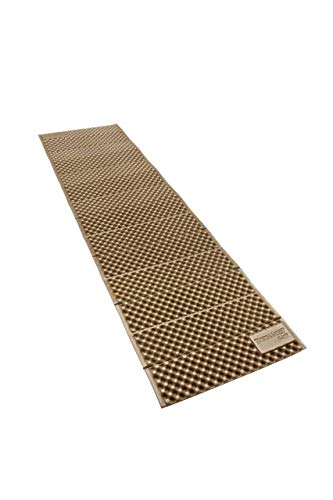
The Z Lite Sol has an accordion fold, a reflective top surface, and R 2.0. It cannot leak, which is its biggest selling point. Thru-hikers strap it to the outside of the pack, use it as a seat at breaks, and keep it as insurance against an inflatable failing. It also stacks under an inflatable to add roughly two R-value points and protect the underside from abrasion. Its flaws are obvious: thin, firm, and bulky, and it is the least comfortable option for many sleepers.
Who Should Buy and Who Should Skip
Buy a NeoAir XLite NXT if
- You backpack in spring through fall and want the best warmth for the weight.
- You sleep on your side and want real cushioning without a heavy pad.
- You are comfortable repairing a pad in the field with the supplied kit.
Skip it if
- You camp on rough terrain and want a pad you never worry about.
- Your budget is tight; a ProLite or Z Lite Sol gives a lot of usable sleep for far less.
Buy an XTherm NXT if
- You regularly sleep on snow, frozen ground, or in cold alpine settings.
Buy a ProLite, ProLite Apex, or Z Lite Sol if
- You prefer durability and simplicity over saving every ounce.
- You want a backup or a layer to stack under another pad.
How Therm-a-Rest Compares With Alternative Brands
The closest competitors to the NeoAir line are the NEMO Tensor series, Sea to Summit Ether Light and Ultralight pads, and Big Agnes insulated air pads. CleverHiker reports the XLite NXT saves a little weight relative to the NEMO Tensor All-Season, while NEMO pads are often praised for being quiet and having convenient valves. Sea to Summit pads use different air-cell designs, and many reviewers compare comfort and noise rather than raw specs. Big Agnes tends to appeal to sleepers who prefer a wide, stable surface and integrated pillow or pump features. For foam, Nemo and Gossamer Gear sell closed-cell alternatives to the Z Lite Sol, and the choice among them often comes down to fold style and thickness. Therm-a-Rest generally earns credit for broad size options, clear R-value labeling, and long-standing field-repair support, while competitors may beat it on a specific trait such as quietness or valve speed.
Sizing and Fit
Therm-a-Rest offers several sizes in most models, typically Short, Regular, Regular Wide, and Large. The Regular is intended for people up to roughly six feet tall, per the brand’s sizing guidance, though the shoulder width matters as much as length. Wide versions help restless sleepers and anyone who finds a standard pad too narrow. Short pads save weight but leave the legs off the pad; many hikers put a pack or foam piece under their feet. If you plan to share a double sleeping system, make sure your pads are compatible with any couplers or sleeping-bag attachment features you intend to use.
Care, Repair, and Common Issues
- Protect the underside. Clear the ground of sharp objects and use a ground sheet when the surface is rough.
- Store pads uncompressed. Keep inflatable and self-inflating pads loosely stored with the valve open to preserve the foam and reduce moisture buildup.
- Use a pump sack rather than your breath. Moisture from breath can accumulate inside and affect long-term durability.
- Find leaks with soapy water. Inflate the pad, brush the surface with soapy water, and look for bubbles. Patch kits are generally included, and the brand publishes repair instructions.
- Use a pad cover or avoid sharp gear. Many punctures come from items inside a tent rather than from the ground.
The brand states a Limited Lifetime Warranty covering defects in material and workmanship (electronic accessories carry a shorter term), and it does not cover normal wear, punctures or abrasion; paid repair is available for some damage. Terms can differ by region, so read the brand’s warranty policy for the specific pad you are buying. Slow overnight deflation is often a valve or temperature issue rather than a hole, since cooling air contracts inside the pad and feels softer by morning.
Decision Table: Pick This Pad If
| Pick this model | If |
|---|---|
| NeoAir XLite NXT | You want the best weight-to-warmth balance for three-season trips |
| NeoAir XTherm NXT | You camp in snow or frozen conditions |
| NeoLoft | You value thickness and comfort over carrying weight |
| ProLite | You want an affordable, self-inflating summer pad |
| ProLite Apex | You want a plush self-inflating pad with more warmth |
| Z Lite Sol | You need a puncture-proof backup or an add-on layer for cold nights |
Frequently Asked Questions
What R-value do I need for three-season camping?
Most reviewers consider an R-value around 4 to 4.5 sufficient for spring through fall in many climates. Colder or windier conditions, a lightweight sleeping bag, or a cold sleeper may call for a higher number or a stacked foam pad.
Is the NeoAir XLite NXT still noisy?
Reviewers at CleverHiker and OutdoorGearLab report the NXT version as noticeably quieter than older NeoAir pads. Some crinkle remains, and sleepers who are very sensitive to noise may still notice it.
Can I use a Z Lite Sol under a NeoAir?
Yes, many backpackers do. Because R-values add, a Z Lite Sol under an inflatable raises the combined warmth by about two points and protects the underside from abrasion.
Are Therm-a-Rest pads easy to repair?
Small punctures in NeoAir and ProLite pads can generally be patched with the supplied kit by locating the leak with soapy water. Larger tears or valve failures may require contacting the brand under its warranty policy.
Which pad is best for side sleepers?
Side sleepers usually prefer thicker pads. The NeoLoft at 4.6 inches and the XLite NXT at 3 inches are common suggestions, while thin foam pads tend to bottom out at the hips and shoulders.
Does a ProLite need to be fully inflated by breath?
Self-inflating pads expand on their own once the valve is opened, but most reviewers advise adding a few breaths or pumps to reach the firmness you like. Using a pump sack for top-offs limits moisture inside the foam.





