Key takeaways
- Pro: Generous long-wide dimensions keep elbows and feet on the pad.
- Pro: Durable exterior fabric resists abrasions on rough tent floors.
- Con: Moderately heavier pack weight compared to pure ultralight minimalist options.
What's inside
Choosing a reliable sleeping pad often comes down to balancing weight, packability, thermal insulation, and long-term durability. Backpackers and campers routinely struggle with ground chill sapping their body heat or narrow designs that cause arms and knees to slide off onto the cold tent floor. If you are researching the nemo eclipse sleeping pad category in 2026, finding a model that provides sufficient structural support without adding unnecessary bulk to your pack is the primary objective.
What separates top-tier sleeping pads from mediocre alternatives is baffle construction, reliable valve design, and quiet face fabrics. Low-end models frequently suffer from loud, crinkly insulation layers, unstable edge support, and slow inflation valves that make camp setup tedious after a long trail day. By analyzing manufacturer specifications, published dimensions, verified pricing, and extensive owner feedback, we evaluated eight top sleeping pads across varied budgets and trip profiles to help you choose the right ground insulation for your sleep system.
As an Amazon Associate we earn from qualifying purchases at no extra cost to you. Product prices and availability are accurate as of the date shown and are subject to change.


Quick Picks
| Product | Best for | Price |
|---|---|---|
| NEMO Eclipse Long Wide | Balanced Comfort & Space | $199.95 |
| NEMO Astro Long Wide | Budget-Minded Backcountry Comfort | $139.95 |
| NEMO Tensor Extreme Long Wide | Extreme Cold & Alpine Trips | $299.95 |
| Naturehike 27oz Ultralight 4.6R | Entry-Level 3-Season Backpacking | $89.99 |
| Therm-a-Rest NeoAir Xlite NXT Regular | Ultralight Weight Savings | $156.89 |
| Therm-a-Rest NeoLoft Regular Wide | Side Sleepers Needing Extra Cushion | $208.06 |
| Therm-a-Rest MondoKing 3D XX-Large | Basecamp & Car Camping Luxury | $289.95 |
| Naturehike 26oz Sidewalls 6.5R Large | Affordable 4-Season Warmth | $109.99 |
How We Picked
To identify the best options on the market, we evaluated each mattress against four core criteria: thermal efficiency (insulation and R-value ratings to prevent convective heat loss), packed dimensions and trail weight, stability and baffle architecture (evaluating side support and surface leveling based on user consensus), and valve usability paired with outer shell puncture resistance. By analyzing verified user reviews alongside published technical specs, we filtered out unreliable options to showcase designs suited for specific wilderness and car-camping demands.
The 8 Best Nemo Eclipse Sleeping Pad in 2026
NEMO Eclipse Long Wide
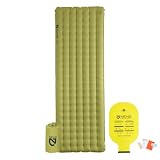
The NEMO Eclipse Long Wide is engineered for backpackers and campers who prioritize generous shoulder space and reliable multi-season warmth without carrying an oversized load. Its wide profile accommodates active sleepers who shift positions throughout the night, while the durable outer fabric handles rugged backcountry use. Owner feedback frequently praises its stable surface feel and efficient inflation process. It bridges the gap between ultralight minimalism and full basecamp comfort.
- Pro: Generous long-wide dimensions keep elbows and feet on the pad.
- Pro: Durable exterior fabric resists abrasions on rough tent floors.
- Con: Moderately heavier pack weight compared to pure ultralight minimalist options.
Skip it if: You are counting every single ounce for fast-and-light thru-hiking where a standard tapered pad is required.
NEMO Astro Long Wide
The NEMO Astro Long Wide provides a dependable, cost-conscious entry point into high-comfort backcountry sleeping. Featuring lateral baffles that resist dipping in the middle, this pad is well-suited for weekend backpackers and paddlers who want a plush layout without crossing the two-hundred-dollar threshold. Users note that the integrated pillow baffle adds a welcome touch of head support when roughing it.
- Pro: Excellent price-to-size ratio with an expansive sleeping surface.
- Pro: Lateral baffle design reduces edge collapse when rolling over.
- Con: Offers less thermal efficiency for late-autumn or sub-freezing outings.
Skip it if: You frequently camp on frozen ground or in deep shoulder-season cold snaps.
NEMO Tensor Extreme Long Wide
The NEMO Tensor Extreme Long Wide is designed specifically for winter mountaineers, cold sleepers, and alpine trekkers who demand top-tier thermal insulation. Engineered with advanced multi-layer internal baffling to reflect body radiant heat, this pad prevents severe ground freezing from disrupting sleep. User feedback highlights its remarkably small packed volume given its immense cold-weather capability.
- Pro: Outstanding insulation designed specifically for severe cold and snow camping.
- Pro: Generous long-wide sizing provides total separation from freezing ground.
- Con: Highest price point in the NEMO lineup, representing a significant investment.
Skip it if: You exclusively camp in warm summer conditions where extreme insulation is unnecessary.
Naturehike 27oz Ultralight 4.6R
The Naturehike 27oz Ultralight pad is tailored for budget-conscious hikers looking for genuine 3-season versatility. Rated at 4.6R, it includes an air pump sack that simplifies inflation while keeping moisture out of the interior chamber. User reviews highlight its solid balance of low price, manageable weight, and respectable warmth during chilly spring and autumn nights.
- Pro: High 4.6R thermal insulation at an entry-level price point.
- Pro: Included pump sack makes camp setup fast and hygienic.
- Con: Surface material feels slicker compared to higher-end textured fabrics.
Skip it if: You require a wide cut or seek maximum ultralight weight savings below one pound.
Therm-a-Rest NeoAir Xlite NXT Regular
The Therm-a-Rest NeoAir Xlite NXT Regular remains an iconic benchmark for thru-hikers and gram-counting backpackers. Engineered with internal reflective baffles that dramatically cut down on the crinkling noise of previous generations, it packs down to the size of a standard water bottle. Owner feedback consistently highlights its unmatched warmth-to-weight ratio on extended trail sections.
- Pro: Ultra-compact packed volume and exceptionally low base weight.
- Pro: Significantly quieter internal core compared to older iterations.
- Con: Standard regular width may feel narrow for broad-shouldered or restless sleepers.
Skip it if: You prefer sprawling out on a wide rectangular mattress rather than a tapered mummy shape.
Therm-a-Rest NeoLoft Regular Wide
The Therm-a-Rest NeoLoft Regular Wide is built for side sleepers and backpackers who refuse to compromise on plush cushioning along the trail. Offering a deeper, loftier sleep surface than traditional ultralight air pads, it absorbs hip and shoulder pressure points effectively. Spec sheets and user feedback emphasize its plush, conforming top layer that delivers near-home mattress comfort in a packable format.
- Pro: Extra loft eliminates ground contact for committed side sleepers.
- Pro: Regular-wide cut provides comfortable elbow room without excess length.
- Con: Slightly bulkier packed footprint than ultralight minimalist pads.
Skip it if: Your primary objective is achieving the absolute smallest packed pack volume.
Therm-a-Rest MondoKing 3D XX-Large
The Therm-a-Rest MondoKing 3D XX-Large is the ultimate basecamp mattress for overland rigs, car camping, and cabin setups. Featuring an expansive 80 by 30-inch footprint with vertical sidewalls, this self-inflating pad mimics a residential bed. Owner feedback raves about the plush foam core, providing complete isolation from uneven ground, gravel, and cold surfaces.
- Pro: Massive 80 x 30-inch sleeping area with vertical 3D sidewall support.
- Pro: Self-inflating foam core provides supreme basecamp comfort and insulation.
- Con: Very heavy and bulky; strictly suited for vehicle-supported camping.
Skip it if: You need to carry your gear on your back for any distance beyond your vehicle.
Naturehike 26oz Sidewalls 6.5R Large
The Naturehike 26oz Large pad targets budget cold-weather campers and side sleepers looking for maximum thickness on a budget. Featuring a 10cm thickened profile with distinct sidewalls and a 6.5R rating, it keeps you centered on the mattress while blocking severe ground chill. It also utilizes a PFAS-free construction, which eco-conscious outdoor enthusiasts appreciate.
- Pro: Substantial 10cm thickness with raised sidewalls keeps sleepers centered.
- Pro: Robust 6.5R insulation provides true four-season ground protection under $110.
- Con: Silver aesthetic and baffle texture may not appeal to all user preferences.
Skip it if: You prioritize a premium micro-adjustable valve system found on top-tier outdoor brands.
Buying Guide
Understanding R-Value and Thermal Insulation
R-value measures a sleeping pad’s capacity to resist conductive heat flow from your warm body into the cold earth. In warm summer conditions, an R-value between 1.0 and 2.5 is generally sufficient. For typical 3-season backpacking where nighttime temperatures dip near freezing, target a pad with an R-value between 3.0 and 4.9. If you plan to sleep on snow, frozen ground, or during winter expeditions, select a dedicated 4-season pad rated at 5.0 R-value or higher to avoid losing critical body heat through the floor.
Pad Shape, Width, and Thickness
Sleeping pads generally come in mummy, tapered, and rectangular shapes. Mummy and tapered cuts shed material at the corners to decrease trail weight, but they provide less room for your feet and arms. Rectangular pads, especially Long Wide variations, offer significant room to shift without rolling onto cold ground. Thickness is equally vital for side sleepers; a mattress with at least 3 to 4 inches (7.5 to 10 cm) of depth ensures your hips and shoulders do not bottom out against the ground.
Valve Types and Inflation Methods
Modern sleeping pads utilize flat, high-flow, one-way valves that prevent air from escaping between breaths during manual inflation. Many brands now include a dedicated pump sack. Using a pump sack not only speeds up inflation at high elevations when lung capacity is reduced, but it also prevents internal condensation and mold buildup caused by breath moisture, protecting the integrity of internal reflective films over years of use.
Our Verdict
For the best overall balance of generous space, reliable build quality, and dependable multi-season trail comfort, the NEMO Equipment Eclipse Long Wide ($199.95) is our top recommendation. If you are shopping on a tight budget and want dependable 3-season performance with a pump sack included, the Naturehike 27oz Ultralight 4.6R ($89.99) delivers exceptional value. However, if your itinerary involves extreme sub-zero mountaineering or snow camping, the NEMO Equipment Tensor Extreme Long Wide ($299.95) is the superior choice to ensure maximum thermal protection from frozen terrain.
FAQ
What R-value do I need for 3-season backpacking?
For standard spring, summer, and autumn trips, an R-value between 3.0 and 4.5 is ideal. This range prevents cold ground temperatures from chilling your sleep system on near-freezing nights while keeping the pad packable and light.
Why should I choose a Long Wide pad over a Regular size?
A Long Wide pad provides extra width across the shoulders and length for taller individuals. This extra surface area prevents your arms and legs from hanging off the sides onto the cold tent floor, which is especially beneficial for side and active sleepers.
How does a pump sack help preserve a sleeping pad?
A pump sack captures ambient air and channels it into the valve, reducing inflation effort significantly. More importantly, it stops moist breath vapor from entering the pad’s interior, preventing internal mold growth and preserving reflective thermal films.
Can I use an ultralight air pad for car camping?
Yes, ultralight air pads work well in any camping scenario, but they tend to be narrower and more delicate than dedicated basecamp mattresses. If weight and packed size are not concerns, a thicker self-inflating mattress will deliver a noticeably more supportive and comfortable night’s rest.