
Best Boat Fenders: The Right Size Depends on Your Dock
The best boat fenders are large enough to keep your hull off the dock under your usual conditions, long enough to cover the contact area, and easy to secure without slipping. For many recreational boats, a pair of cylindrical fenders is a practical starting point; boats that lie against pilings or face changing water levels often benefit from longer fenders or additional shapes. Choose by boat length, hull height, dock type, and how exposed the berth is—not by boat length alone.
Quick size guide
The figures below are starting points for typical recreational boats, not guarantees. Fender dimensions and recommended boat sizes vary by maker, and rough water or a heavy boat may call for larger or more numerous fenders.
Our top picks
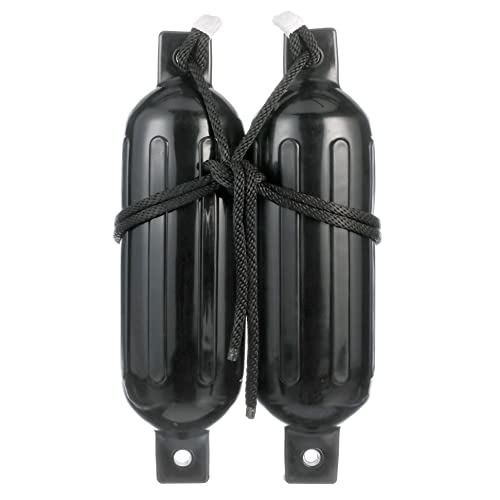 Seachoice Twin Eye Ribbed Fender Kit
- Durable, dependable Marine Grade vinyl fenders are Roto-molded…
- Premium-quality ribbed material ensures softness
- Valve plug housing is molded into fender, and…
 Dreizack Boat Fenders 4 Pack 6.5"x23"
- 🚢【IDEAL PROTECTOR】Dreizack Boat Fenders have a strong cushioning…
- 🏅【HIGH-QUALITY PVC MATERIAL】Our Boat Bumpers are rotomolded from…
- 🏆【DOUBLE HOLE DESIGN】Double hole reinforcement moulding can be…
 VEITHI Boat Fenders 4 Pack 6.5 x
- 【Material】The boat fenders for docking made of high-quality…
- 【Reinforced Twin Eyelets Design】Boat bumper eyelets are reinforced…
- 【Protect Your Boat】Pontoon boat bumpers for docking great…
| Product | Key specs | |
|---|---|---|
| Seachoice Twin Eye Ribbed Fender Kit | Durable, dependable Marine Grade vinyl fenders are Roto-molded… Premium-quality ribbed material ensures softness Valve plug housing is molded into fender, and… | Check price |
| Dreizack Boat Fenders 4 Pack 6.5"x23" | 🚢【IDEAL PROTECTOR】Dreizack Boat Fenders have a strong cushioning… 🏅【HIGH-QUALITY PVC MATERIAL】Our Boat Bumpers are rotomolded from… 🏆【DOUBLE HOLE DESIGN】Double hole reinforcement moulding can be… | Check price |
| VEITHI Boat Fenders 4 Pack 6.5 x | 【Material】The boat fenders for docking made of high-quality… 【Reinforced Twin Eyelets Design】Boat bumper eyelets are reinforced… 【Protect Your Boat】Pontoon boat bumpers for docking great… | Check price |
 Affordura Boat Fenders 4 Pack Boat Bumpers | The package contains 4x 5.5 inch boat bumpers… Well protection- Keeps your boat from getting scratched… Easily inflated- If you tired of boat bumpers… | Check price |
As an Amazon Associate we earn from qualifying purchases at no extra cost to you.
| Boat length | Starting cylindrical fender size | Typical starting quantity | When to size up |
|---|---|---|---|
| Under 20 ft | 4.5–5.5 in diameter × 15–20 in long | 2–3 | Heavy boat, exposed slip, or tall dock face |
| 20–25 ft | 6–6.5 in diameter × 20–24 in long | 3–4 | Frequent wakes, pilings, or rafting alongside another boat |
| 26–35 ft | 8–10 in diameter × 24–30 in long | 4–6 | Heavy displacement, surge, or a fixed dock with uneven contact points |
| 36–45 ft | 10–12 in diameter × 30–36 in long | 6 or more | High windage, exposed mooring, or substantial tidal movement |
Use the table as a shopping shortlist, then check the manufacturer’s sizing guidance and the fender’s actual inflated dimensions. A wide, heavy boat can need more protection than a narrow boat of the same length.
Choose by docking situation
| Your situation | Good starting choice | Why |
|---|---|---|
| Calm marina, occasional docking, limited locker space | Two or three medium cylindrical inflatable fenders | Compact to store and easy to reposition for routine dockings. |
| Fixed dock, wakes, or a boat that moves against the berth | Larger-diameter fenders, with extra units at contact points | More diameter gives a larger cushion and helps keep the hull separated. |
| Pilings or a berth with changing water level | Long fenders or vertical piling fenders | Longer coverage is less likely to leave the hull exposed as the boat rises or falls. |
| Rafting alongside another boat | Several large cylindrical fenders or purpose-made rafting fenders | Broad, distributed contact helps protect both hulls; agree on placement with the other skipper. |
| Low-clearance storage or frequent launching | Inflatable fenders with a dependable valve | They deflate for storage, though inflation and valve care add setup tasks. |
What to compare before buying
Diameter: the main cushioning dimension
Diameter determines how far the fender stands off the dock and how much contact area it presents. If the boat is heavy, the berth is exposed, or the dock has hard edges, prioritize diameter over a marginal increase in length. Too-small fenders can flatten under load or allow the hull to touch the dock. More fenders do not always make up for inadequate diameter.
Length: coverage along the hull
Length matters when the dock face is tall, the hull has a long contact zone, or the water level changes. A fender should cover the area likely to meet the dock, rather than hanging so low that it can snag or ride beneath the hull. Check the boat’s freeboard—the vertical distance from the waterline to the deck—and the dock’s height at both high and low tide.
Inflation and valve quality
Inflatable fenders should be firm enough to hold their shape but not stretched drum-tight. Follow the maker’s inflation instructions; there is no universal pressure that suits every model, and many manufacturers specify inflation by feel rather than a pressure rating. Overinflation can stress seams and valves, especially when a fender heats in the sun.
A valve that seals reliably and accepts the appropriate pump nozzle is more useful than one that is merely easy to reach. Before relying on a new fender, inflate it as directed and check for pressure loss. Keep the valve clean, avoid forcing incompatible fittings, and retain any cap or adapter the manufacturer supplies.
Attachment options and placement
Look for reinforced eyelets or end openings that suit your preferred line attachment. A line through both ends can reduce swinging; a single-point tie is quicker to adjust but may let the fender rotate. Use fender lines that are easy to handle and secure with a knot you can release under normal conditions. Tie fenders to strong rails or dedicated points—not to fittings that are not designed for load.
Set fenders where the hull will actually meet the dock: commonly near the widest part of the boat and toward the bow and stern. Adjust their height for the dock face, then check again from the dock. On a piling, secure the fender so it cannot slide out of position as the boat moves.
How many fenders do you need?
Start with at least three for a typical small powerboat: one near the widest point and one toward each end of the likely contact zone. Larger boats commonly need four to six or more, depending on hull shape and berth. Add protection where the boat is most likely to touch, rather than spacing fenders evenly by habit.
For example, a 24-foot boat with a 22-inch-wide fender at the widest point and one near each end has three initial contact zones. If its slip exposes the stern to wakes, adding a fourth fender aft can address that specific risk. This is a placement plan, not a substitute for choosing a diameter suitable for the boat’s weight and conditions.
Inflatable or solid?
Inflatable fenders pack smaller and let owners replace or top up air, but they need occasional pressure checks and careful valve handling. Solid foam or molded fenders avoid inflation and can suit owners who value simple, ready-to-use gear; they take more storage space and may be bulkier to carry. For either type, inspect attachment points, surfaces, and any areas that rub against the hull or dock.
Ownership realities that affect value
Inflatable fenders commonly wear first at their eyelets, seams, valves, and abrasion points. Dirt trapped between a fender and hull can scuff the finish, so rinse both after gritty or muddy dockings and clean with products compatible with the fender material and boat finish. Store fenders out of prolonged direct sun when practical, and keep them away from sharp edges.
Common mistakes include buying by boat length alone, overinflating, using too few fenders at the actual contact points, and leaving lines slack enough for a fender to swing away. A modestly priced set of appropriately sized fenders can be a better buy than premium materials in a size too small for the berth. General market prices range from a few dozen dollars for basic small fenders to several hundred dollars for large or specialized sets; size, construction, and quantity make a substantial difference.
Bottom line
For a calm, protected berth, begin with the size range for your boat and enough cylindrical fenders to cover likely contact points. For wakes, pilings, tidal movement, or a heavy boat, prioritize a larger diameter, longer coverage where needed, and additional fenders at exposed areas. Before purchase, confirm the maker’s sizing and inflation guidance, inspect the attachment design, and make sure the fenders can be positioned securely at your dock.





