
Our Top Picks
The best camera for photography in this group is the one that matches how you actually shoot, and the listing titles split into three clear classes. The Canon EOS R50 kit and the Canon EOS Rebel T7 kits are the interchangeable-lens options with a 24-megapixel APS-C sensor. The two Kodak Pixpro cameras are straightforward point-and-shoot compacts. The Notoldpine, Duluvulu and G-Anica listings are low-cost “vlogging” cameras with very large megapixel claims and are the weakest class for serious stills. If photography is the goal, start with the Canon group.
Ten listings are covered below, with plain notes on who each one suits and what to verify before buying. Prices change often, so the tables use relative tiers only.
Top picks at a glance

Canon EOS Rebel T7 DSLR Camera EF-S 18-55mm f/3.5-5.6 is II Lens Kit | 24.1 Megapixel CMOS (APS-C) Sensor, Full HD Videos, Built-in Wi-Fi, Beginner Photographers, Digital Camera


As an Amazon Associate we earn from qualifying purchases. Product prices and availability are accurate as of the date/time indicated.

Canon EOS Rebel T7 DSLR Camera Double Zoom Lens Kit | EF-S 18-55mm & EF 75-300mm Lenses, 24.1 Megapixel CMOS (APS-C) Sensor, Full HD Videos, Wi-Fi, Beginner Photographers


As an Amazon Associate we earn from qualifying purchases. Product prices and availability are accurate as of the date/time indicated.

5K Digital Cameras for Photography 80MP WiFi UHD Autofocus Vlogging Camera | Camera for YouTube, Fast Autofocus, Travel Video Camara Beginner, 3" 270° Flip Screen, 18X Zoom, Memory Card, Lens Hood


As an Amazon Associate we earn from qualifying purchases. Product prices and availability are accurate as of the date/time indicated.

KODAK PIXPRO FZ55 16MP Compact Digital Camera, 5X Optical Zoom, Black | 1080p Full HD Video, 28mm Wide Angle Lens, 2.7 Inch LCD, Point and Shoot, Vlogging Camera, Li-Ion Battery
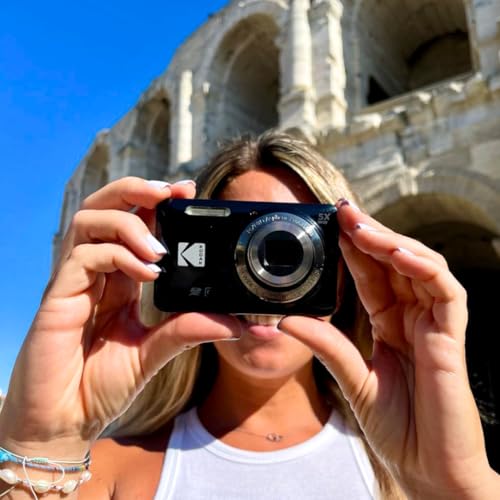


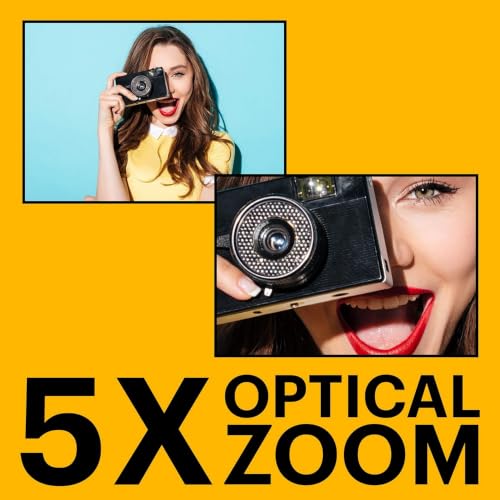


As an Amazon Associate we earn from qualifying purchases. Product prices and availability are accurate as of the date/time indicated.

Canon EOS Rebel T7 DSLR Camera with 18-55mm Lens (Black) (Renewed) | 18-55mm


As an Amazon Associate we earn from qualifying purchases. Product prices and availability are accurate as of the date/time indicated.

Duluvulu 4K Digital Camera for Photography Autofocus, 2026 Latest 48MP Vlogging Camera for YouTube with SD Card, 2 Batteries, 3" 180°Flip Screen Compact Travel Camera for Teens with 16X Zoom,Black


As an Amazon Associate we earn from qualifying purchases. Product prices and availability are accurate as of the date/time indicated.

Canon EOS R50 Mirrorless Camera RF-S18-45mm F4.5-6.3 is STM Lens Kit | 24.2 Megapixel CMOS (APS-C) Sensor, 4K Video, Vlogging, Content Creation, Photography, Digital Camera, Black


As an Amazon Associate we earn from qualifying purchases. Product prices and availability are accurate as of the date/time indicated.

KODAK PIXPRO FZ45 16MP Compact Digital Camera, 4X Optical Zoom, AA, Black | 1080p Full HD Video, 27mm Wide Angle Lens, 2.7 Inch LCD, Point and Shoot, Digicam, Travel and Family Photos


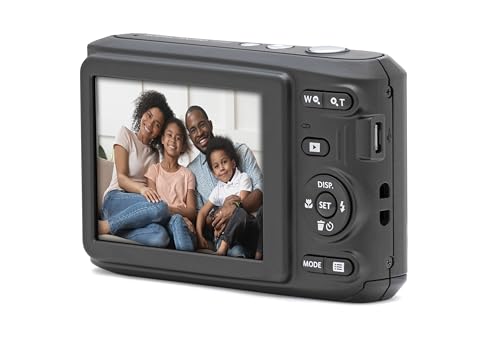


As an Amazon Associate we earn from qualifying purchases. Product prices and availability are accurate as of the date/time indicated.

G-Anica 5K 64MP Digital Cameras for Photography with Dual-Lens WiFi | Vloging Wifi Camera with 180° Flip Screen, Wide-Angle & Macro Lens, 16X Zoom All-in-One Camera Kit for Beginners, 2 Batteries





As an Amazon Associate we earn from qualifying purchases. Product prices and availability are accurate as of the date/time indicated.
| Model | Key point from the title | Price tier | Best for |
|---|---|---|---|
| Canon EOS R50 kit | Mirrorless, 24.2MP APS-C, 4K video, RF-S18-45mm lens | Price not shown in our data | Photographers who also want video |
| Canon EOS Rebel T7 (18-55mm kit) | DSLR, 24.1MP APS-C, Full HD, Wi-Fi | Premium within this set | First interchangeable-lens camera |
| Canon EOS Rebel T7 (double zoom kit) | Adds EF 75-300mm lens to the 18-55mm | Premium within this set | Buyers who want longer reach in one box |
| Canon T7 renewed, 42-piece bundle | Renewed, 420-800mm lens, backpack, 64GB cards | Premium within this set | Bundle shoppers who accept renewed stock |
| Canon T7 renewed with 18-55mm | Renewed body and standard zoom | Mid-range | Lowest-cost route to the Canon DSLR |
| Kodak Pixpro FZ55 | 16MP, 5X optical zoom, 28mm wide angle, 1080p | Budget | Simple everyday snapshots |
| Kodak Pixpro FZ45 | 16MP, 4X optical zoom, 27mm wide angle, AA batteries | Budget | Family trips and easy battery swaps |
| G-Anica 5K dual-lens | Wide-angle and macro lens, 180 degree flip screen | Mid-range | Casual vlogging, not serious stills |
| Notoldpine 5K camera | “80MP” claim, 18X zoom, 270 degree flip screen | Budget | Low-stakes experimenting |
| Duluvulu 4K camera | “48MP” claim, 2 batteries, 16X zoom | Budget | A child’s first camera |
What is changing in the camera category
Camera makers have spent years shifting attention from DSLRs to mirrorless designs, and the trend is visible in buying advice across the category. Mirrorless bodies generally offer more advanced autofocus, better video and a live preview of exposure, while DSLRs keep a reputation for battery life, a large used and renewed market, and a deep catalog of affordable lenses. Neither type is automatically better for a beginner. It depends on what you want to shoot and how much you want to spend on lenses later.
Phones have also reshaped what a dedicated camera is for. For snapshots, a recent phone is often good enough, so the cases where a standalone camera still wins are mostly about optics: a larger sensor, a lens that zooms optically, a shallower depth of field and a body that is comfortable to hold for a long afternoon. That is why the interchangeable-lens kits below are worth more attention than cheap compacts that copy phone-style features.
A third trend is the flood of inexpensive “vlogging” cameras with headline resolutions like 4K, 5K and double-digit megapixel counts. These listings often put big numbers in the title, and a number in a title is a seller claim, not an independent measurement. Finally, renewed and bundled listings have become common. They can offer value, but they also make it harder to compare like for like, because the same body may appear with different lenses, cards and bags at very different tiers.
How we picked these
This roundup is built from published specifications, manufacturer documentation and buyer reviews, and from what each listing title states. Nobody on the team used or measured these units. Where a title did not say something, we say “check the listing” rather than guess. We grouped products by class first (interchangeable-lens, compact, low-cost vlogging), because comparing a mirrorless kit directly with a budget compact tells you little. Price tiers are relative within this set and not a statement about current prices.
Reviews of each listing
Canon EOS R50 Mirrorless Kit (RF-S18-45mm)
The title describes a mirrorless camera with a 24.2-megapixel APS-C CMOS sensor, 4K video and an RF-S18-45mm f/4.5-6.3 IS STM lens, marketed for vlogging, content creation and photography. It is the only mirrorless body in the group, and the only one with 4K video named in a Canon title. Our data shows no price for it, so confirm the current price and whether the kit is new.
It suits someone who expects to shoot both photos and short videos and wants a body that is designed around the newer lens mount. A realistic scenario is a family photographer who records birthdays in 4K and prints a few favorite stills each month. Because RF-S lenses are a newer system, the lens range and prices differ from the older EF-S system used by the Rebel T7, so look at the lens options you might want later.
- Pros: mirrorless design; 4K video named in the title; APS-C sensor with 24.2MP.
- Pros: kit lens included, so you can shoot out of the box.
- Cons: price missing here, so the value case cannot be judged.
- Cons: kit lens is a modest zoom, not a fast portrait lens.
Check the listing for battery included, memory card (usually not included), and whether the seller is Amazon or a third party. One question to ask: do I want the newer lens system, or is the cheaper DSLR lens ecosystem enough for me?
Canon EOS Rebel T7 with 18-55mm Lens Kit
This listing names a DSLR with an EF-S 18-55mm f/3.5-5.6 IS II lens, a 24.1-megapixel APS-C CMOS sensor, Full HD video and built-in Wi-Fi, aimed at beginner photographers. It is the plain, no-extras version of the Rebel T7 offer, and it is the cleanest reference point for judging the bundle listings further down.
It fits a first-time buyer who wants real lenses, manual controls and an optical-style DSLR experience without a mirrorless price. A typical use is learning exposure on weekend walks, then adding a cheap prime lens for portraits. The kit lens is slow at the telephoto end, so low-light shooting will push you toward higher ISO values or a faster lens.
- Pros: APS-C sensor and interchangeable lenses.
- Pros: Wi-Fi named in the title for sharing photos.
- Cons: Full HD video only; 4K is not mentioned.
- Cons: an older design compared with mirrorless options.
Check the listing for what is in the box (battery, charger, strap) and the warranty terms. One question to ask: is it worth paying more here than for the renewed version of the same body?
Canon EOS Rebel T7 Double Zoom Lens Kit
This is the same Rebel T7 body with two lenses named in the title: an EF-S 18-55mm and an EF 75-300mm. It keeps the 24.1-megapixel APS-C sensor, Full HD video and Wi-Fi. The second lens widens your reach, which is the main reason people pick this version over the single-lens kit.
It is a good match for someone who knows they want to photograph distant subjects, like a child on a sports field or birds at a feeder, without buying a separate lens right away. The practical trade-off is weight and handling: a 300mm lens is harder to keep steady at slow shutter speeds, so plan on bright light or a tripod.
- Pros: two lenses cover wide to 300mm in one purchase.
- Pros: same sensor and body as the single-lens kit.
- Cons: the long lens may be slow and soft at full zoom; check buyer photos.
- Cons: higher tier than the single-lens kit for an accessory you might not use.
Check the listing for whether the lenses are stabilized (the title only says IS II for the 18-55mm) and what accessories are included. One question to ask: will I really shoot at 300mm often enough to justify the extra cost?
Canon Rebel T7 Renewed Bundle with 420-800mm Lens (42 Pieces)
The title describes a renewed T7 with an EF-S 18-55mm lens, a 420-800mm “super telephoto” lens, a sling backpack, 64GB memory cards and a 42-piece accessory bundle. It is branded as a “professional photo bundle”, which is marketing language rather than a specification.
It appeals to a buyer who wants everything in one box. The caution is that a 420-800mm lens is an extreme focal length. Lenses in that range sold in budget bundles are usually manual focus and slow, and they need a very stable support to give sharp results. Treat that lens as a novelty to try, not as the reason to buy.
- Pros: bag, cards and extras included in a single order.
- Pros: renewed pricing can lower the cost of the body.
- Cons: the third-party-style accessories vary in quality; verify brands.
- Cons: the bundle price may exceed buying a new kit and choosing your own bag and card.
Check the listing for who renewed the camera, the warranty length and the return window. One question to ask: if I priced each piece separately, would I choose the same bundle?
Canon Rebel T7 Renewed with 18-55mm Lens
This is the lean renewed offer: a T7 body with an 18-55mm lens, in black, with no bundle extras named in the title. It is the lowest-cost route in the group to the Canon DSLR experience.
It suits a budget-minded beginner who plans to buy only the essentials, such as a memory card and a camera strap, and learn the basics. The savings are real only if the renewed condition is genuinely good, so read the grading and seller details carefully. Because the title does not list the lens model fully, confirm whether it is the stabilized version.
- Pros: lowest entry cost for a Canon interchangeable-lens kit here.
- Pros: no bundle clutter.
- Cons: renewed condition and warranty vary by seller.
- Cons: sparse title; you must verify what comes in the box.
Check the listing for battery health, charger, cosmetic grade and the return window. One question to ask: does the savings over the new kit still make sense after the shipping and warranty terms?
KODAK PIXPRO FZ55 Compact Digital Camera
The FZ55 listing names a 16-megapixel compact with a 5X optical zoom, a 28mm wide-angle lens, 1080p video, a 2.7-inch LCD and a Li-Ion battery. It is a point-and-shoot, with a fixed lens.
It is built for people who want a simple camera that fits in a coat pocket: a grandparent photographing a family reunion, or a student who wants to leave the phone in the bag. The small sensor class means indoor and night shots will be limited, so expect it to shine in daylight. The rechargeable battery is convenient but means you should carry a spare on long trips.
- Pros: optical zoom and a wide 28mm angle.
- Pros: rechargeable battery named in the title.
- Cons: a fixed lens and small screen limit creative control.
- Cons: 1080p only; low-light performance is likely modest.
Check the listing for memory card compatibility and whether a card is included. One question to ask: would my phone already do most of what this camera does?
KODAK PIXPRO FZ45 Compact Digital Camera
The FZ45 is the smaller step down: 16 megapixels, a 4X optical zoom, a 27mm wide-angle lens, a 2.7-inch LCD and 1080p video, using AA batteries. It is described for travel and family photos.
The AA battery design is the point. On a trip where charging is inconvenient, you can swap in store-bought AAs, which suits a long hike or a school outing. The trade-off is that AA cells can drain faster than a purpose-built pack, so carry spares or rechargeables. Follow the manufacturer’s instructions on battery type and handling.
- Pros: simple operation and easy battery replacement.
- Pros: low tier within this set.
- Cons: shorter zoom than the FZ55.
- Cons: a small sensor class, so image quality is modest in dim rooms.
Check the listing for whether batteries are included. One question to ask: do I value easy AA swaps more than the extra zoom of the FZ55?
G-Anica 5K 64MP Dual-Lens Camera
This listing promises 5K video, 64 megapixels, WiFi, a 180 degree flip screen, wide-angle and macro lenses, 16X zoom and two batteries, packaged as an all-in-one kit. It is an inexpensive camera aimed at beginners who want to vlog.
Treat the numbers carefully. A very small, low-cost camera listed at “64MP” and “5K” is advertising output settings, and it does not follow that image quality matches a camera with a larger sensor. The flip screen and two batteries are practical for casual video. For serious stills, the Canon listings are a safer class.
- Pros: two batteries, flip screen and extra lens options.
- Pros: mid-tier price within the set.
- Cons: headline resolutions are seller claims; sensor size is not stated.
- Cons: a weaker class than the interchangeable-lens kits for photography.
Check the listing for sensor size, the true optical zoom and whether the “16X” is digital. One question to ask: what do buyer photos at full size actually look like?
Notoldpine 5K 80MP Digital Camera
The Notoldpine title lists 5K video, “80MP”, WiFi, autofocus, a 3-inch 270 degree flip screen, 18X zoom, a memory card and a lens hood. It is positioned as a camera for YouTube and travel video.
It is a low-cost experiment for someone who just wants to try out a vlogging setup. An “80MP” claim on a camera in this tier is almost certainly a software output setting, and the 18X zoom is likely digital. We are not stating that as fact about this unit, only flagging it as the sort of claim you should verify. It is a weaker class for photography than the Canon or Kodak options.
- Pros: very low tier; includes a card and hood per the title.
- Pros: rotating screen suits selfies and vlogs.
- Cons: megapixel and zoom claims are unverified.
- Cons: brand support and warranty may be limited; check the seller.
Check the listing for sensor details, battery capacity and return terms. One question to ask: am I buying this for photographs, or for an inexpensive video toy?
Duluvulu 4K 48MP Digital Camera
The Duluvulu listing describes a 4K, “48MP” compact with autofocus, an SD card, two batteries, a 3-inch 180 degree flip screen and 16X zoom, aimed at teens and travel. The title also carries a year, which is a marketing label that should not be read as a spec.
It is the lowest-tier option in the set, so the realistic use is a child’s first camera or a backup for casual snapshots. Handle expectations: this class usually has a small sensor and limited low-light ability. Supervise young children with batteries and chargers and follow the manufacturer’s instructions.
- Pros: lowest tier; two batteries and a card in the kit.
- Pros: easy flip screen for selfies.
- Cons: “48MP” and “16X” are unverified claims.
- Cons: likely modest image quality compared with APS-C cameras.
Check the listing for lens details and what “16X” means. One question to ask: will a more capable used or renewed camera fit within the same budget?
Buying guide for photography cameras
Sensor size matters more than megapixels
The sensor captures light, and a larger sensor generally collects more of it. The Canon EOS R50 and Rebel T7 are listed with APS-C sensors, which are larger than the sensors normally found in small compacts and budget vlogging cameras. That usually helps in dim rooms and with background blur. A camera that advertises 80MP with no sensor details is giving you a number that sounds impressive while hiding the part that matters. Pixel count describes resolution; the sensor’s ability to gather light decides how clean those pixels look.
DSLR, mirrorless or compact
A DSLR such as the Rebel T7 offers a mature lens catalog, a body that is comfortable for long shoots and often strong battery life. A mirrorless body such as the R50 is generally lighter and tends to be better set up for video and modern autofocus. A compact like the Pixpro FZ55 is the easiest to carry. If you will print photos, crop heavily or learn manual control, lean toward an interchangeable-lens body. If you want photos with no setup, a compact is enough.
Lens kits and extras
A kit lens such as an 18-55mm covers wide landscapes to a modest portrait length and is a good starting point. A 75-300mm adds reach, which suits sports or wildlife. Be cautious with bundles that include an extreme 420-800mm lens: reach on paper does not equal sharp photos, and a stable tripod is usually needed. The money saved by skipping a flashy bundle is often better spent on a second lens such as a lightweight prime.
Video features
If video is a priority, check frame rates, stabilization and microphone options as well as resolution. The R50 title lists 4K, while the Rebel T7 titles list Full HD. Low-cost cameras that list 4K or 5K may record at a lower real quality because of the sensor and processing, so look at buyer footage.
Memory, batteries and power
Plan on at least one extra battery and a quality memory card from a known brand. Counterfeit or slow cards cause lost shots and dropped video, and cheap off-brand batteries can behave unpredictably. Charge and store lithium-ion batteries according to the manufacturer’s instructions and stop using any battery that swells or overheats.
New versus renewed
Renewed cameras can be good value, but the seller determines the quality. Look for a clear grading description, a warranty and a return window that lets you inspect the sensor, shutter and lens for dust, scratches or fungus.
Worked example
Assume a hobbyist with a $700 total budget who wants sharp family photos and a little video. These are estimates for illustration only, not current prices. A new interchangeable-lens kit might use about $500 to $600 of that budget, leaving $60 to $100 for a memory card and a second battery, and the rest for a basic bag. A renewed body at a lower tier could leave room for a cheap 50mm prime lens around $100 to $150. The best split is usually to spend on the body and a good standard lens, not on bundled accessories of uncertain quality.
| Spec concept | What to look for | Why it matters |
|---|---|---|
| Sensor size | APS-C or larger; sensor size stated | Light gathering and background blur |
| Lens mount | EF-S (T7) or RF-S (R50); available lenses | Future upgrade path and cost |
| Zoom type | Optical, not digital | Digital zoom crops the image and loses detail |
| Video | 1080p or 4K with stabilization | Marketing resolution may not equal quality |
| Power | Rechargeable pack or AA; spare available | Avoids missed shots on trips |
| Condition | New, or renewed with warranty | Protects against defects |
Mistakes buyers make
The first mistake is shopping by megapixel count. A 12 to 24 megapixel camera with a good sensor and lens beats a small-sensor camera that claims 80. The second is buying a huge telephoto bundle because the lens looks professional; reach is not sharpness. The third is ignoring the memory card, which can limit continuous shooting and video. The fourth is forgetting batteries: one battery is rarely enough for a full day. The fifth is skipping the return window on a renewed camera and finding a flaw after it has expired. The sixth is judging only by the price tier instead of what the listing includes, since a bare kit and a 42-piece bundle may share the same body.
Verdict by use case
Learning photography with room to grow: the Canon EOS Rebel T7 18-55mm kit, or the renewed version if the seller details check out. Photos plus 4K video: the Canon EOS R50 kit, once you confirm the price. Long reach: the T7 double zoom kit before the extreme 420-800mm bundle. Pocket camera: the Kodak Pixpro FZ55, or the FZ45 if you prefer AA batteries. Cheapest experiments: the Duluvulu, Notoldpine or G-Anica, with the caveats above.
For more on APS-C bodies, see our guide to APS-C mirrorless cameras, and for beginners, cameras for beginner photographers. If you will shoot indoors, continuous lights for photography can help more than a new camera body.
Frequently asked questions
What is the best type of camera for photography?
For still photography, a camera with a larger sensor and interchangeable lenses gives the most room to grow. In this set that means the Canon EOS Rebel T7 kits and the Canon EOS R50, both listed with a 24-megapixel APS-C sensor. A compact such as the Kodak Pixpro FZ55 is simpler to carry and operate but offers fewer options. Match the camera to how often you will shoot and how much gear you are willing to carry.
Are megapixels the most important number on a camera?
No. Megapixels describe how many pixels make up the image, not how good each pixel is. Sensor size, lens quality, and how well the camera handles low light usually matter more for everyday photos. Listings that advertise very high megapixel counts on small, inexpensive cameras are often using interpolation or marketing math, so treat those numbers as seller claims and look at sample photos from real buyers instead.
Is a DSLR still worth buying for photography?
It can be, especially for a beginner who wants an affordable body, a wide choice of lenses, and a long battery life. DSLRs like the Canon Rebel T7 are older designs, and mirrorless cameras generally offer newer autofocus and video features. If your budget stretches to a mirrorless kit such as the Canon EOS R50, it is worth comparing. If you mostly want inexpensive stills with real lenses, a DSLR kit remains a sensible choice.
Should I buy a renewed camera?
A renewed camera can lower the entry price, but condition and warranty vary by seller. Read what the listing says about inspection, included accessories, and the return window before you buy. Check the shutter count if the seller shares it, confirm that a battery and charger are included, and look for a return policy long enough to test the camera properly once it arrives.
Do I need a telephoto lens for general photography?
Most people do not. A standard zoom such as an 18-55mm covers portraits, travel scenes, and family photos. A telephoto helps for distant subjects like wildlife or sports, but very long budget lenses are often slow, soft at full zoom, and difficult to hold steady. Start with the kit lens, learn what you wish you could reach, and add a longer lens only when a specific need shows up.
Can I use the Canon T7 lenses on the Canon EOS R50?
The T7 titles name EF-S and EF lenses, while the R50 title names an RF-S lens, which is a different mount. Adapters exist in the wider Canon ecosystem, but compatibility and features differ, so confirm the details with Canon’s documentation before planning to move lenses between the two systems. If you may switch later, factor the lens cost into your decision.





